I’m not much of a reader – 11 books I have read that have influenced my life


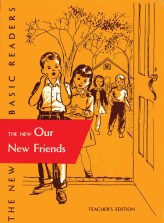
our new friends dick jane

My first exposure to fiction.

Not being much of a reader, I had a hard time coming up with the list of books that had an influence on me.

I should list the books on my shelf that I have intended to read.

Had I been able to read non-fiction rather than that nonsensical Dick and Jane stuff, I would have become a better reader. I was always in the lowest reading groups in elementary school. It was a bit demeaning since the top readers were in the ‘eagle’ group while I was in the ‘sparrows’. As noted in this list, the books I have read are for some purpose, other than enjoyment, or getting lost in fictional worlds. I have a hard enough time in the real world, let alone fantasy.
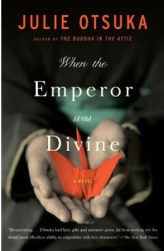
emperor divine

This was a book read by Boulder.

“When the Emperor Was Divine” by Julie Otsuka – This book was the Boulder “community book” selected a few years back. The book is about a Japanese – American family that gets split up with the father, who is thought to be a spy, is sent to one World War II relocation camp for the potential criminals and the mom, son and daughter get sent to another. I read it a couple times and ended up writing a screenplay from it, which reminds me that I need to get it out and tweak it. I’m still unsure of how to end it.

creative genius.png

Insight for the creative introverg


“You’re a Creative Genius, Now What?” by Carl King – I think I learned of this book from a movie maker named Michael Wiese who is also a book publisher and published this book. He made a movie called “The Sacred Sites of the Dalai Lamas” that screened at the Boulder Asian Film Festival many years ago. I want to make a documentary about his approach, particularly suited to introverts, such as myself. I should follow up on that.

Tips from my favorite screenwriting critic

screent trade

Tales by my favorite screenwriter.

“Adventures in the Screen Trade” by William Goldman – I started out in the movie business taking a Lighthouse Writers screenwriting workshop. I didn’t know much about the craft and watched movies while reading the screenplays. For not getting much direction, my first screenplay critique was pretty harsh, which is part of the business. It was a rewrite of a stage play “The Webster Street Blues” which is another project still in development. I produced it as a stage play at the Mercury Cafe in Denver. It was a fundraiser in the wake of the big tsunami that swamped Japan. A couple of my favorite movies, “Butch Cassidy and the Sundance Kid” and “Marathon Man” were written by William Goldman. If I read any fiction, I read screenplays rather than books.
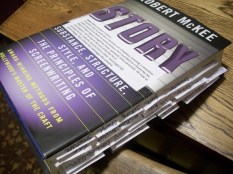
story_mckee

The screenwriting bible

“Story” by Robert McKee – I took a screenwriting class and had a hard time with the work flow. The workshop I was in seemed more like therapy for frustrated writers, some of whom didn’t ever finish one script over a couple years. After learning the basics of the craft, the first short I wrote won third prize in a contest. “Stardust” was the first movie I made when I was just learning as a volunteer at the public access TV station. I ended up traveling to New York and taking the “Story” screenwriting class taught by Robert McKee. It sounds odd, but this particular weekend event changed my outlook on life. I have read this book a couple times and still refer to it.

on_the_road_book_cover

Inspired on of my short movies.

“On the Road” by Jack Kerouac – At the Denver Film Festival a few years back, I saw a short about the gas station in Longmont, Colorado where Sal Paradise (Kerouac) stayed after coming from Cheyenne on his way to meet Dean Moriarty (Neal Cassady) in Denver. I started the “Digital Scroll” project which has only one episode, that being a short docu-drama about Sal Paradise spending a night in Cheyenne during “Wild West Days (Cheyenne Frontier Days) on his way to Denver, via Longmont. Kerouac typed the original “On the Road” manuscript on a long piece of paper that consists of many sheets taped together. I was in Central City, Colorado yesterday and the next episode will be “On the Stage: Jack Kerouac in Central City. He and some friends spent some time hanging out with some of the opera players, I’m thinking at the Teller House after Fidelio played.

o'keeffe stieglitz

There isn’t a lot of information about Georgia O’Keeffe’s visit to Colorado.

“O’Keeffe and Stieglitz” by Bonita Eisler – While in Santa Fe, there was a book, maybe at the Georgia O’Keeffe Museum that had all the works of Georgia O’Keeffe. The book included all the paintings she made while in Ward, Colorado. That was the first “famous people in strange places” moment that incited a movie based on the sketchy information available about her stay. I picked up this book as reference for a short film about her vacation in Boulder County in the summer of 1917. It originally screened at the church in Ward. Next stop is a screening in Santa Fe.
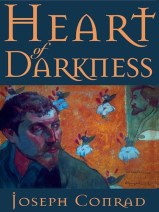
heart-of-darkness-paul-gauguin

This was a book I read in a Books to Movies class in college.

“Heart of Darkness” by Joseph Conrad – I took a literature and film class at Hastings College taught by Sara Jane Gardner. It was the first exposure that I had to the nexus between movies and books. “Apocalypse Now’ is based on “Heart of Darkness.” Both have a first person narrative from the point of view of Marlow in the book and Willard in the movie. In the movie, Willard travels up the Mekong river in search of a Green Beret named Kurtz.
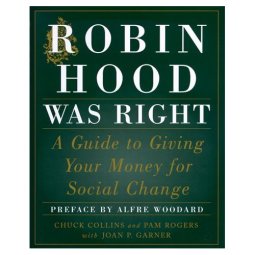
Robin Hood Was Right

This was the first book written about funding social change.

“Robin Hood Was Right” by Chuck Collins and Pam Rogers – When I first moved to Colorado, I somehow became involved with the Chinook Fund, which is a community – based foundation that funds mostly activist organizations.I was on the board of directors with John Hickenlooper, who was a biermeister at the Wynkoop Brewery. He was one of the first guys I met while in Colorado. He’s now on to other pursuits. His most memorable antic was passing out orange and blue placards at a Broncos game protesting the Mile High Stadium name change when the Stadium Authority was selling naming rights. This is one of the handbooks about how to fund social change. It’s a book about the classic example, rather than giving a guy a fish, it’s better to teach him how to catch fish.

spanish dictionary

I wore a couple of these out during my sojourns to Mexico.

“Spanish Dictionary” by University of Chicago – I did business for eight years or so in the late 1990s to early 2000s in the small town of Sombrerete in the state of Zacatecas in north central Mexico. Contrary to popular belief, English is not a very common language in most parts of Mexico, particularly in rural places like Sombrerete. This is the only book that I have worn out to the point that I had to get a new one. There are many Spanish – English dictionaries out there. I don’t know why I settled on this one.

Baseball-Saved-Us

A good children’s book introducing the topic of racism.

“Baseball Saved Us” by Ken Mochizuki – There used to be a group called “Reading to End Racism.” Community members would go into the school classroom and read a book to the students and have a discussion about it with them after. The book I generally read was this one about a baseball team that formed at a Japanese – American war relocation camp as a diversion during captivity. Oscar winner Chris Tashima (“Visas and Virtues”) made a short movie also about baseball in camp called “Day of Independence.”

mockingbird

One of the few books I read in high school, which did have a big impact on me.

“To Kill a Mockingbird” by Harper Lee – I had to include one book that I read in high school. This book was one of the first novels that confronted racism and I read it cover to cover. I was in high school from 1969 to 1971 and it was very topical. I related to the Scout character. I thought the movie with Gregory Peck stuck pretty close to the book. The other book I sort of remember is “Billy Budd” by Herman Melville.

There you have it.

Based on my list, they are books which are purposeful and most were read as an adult. Turns out, I’m more of a doer than reader.

Like Will Rogers said, “There are three kinds of men. The one that learns by reading. The few who learn by observation. The rest of them have to pee on the electric fence for themselves.”

Lassoed fish – an ‘Art of the Hunt’ tale

I produced a series of videos for the upcoming Art of the Hunt display that opens at the Wyoming State Museum in Cheyenne on July 18th.

The exhibit, spearheaded by the Wyoming Arts Council, the University of Wyoming and the Wyoming State Museum, features folkloric stories told through the unique art forms of hunting and fishing, including leather working, bow making, fly tying and taxidermy.

You don’t have to be a rugged outdoors man or woman to have stories.

I’m a city kid who grew up in the suburbs of Cheyenne. One Christmas Santa brought these short fishing rods and rudimentary reels. We could hardly wait until spring to get our lines wet.

My Uncle Rich gave me this fly box for Christmas one year. He was an avid fisherman around Wyoming.

My Uncle Rich gave me this fly box for Christmas one year. He was an avid fisherman around Wyoming.

As a family activity in the 1960s my parents would take my sister and I to Country Club Lake. On the way we stopped by the tackle store and picked up a box of worms for bait. My dad showed us how to bait the hooks and explained the purpose of bobbers.

My mom’s job was to untangle the fish line snags. I remember hooking my first fish, it was a six-inch perch. We caught several small ones that day.

I wasn’t allowed to clean the fish, because I wasn’t yet able to use sharp knives. That evening, my mom breaded the fish and we had them for dinner that night.

When I was a bit older, I don’t remember the exact birthday, but my grandfather gave me one of his manual spinning reels – the kind with a bail.

This was a big step up from the push bottom job I had been using. He also explained to me about using artificial lures. He said it was more challenging because it became a battle of wits catching a fish with lures.

He gave me a box of various flat fish and spoons. I didn’t use the flat fish since I learned they were mostly for fish that didn’t live in Southeast Wyoming, but always have kept those hand-me-downs in my tackle box.

When I was living in Lander, one spring, my fishing pal Perry and I went out up to the Big Wind River just outside of Thermopolis. The water was running high and muddy. We wore hip waders. Perry had a few strikes, I was using a muddler minnow thinking that the brown trout would hit, but became a bit discouraged. Perry suggested that I try something that no fish would like. I opened my fly box and there was the green flatfish.

I clipped it on the end of the leader and cast, then reeled in the line. Tugged and reeled, tugged and reeled. Hopelessly snagged on some plants.  I waded out to untangle the line. Much to my surprise, in addition to the wad of greenery, was a 10 inch trout entangled in the weeds and being strangled by my fish line.

“You lassoed a fish!” Perry hollered.

It wasn’t good, the line was stuck under the fish’s gills and cut him up. I ended up taking the fish out of mercy, but I didn’t think I had taken him fairly.

I still have my grandfather’s flat fish, but I haven’t had it out since. I have an antelope hunting story I’ll jot down when the Art of the Hunt exhibit gets into full swing. Join the facebook page and share your hunting and fishing stories and photos: https://www.facebook.com/artofthehuntwyoming

Random Father’s Day thoughts 2014

My father died a few years back and my two grandfathers passed on many years ago. I haven’t mused about them, really. There are all these Father’s Day sports movies on cable today – or maybe they’re on as an alternative to the World Cup games.

My dad and me circa 1954. This is taken in front of our first home on 10th Street in Cheyenne.

My dad and me circa 1954. This is taken in front of our first home on 10th Street in Cheyenne.

My paternal Grandfather Ohashi was named Toichi but known as George. I don’t know exactly when he emigrated from Japan, but it was in the later part of the 19th century. He and apparently one or more of his siblings initially ended up in Alaska.

There’s a photograph of him hustling pool someplace in Alaska, which I will dig out. When I was on a trip with the Presbyterian Church to Sitka, Alaska we took a ferry boat ride up and down the panhandle.

While in Ketchikan, my pal Sam Allen from Cody and I came upon a sign that said OHASHI Candy and Tobacco. Turns out it was owned by my Great Uncle, my grandfather’s brother who’s name escapes me. I was later at a conference in Seattle a few years ago and ran into an Ohashis who was a niece.

My Grandfather Ohashi on the lawn in front of his home on 8th Street in Cheyenne.

My Grandfather Ohashi on the lawn in front of his home on 8th Street in Cheyenne.

I’m pretty sure he was a pretty good pool hustler. He owned a pool hall on 17th Street in downtown Cheyenne. I inherited one of the pool tables when the pool hall closed and had it set up for many years, but when I moved to Colorado, I donated it to the Ethete Senior Citizen Center. I kept an old 9 ball from the rack. He was going blind, but could still hit a few trick bank shots.

My cousin Matthew from Salt Lake and his dad got me started collecting and scrounging up old stuff. He had an old Phillip Morris poster in there that I wanted, but couldn’t get freed up. I’ve wondered what happened to that item.

He developed diabetes later in life and moved into our house on 10th Street for a period of time. I was young but had to give up my room to my grandfather. I can’t remember how long he stayed, but he let me give him his insulin injections in his thigh. That was back in the day of those huge needles.

The Highway Cafe on the South Greeley Highway is now a tobacco convenience store.

The Highway Cafe on the South Greeley Highway is now a tobacco convenience store.

He and my grandmother owned the Highway Cafe on the south Greeley Highway. He originally was a truck farmer from Brush, Colorado. He drove around an old panel truck and picked up produce from the farmers and sold them from a fruit and vegetable stand next to the cafe. It was nestled against a bluff where Interstate 80 would eventually pass and they moved a few blocks north. The Building still stands today, but is now a tobacco store.

Every once in a while I got the job of writing the new $1.00 specials on the black board. It was stuff like hamburger steak, egg foo yong, liver and onions. There was a Filipino guy named Carl who came in every night and had a half order of the special. The famous Cheyenne fisher Hank Okamoto came in from time to time showing off his string of fish. He was a fishing buddy of my Uncle Rich.

My dad brought my sister and I one at a time and together to the cafe. He cooked there after he finished working and after dinner. I don’t know this for fact, but it seemed to me the state put them out of business. The last straw was when the state required a vestibule to be constructed between the public area and the restroom, of which there was only one and not two.

My Grandfather Sakata on the porch of his home on Capitol Avenue in Cheyenne.

My Grandfather Sakata on the porch of his home on Capitol Avenue in Cheyenne.

My maternal Grandfather Sakata’s name was Jusaburo, but he was called Joe. There’s a Cheyenne history book that has the details about his emigration to Wyoming, but off the top of my head he came from Japan, then returned for my grand mother who was 20 years younger. What I mostly remember is he worked for the Burlington Railroad.

Back then it was known as the Chicago, Burlington & Quincy Railroad and he was the section foreman at a place called Orpha, Wyoming. Orpha still is there and located across the road from the Fetterman Battlefield State Historic Site.

This is an image I got from one of the Orpha neighbors. My uncle George is the tall guy in the middle on his left is Joe Shinmori. My mom is on the right end.

This is an image I got from one of the Orpha neighbors. My uncle George is the tall guy in the middle on his left is Joe Shinmori. My mom is on the right end.

I went to visit a couple years ago. Many years before when I was in junior high school, my sister and I spent the summer irrigating on the Shinmori beet farm near there. We took a tour of Orpha which included the one room school, and the house where my mom’s family lived. Only the foundation remained when I last went to look around.

He and my grandmother moved to Cheyenne I’m thinking after he retired. My mom, who was the youngest of the three kids ended up in Cheyenne, too. In his retirement he became a gardener and did yard work for some of the neighbors around their home on Capitol Avenue a couple blocks from the state capitol building. That was one of the resupply depots for soda pop that we sold along the Cheyenne Frontier Days parades.

When I graduated from high school, I remember getting his wise words in Japanese – but my grandmother reminded him that I only understood English and got the speech again in English.

Language was a barrier keeping me from knowing my grandparents better. Of course, after World War II, that was a big wake up call for the Japanese American community. Even in the middle of nowhere Wyoming, there wasn’t any Japanese spoken around the house nor were Sansei kids – third generation – expected to learn Japanese nor retain much if anything about the culture, although I still prefer rice with my eggs. The 20th Street Cafe run by a Japanese family serves eggs with rice upon request.

I learned to be self sufficient, but that may have been because I was boy. When I graduated from college, I lived at home for a couple years while in grad school at the University of Wyoming. I think my parents appreciated that.

I took my dad to the opening game at Coors Field between the replacement Yankees and the replacement Rockies during the strike - shortened season in 1995.

I took my dad to the opening game at Coors Field between the replacement Yankees and the replacement Rockies during the strike – shortened season in 1995.

My father, Frank, worked his entire career at the Coca Cola plant in Cheyenne eventually becoming the manager. When the business was sold to the Ludwigs in Laramie, my dad was a part of the deal. When I was a sophomore in college, we moved over the hill to Laramie. I remember going to that house on Downey Street for the first time. I didn’t know which drawer the forks were kept.

When I was in high school, I worked summers for him at the Coke plant. That was an eye opener for me seeing him in a capacity other than at home. He managed like it was a basketball team – he was a pretty good basketball player on the Cheyenne High School team. He didn’t ask anyone to do anything he didn’t do himself. That’s one thing that rubbed off on me. I remember him chewing out a guy, who came to work drunk and eventually was fired. It was the first time I’d heard him swear like a sailor!

One time I was caught shoplifting and the condition of my staying out of the system was fessing up to my dad and he calling the store manager. That was by far the hardest thing I’ve had to do in my 61 years. I don’t think he told my mom about it.

He was always supportive of my activities, even later in life. When I played in the Fremont County orchestra, there was a performance in Laramie. Very few people were in the audience, but my dad was there. He pushed me to get my Cub Scout activities completed. I made it up to getting my “Bear” patch before Pack 113 folded. He was asked to take over, but it wasn’t his thing.

He was always a “behind the scenes” guy. My mom was more of the front act. She was the flamboyant artist, he hung the shows and took them down.

What about the name O’Hashi?

Nobody knows for sure, but the O’H is attributed to a school administrator who changed his name when he found out his birthday was March 17th – St. Patrick’s Day. Only my dad and his youngest brother Jake used the anglicized spelling.

“The Natural” just ended. That’s a pretty good baseball movie – I wonder what else is “on” today besides soccer… Next? “Remember the Titans”!