‘Beyond Heart Mountain’ book and movie are for sale

Featured

Buy Beyond Heart Mountain memoir published by Winter Goose Publishing. It is available as a printed book and ebook. Signed copies can be purchased from the author. The book was released February 27th. That week coincided with the 80th anniversary of President Roosevelt’s signing of Executive Order 9066 that sent 120,000 Japanese to 10 war relocation camps, that included Heart Mountain in northwest Wyoming.

Beyond Heart Mountain book and related are now for sale.

Remember to download the Beyond Heart Mountain promotional information booklet.

Boulder Community Media (BCM) produced a documentary that aired on PBS that aired in December 2021. The Nishigawa Neighborhood is a coffee table book that will soon be released.

During World War II, Cheyenne native Alan O’Hashi’s family avoided life in internment camps such as Heart Mountain.

As a Baby Boomer, Alan documents the overt and quiet racism pervasive in Wyoming and throughout the United States during and following World War II. He relates his experiences to current violence towards Asians and the issue of civility within society.

The backdrop to Alan’s account is the history of the once vibrant Japanese community in the 400 and 500 blocks of West 17th Street in the downtown area of my hometown, Cheyenne, Wyoming.

*****

“My grandmother and grandfather Ohashi and their large family lived in worked in that neighborhood where I spent quite a bit of time between elementary and high school. Having been away from Cheyenne for many years, I stashed those two blocks in the back of my mind until I learned that two classmates of mine were planning to build a housing development at 509 W. 17th St. The biggest obstacle was obtaining permission to tear down an old building. It was the last structure in the Japanese neighborhood. It was the site of a rooming house operated by Mrs. Yoshio Shuto.”

Buy the Beyond Heart Mountain movie

Buy the Beyond Heart Mountain DVD is mainly about the West 17th Street Japanese community history and a general overview of Executive Order 9066 that President Franklin Roosevelt signed that relocated 120,000 Japanese into 10 internment camps, including Heart Mountain in northwest Wyoming.

I interviewed four childhood friends for the documentary. Robert Walters formerly worked at the City Cafe. He still lives in Cheyenne, where he practices law.

Terie Miyamoto and her family-owned Baker’s Bar. It was the only racially-integrated bar in Cheyenne at the time. She now lives in the Denver Metro area.

Brian Matsuyama now lives in Seattle, Washington. He resided in Cheyenne during his childhood. His family owned the California Fish Market. Carol Lou Kishiyama-Hough is in Cheyenne. She and her family purchased the Fish Market from the Matsuyamas.

Buy the Nishigawa Neighborhood coffee table book. It’s a 11 x 8.5-inch hard-cover coffee table book with over 100 color, black and white images of the neighborhood. Signed copies are available from thanks author.

Nishigawa Neighborhood coming soon

Mrs. Shuto’s tenants were mainly Japanese residents who made their way to Cheyenne. She later opened the City Cafe across the street which became a gathering place for the Japanese in town.

My grandmother was a cook at the City Cafe. Next door, my grandfather was the third owner of a pool hall.

Whenever we went out to eat, the restaurant of choice was the City Cafe. It was a gathering place for the Japanese in Cheyenne. My friends enlisted me to do a cultural and historical survey of the Japanese residents who lived and worked there from the 1920s through the 1970s.

Buy a Beyond Heart Mountain cap are also available. They are low-profile baseball-style hats. Select Beyond Heart Mountain from the dropdown menu.

The logo is an adapted version of the Wyoming state flag. One size fits most.

Born on the 1st Saturday in May

I didn’t just show up on May 2nd. I arrived with hooves thundering in the background.

The 79th running of the Kentucky Derby at Churchill Downs provided a dramatic soundtrack for my birthday. Between the starting gate and the finish line, I made my entrance into the world. Timing, as I would later learn, is everything, especially if you’re betting on it.

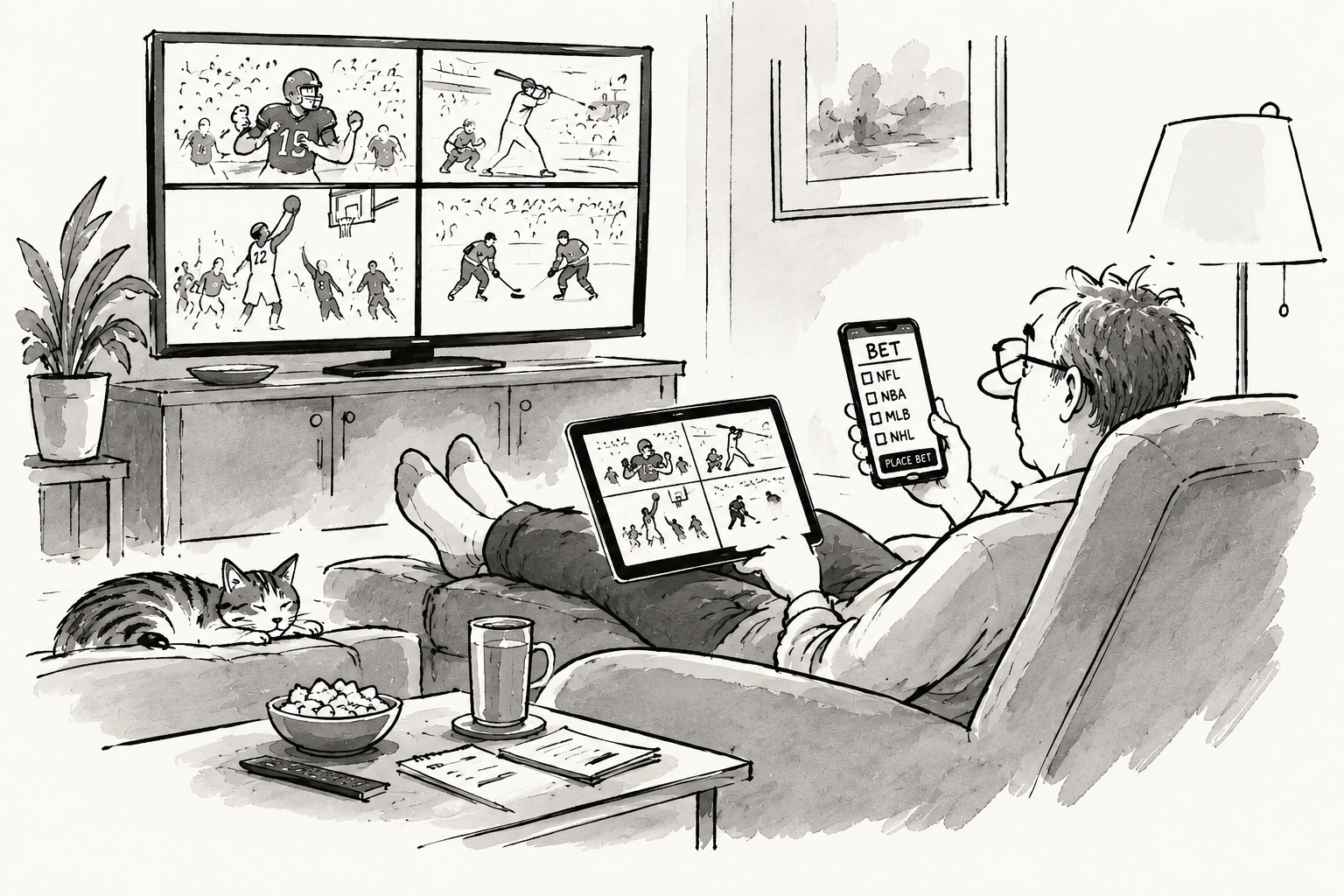
My dad, meanwhile, had money riding on the favorite, Native Dancer. This wasn’t the polished, app-based gambling world we know today. No sleek interfaces or “deposit bonus” nonsense. 

This was Cheyenne, Wyoming, where a guy would stroll into local businesses like he was delivering office supplies, except he was taking bets. Completely illegal but completely trusted.

Dad also dabbled in Irish Sweepstakes tickets, which were as legal as robbing a bank but with better branding. I don’t recall him ever hitting it big, but that never seemed to matter. He was a gambling man in the purest sense, not chasing riches, but the action and the thrill.

Then came the race. On the left is a photo taken on May 2, 1953, of Dark Star in the winner’s circle.

Native Dancer looked like a sure thing. If there’s one thing horse racing stories have, it’s a good plot twist. Dark Star, a longshot with a name that sounds like a rejected Batman villain, surged at the wire and won by a neck.

Just like that, my dad lost his bet, and just like that, I was born into a world where the favorite doesn’t always win.

That’s a fitting origin story.

By the time I turned 19, the legal drinking age at the time, Kentucky Derby Day had officially leapfrogged Christmas as my favorite holiday. Mint juleps replaced the tree and presents.

Back in the day, before gambling went respectable and crossed state lines, I had to work for it. I tracked down off-track betting joints, like the Stampede in Aurora, Colorado,  like a guy following a treasure map. I walked in, placed a bet, grabbed a drink, and for two minutes I was a part of the race action.

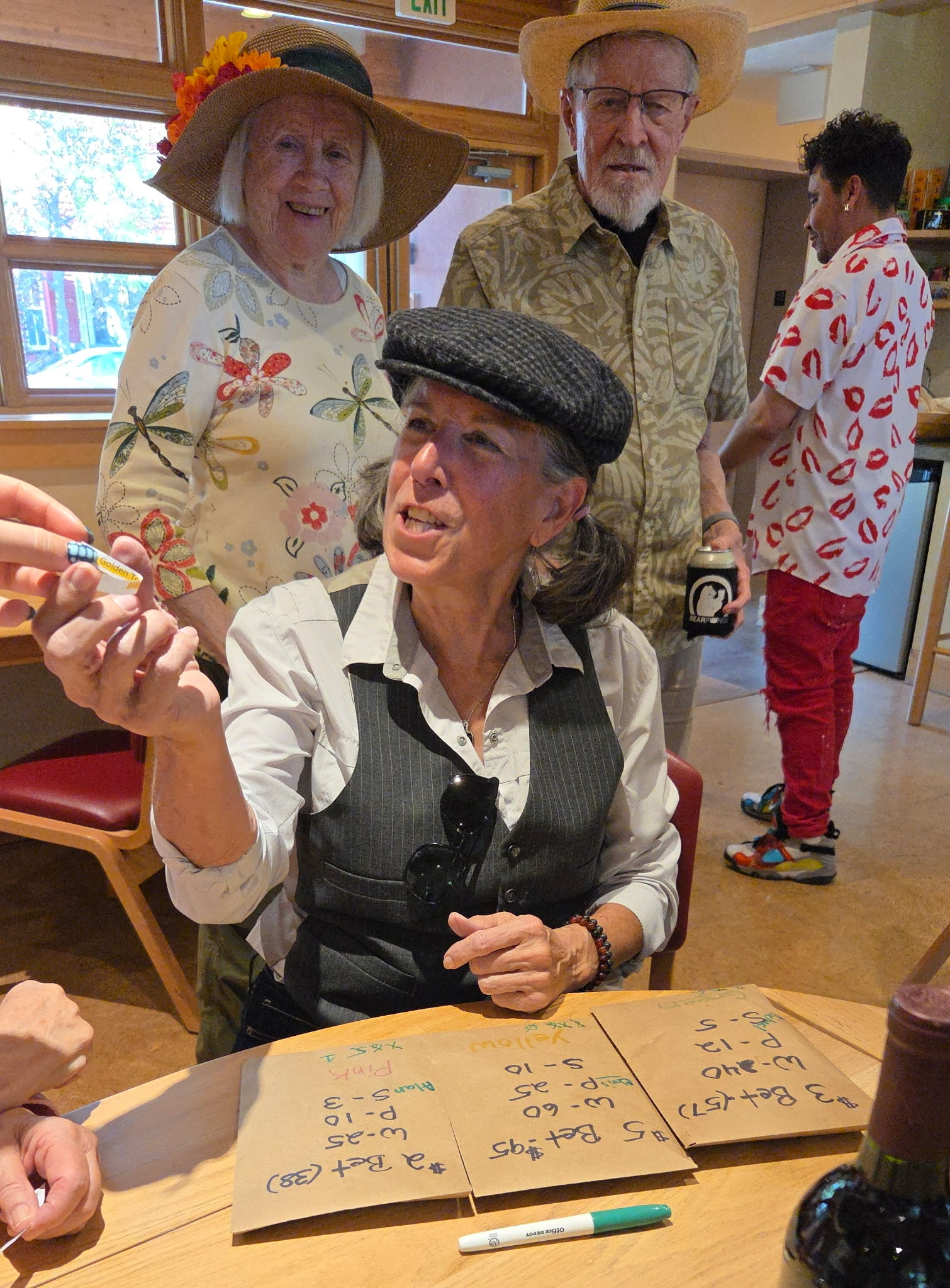
These days, I’ve scaled it back. On my birthday this year, the bookie and my upstairs neighbor, Lindy, organized a casual race pool. This year I drew the 22 horse, Ocialia, that showed and won $3. The ritual hits the same. 73 years later. The call to the post, the crowd, the faint hope that I drew the winning horse.

If my Kentucky Derby birthday taught me anything, it’s that favorites are comforting, and longshots are interesting. Life has a funny way of siding with the Dark Stars of the world.

Elvis, Belly Dancers, F-15s, and the Bolder Boulder

How the 10K road race turned a reluctant walking jogger into an annual participant.

Every Memorial Day, thousands of people from around the world flood the streets of Boulder for an event that’s bigger than a 10K road race. It’s not too late to register. I don’t know if there’s enough space left if all 5,000 of you sign up, but check out more information by clicking on the obligatory Folsom Hill shot.

The Bolder Boulder turns an ordinary Monday morning into a citywide festival where Olympians, walkers, musicians, families, veterans, and people like me all move together toward the same finish line.

I’ve never considered myself a runner.

Back at Carey Junior High, I spent a couple of years on the cross-country team. “Running” might have been too generous a description for what I did.

I survived more than I competed. Between the wheezing and side cramps, I learned, as a 14-year-old, that distance running requires a mindset I didn’t naturally possess.

Regardless, in 2002, I lined up at the Bolder Boulder starting line, soon after 9/11. Here’s a video I shot in 2008 with Elvis. Click on the mugshot from 2025.

I’ve returned every year since then and participated as a walking jogger, a determined and survivor.

I don’t train. The last time I tried to prepare for a race, I twisted my ankle and forfeited my entry fee.

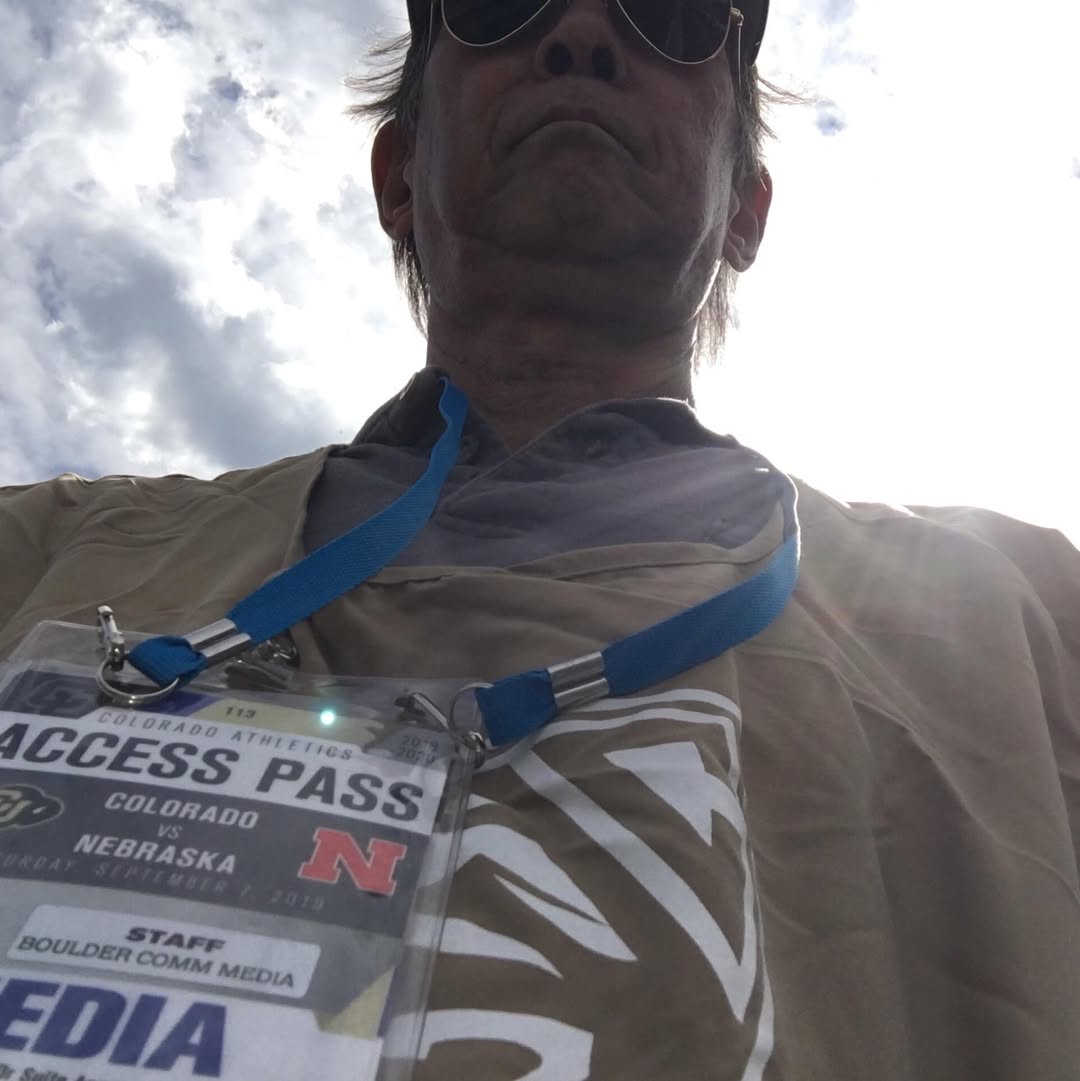
I also carry a media credential, which gives me a different perspective on the event. Instead of focusing only on my own exhaustion, I pay attention to the thousands of stories unfolding around me.

That’s the real race.

Every year, I shoot short video clips along the route and stitch them together into a movie. The Bolder Boulder is a running event from Point A to Point B, combined with a street festival spread across six miles of Boulder neighborhoods. Click on the picture of the Howling Commandos to watch the 2025 non-race highlights.

Recording entertainment is part of my ritual.

The belly dancers on Folsom Hill always draw a crowd. By the time runners reach the top of the incline, many of us need spiritual encouragement.

The music and dancing deliver it.

A little farther along, Elvis appears near the 7-Eleven like a rhinestone-covered guardian angel watching over exhausted runners. You can hear laughter before you even see him.

Then the bagpipes drone before runners enter the stadium. That sound changes everything.

After grinding through the course, hearing those pipes echo in the distance feels cinematic, like a Mel Gibson movie.

The finish is near. The crowd noise swells. Your tired legs suddenly muster up a little extra energy.

Then you enter Folsom Field, where the Buffaloes play football.

Nothing prepares you for that moment the first time you experience it.

Forty thousand cheering fans fill the bleachers. Even if you had walked half the course, even if your knees hurt, even if you questioned your life choices around mile four, entering that stadium makes you feel like an Olympian.

The roar rolls down from the stands and wraps around you. Well-wishers along the rail share “high fives” with the runners passing by.

Everyone’s a champion.

The Bolder Boulder has something for everyone.

World-class elite runners and wheelchair racers from across the globe chase prize money and prestige.

Serious local athletes try to beat personal records. Costumed runners shuffle along in superhero capes. 

Walkers treat the race like a social event. Spectators camp in their front yards, grilling burgers before nine in the morning.

The event belongs equally to the front-of-the-pack Kenyan runner and the guy jogging in a banana costume while carrying a beer.

That’s why I keep coming back.

The race reminds me that participation matters more than perfection.

Memorial Day carries heavy meaning, with F-15s streaking overhead and paratroopers gliding onto the football field carrying flags.

The Bolder Boulder balances remembrance with celebration. It honors sacrifice while celebrating the joy of being alive and moving forward together.

If you’ve ever thought about doing the Bolder Boulder, stop overthinking it. 

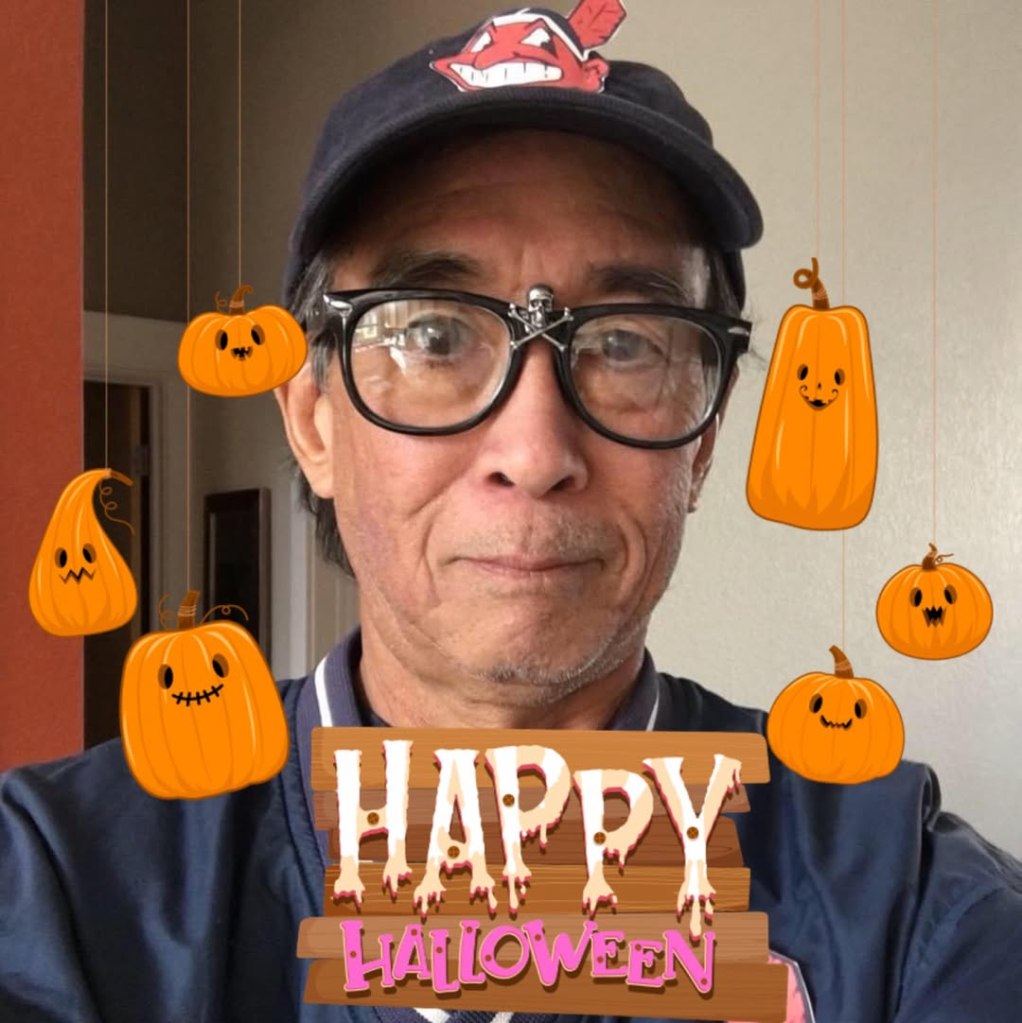
You don’t need to be fast. You don’t even need to run much. You just need to show up. I took my mug shot selfie on the right three months after I got up from my deathbed, after six weeks in the hospital, and managed to make my annual Memorial Day rounds.

If I can finish the Bolder Boulder, half-dead and lugging a camera and an oxygen bottle, you can make it!

The course, the crowds, the music, the spectacle, and that unforgettable entrance into Folsom Field will carry you to the finish.

Confessions of an Accidental Environmentalist

 Turns out reusing microwave popcorn bags now counts as activism.

“Sustainability” is one of those words that started out meaning something specific and useful, then got run through enough marketing departments that it now sounds like a yoga retreat sponsored by a bank.

Back in the 1990s, the term actually had practical roots. I received a grant from the United States Environmental Protection Agency to use the Northern Arapaho Farm as a model for agricultural sustainability. EPA researchers promoted sustainable ag as a way for farmers and ranchers to remain economically viable.

Less fertilizer. Less pesticide. Less diesel. No-till seed drilling. Better water management. The idea was to stop going broke buying chemicals and fuel.

The environmental benefits were incidental. If you used fewer inputs, there was less poisonous and nitrogen runoff into streams and less soil erosion. Farmers got to keep more money. Everybody won.

That made sense to me.

Somewhere along the line, though, “sustainability” became a lifestyle brand.

The word appears on luxury condos, imported bottled water, and pricey organic kale chips shipped across three continents in a refrigerated truck.

Everything’s now “sustainable.”

Meanwhile, I’ve been practicing my own version of sustainability since the 1970s.

I’m not virtuous.

I’m cheap.

I haven’t used a store-bought trash bag since the Carter administration. Why would I? Grocery stores used to hand out perfectly good plastic bags for free.

Now that these bags cost a dime, I’ve adapted.

I now use patient “Personal Belongings” bags. Hospitals send your stuff home in large sturdy plastic sacks with drawstrings. Those things are practically military grade. You could store bowling balls in them. I reuse each one multiple times. Of course, I don’t account for the fact that the hospital probably billed my insurance company $50 for each one.

Every morning, I fill a reusable Keurig cup with coffee. I’m not saving the Earth. I refuse to pay sixty-five cents for a thimbleful of coffee sealed in a tiny plastic chalice engineered by NASA.

Spent Keurig cups aren’t safe from my program. I disassemble them like I’m operating a tiny recycling center in the kitchen.

Plastic and foil in the recycling bin. Coffee grounds in the compost.

By the time I’m done, I’ve spent seven minutes salvaging the components.

Even Moon the cat has become part of the operation.

Cleaning her litter box is now a daily exercise in supply chain management. I save unrecyclable bags from tortilla chips, frozen vegetables, shredded cheese, and microwave popcorn. Commercially available unscented or scented cat poop bags run around fifteen cents each.

The plastic wrap from meat trays gets reused, too. Most people peel that stuff off and throw it away. Not me. I rinse it off and freeze leftovers with it later. Plastic wrap at Safeway costs three bucks for 200 square feet, a penny a square foot. Still, $3 us $3.

My ancestors who lived through the Great Depression are nodding proudly.

Financially, none of this may pencil out, but it feels correct.

That’s why I prefer the word “efficient” over “sustainable.” Efficient means getting the most out of what you have.

I don’t think of myself as “green,” but more as “cheap.”

Somewhere in America, sustainability experts are discussing circular waste streams and post-consumer reuse initiatives.

Being cheap has diverted more stuff from landfills than half the public and private sustainability reports ever printed.