
The Papa Burger and Princess Leia

Sorting through old myths, one cheeseburger at a time.

There’s a Swedish television show where three cheerful Scandinavians arrive at cluttered American homes and gently remind people of an inconvenient truth.

When you die, your relatives will either fight over your stuff, donate it to Goodwill, or haul it to the dumpster.

The Swedes call it “death cleaning.” Americans call it “my garage.”

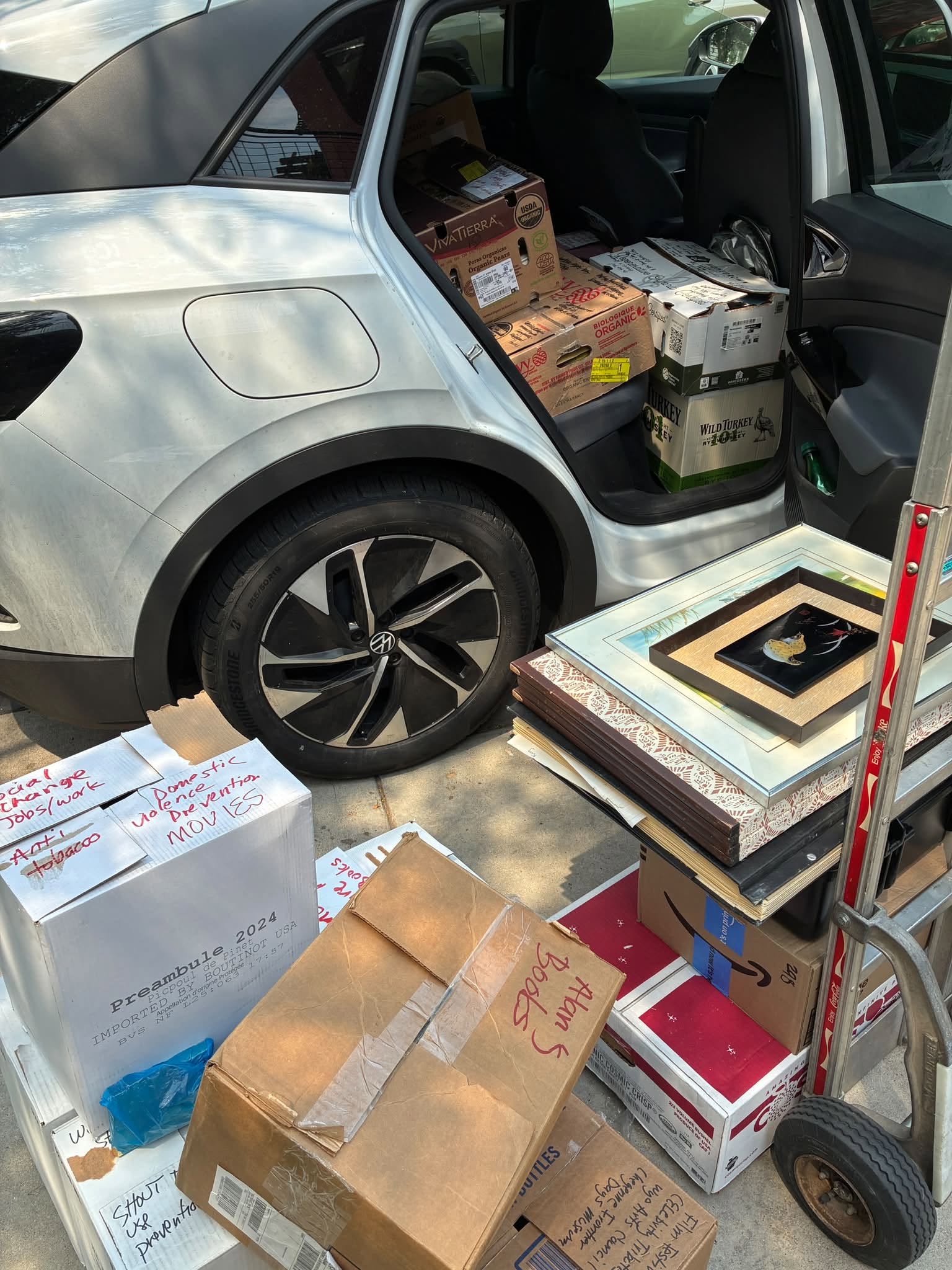
I’ve been doing my own version lately. A few boxes at a time. Not because I’m planning an imminent departure from the planet, but because I’ve reached the age where I open a box and wonder why I thought it was important enough to move across three states.

This week’s excavation uncovered two sets of toys I once used as visual aids during gender-bias trainings when I worked in domestic violence prevention.

Leia and Luke over the years.

I’d pull out old Star Wars figures and Barbie dolls to make the point that popular culture starts socializing children early. Boys become dominant. Girls become decorative. By adulthood, everybody needs therapy.

The original 1977 Princess Leia and Luke Skywalker figures looked like underfed exchange students. Skinny. Plain. Awkward.

Over the years, both evolved into action heroes with toned abs and revealing wardrobes.

Ken especially transformed from suburban boyfriend into a plastic MMA fighter. Barbie’s proportions stayed pretty much the same, emphasizing that thin is better than otherwise.

Ken has bulked up over the years.

The toys worked well in trainings because every participant understood the point. You could physically see cultural expectations hardening in molded plastic.

Eventually, my teaching props became clutter.

So I sold the Star Wars collection to a collector in Berthoud. After an acupuncture appointment in Longmont, I drove over to make the delivery. One more box removed from the archive of my former lives.

Of course, no trip to Berthoud is complete without stopping at the A&W Restaurant.

The drive-in feels like a surviving artifact from “American Graffiti.” I pulled in, pushed a button and ordered through a two-way speaker, The curbhop brought out a tray that hooked onto the partially rolled-down car window.

Baby Boomers somehow managed to eat entire meals in their cars without permanently staining the upholstery, although now that I think about it, my old Ford Falcon may have always smelled faintly of french fries.

I ordered the Double Papa Burger combo: fries and a large root beer float, another stop on my ongoing cheeseburger field research project.

Double Papa Burger Combo

The Papa Burger today is wetter than I remember. Not worse. Just overcommitted to condiments.

The burger arrived dripping special sauce and sliced tomato fluid. I inhaled the monster with no evidence of chewing, which may explain indulgent health trends.

Compared to the other burgers I’ve sampled over the past few months, the Papa Burger holds up well.

There’s no brioche bun or truffle aioli. It’s a big, messy American cheeseburger served at a drive-in where you’re expected to eat like napkins are optional.

The afternoon felt connected in a strange way.

I sold toys that represented old ideas about masculinity and femininity. Then I celebrated by eating a burger large enough to challenge modern cardiology.

America remains a land of contradictions.

The trip would have been perfect if the kids meal had come with a Mandalorian toy.

Of course, that’s the domain of Burger King.

Swedish Death Cleaning for Pack Rats

Have you heard about Swedish Death Cleaning?

Where sentimental value meets Facebook Marketplace.

There’s a television show called the “Gentle Art of Swedish Death Cleaning” where three cheerful Swedes descend upon cluttered American homes like minimalist Viking spirits.

They smile politely while staring at your collection of commemorative beer steins and ask questions that cut straight to the soul.

“Will anyone want this after you die?”

“Why do you own 17 extension cords?”

The premise is simple and terrifying. Swedish death cleaning (döstädning) is the practice of gradually getting rid of your stuff before someone else has to do it for you.

I don’t want my grieving friends and relatives to stand in my garage holding a box labeled “miscellaneous cables” and wonder if I was building a radio station or hiding evidence.

I’ve been Swedish death cleaning for years without realizing it had a name. I thought I was slowly becoming the old guy muttering, “Why do I still own this?”

The Marshall Fire accelerated the process for me. Watching entire neighborhoods go up in a puff of smoke changed my relationship with possessions in a hurry.

I started thinning out decades of sports memorabilia, political collectibles, souvenirs, and enough paper ephemera to start my own presidential library or baseball museum.

At first, it was hard.

I had convinced myself that every object contained meaning. I took pictures of everything significant. I got rid of the item and kept the memory.

“This ticket stub is history.”

“This bumper sticker might be valuable someday.”

“This faded Rockies pennant represents an era.”

If I wanted a replacement, I could buy another.

Eventually, I realized my heirs are not going to lovingly curate my life’s treasures. They’re going to rent a dumpster.

Now I’m down to the nuisance phase of death cleaning. The weird objects. The things that survive every purge because they’re too sentimental to toss.

Which brings me to the Sony micro television.

This tiny set came from my grandmother’s estate over forty years ago. She had hauled it all the way from Japan sometime in the 1960s, back when electronics from Japan felt futuristic and exotic.

The little monitor looked like something NASA might issue astronauts to watch Walter Cronkite on the moon.

I’ve carried that little TV through apartments, condos, moves, closets, shelves, storage bins, and several rounds of “I really should get rid of this.” It became less of a possession and more of a hostage situation.

The TV held me hostage.

I dug out the box and posted it on Facebook Marketplace.

Immediately, two kinds of people appeared.

The first guy messaged me within minutes.

“I can come right now.”

That’s slightly alarming. Nobody has ever urgently needed anything good from Facebook Marketplace. Usually, it’s either haunted, illegal, or both.

Then another user chimed in helpfully to explain that old electronics are worthless.

Thank you, internet stranger. That was comforting.

But the first guy arrived today, and it turns out he’s part of a group called the Colorado CRT Connection. These people rescue old cathode ray tube televisions and monitors.

They restore them, tinker with them, keep retro gaming systems alive, and host meetups that benefit the Children’s Hospital.

Who knew there was an underground network of people lovingly preserving obsolete television technology?

This guy looked at my grandmother’s tiny Sony TV the way an art dealer might inspect a lost Picasso.

“The guys are going to be so jealous.” He knew exactly what he bought.

He appreciated its history.

He was genuinely excited.

This object I’d been schlepping around for decades wasn’t junk anymore. It had found its next chapter.

That’s the beauty of Swedish death cleaning. It’s about getting rid of things and releasing them back into the wild while they still mean something to somebody.

All our treasures eventually become mysteries to the next generation.

“Why did Grandpa keep this?”

“What is this thing?”

“Can we throw this away?”

Every once in a while, the right person shows up. The object finds its tribe again.

My grandmother is smiling that her quirky little television, carried across the Pacific Ocean 60 years ago, is still sparking curiosity instead of gathering dust in my basement.

I still have a box of cables I’ll take to Goodwill soon, 2028 at the latest.

What would the Swedes think?

Reflections on Lent: A Journey Through Texas

It’s the middle of Lent. Lent is a 40-day, solemn Christian season of fasting, prayer, and repentance that begins on Ash Wednesday and ends before Easter. It honors Jesus’s 40 days in the wilderness. Common practices include giving up luxuries. I grew up as a Presbyterian and knew about Lent, but didn’t practice the rituals.

These days, I still don’t practice Lent, except to give a couple of hours each morning and respond to Lenten writing prompts. I recently returned from a long drive through the Longhorn State and didn’t forego eating beef.

Jeremiah writes that those who trust in flesh are like shrubs in the desert, unable to see relief when it comes.

Desert language is appropriate for Lent.

What gives me relief is a change of scenery.

A few hundred miles between my real world in Boulder and wherever I happen to be, life continues in Colorado without me. The inbox fills. The deadlines creep closer.

When I leave town, I get to step into someone else’s ordinary life.

I’m in Texas on my way to Galveston to shoot footage for a documentary. The first night, Amarillo was a seven-hour drive. I had to stop at the Big Texan Steak Ranch, which also has a motel where I stayed, and is also home to the 72-ounce steak challenge. Finish it in an hour, and it’s free. Fail, and you pay $72.

I didn’t attempt it. The steak would have eaten me.

Instead, I listened to five men and a woman next to me, who talked in thick drawls about their trade show. Diners are seated family style at long tables. I asked the server how many challengers down the steak with all the fixings. Oddly, she didn’t know. Curious, I found out 100,000 determined eaters try, and 10,000 get a free steak.

The next morning and seven hours later, I pulled into Fredericksburg, with its German storefronts and tidy sidewalks. There were vineyards around the area, and I ended up at the Wine Country Inn. No wine tasting, though. I like to watch the local TV news. The lead story was the Senate “Democrat” primary. Mild-mannered James Talarico defeated sound-bite firebrand, Jasmine Crockett. Meanwhile, Senator John Cornyn eked out a plurality over ultra-right challenger Ken Paxton.

Same country as Colorado. Different political weather systems. Speaking of weather systems, it’s rained nonstop since I’ve been in Texas, compared to Boulder’s drought. I’m on the Watch Duty app that sends me notices about natural disasters and notified me about a fire near Heil Ranch, a few miles north of Boulder.

Last night I ate hockbraten at Altdorf Biergarten, bacon-wrapped meatloaf smothered under mushroom gravy. My server was from Germany, with an accent thick enough to make me feel like I was in Frankfurt. I’m not a devotee of German food, but it was pretty good, very earthy.

This morning, I’ll be back on the highway, dodging flatbeds carrying wind turbine blades, wide oil field equipment parts, and enormous John Deere discs creeping down the road with occasional passing lanes.

I’ve been catching up on my audiobooks. I listened to “First Frost” by Craig Johnson, which has a Japanese incarceration camp as a backdrop. Now I’m listening to one called “White Trash” about the origins of the white and gender class systems in America that dates back to indentured servitude in England in the 16th and 17th centuries.

Travel slows down my life. Audiobooks fill the void I would otherwise fill with thoughts about whatever might be happening back home.

When Jeremiah warns about trusting in flesh, I wonder whether my leaving town is a pilgrimage or an anesthetic escape with different scenery?

Distance reminds me that the world is larger than my preoccupations. It places me inside other people’s lives and places.

No matter how many miles I add between Boulder and Galveston, I still bring myself along for the ride.

No matter where I go, there I am.

On Saturday, I turn around and head back to Boulder.

This time I’m taking a different route home.

Maybe that’s the point. Lent asks for reorientation. The inbox will be filled with the usual Spams and Scams. I still have to finish a grant application, but I will have arrived changed. How that looks, I don’t know yet.

Time does slow down. That extra space gives me a place to learn how to return.