Swedish Death Cleaning for Pack Rats

Have you heard about Swedish Death Cleaning?
Where sentimental value meets Facebook Marketplace.

There’s a television show called the “Gentle Art of Swedish Death Cleaning” where three cheerful Swedes descend upon cluttered American homes like minimalist Viking spirits.

They smile politely while staring at your collection of commemorative beer steins and ask questions that cut straight to the soul.

“Will anyone want this after you die?”

“Why do you own 17 extension cords?”

The premise is simple and terrifying. Swedish death cleaning (döstädning) is the practice of gradually getting rid of your stuff before someone else has to do it for you.

I don’t want my grieving friends and relatives to stand in my garage holding a box labeled “miscellaneous cables” and wonder if I was building a radio station or hiding evidence.

I’ve been Swedish death cleaning for years without realizing it had a name. I thought I was slowly becoming the old guy muttering, “Why do I still own this?”

The Marshall Fire accelerated the process for me. Watching entire neighborhoods go up in a puff of smoke changed my relationship with possessions in a hurry.

I started thinning out decades of sports memorabilia, political collectibles, souvenirs, and enough paper ephemera to start my own presidential library or baseball museum.

At first, it was hard.

I had convinced myself that every object contained meaning. I took pictures of everything significant. I got rid of the item and kept the memory.

“This ticket stub is history.”

“This bumper sticker might be valuable someday.”

“This faded Rockies pennant represents an era.”

If I wanted a replacement, I could buy another.

Eventually, I realized my heirs are not going to lovingly curate my life’s treasures. They’re going to rent a dumpster.

Now I’m down to the nuisance phase of death cleaning. The weird objects. The things that survive every purge because they’re too sentimental to toss.

Which brings me to the Sony micro television.

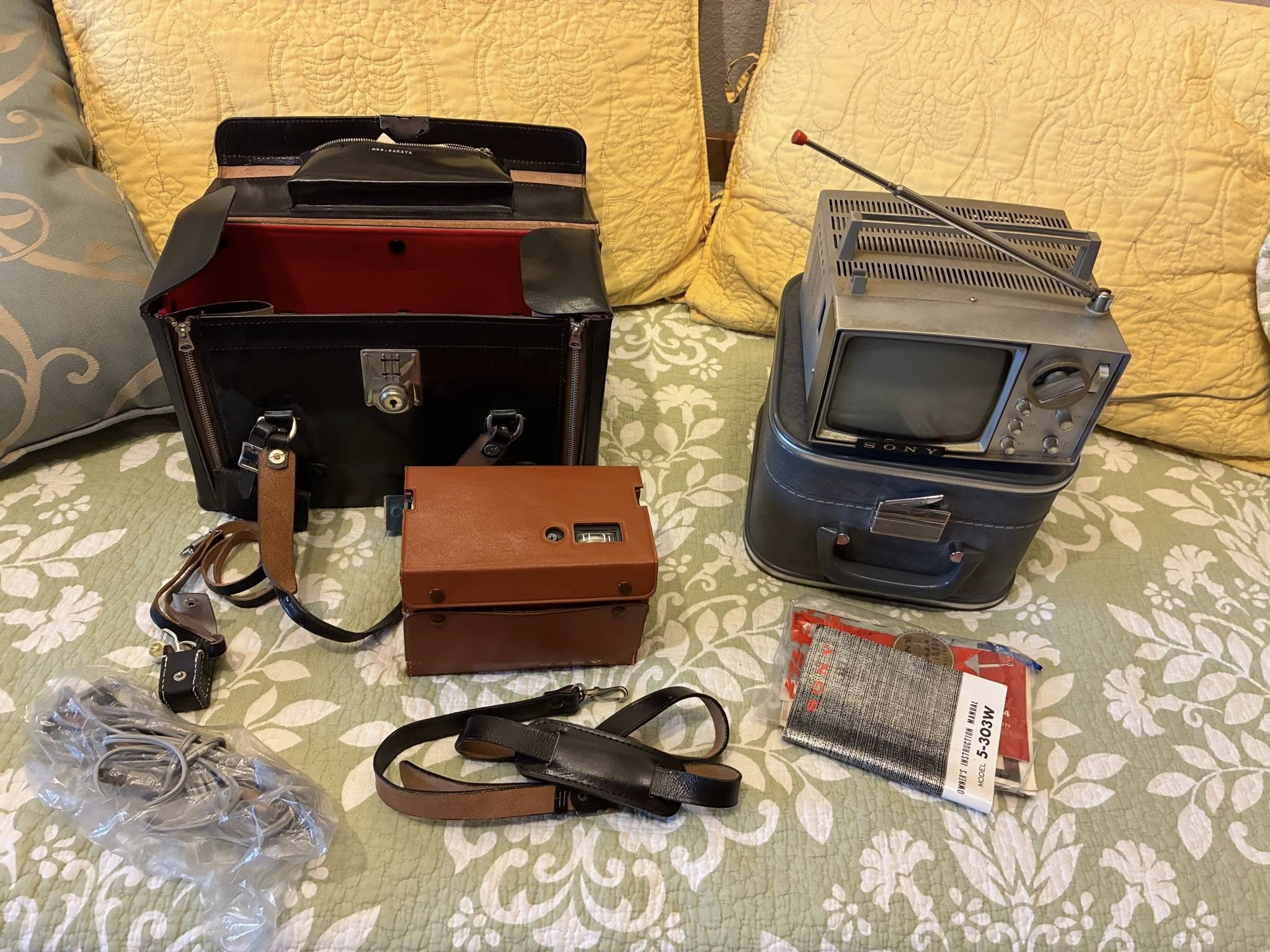
This tiny set came from my grandmother’s estate over forty years ago. She had hauled it all the way from Japan sometime in the 1960s, back when electronics from Japan felt futuristic and exotic.

The little monitor looked like something NASA might issue astronauts to watch Walter Cronkite on the moon.

I’ve carried that little TV through apartments, condos, moves, closets, shelves, storage bins, and several rounds of “I really should get rid of this.” It became less of a possession and more of a hostage situation.

The TV held me hostage.

I dug out the box and posted it on Facebook Marketplace.

Immediately, two kinds of people appeared.

The first guy messaged me within minutes.

“I can come right now.”

That’s slightly alarming. Nobody has ever urgently needed anything good from Facebook Marketplace. Usually, it’s either haunted, illegal, or both.

Then another user chimed in helpfully to explain that old electronics are worthless.

Thank you, internet stranger. That was comforting.

But the first guy arrived today, and it turns out he’s part of a group called the Colorado CRT Connection. These people rescue old cathode ray tube televisions and monitors.

They restore them, tinker with them, keep retro gaming systems alive, and host meetups that benefit the Children’s Hospital.

Who knew there was an underground network of people lovingly preserving obsolete television technology?

This guy looked at my grandmother’s tiny Sony TV the way an art dealer might inspect a lost Picasso.

“The guys are going to be so jealous.” He knew exactly what he bought.

He appreciated its history.

He was genuinely excited.

This object I’d been schlepping around for decades wasn’t junk anymore. It had found its next chapter.

That’s the beauty of Swedish death cleaning. It’s about getting rid of things and releasing them back into the wild while they still mean something to somebody.

All our treasures eventually become mysteries to the next generation.

“Why did Grandpa keep this?”

“What is this thing?”

“Can we throw this away?”

Every once in a while, the right person shows up. The object finds its tribe again.

My grandmother is smiling that her quirky little television, carried across the Pacific Ocean 60 years ago, is still sparking curiosity instead of gathering dust in my basement.

I still have a box of cables I’ll take to Goodwill soon, 2028 at the latest.

What would the Swedes think?
Hoarding comfort food – NO; Hoarding baseball cards – YES

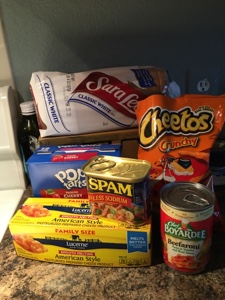
I went to the store and picked up some of my favorite comfort foods.

I’m a hoarder from way back. Anyone who collects stuff is a hoarder, but just more organized about it. Baseball cards, political campaign buttons, but certainly not food, even during times of crisis like the current COVID-19 sequestration.

Eat, drink, and be merry, for tomorrow we die. Maybe we should enjoy life as much as possible, because it will be over soon. This saying is based on verses from the biblical books of Ecclesiastes and Isaiah.

I imagine this is one reason why some people are in a panic and are hoarding toilet paper and Lysol – as a side note, I just ordered clorox pellets on Amazon for those of you who are into making DIY disinfectant.

I went to the food store yesterday, mostly to just look around and inventory what wasn’t there. I’m not really a very creative shopper and tend to buy the same things, plus, the random emergency food I have in the pantry isn’t exactly what you’d think a Boulder person would buy, as such, I haven’t been in a panic when I go to the store these days.

At Safeway, there haven’t been any lines. My next door neighbor said there are lines at Whole Foods. My upstairs neighbor said there were long lines at Costco.

My anecdotal cultural guess based only on stereotypes of Boulderites? Whole Food shoppers only buy for the day or the next day, and aren’t in the habit of buying processed foods. The last time I was in the big Whole Foods was a few years ago when an exchange student studying sustainable agriculture in Costa Rica wanted a “tour” so I showed him around. The last time I was in Costco I had to buy a six pack of Colgate shaving lather. I think I still have a few cans left.

I tend not to use a grocery cart, either.  When I do, it gets filled up with stuff I didn’t really need. Generally, I shop with a bag, plus, I don’t worry about contracting an infectious disease from the cart handle.

These days, the shelves are picked over pretty well, but the extra emergency items I like to keep in the pantry don’t seem to be in short supply.

I picked up a pack of cherry Pop Tarts. I heard that when there’s a hurricane, Pop Tarts are the first to go when people are holing up. Not last night in Boulder – all the Pop Tarts I wanted were there staring at me from the shelf. Originally, they were plain and unfrosted and scored to eat them on the diagonal when broken in half. I didn’t know that the packaging technology was originally used to wrap up the moist dog food Gainsburgers.

churros

Churros are deep fried snacks from Mexico made from corn meal/flour.

As for Cheetos, I didn’t become a fan until I tried the crunchy ones. My grandparents were fans of the puffed Cheetos, but I didn’t care for them. I lived off and on in Mexico for six years in the 1990s and learned about churros that are made out of corn flour and deep fried. I always thought that cheetos were cultural misappropriation of churros.

Then there’s Velveeta processed American cheese. Lucerne, the grocery store brand, is three dollars cheaper, so I opted for that. Since I was a kid, I’ve always liked Velveeta grilled cheese sandwiches on white bread dunkable in any Campbell’s Soup, but tomato is preferable.

That’s also a throwback to my Hastings College days. The food service called SAGA (A GAS spelled backward) served chili or tomato soup and grilled cheese sandwiches, but I can’t remember which, but maybe Saturday lunch.

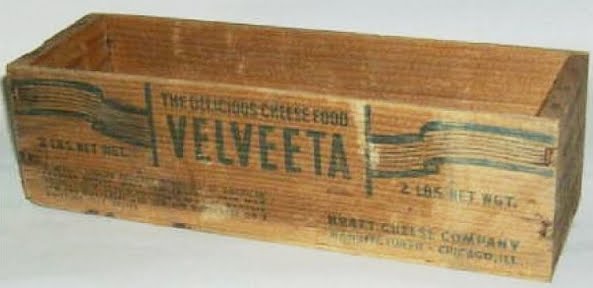
Velveeta Box

Velveeta was sold in wooden boxes. I imagine you took it back for refills.

I don’t know the manufacturing process, but Velveeta is kept at room temperature until it is opened. Velveeta was invented in 1918 and later sold to Kraft Foods in 1927. It was the first cheese product to obtain the American Medical Association seal of approval in the 1930s.

Despite it looking like cheese, the FDA classified it as quasi-cheese, “cheese spread” because it’s made with milk. In 2002, Velveeta was classified as “cheese product” because it didn’t have any actual cheese.

Nonetheless, there’s as much “cheese product” on the shelves as you’d care to buy.

kramer beeferino

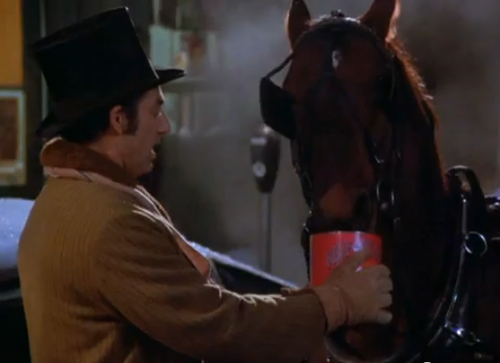
Kramer feeding his horse Rusty Beeferino.

Another one of my comfort food staples is Beefaroni. The Chef BoyArDee canned version of macaroni spaghetti came on the market in the mid-1960s, “Hooray, for Beeferoni!” was the TV ad pitch phrase. A chef in New York City named Hector Boiardi founded the company because there was high demand for his marinara sauce that he sold in milk bottles.

You may recall a Seinfeld episode when Kramer is driving a Central Park horse and carriage, then feeds the steed a big can of Beeferino with unsettling results. Last night, there wasn’t one can of Beeferoni, regular or mini ravioli. My thought, frantic shoppers grabbed anything with no intention of actually eating it. The beeferoni will end up in the next food drive basket.

fb spam sushi

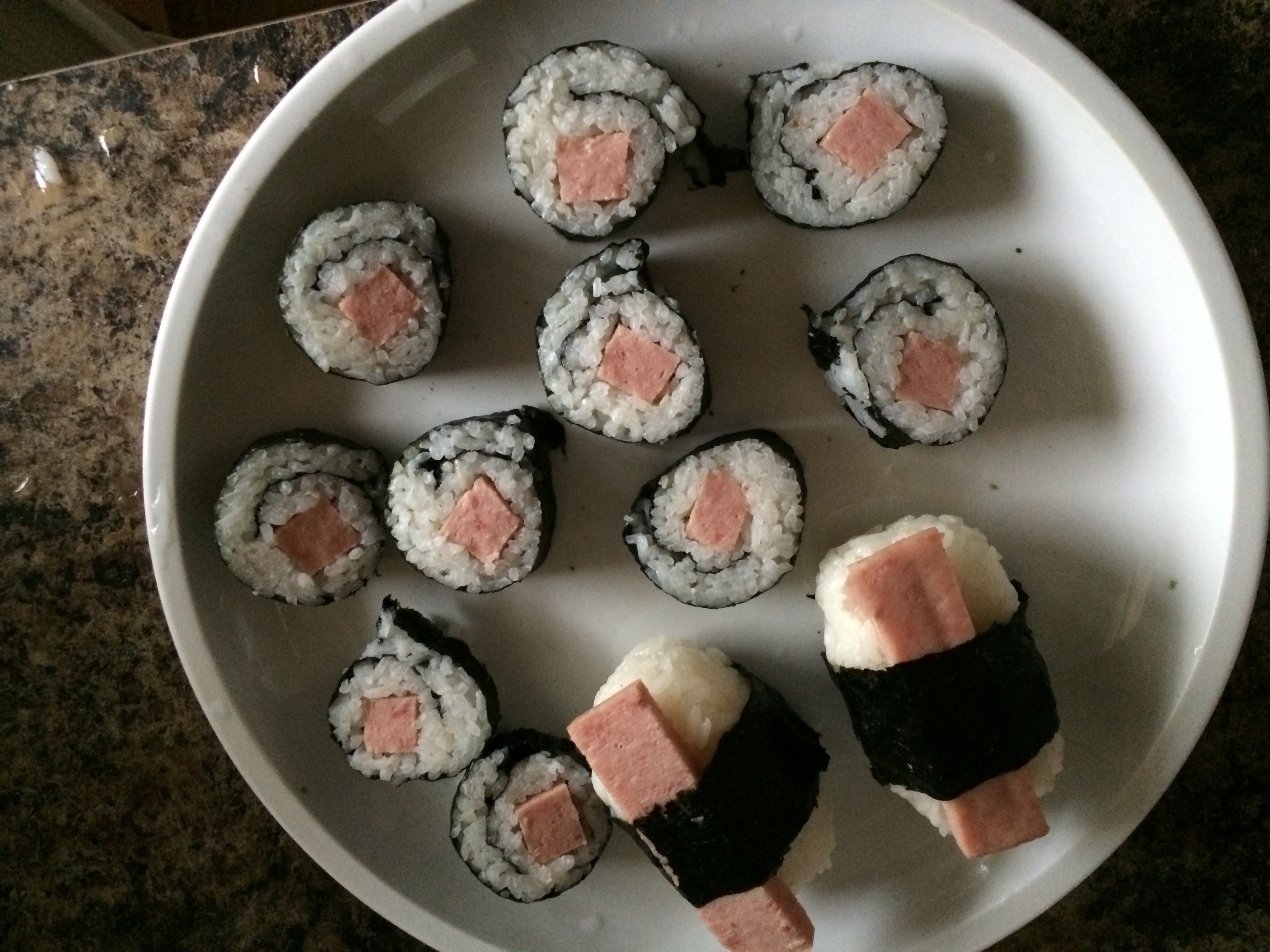
SPAM sushi

The same holds true for SPAM, I’d be surprised if anyone in Boulder bought that reconstituted pork product other than out of desperation. It was always a staple around the house when I was young, SPAM was a hold-over from World War II in Hawaii.

My dad liked SPAM and eggs. The Village Cafe on Folsom and Arapahoe in Boulder offers SPAM as a meat option, as does the 20th Street Cafe in LoDo Denver. That place is owned by a Sansei Japanese and his family. I got this can out to make some SPAM sushi.

mantle sig decalI still don’t know what to make of this coronavirus thing. I’m thinking people are hoarding food and dry goods thinking, “Well, if it’s nothing, at least I have a stockpile of toilet paper and lysol to last me until the 22nd century.” The talking heads and politicians make no mention of the 2009 swine flu pandemic that infected a billion people and killed 500,000 around the world. That all happened a year after the international financial system crashed.

I’m pretty sure that it being an election year, adds to the panic with an incumbent president trying to make hay; cable tv channels wanting to up their ratings and riding the coronavirus pandemic and election waves.

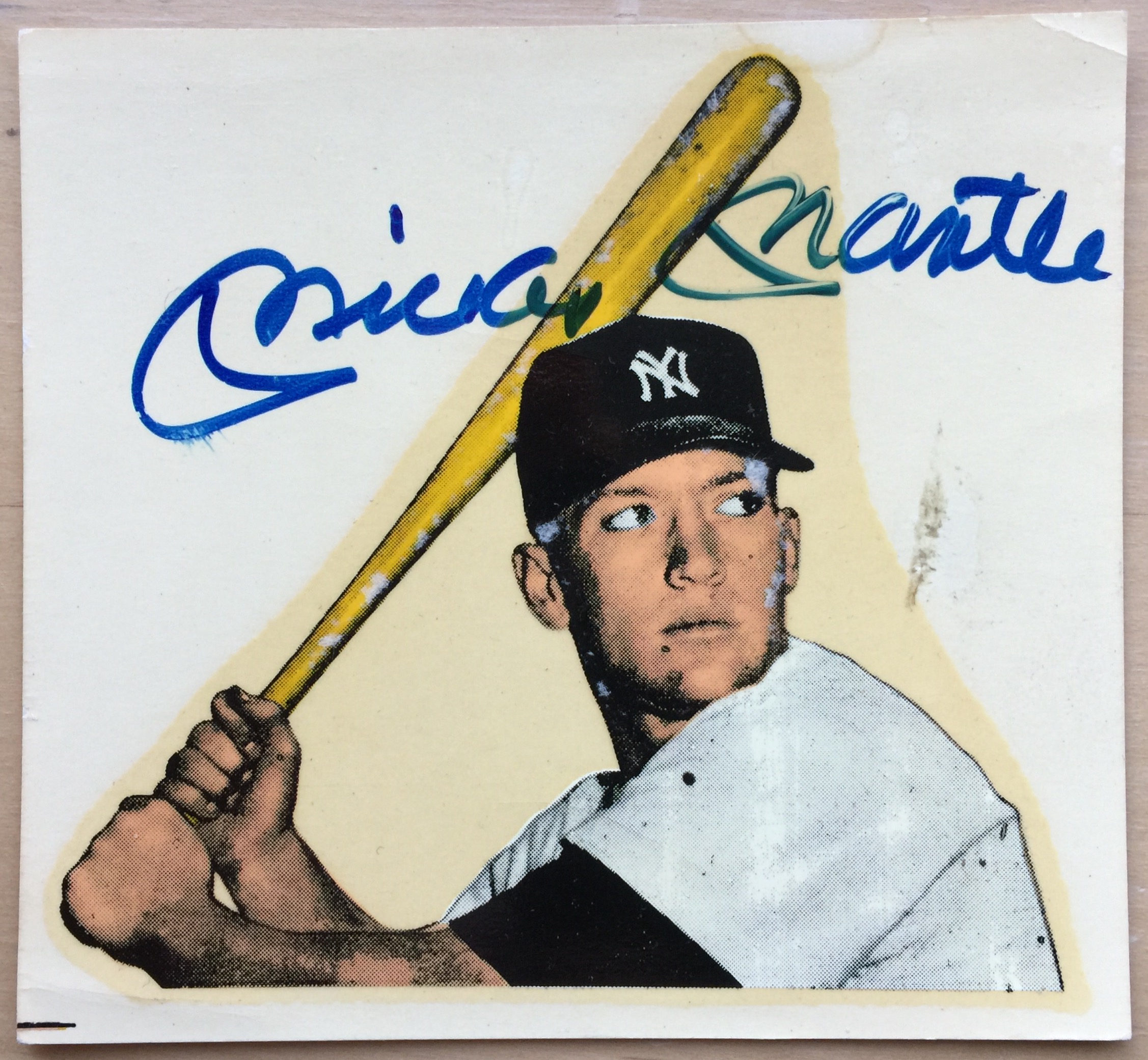
Maybe I should dump some of my baseball cards. I doubt Safeway will accept my signed Mickey Mantle card in exchange for a case of Cheetos, at least in the near future.