Before Dismissing Democratic Socialism, Ask Why It’s Growing

Every time the phrase “democratic socialism” pops up in a political discussion, someone inevitably reacts as if a Soviet submarine has surfaced in the neighborhood swimming pool.

For many Americans, especially those who grew up during the Cold War, the word “socialism” comes with a lot of baggage. It evokes memories of school drills, the Iron Curtain, and endless warnings about communism. To some, the term sounds less like a political philosophy and more like a 1962 emergency broadcast.

Before dismissing democratic socialism outright, it might be worth asking a simple question:

Why is it growing?

The answer has less to do with Karl Marx and more to do with rent.

Younger voters aren’t advocating for government ownership of everything. Most aren’t spending their weekends debating nineteenth-century economic theory. They’re looking at housing costs, healthcare bills, student debt, stagnant wages, and wondering why the American Dream require a six-figure salary and three side hustles.

For them, democratic socialism serves as shorthand for a belief that the economy should work for more people, not just those at the very top.

Whether that diagnosis is correct is a matter for debate, but the concerns themselves are real.

The conversation becomes more interesting when demographics enter the picture.

Every day, roughly 10,000 Americans turn 18 and become eligible to vote. Every day, roughly 10,000 Americans also turn 65 and enter retirement age. One generation is stepping onto the political stage while another gradually exits it. That’s not a criticism of older voters. It’s how time flies. Elections are always a contest among the past, the present, and the future.

Political parties ignore these demographic shifts at their peril.

The emerging electorate is more diverse than any generation before it. Demographers project that by around 2045, the United States will become a “majority-minority” nation, meaning no single racial or ethnic group will constitute a majority of the population.

Whether that development excites or worries people, it represents a profound demographic change that will influence politics, culture, and public policy for decades.

In that context, the question are why young voters are embracing new ideas and why anyone would expect them not to.

After all, every generation rebels against the assumptions of the previous one.

The Baby Boomers challenged the norms of the 1950s. Generation X questioned institutions. Millennials entered adulthood during economic turmoil. Generation Z inherited housing prices that make Monopoly look affordable.

Given those circumstances, it shouldn’t be surprising that younger voters are exploring alternatives and asking questions about wealth, opportunity, and economic fairness.

Critics of democratic socialism argue that expanding government programs increases taxes, create inefficiencies, and weaken economic incentives. Supporters argue that today’s economy has produced a widening gap between those who have accumulated extraordinary wealth and those struggling to keep up with the cost of living.

Both sides make points worth discussing.

What gets lost in the shouting match is that many of the policies associated with democratic socialism already exist in America. Social Security, Medicare, public education, unemployment insurance, rural electrification, and public libraries were all controversial at one time.

I remember a political cartoon from the 1950s of a Russian truck dumping wheat in the ocean to prop up prices. The U.S. government subsidizes ag businesses the same way.

Today, most Americans view them as normal parts of civic life.

This doesn’t mean democratic socialism is right. It doesn’t mean capitalism is wrong.

It means the debate is more complicated than the labels.

For older Americans, “socialism”still conjures images of Cold War adversaries like Joseph Stalin’s work camps . For younger Americans, the term means affordable healthcare, attainable housing, stronger worker protections, and a chance to build a stable life.

The disconnect is less about ideology and more about vocabulary.

Before dismissing democratic socialism as a relic from another era or embracing it as the answer to every problem it’s worth listening to what its supporters say.

Political movements rarely grow by accident.

They grow when enough people feel that something isn’t working.

The label isn’t the story.

The story is why a growing number of Americans, especially younger Americans, believe the current system needs repair.

If that many future voters are asking the question, both political parties might want to pay closer attention because if something keeps surfacing in the political pool, it may be less useful to shout “submarine” and more useful to ask what’s driving it to the surface in the first place.

The Papa Burger and Princess Leia

Sorting through old myths, one cheeseburger at a time.

There’s a Swedish television show where three cheerful Scandinavians arrive at cluttered American homes and gently remind people of an inconvenient truth.

When you die, your relatives will either fight over your stuff, donate it to Goodwill, or haul it to the dumpster.

The Swedes call it “death cleaning.” Americans call it “my garage.”

I’ve been doing my own version lately. A few boxes at a time. Not because I’m planning an imminent departure from the planet, but because I’ve reached the age where I open a box and wonder why I thought it was important enough to move across three states.

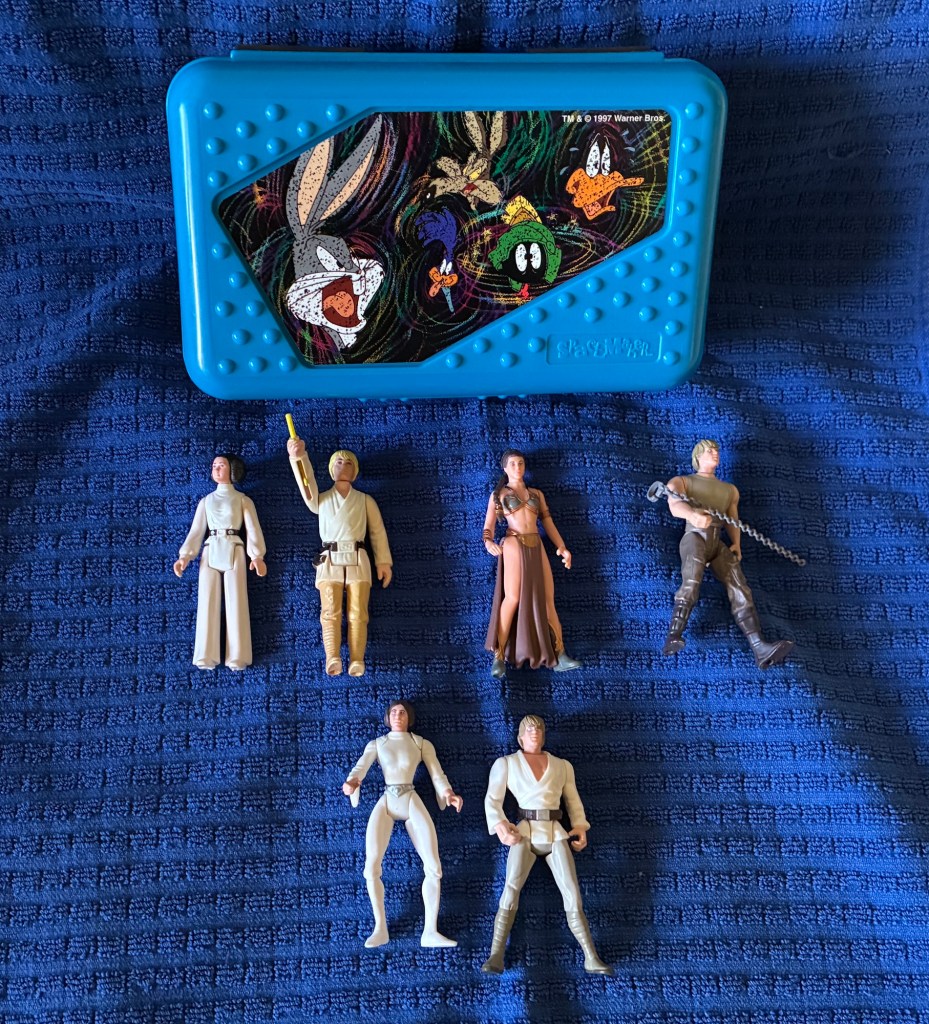
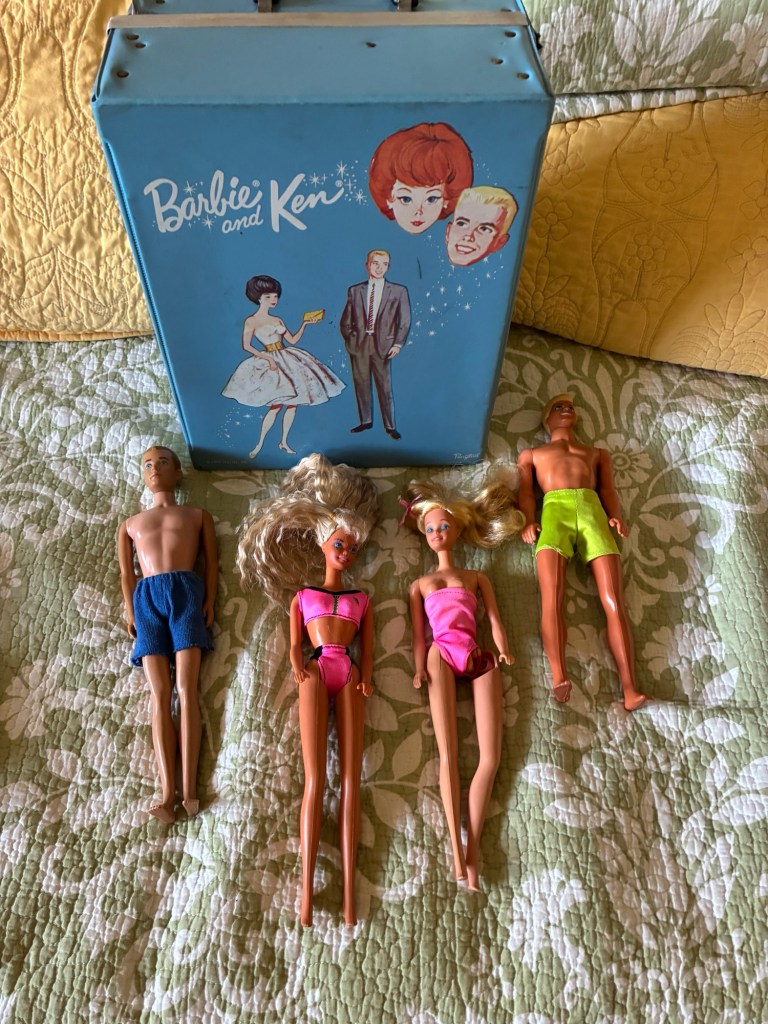
This week’s excavation uncovered two sets of toys I once used as visual aids during gender-bias trainings when I worked in domestic violence prevention.

Leia and Luke over the years.

I’d pull out old Star Wars figures and Barbie dolls to make the point that popular culture starts socializing children early. Boys become dominant. Girls become decorative. By adulthood, everybody needs therapy.

The original 1977 Princess Leia and Luke Skywalker figures looked like underfed exchange students. Skinny. Plain. Awkward.

Over the years, both evolved into action heroes with toned abs and revealing wardrobes.

Ken especially transformed from suburban boyfriend into a plastic MMA fighter. Barbie’s proportions stayed pretty much the same, emphasizing that thin is better than otherwise.

Ken has bulked up over the years.

The toys worked well in trainings because every participant understood the point. You could physically see cultural expectations hardening in molded plastic.

Eventually, my teaching props became clutter.

So I sold the Star Wars collection to a collector in Berthoud. After an acupuncture appointment in Longmont, I drove over to make the delivery. One more box removed from the archive of my former lives.

Of course, no trip to Berthoud is complete without stopping at the A&W Restaurant.

The drive-in feels like a surviving artifact from “American Graffiti.” I pulled in, pushed a button and ordered through a two-way speaker, The curbhop brought out a tray that hooked onto the partially rolled-down car window.

Baby Boomers somehow managed to eat entire meals in their cars without permanently staining the upholstery, although now that I think about it, my old Ford Falcon may have always smelled faintly of french fries.

I ordered the Double Papa Burger combo: fries and a large root beer float, another stop on my ongoing cheeseburger field research project.

Double Papa Burger Combo

The Papa Burger today is wetter than I remember. Not worse. Just overcommitted to condiments.

The burger arrived dripping special sauce and sliced tomato fluid. I inhaled the monster with no evidence of chewing, which may explain indulgent health trends.

Compared to the other burgers I’ve sampled over the past few months, the Papa Burger holds up well.

There’s no brioche bun or truffle aioli. It’s a big, messy American cheeseburger served at a drive-in where you’re expected to eat like napkins are optional.

The afternoon felt connected in a strange way.

I sold toys that represented old ideas about masculinity and femininity. Then I celebrated by eating a burger large enough to challenge modern cardiology.

America remains a land of contradictions.

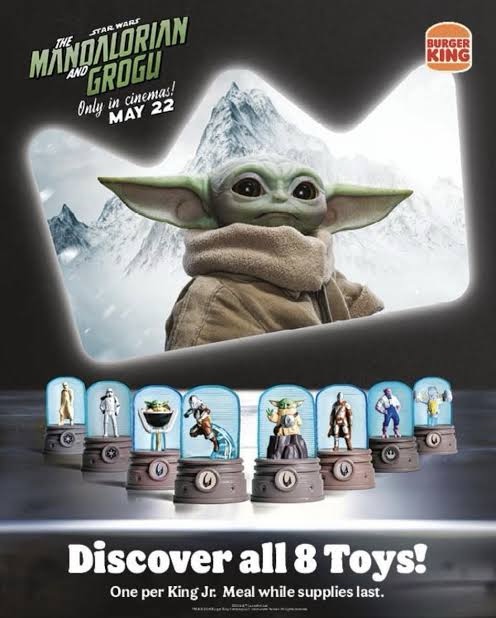
The trip would have been perfect if the kids meal had come with a Mandalorian toy.

Of course, that’s the domain of Burger King.

Swedish Death Cleaning for Pack Rats

Have you heard about Swedish Death Cleaning?

Where sentimental value meets Facebook Marketplace.

There’s a television show called the “Gentle Art of Swedish Death Cleaning” where three cheerful Swedes descend upon cluttered American homes like minimalist Viking spirits.

They smile politely while staring at your collection of commemorative beer steins and ask questions that cut straight to the soul.

“Will anyone want this after you die?”

“Why do you own 17 extension cords?”

The premise is simple and terrifying. Swedish death cleaning (döstädning) is the practice of gradually getting rid of your stuff before someone else has to do it for you.

I don’t want my grieving friends and relatives to stand in my garage holding a box labeled “miscellaneous cables” and wonder if I was building a radio station or hiding evidence.

I’ve been Swedish death cleaning for years without realizing it had a name. I thought I was slowly becoming the old guy muttering, “Why do I still own this?”

The Marshall Fire accelerated the process for me. Watching entire neighborhoods go up in a puff of smoke changed my relationship with possessions in a hurry.

I started thinning out decades of sports memorabilia, political collectibles, souvenirs, and enough paper ephemera to start my own presidential library or baseball museum.

At first, it was hard.

I had convinced myself that every object contained meaning. I took pictures of everything significant. I got rid of the item and kept the memory.

“This ticket stub is history.”

“This bumper sticker might be valuable someday.”

“This faded Rockies pennant represents an era.”

If I wanted a replacement, I could buy another.

Eventually, I realized my heirs are not going to lovingly curate my life’s treasures. They’re going to rent a dumpster.

Now I’m down to the nuisance phase of death cleaning. The weird objects. The things that survive every purge because they’re too sentimental to toss.

Which brings me to the Sony micro television.

This tiny set came from my grandmother’s estate over forty years ago. She had hauled it all the way from Japan sometime in the 1960s, back when electronics from Japan felt futuristic and exotic.

The little monitor looked like something NASA might issue astronauts to watch Walter Cronkite on the moon.

I’ve carried that little TV through apartments, condos, moves, closets, shelves, storage bins, and several rounds of “I really should get rid of this.” It became less of a possession and more of a hostage situation.

The TV held me hostage.

I dug out the box and posted it on Facebook Marketplace.

Immediately, two kinds of people appeared.

The first guy messaged me within minutes.

“I can come right now.”

That’s slightly alarming. Nobody has ever urgently needed anything good from Facebook Marketplace. Usually, it’s either haunted, illegal, or both.

Then another user chimed in helpfully to explain that old electronics are worthless.

Thank you, internet stranger. That was comforting.

But the first guy arrived today, and it turns out he’s part of a group called the Colorado CRT Connection. These people rescue old cathode ray tube televisions and monitors.

They restore them, tinker with them, keep retro gaming systems alive, and host meetups that benefit the Children’s Hospital.

Who knew there was an underground network of people lovingly preserving obsolete television technology?

This guy looked at my grandmother’s tiny Sony TV the way an art dealer might inspect a lost Picasso.

“The guys are going to be so jealous.” He knew exactly what he bought.

He appreciated its history.

He was genuinely excited.

This object I’d been schlepping around for decades wasn’t junk anymore. It had found its next chapter.

That’s the beauty of Swedish death cleaning. It’s about getting rid of things and releasing them back into the wild while they still mean something to somebody.

All our treasures eventually become mysteries to the next generation.

“Why did Grandpa keep this?”

“What is this thing?”

“Can we throw this away?”

Every once in a while, the right person shows up. The object finds its tribe again.

My grandmother is smiling that her quirky little television, carried across the Pacific Ocean 60 years ago, is still sparking curiosity instead of gathering dust in my basement.

I still have a box of cables I’ll take to Goodwill soon, 2028 at the latest.

What would the Swedes think?