

Month of Modern sponsored a panel discussing “Are Millennials Killing the Suburbs?” The panel was moderated by Jill Grano.
Turns out Baby Boomers and Millennials have more in common than they think.
The other night I had a big “AHA” moment about presidential candidate Andrew Yang after listening to a panel discussion called “Are Millennials Killing the Suburbs?”
Yang is the Millennial guy who caught a bunch of flack from the mainstream cable TV talking heads for wearing an open collar during the first candidate debate.
He went on to own that criticism and there haven’t been any comments about it since.
I’m working on a co-living project that consists of co-op and cohousing on a very small site that encourages alternative transport modes like walking, bicycles, and mass transit. My colleague and I – we’re both Baby Boomers – were interested in what a panel of Millennial architectural and design professionals would have to say about, not only their housing choices, but also their lives.
The panel discussion was organized by Month of Modern.
The suburban home has served as an important cultural icon in this country since its inception post WWII. It has held its place as an aspirational staple of the American dream. However, as millennials enter their peak home buying years, they are becoming homeowners later and at lower rates.
-
How has growing up in the 21st century affected this generation’s idea of the American dream, its desirability, and its achievability?
-
As the largest generation in US history, how will this affect our cities?
-
As designers, how should we rethink our work as well as and the structure of our workplaces? Baby boomers and Generation X have undeniably propelled the profession into the 21st century, but millennials will soon set the prevailing culture of both the workforce and built environment.
There were frustrations expressed by the panel members about the American Dream. They have chosen to redefine the American Dream and live in smaller spaces closer to their places of work. Those criteria were high priorities, particularly because, while all had pretty good jobs, were faced with other expenses like college debt and consumer debt – having to pay for food and rent with credit cards.
Enter entrepreneur Andrew Yang.
Yang is the only non-politician who has gained enough traction to stay on the Democratic candidate debate stage. Now I know why he is gaining so much traction.

I didn’t get Andrew Yang’s Universal Basic Income plan to distribute $1,000 to everyone over 18 years old, until I heard a panel of Millennials discuss reinventing the American Dream.
Yang’s plan to provide a monthly stipend to everyone 18 or older wasn’t particularly named during the discussion, but one Millennial panelist said that an extra $1,000 per month would be a welcomed hedge to help make ends meet without having to take on another part-time gig.
I didn’t quite understand Yang’s guaranteed income plan until I listened in on this panel discussion about how times are changing.
Here’s what Yang says, “By 2015, automation had already destroyed four million manufacturing jobs, and the smartest people in the world now predict that a third of all working Americans will lose their jobs to automation in the next 12 years. Our current policies are not equipped to handle this crisis. Even our most forward-thinking politicians are unprepared.
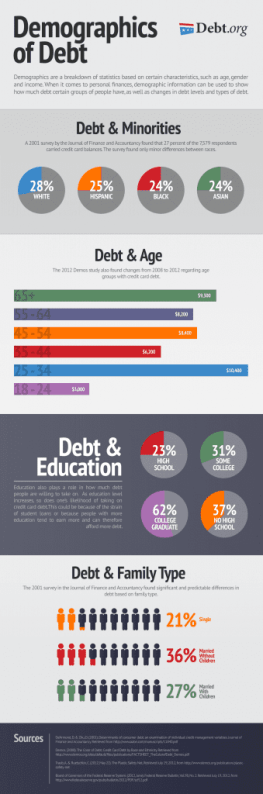
These data are a little dated, but show how Yang’s Freedom Dividend will level the playing field as the size of the middle class continues to dwindle.
“As technology improves, workers will be able to stop doing the most dangerous, repetitive, and boring jobs.
“This should excite us, but if Americans have no source of income – no ability to pay for groceries, buy homes, save for education, or start families with confidence – then the future could be very dark. Our labor participation rate now is only 62.7 percent, lower than it has been in decades, with 1 out of 5 working-age men currently out of the workforce.
“This will get much worse as self-driving cars and other technologies come online. This basic income, funded by a simple Value Added Tax, would guarantee that all Americans benefit from automation, not just big companies.
“An additional $1,000 a month would provide money to cover the basics for Americans while enabling us to look for a better job, start a business, go back to school, take care of loved ones or work toward our next opportunity.”
Getting too far down into the weeds about funding and so forth will divert away from the premise and the needs that arise from the changing economy.
What do Baby Boomers and Millennials have in common? In 2012, data show that both generations have the highest debt loads – over 65 years, $9,300.00; and 25 to 34 years $10,400.00.
Both generations are trying to get by on less. Baby Boomers have the most accumulated and inherited wealth largely tied up in big suburban homes that they can’t sell as they downsize and enter the last third of their lives. Millennials are downsizing also, but out of necessity largely because of high levels of debt and untimely cash flow.
Some can’t afford to move out of their parent’s basements.
Boomers and Millennials should be natural allies. Andrew Yang may be the guy who can find that common ground.
 Collaborative neighborhood process. Future Lincoln Court denizens will have a chance to participate in the design of the community so that it meets their needs. There will be a series of meetings as the project progresses to define them. Some collaborative communities are initiated or driven by a developer. The Lincoln Court Collaborative Community is a combination of both with the developer playing more of a technical role making the community member vision real. This collaboration will result in a well-designed, pedestrian-oriented community that integrates with the adjacent West Edge community, as outlined in the city of Cheyenne Missile Drive Corridor Plan.
 Collaborative common spaces. Common facilities will be designed for daily use, and for special community activities. They are an integral part of the collaborative community, and complementary to the private residences and businesses. The extent to which the private businesses and studio spaces are public will be determined. There will likely be an expectation that community uses and activities will be a part of the private business spaces. Participating in community life is optional – denizens may have as much community as or as little community as they want. Since the buildings are clustered, the Lincoln Court may retain several or many acres of undeveloped shared open space for future expansion.
 Collaborative management. Lincoln Court denizens will manage, to a great extent, the business of the collaborative community, and also perform much of the work required to maintain the property. The cohousing sub-communities participate in the preparation of common meals, and meet regularly to solve problems and develop policies for the community. A master Community Association may be formed to deal with issues concerning common spaces of the entire collaborative community, such as snow removal, open space maintenance, and managing community business relations.
 Collaborative consensus. Leadership roles will evolve and based on how and when community members join Lincoln Court. However, no one person (or persons) has authority over others. As individuals, families, businesses and organizations join the collaboration, each take on one or more roles consistent with their skills, abilities or interests. Lincoln Court will make decisions by consensus or similar forms of consensus decision-making. Although likely will have a policy for majority-rules voting if the group cannot reach consensus (nuclear option).
 Collaborative community economy. The community is not a source of income for its individual members. However, in the Lincoln Court, rental income from businesses, use of performance / exhibition space, studio / co-working spaces would accrue back to the community at-large to decrease homeowner / community owner association fees / reserve funds. It is possible that the master association or a sub-associations could contract with a resident / tenant to perform a specific task for compensation, but more typically the work will be considered that member’s contribution to the shared responsibilities. It is possible that community residents will earn income from rented studio or business location.
 Collaborative higher purpose. The envisioned community “higher purpose” is around arts, culture and fostering creative thinking in the day-to-day community functionality. The site has a great story. The original site was a part of a Homestead Act land grant at the turn of the 20th century. Historic Highway 30, also known as the Lincoln Highway spanned coast to coast in the 1930s. The Lincoln Court was built as a motor hotel which later evolved into the Hitching Post Inn. The Hitching Post was a legendary Cheyenne landmark. There are some great stories associated with the site which are big selling points for the project. Mine, for example? My first job when I was a 12-year-old was at the Hitching Post.
 Views from Behind the Lens