
Keep affordable housing from being an elephant in the room

jim snow tree

Silver Sage Village in Boulder, Colorado consists of 10 market rate and six affordable homes.

The “Dealing with Diverse Personalities” retreat is coming up at the end of September – there’s still time time to sign up. The retreat is not for the faint of heart.

Like dealing with issues of housing affordability, it’s not an easy topic to discuss since it requires people to step out of their comfort zones.

Most affordable housing discussions are about density and development scale, parking, traffic, grants, public / private partnerships – the “stuff” of affordability.

Once built, however, affordable housing and the diversity that goes along with it can be sources of personal conflict which happen at the national, local and neighborhood levels. As a refresher, I’ve written about diversity and cultural competency as a prelude to the Arcosanti retreat and folds right into discussions about affordable housing.

There’s been quite a bit of discussion about affordability in cohousing. Here are a few of my observations about it which I originally wrote for the EcoEducation Village Institute.

In my past lives I was a city planner, then developed Habitat for Humanity affordable housing and served a term on the Boulder Planing Board. I currently live in an affordable cohousing home.

Silver Sage Village has 16 homes of which ten are market rate and six were built as part of the city of Boulder’s permanently affordable housing program.

Wild Sage cohousing across the street partnered with Habitat for Humanity as well as the city affordable program. Here are a few of my random thoughts and suggestions:
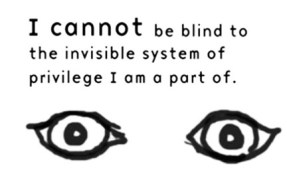
privilegeDiversity and cultural competency cross cut when it comes to affordable cohousing.

I suggest you have a serious and frank discussion among yourselves about why you personally – as opposed to philosophically – want affordable housing in your neighborhood.

Get strong commitments about all being willing to pay more money out of pocket to level the field for those who cannot otherwise afford to live there.

It’s obvious that partnering with others, rather than tackling affordable housing on your own is necessary. Even if you do find ways to subsidize building costs those don’t lower monthly Home Owner’s Association fees.

coho suburb aerial– I suggest you build the homes so they are all affordable to people / families of similar means. At Silver Sage, over the years, a perceived caste system arose. Dealing with a more socio-economically diverse community is a challenge for people, particularly since stereotyping may be involved.

The Silver Sage Village affordable homes are 800sqft and worth $150000 and limited in annual appreciation. The market rate homes are between 1100 and 2300sqft and valued at $500000 and $800000 and rising.

For the affordable home owners with limited appreciation, it’s a challenge to keep HOA fees equitable. Affordable homes are the same as market rate homes in the sense that the equity is earned differently. Rather than having to tie up large amounts of cash into a home, affordable homes are lesser expensive, in exchange for earning the equity in small annual chunks.

Becoming more culturally competent is a step toward breaking down the notions of privilege or lack, thereof.

– I suggest building all similar sized homes so the homeowner fees are more equally distributed. At Silver Sage fees range from $450+ to $650+/month which includes gas heat and water and build enough homes to spread around the fees. I think the sweet spot is around 32.

the-not-so-big-house– I suggest you design the homes ala “The not so big house” by Sarah Susanka to encourage residents to use the common house.

At Silver Sage the common house is used more by the affordable homeowners because our living spaces are smaller.

The common house here is used a majority of the time by by non-residents who rent it for studio and office space and outside events like meetings and classes. The market rate homes are designed like large homes in the suburbs and plopped into cohousing with large living rooms and big kitchens.

These are a few of my ideas and suggestions when considering whether or not you want to have affordable homes in your neighborhood / community. It’s not as easy decision to make, when you take into account the potential demographics of those who live in affordable housing.

Everyone each have different life experiences, current lifestyles, and it is imperative that all community members recognize these differences and learn how to embrace them in the contexts of their own lives.

If you  intellectually think affordable housing is a good idea, but not sure why it’s so hard for you to accept it emotionally, take a chance and step out of your comfort zones, sign up for the “Dealing for Diverse Personalities” retreat September 30 – October 2nd in Arcosanti, AZ.

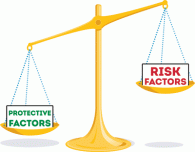
Part II – Diverse personalities: Risk vs Protective Factors

conflict resolution

Find out more about the Dealing with Diverse Personalities retreat September 30 – October 2

I’m facilitating a retreat later this fall about dealing with diverse personalities in Arcosanti, AZ. I’ve been asked by a few people about what the “strength-based” approach I’ll be using is about.

Risk and protective factors are a little jargony and wonky, but important concepts when dealing with disruptive and violent behavior in an organization, community – any group, really.

I formerly worked in the positive youth development and domestic violence prevention fields. Parts of my jobs involved training in strength-based cultural competency, which is how the retreat will be presented.

First I’ll talk a little bit about the differences between the two approaches in the context of disruptive behavior.

srisk protective cales

Protective factors are buffers against risks that contribute to disruptive behavior and violence.

Risk Factors are numerous. They increase a person’s possibility of committing disruptive or violent acts. It is possible to be disruptive or commit violent acts with or without any of the risk factors listed below – the list of possible risk factors is nearly endless. However, the more risk factors a person is exposed, the possibility of committing disruptive or violent acts increases. Here’s a list of possible risk factors:

Personal risk factors

  • History of tantrums or angry outbursts
  • Resorts to name calling or cursing
  • Bullying others
  • History of being bullied
  • A pattern of violent threats when angry
  • Use and abuse of alcohol or drugs
  • Mood swings
  • Blames others for personal problems
  • Desire for power and control
  • Recent experience of humiliation, loss, or rejection
  • Poor peer relations, is on the fringe of the community

Community risk factors

  • Community disorganization
  • Lack of community norms that set boundaries on behavior
  • Destruction of property within the community

The response to dealing with risk factors is known as secondary prevention (How do we prevent a person from being disruptive a second time) which features “victim blaming.” That’s a consequence of the law enforcement containment approach.

It’s prevalent in schools (administrative confrontation, send a note home to parents, sessions with counselors, expulsion).

In conventional systems of discipline, offenders from school bullies to domestic violence perpetrators are managed or contained by several agencies, groups or individuals and are very labor and time intensive systems.

This “out of sight, out of mind” method, finger-points and isolates, but does not solve the ultimate problem, which may be deeper and enabled by community risk factors.

All of us have had the top-down, more authoritarian model pounded into us from the age of five.

Those habits are hard to shake.

What can we do to prevent disruptive behavior or violence from happening at all?

Protective factors provide primary prevention and buffers the risks which may be associated with disruptive or violent behavior. Protective factors haven’t been studied as extensively as risk factors because they are difficult to measure.

Protective factors are not the opposite of risk factors, but rather shield a person from the effects of risk factors.

In the context of community, it takes a village to create an atmosphere and culture that nurtures protective factors in positive directions rather than negative ones.

The strength-based protective factor approach is one that is more easily implemented.

Why?

Rather than trying to ameliorate, in a reactionary way, individual risks which may or may not cause a particular disruptive behavior a few protective factors can be developed that that buffer against many risk factors.

  • Community establishes boundaries, expectations and norms that emphasizes the whole and not the individual.
  • Community establishes “restorative justice” consequences
  • Community participates in activities that support its “higher purpose.”

What’s “restorative justice”?

In the outside world criminal justice system, it brings together victims, other stakeholders, the affected community to transform. Most community settings don’t have punishments in the strict sense and “enforcing” on disruptive or violent people is difficult, if not impossible. You can’t expel them, make them stay after school, lock them up, or whatever.

In the context of community, there likely is a looming or approved decision that takes from the whole to benefit a few that creates angst. I’ll call the process finding “transformational solutions” (which is a bit wonky).

Any consequence leveled in a community likely involves many disruptive event contributors who must take ownership of their roles as opposed to blaming others. Since disruptions are dynamic and different there are many role combination and curcumstances possible.

  • Target (who likely is directly involved)
  • Incident inciter (who may or may not be directly involved in the disruption)
  • Retaliator(s) (community member(s) who feel harmed by the inciting incident)
  • Bystanders (members who may have witnessed the disruptive behavior)
  • Intervener (bystander who actively tries to calm down the disruption)

The retreat will address how all community members can dig into their pasts and begin to unpack previously learned behaviors and how to better respond to distuptions as we find ourselves in various roles.

What is “higher purpose”?

My cohousing neighbor uses the analogy about community culture, “What if we were all accountants?”All being accountants is a common characteristic, but not a higher purpose. If all the accountants as a community decided to provide money management for senior citizens or help low income people fill out their income tax returns, that would be a higher purpose.

No matter what age, participation in “religion” or organized higher purpose is the most effective protective factor that buffers against risks. Another is having a strong alky who is not a family member.

lack of boundaries memeAs for myself, the reason I’m committed to this process is I’ve recently been involved with a huge conflict within my cohousing community that’s been festering going on three years with no end in sight.

Dealing with diverse personalities is the “elephant in the room” that gets shoved in the closet, only to emerge later in another room.

The retreat leads participants through a process that enables each to know themselves better and how they can better understand others through getting to know them better.

The retreat and three sessions will be very interactive, hands-on and also be quite entertaining with a big dance performance at Arcosanti and plenty of time to network, meet new people and get to know existing acquaintances better.

NEXT – “PART III – DIVERSE PERSONALITIES: CULTURAL COMPETENCY”

My next story will address how cultural competency as a protective factor works hand in glove with developing other protective factors in community as primary prevention against disruptive behavior and escalating violence.


Part I – Diverse Personalities: Do you proactively de-escalate disruptive people in your life?

arcosanti wide

CoHoUSA is presenting a retreat September 30 – October 2 called “Dealing with Diverse Personalities in Community” at Arcosanti. Click on the image to learn more about  and register for the $175.00 retreat.

Arcosanti, Arizona is an experimental community between Flagstaff and Phoenix built by a bunch of volunteers to demonstrate sustainable alternatives to urban sprawl and also the home to a bronze bell foundry.

September 30 to October 3 Arcosanti will be the location for another experiment of sorts as the venue for the “Dealing with Diverse Personalities in Community” retreat facilitated by Jeff Zucker and myself.

“De-escalation”has been in the news lately.

Our retreat will concentrate on how individuals within communities of any ilk can learn some skills about exploring the roots of their own diverse personalities, how to become aware of others’ diverse personality traits and how to de-escalate when personalities clash.

Regardless of your community – be it in your workplace, neighborhood, place of worship – all members have personalities and quirks that are annoying or pleasant with endless traits in between.

chickendifficultAt some point in our lives, we’ve likely been annoyed by someone or been the one annoying someone else.

I live in a cohousing community which, I’m finding, is an endless source of personality war stories. I spend a very small part of my time in cohousing mode, but last week, there was a huge blow up over a festering issue.

The unsuspecting target wandered by and offered salutations only to be greeted by one retaliator who had multi-faceted tension building up in him about the ‘inciting incident’ before letting loose with a vulgar verbal barrage. A second retaliator exchanged a few words and walked away.

There were a number of bystanders, a couple intervened from a far, but that didn’t slow him down. Another in the conversation tried to establish a boundary to no avail and left.

While sympathetic to the retaliator’s perspective on the issue, I didn’t gang up on the target, but rather, intervened and sent the target on his way which ended the incident. I later went up and talked to him about what happened, and what I viewed as elements of the perfect storm that triggered it.

This was an eye opener for me. I had heard about community skirmishes, but this is the first time I’d been in the middle of one.  The timing and circumstances that brought a particular group of otherwise good people together in one spot, caused this violent outburst and what might have prevented it would be a good case study.

I can see how a routine traffic stop can escalate into gunfire between cop and citizen.

The skirmish ended, but the issues and hard feelings continue to be proverbial elephants in the room, ignored until the next perfect storm brews.

It’s impossible to predict when personality flareups will happen and the Arcosanti retreat will provide participants with three workshops purveyed by hands-on activities, visual and audio presentations about how to be better prepared for community social emergencies. Each participant will also develop an action plan to take with them.

Not only will it be information packed, but the weekend is guaranteed to provide a good time for all!