

Click on the post card image to download the draft business plan narrative.
The LINCOLN COURT mixed use development is an ambitious one but meets a variety of community needs. Plans are to develop on the 15 acre Back 40 Subdivision on the West End of Cheyenne, Wyoming consistent with the approved Missile Driver Corridor Plan.
The project is organized by Boulder Community Media dba ECOS. Download a copy of the draft business plan narrative.
The property is adjacent to the former Hitching Post Inn site. The project name is homage to the Lincoln Court, a motor lodge that preceded the Hitching post, which fronted on the Historic Lincoln Highway (US 30).
The Lincoln Court project targets the affordable housing need with purchase price-points between $200,000 to $300,000. The vast majority of those needing housing will be those households who earn between 0 and 80% of the county’s Median Family Income. The project will work with Habitat for Humanity and the Wyoming Community Development Authority (WCDA) programs for first-time home buyers.
Based on a 2017 housing needs survey completed by the WCDA, Laramie county has 9,520 substandard housing units and based on incremental growth, an additional 4,074 dwelling units will be needed by 2020. Out of this need
WCM envisions a project positioned to target those wishing to incorporate more creativity in their business and day-to-day lives seeking to build equity in them selves or improving their housing situations. From a larger community perspective, the project supports and implements Cheyenne and Laramie County community development goals by enhancing the social and cultural experience for current and future residents through a mixed-use creative intentional community and possibly improving blighted property – the LINCOLN COURT alter-ego Hitching Post Inn site. The project also nurtures economic development by providing housing for primary jobs and also space for local low-impact businesses to expand and entrepreneurs to flourish.
Based on a 2014 economic development report by Cheyenne LEADS and a 2017 report by the Wyoming Community Development Authority there is a big need for housing, particularly affordable housing in Cheyenne and Laramie County.

The WCDA offers down payment assistance programs for affordable housing and first time home buyers.
Lincoln Court offers the full range of benefits to Cheyenne with regards to affordable housing as a key economic development objective:
- Available housing for all income groups helps a community retain jobs and retail stores, and helps business owners attract and retain quality and reliable workers.
- The job creation and expansion impact is strongest if workers reside in the community. Employees are able to live near employment centers and thus are better able to report to work on time and have time to improve their job skills or get an education.
- Improves ability of communities and businesses to attract and retain workers.
- For a community, housing ties people together. It fosters a sense of place and local identity. It plays an important role in a economic sustainability and development.
- New construction and management of a property creates new employment and generates multiple ripple effects that strengthen the local economy.
- Workforce housing creates a more stable environment for children and helps them perform better in school.
- Enables lower-wage earners to get into a home and begin building equity. A house payment is generally less expensive than rent, which increases disposable income.
- Helps improve distressed areas and strengthen community and neighborhood pride.
- Increases property values and property tax revenue to communities.
- Creates family stability since wage earners work nearby and not commuter-distance away.
- Housing plays a key role in individual welfare and often represents the single-largest family expense/investment.
The project meets this housing need through a mixed-use development consisting of owner occupied and rental, universally-accessible senior and intergenerational cohousing dwelling units – detached and duplexes, civic and community spaces and appropriate retail that would support the community such as a coffee shop, offices, live-work options. A site map is attached.
The LINCOLN COURT also is interested in innovative continuous care, including intergenerational “green houses” as championed by Bill Thomas for caregivers who could live “on site” in the cohousing community with their disabled family members who need more intensive and specialized health care nearby.
The target market is wide open and consists of intergenerational individuals and families, as well as seniors over 50 years of age, who may be local or from out of town “empty nesters” and wanting to downsize, “vigorous retired” people wanting to stay active and age in a community setting. In support of this, the project will investigate compatible services such as personal care, urgent care.
The project is a public – private partnership with strong private sector partners and the affordable housing component involving participation by local, state and federal government agencies. The project is economically viable with a balance among strong equity from the public and private non-profit sectors, debt financing and sales/lease.
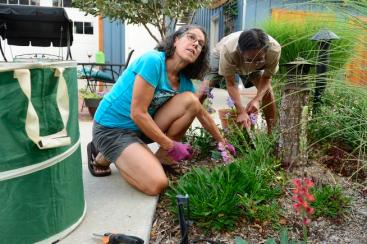
 Collaborative neighborhood process. Future Lincoln Court denizens will have a chance to participate in the design of the community so that it meets their needs. There will be a series of meetings as the project progresses to define them. Some collaborative communities are initiated or driven by a developer. The Lincoln Court Collaborative Community is a combination of both with the developer playing more of a technical role making the community member vision real. This collaboration will result in a well-designed, pedestrian-oriented community that integrates with the adjacent West Edge community, as outlined in the city of Cheyenne Missile Drive Corridor Plan.
 Collaborative common spaces. Common facilities will be designed for daily use, and for special community activities. They are an integral part of the collaborative community, and complementary to the private residences and businesses. The extent to which the private businesses and studio spaces are public will be determined. There will likely be an expectation that community uses and activities will be a part of the private business spaces. Participating in community life is optional – denizens may have as much community as or as little community as they want. Since the buildings are clustered, the Lincoln Court may retain several or many acres of undeveloped shared open space for future expansion.
 Collaborative management. Lincoln Court denizens will manage, to a great extent, the business of the collaborative community, and also perform much of the work required to maintain the property. The cohousing sub-communities participate in the preparation of common meals, and meet regularly to solve problems and develop policies for the community. A master Community Association may be formed to deal with issues concerning common spaces of the entire collaborative community, such as snow removal, open space maintenance, and managing community business relations.
 Collaborative consensus. Leadership roles will evolve and based on how and when community members join Lincoln Court. However, no one person (or persons) has authority over others. As individuals, families, businesses and organizations join the collaboration, each take on one or more roles consistent with their skills, abilities or interests. Lincoln Court will make decisions by consensus or similar forms of consensus decision-making. Although likely will have a policy for majority-rules voting if the group cannot reach consensus (nuclear option).
 Collaborative community economy. The community is not a source of income for its individual members. However, in the Lincoln Court, rental income from businesses, use of performance / exhibition space, studio / co-working spaces would accrue back to the community at-large to decrease homeowner / community owner association fees / reserve funds. It is possible that the master association or a sub-associations could contract with a resident / tenant to perform a specific task for compensation, but more typically the work will be considered that member’s contribution to the shared responsibilities. It is possible that community residents will earn income from rented studio or business location.
 Collaborative higher purpose. The envisioned community “higher purpose” is around arts, culture and fostering creative thinking in the day-to-day community functionality. The site has a great story. The original site was a part of a Homestead Act land grant at the turn of the 20th century. Historic Highway 30, also known as the Lincoln Highway spanned coast to coast in the 1930s. The Lincoln Court was built as a motor hotel which later evolved into the Hitching Post Inn. The Hitching Post was a legendary Cheyenne landmark. There are some great stories associated with the site which are big selling points for the project. Mine, for example? My first job when I was a 12-year-old was at the Hitching Post.
 Views from Behind the Lens