
Unknown's avatar

About Alan O’Hashi, Whole Brain Thinker

I’ve been involved with community journalism since 1968 when I wrote for my junior school paper, the "Tumbleweed," through high school and college and then wrote for the "Wyoming State Journal." I put aside my newspaper pen and began Boulder Community Media in 2005. There wasn’t much community journalism opportunity, so I resurrected my writing career as a screenwriter. My first short screenplay, “Stardust”, won an award in the 2005 Denver Screenwriting Center contest. I've made a number of movies over the years. Filmmaking is time-consuming, labor and equipment intensive. I recently changed my workflow to first write a book and make a movie based on that content. - Electric Vehicle Anxiety and Advice - This is a memoir travelogue of three trips covering 2,600 EV miles around Wyoming (2022) - Beyond Heart Mountain - Winter Goose Publishers released my memoir in February (2022) - The Zen of Writing with Confidence and Imperfection - This is a book recounting how luck planed into my signing a book deal after a 15-minute pitch meeting. (2020) - True Stories of an Aging Baby Boomer - War stories about living in a cohousing and lessons others can learn when starting their communities (2021) - Beyond Sand Creek - About Arapaho tribal efforts to repatriate land in Colorado (PBS - TBA) - Beyond Heart Mountain - Based on my memoir about my childhood in Cheyenne facing overt and subtle racism toward the Japanese following World War II (PBS - 2021) - New Deal Artist Public Art Legacy - About artists who created work in Wyoming during the Great Depression (PBS - 2018) - Mahjong and the West - SAG indie feature which premiered at the semi-important Woodstock Film Festival (2014) Over the years, I’ve produced directed, filmed and/or edited several short movies, “Running Horses” (Runner Up – Wyoming Short Film Contest), “On the Trail: Jack Kerouac in Cheyenne” (Lowell Celebrates Kerouac Festival, Top 10 Wyoming Short Film Contest), “Gold Digger” (Boulder Asian Film Festival), “Adobo” (Boulder International Film Festival), “A Little Bit of Discipline” (Rosebud Film Series), and two feature length documentaries “Your Neighbor’s Child” (Wyoming PBS and Rocky Mountain PBS), and “Serotonin Rising” (American Film Market, Vail Film Festival). He also directed and produced the award winning stage play “Webster Street Blues” by my childhood friend Warren Kubota. Boulder Community Media is a non-profit production company dedicated to democratzing media in all their forms - large and small screens, printed page and stage by providing sustainable and community-based content. I mostly work with community-based media producers, organizations, and socially-responsible businesses to develop their content via – the written word, electronic and new media, the visual and performing arts in a culturally competent manner – I’m what’s commonly called a niche TV and movie producer. Along with all this is plying my forte’ – fund development through grant writing, sponsorship nurturing and event planning.

Tiny House Cohousing?

wee casa

WeeCasa is a tiny house resort in Lyon’

Seems everything has a cohousing reference to me these days. On a quick trip up to Estes Park last week, there’s a place to stay over in Lyon’s Colorado called WeeCasa. It’s a tiny house resort. They rent for the the night or extended stay. It’s laid out like an RV park with a community room.

Now that would be a place for cohousing secret sauce, but how realistic is a tiny house cohousing community?

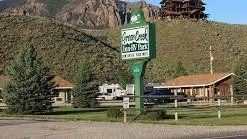
A couple years ago, I was on the road in Wyoming and spent a night at the Green Creek Inn and RV park. If you’ve stayed in camping / RV parks there’s, generally, an area set aside for semi-permanent places for longer-stay RVers.

In Wyoming, they are seasonal park workers, oil and gas field workers, hard-core hunters and fishers.
green creek rv park

The Green Creek Inn and RV Park between Cody and Yellowstone offers a low cost housing option for RVers.

There’s been talk about low cost housing types for Millennials paying off student debt, seniors seeking nursing home alternatives and marginalized populations like homeless vets.

As housing configuration alternatives come up, cooperative and collaborative approaches float to the surface. Tiny houses are low-cost to construct and lots of them can be crammed onto a piece of ground. As such, there are cities that are building tiny houses for the homeless population.

Tiny houses make some sense for an intentional community but developing one has more challenges than appear on the surface. The main one being counter to the American Way culture – smaller is better than larger; less is better than more; the group is more important than the individual. But I digress.

This is tiny house that is 21' by 8.5' in size with a fairly tall ceiling.

This is tiny house that is 21′ by 8.5′ in size with a fairly tall ceiling.

In a past life, I used to be a city planner in Wyoming, later a member the Boulder Planning Board in Colorado, as well as the Executive Director of Habitat for Humanity of the St. Vrain Valley in Longmont. I studied ecological biology and environmental politics as an undergrad and grad student. How to live a balanced life in both the human and natural environments has always been an interest of mine and why I live in cohousing.

The cohousing idea is a little bit about the buildings, but it’s more about setting up an old fashioned sense of community in which residents participate in the design, character and culture of their neighborhoods. With an itinerant population like homeless people, creating a sense of community would be a challenge. I would think tiny house cohousing would have quite a bit of turnover, at any rate.

Cohousing originated in Scandanavia, which is a bit more communal and socialistic than in the US. Here, cohousing tries to adapt communal tenets into the “rugged individualism” of America. The mobile American would fit this mold.

cohousing2

This is a 500 sq ft tiny house that has a 1-car garage and a balcony.

Over the past few years, interest in “tiny houses” has been growing. That is, people choosing to live in homes that are from 200 to 600 sq ft in size. There are a couple cable TV shows dedicated to the topic.

They are generally built on a “flat bed” and can be wheeled around from place to place, but also can be built on a foundation, but that kicks in an entirely different set of building requirements. Tiny houses on skids or wheels fall into the land use category of mobile homes or temporary housing. There’s technical jargon that defines a tiny house. In Boulder an accessory dwelling is not is highly regulated so as to prevent too high of a neighborhood density.

They are far different than your standard mobile home. Regular mobile homes can be the size of stick built houses that incorporate some space saving design features. Mobile homes are regulated and have design standards and have a strong lobbying presence. Tiny houses, if too popular, infringe on the mobile home monopoly.

If you google “tiny house” lots of websites and images pop up. There are several cable TV shows dedicated to the topic. The host / developer and an innovative builder work with people – mostly seniors and Millennials – to build their tiny house. The stories are about space saving innovations – steampunk trailers.

The biggest hurdles for traditional cohousing, as well as regular housing, for that matter, are government regulations and money. From a zoning code standpoint, tiny house communities will likely be a land use without a zoning designation.

Cohousing homes are houses with no lot lines with the development and individual houses

Cohousing homes are houses with no lot lines with the development and individual houses “designed” with input by the resident / community members. This home in Silver Sage Village recently sold for $750,000.

Money for land, money for the development are also typical impediments. Because cost is such a huge factor, stick built cohousing homes are constructed to maximize profit. This generally means expensive houses crammed onto a tiny space. How about the opposite – inexpensive houses crammed onto tiny spaces, that results in more open spaces?

Tiny houses cost anywhere from $20,000 to $60,000 and can be parked in friends’ back yards. They are often built with sweat equity. Check out one of the cable tv shows to get an idea about downsizing baby boomers, young couples and individuals making the move to drop out of the “bigger is better” society. The guy who comes up with the tiny house gadgetry is Zack Giffin, who is from Boulder.

Some tiny homeowners want to be more mobile, others are sedentary.

With tiny houses, a cohousing organizing “burning soul” wouldn’t need near as much space as a typical coho development. It would depend on the rules, but a tiny house development would likely be more transient. How to raise money? The organizational community structure during the development stage could be a corporation or LLC, maybe an HOA, if allowed by the state laws. It’s likely to be a commercial venture as opposed to residential, so may be more expensive.

It could be a subdivision with private lots that are sold, some may be rentals owned by the community. Is a tiny house a mobile home, an accessory dwelling unit? How do the uniform building codes apply?

Utilities could be “hook ups” like in an RV park. Decisions would have to be made, based on political jurisdiction about individual septic or a septic field or central wastewater collection; individual water cisterns or central water; city spec water and sewer.

I would think there would be some amenities like streets, sidewalks, open space, in addition to the common house.

This is the interior of a tiny house that through innovative design maximizes the space.

This is the interior of a tiny house that through innovative design maximizes the space.

At the typical RV park, the longer-stay “residents” have access to the common showers / restrooms, laundry, the little store and breakfast available to the overnight campers.

I can envision a common house that is more permanent, though. As a monetary hedge against potentially higher turnover rates, the common house, like at a KOA RV park, could be mixed use with community amenities like the open dining area, kitchen, laundry facilities, TV room, guest rooms, with business tenants or owners like a convenience store, coffee shop, business offices, laundromat and the like.

Because tiny houses are small, neighbors would be more likely to frequent the common house, compared to some traditional cohousing communities in which homes are the same as in suburbia with large living rooms, utility rooms, large kitchens. Cohousers go into their house and you don’t see them again.

Sarah Susanka says that buying a home strictly for

Sarah Susanka says that buying a home strictly for “resale” value isn’t the best choice.

There are the unfounded housing characteristics necessary for resale, as espoused by Sarah Susanka author of “Not So Big House.”

Susanka, who is also an architect, says that the sense of “home” has less to do with quantity and everything to do with quality. She points out that we feel “at home” in our houses when where we live reflects who we are in our hearts.

I heard her speak at Denver University a few years ago. The examples that stuck with me are those of the “den” and “dining room.” She asked the huge audience about who uses their den and who eats in the dining room. Not many hands went up. Dens and dining rooms, supposedly, increase resale value, but if nobody uses them, what’s the point.

I’d say that, for the most part, cities still have a bias AGAINST mobile home parks and hold the “trailer trash” stereotype. In a place like Boulder, there would be an uproar about this as a form of affordable housing. The best place to try this out would be where land is inexpensive and there is less of an elitist attitude.
beloved tiny home

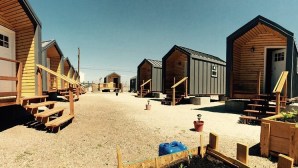
The Beloved tiny house community organized by the Colorado Village Collaborative has been beset with zoning code problems.

Denver has a tiny house village called “Beloved” for homeless people. It has a common house and is self-governed. The community consists of 11 small houses and has met with some success. Beloved only had a six month temporary zoning permit for the current location and forced to move the entire village.

There’s the social stigma of housing for homeless people. Local mainstream cultures should be open to tiny houses for “regular” people. If the concept works here, why not in another setting? WeeCasa figured it out.

I’ll plant the seed, but it may take me developing the idea in order for me to make a documentary film about it. Anyone interested in organizing a tiny house cohousing community?

*****************

This article was originally published in December 2014, updated again in 2017, in part due to a wordpress glitch that obliterated the story.
‘Beyond Heart Mountain’ book about Japanese in Downtown Cheyenne available Feb 19th

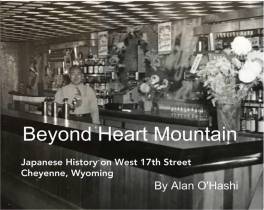
bhm 1-1What happened to the Japanese residents and businesses on West 17th Street in downtown Cheyenne, Wyoming?

It’s not just about the demise of the once vibrant Japanese community in a small town in Wyoming that thrived from the 1920s through the 1960s, but about how downtown areas can be revived by adding new life to them with people.

The story is a historical memoir told through the eyes of the author, a Sansei generation Baby Boomer Cheyenne native, Alan O’Hashi.

The story arose from a Cheyenne Historic Preservation Board decision to allow the demolition of 509 W. 17th St. with the condition a cultural and historical survey be done about the Japanese community that flourished in the 400 and 500 blocks of W. 17th St.

John and Jim Dinneen are constructing 12 townhouses in the Downtown Cheyenne neighborhood.

Check out a preview of the 50 page picture book by opening the YouTube link.

The release date is the “Day of Remembrance” on February 19th, which commemorates 77 years since President Franklin Roosevelt signed Executive Order 9066 that required internment of Americans of Japanese ancestry.

Retrofit Cohousing Communities: Can they solve the elder housing shortage?

pat nichols birthday

Growing up in the Cole Addition in Cheyenne, WY in the 1960s. This is my across the alley neighbor Pat Nichol’s birthday party.

NOTE: Author Alan O’Hashi presented a WebChat on this topic for the Cohousing Association of the US. Download a copy of his presentation notes by clicking on the image on the left or this link.

___________________________

I remember growing up in a neighborhood where the kids all hung around together and the reason our parents knew each other was because of bands kids running through one another’s houses. Garage doors were always open and lots of neighborhood birthday parties happened on the weekends.

We Baby Boomers, now well into our 60s and 70s, are trying to figure out how we will be cared for now that our kids are scattered all over the country with lives of their own, or in my case, no kids.

According to a 2015 US Aging Survey, 58 percent of seniors have lived in the same home for at least the past 20 years. Even though people ideally want to stay in one place, there continues to be anecdotal evidence about future uncertainty. While researching this story I asked in a facebook post, “Who will take care of you when you get old?” I was surprised at the 2,000+ engagements and 850 responses that ranged from “myself” to “nobody” to “I don’t know” to “maybe one of my kids” to “my cohousing neighbors.”

Cohousing intentionally tries to replicate neighborhood relationships that came about organically, by “building community, one neighborhood at a time.”

There’s a big unseen housing shortage that will become larger in the years to come. Did you know that 10,000 people turn 65 everyday? While many seniors, like myself,  are able to live independently, there will come a point when we will need assistance or be unable to take care of ourselves.

This growth is pressing seniors and their families to think differently and more broadly about a whole host of issues: housing, transportation, social services, cultural offerings, health and wellness programs, to name a few.

Life care managers, like gerontologists and social workers, believe there is a strong correlation between safe and affordable housing and keeping seniors healthy through accessible informal and formal care giving.

A longer life doesn’t always translate into a better quality of life. No one knows this better than the millions of adult children caring for their parents who struggle to remain in family homes and communities ill-designed for the challenges of aging. Those challenges include long travel distances, non-existent or limited relationships among parents and their children.

Historically, seniors aged in their homes for as long they could with support from family and informal caregivers, until they died or health conditions deteriorated to the point that hospital or nursing home care was necessary.

These data are now flipped. In his book “Being Mortal: Medicine and What Matters in the End” Atul Gawande observes that now, the vast majority of people die in the hospital or long term care facilities rather than at home.

golden girls

The “Golden Girls” were among the cooperative living trend setters – ABC

The circumstances of where, how, and with whom people grow old are changing. From “Golden Girls” roommate households to high-rise artist-centered apartments, Baby Boomers are redefining how they live out their lives — breaking down the old stereotypes and rules, and building new visions of great places to grow old, and doing it better living in community.

One such housing configuration is cohousing. I live in cohousing for people over 50. Cohousing communities consist of neighbors who decide to live together in their private homes and agree upon common values, share in some form of consensus decision-making, operate and maintain common spaces such as a common house where cohousers share meals and activities together.

What if this cohousing “secret sauce” is applied to other senior and multigenerational housing configurations?

Continuing Care Residential Communities (CCRC) are good for some. For decades, Continuing Care Retirement Communities (CCRCs) have offered older adults (usually age 65 and older) an innovative and independent lifestyle that differs from other housing and care options. CCRCs offer a living continuum  in which residents transition from independent to assisted to long-term care.

The CCRC model is appropriate for retrofit cohousing because cohousing can be the entry point to a CCRC. The main limitation of retrofitting an existing CCRC is one of control. CCRCs are typically managed “top-down” as opposed to resident directed.

Retrofit cohousing residents govern themselves and become accustomed to community living. That doesn’t mean giving up independence, but being collaborative among others with independent lives. While there would be changes in the cohort, the idea is that it would remain intact and repopulated with others attracted to the community lifestyle.

CCRCs allow seniors to convert home equity or other assets into a place to live and receive daily living services and health care that keeps monthly expenditures more stable – like a meal plan in the dorms. A CCRC isn’t for everybody.

The National Long Term Care Survey is a nationally-representative sample both of the community and of institutionalized populations and is longitudinal in that sample persons join the survey once they reach 65 years of age and stay in the survey until they either die or are lost to follow-up. The NLTCS data from 2004 are not up to date, but find that while CCRC residents are the oldest and sickest population, they have the highest incomes, with an average household income of $40,000-$45,000. Compare that to those in assisted or independent living who report average incomes of $24,000.

CCRCs are a tried and true lifestyle option for some seniors, particularly those with higher incomes and net worth, but what about everyone else?

alan wheel chair

My last day in rehab after six weeks in ICU and recovering from two surgeries in 2013.

Applying cohousing principles, relationships developed among neighbors and subsequent sharing of tasks and care for one another can help delay the need for other types of independent and assisted living.

Adapting existing housing configurations – senior or multigenerational – by adding the tenets of cohousing emulates what is provided in a CCRC:

  • Private residences and common areas;
  • A continuum of service, including food services, housekeeping, social and recreational outlets, transportation, and health-care services, as needed;
  • Housing rent or ownership that may utilize home equity to help keep monthly expenses lower

Buying into a CCRC is not cheap. Entrance fees range from about $20,000 to more than $500,000 or even $1,000,000, based on an area’s cost of living. This is clearly unaffordable to most people.

hospital monitors

Six weeks in the hospital and rehab and homeboubd for a mobth after. One day I was healthy, a couple months later I was on my death bed.

We’re all getting older every day. Unfortunately, for many young people say, under 50, the prospects of aging aren’t on their radar screens. It isn’t until the “Join AARP” membership cards start coming in the mail and phone calls from parents in the hospital announcing, “I fell down and can’t get up” that they begin to take notice.

Home living conditions have a huge impact on the health of seniors living with long-term illness and their abilities to live independently. Care managers and geriatricians are often called upon to give advice to families about where their aging family members who have developed illnesses or a disability can live, according to the Aging Life Care Association.

Seniors and their families now seek more information about the relationship between safe, affordable housing and health. At-risk older people who are on fixed incomes with no familial safety net are more likely to be living in non-decent rental or owner-occupied housing.

The 4th annual 2015 United States of Aging Survey, conducted by the National Association of Area Agencies on Aging (n4a), the National Council on Aging (NCOA) and UnitedHealthcare, examines senior perspectives on aging and what communities can do to better support an increasing, longer-living senior population. The survey included a nationally representative sample of 1,650 Americans 60 and older, and professionals who work closely with them. These data support a need for supportive and collaborative communities.

Financial concerns:

  • The top financial worries that keep seniors up at night are increasing costs of living, 28 percent and unexpected medical expenses, 24 percent.

Maintaining health:

  • Professionals and seniors agree that maintaining good health as they age as important. They named eating healthy, 91 percent and 72 percent, respectively; maintaining a positive attitude, 86 percent and 72 percent; and getting enough sleep, 79 percent and 67 percent.

Staying at home and independent:

  • When asked what concerns they have about living independently, 42 percent of seniors say they are most concerned about becoming a burden to others, 41 percent said experiencing memory loss and 34 percent said not being able to get out of the house and/or drive.

Community Support:

  • 59 percent of seniors say that young people today are less supportive of seniors than their own generation was in previous years, 24 percent see the same levels of support, and 12 percent say young people are more supportive of older adults;
  • 47 percent, (down from 54 percent in 2014 and 49 percent in 2013) and 37 percent of the professionals say their community is doing enough to prepare for the needs of retiring Baby Boomers.
alan shoveling poster

Cohousers share in the chores around the community.

Retrofit cohousing can fill the housing gap. The cohousing model originated in Denmark in the 1960s. Architects Katie McCamant and Chuck Durrett brought the concept to the United States in the 1980s. The legal structure is typically a Home Owners Association (HOA) or Housing Cooperative.

Most cohousing communities are multigenerational, but over time, become senior communities because of people who age in place. There are around 11 established senior-only cohousing communities and more in the forming stages. Most cohousing communities are new-build or adapted developments and some retrofits.

Research points to a variety of cohousing benefits. The most often mentioned benefits relate to reducing social isolation. The cohousing secret sauce provides for intentional socializing, neighborly support when under the weather, sharing chores, sharing expertise, and having neighbors who share similar interests.

Compared to the general population, cohousers are more likely to be a homeowner, highly educated, Democrat, White, female, and age 60 or older, according to the Cohousing Research Network.

Traditional cohousing communities may not represent the characteristics of a broader segment of the population that is interested in cohousing but unable to access, or would be interested if they knew about it. This is where retrofit cohousing can help fill the gap.

How a cohousing community gets started is like forming a club. A few strong advocates seek others to join the community development efforts. In addition to finding like-minded people who want to live together, they must also have the financial resources to invest in land, design and construction, patience to decide on countertops and landscaping and have the time to wait while all this happens. This ground-up process often takes three to five years or more with potential members coming and going.

The cohousing model can also be applied to more structured housing configurations such as existing CCRCs, stand-alone independent living communities, assisted living or long-term care facilities; and people living dispersed within a geographic area such as the Beacon Hill Village in Massachusetts.

The only assisted living facility I’ve heard about is one being planned by a life care manager in Gloucester, Massachusetts.

beacon hill village

Beacon Hill Village in Boston is a member-drive organization that provides services so members can lead active lives, while living in their own homes and neighborhoods.

Retrofit cohousing communities are more diverse. Data from a 2012 Cohousing Research Network study by Angela Sanguinetti compared the residents of retrofit cohousing communities (those that grow over time in existing residential developments) with the residents of traditional cohousing (new-build or adapted developments that start from scratch, involving a full group of members in the planning process who move in all at once).

When applying the tenets of cohousing, “retrofit” can also be a community of people who don’t live in the same proximity. Housing is housing, but the cohousing culture is what makes the community. The Beacon Hill Village is an existing dispersed community of 500 seniors who agree upon how to be active and supportive of one another rather than reliant on others to “take care” of them all the time. They provide neighborly support with one another and coordinate outside social and physical care giving when necessary.

The Beacon Hill approach would be appropriate to multigenerational communities as well. Since all are aging, it seems like people don’t get around to planning for their life care until it’s almost too late.

chung nyc coho

Jeddy and Cynthia created an accidental cohousing community in Flushing, NYC.

Residents of retrofit cohousing in one place include more young people, full-time students, renters, racial minorities, single householders, and households with fewer financial assets. An example, while not called “cohousing” is the case of a group of apartment dwellers in Flushing, New York City who became an accidental community.

Sanguinetti’s study finds that retrofit cohousing residents did not differ from traditional cohousing residents in terms of political affiliation or the level of education. The retrofit model may mitigate some barriers for a broader group of interested cohousers by being less resource-intensive.

The social support that cohousing offers may be beneficial for an aging population. Senior cohousing has received recent attention as a model to support well being, and aging in place through emotional support and activities of mutual assistance (e.g., doing errands, driving, cooking, or going for a walk with a neighbor), downsizing, and safety.

How does retrofit cohousing work? In a retrofit situation the community development steps are the same as for a traditional cohousing community. “Burning soul” advocates and other group members may or may not live in the same building or community. They may decide to move into the same apartment or condo complex, but would follow a typical cohousing development process such as these three steps that were identified by CoLiving Canada:

Feasibility study

  • Discuss and agree upon community values and perhaps, a higher purpose, which would fill the need to walk their community values talk while participating in service projects;
  • Whether you’re three or thirty people, come up with a name and “elevator speech” identifying the community. Referring to yourselves as a “bunch of housemates” doesn’t tell about your community story;
  • Community cohesiveness could be built around a higher purpose of community service that binds a community together.
  • Once you kick the can down the road a few blocks, check your state laws about homeowner association regulations. You will find they set up HOAs that do not mirror cohousing very well – lots of centralized power and control, lots of voting. Save this until later, because conforming cohousing declarations with state laws is a chore.

Develop budgets

  • There likely will be common expenses that relate to community activities, coordinating transportation, common meals, intra-community communication and a fee structure to pay for all or part.
  • Community values and mission are implemented through the budget by teams – overall steering team equivalent to a board of directores, social events, managing building and grounds, procesd and governance, finances and legal matters,
  • The entire community approves by consensus the budget or any action for that matter, and the steering team ratifies the action also by consensus.

Design and Construction

  • If you’re sharing a big house, there will be design issues about designating common spaces and storage. Some design and construction in retrofits may be necessary if you’re in an existing condo community or apartment building is adapted. This may include renovating an existing dwelling unit into a common space with a guest room and common kitchen which was the case at Boulder Creek cohousing in Colorado;
  • Identify resident needs, how the “site” functions – if it is in an existing physical development like a condo association, apartment complex, or households dispersed within a given boundary;
  • Determine what are considered “common spaces” which may not be literally common, but function in common. These may be in private homes for shared meals and meetings, civic spaces, churches, libraries

Looking for a few cohousing retrofit pioneers. There are plenty of individuals who are interested in cohousing. Some of you may have managed to form into group that has begun the traditional cohousing process but you’ve bumped into obstacles including lack of money, no suitable land available, professionals such as architects who are only willing to give so much upfront service, group members who can no longer wait for the community to get off the ground. There are well-documented war stories.

I want to prove the concept. I’m seeking one or more people, preferably in the Denver-area to organize a retrofit cohousing community and facilitate you through the process.

  • Maybe, you don’t need a place to live or have bumped into some community development obstacles, but want to create connections with other like-minded people as a hedge against loneliness and living in isolation;
  • Maybe you live in an apartment building and your neighbors are interested in a more collaborative lifestyle;
  • Maybe you are affiliated with an existing assisted living community and want to adopt appropriate cohousing principles

There are varying opinions about whether what I describe is actually cohousing, but regardless, I want to hear from you. Email adoecos@yahoo.com

In case you’re wondering about my interest in this topic, I became Medicare-eligible this year and live in the Silver Sage Village cohousing community in Boulder, Colorado.