What was your happiest moment with money? When I won over $1000 in a football pool at the Stockgrower’s Bar in Lander, Wyoming. I don’t remember the exact year, but it was in the 1990s. The pool was set up so the pot was progressive. Throughout the season, there was a winner every week or two. The last pot accumulated over several weeks. I don’t recall more details nor my numbers, but I had Kansas City and the Minnesota Vikings. Chiefs defensive back Deron Cherry intercepted a pass that stopped a Vikings drive at the end of the game which gave me the pot.
Your unhappiest? When I was laid off a job in 2004 and had to use my grad student loan money to augment my unemployment insurance benefit. I’m still paying that off, luckily the interest rate is 2percent. When I got sick at the end of 2013, my insurance was ready to lapse and I had to sign up for the first round of Obamacare. I ended up with two deductibles – don’t get sick in December – and re-upped with a higher deductible plan to keep my premiums lower. It took almost two years to pay off my out of pocket costs.

One of the dads organized field trips for the neighborhood kids. This was from a tour of a local dairy. We all got Popsicles.

All my direct family members lived in the same town and were close knit.
Were you anxious about money? Growing up, I was never anxious about money. I always had a nickle in my pocket and knew I had a place to come home. Being an entrepreneur the past 15 years-or-so, I’ve learned to wake up unemployed everyday and get with the program. So far, I haven’t grown tired of it since my work is a lot of fun and different everyday. There are a few of us who live in the community who still work and the place, otherwise, operates on a “retiree” schedule.
What did your parents do to earn money? I answered that above. We were always comfortable. I ended up working for wages for most of my jobs as an adult and didn’t get the entrepreneurial bug until I was old enough to know better.
Who handled the money In your family, and how? I’m pretty sure my dad handled most of the finances. When my sister and I left the house, my mother began working again and turned her water color painting hobby into a business. She handled much of her own book work for that. As a kid, I managed my own bank account, although I often needed a ride to the savings and loan to make deposits.
Was money discussed in your family? Money wasn’t discussed when I was a kid. It was talked about when I applied for college to get loans and scholarships. Money wasn’t really discussed until we decided to put all the family assets into trust.

All kids invited one another to birthday parties. There was no exclusion.
How did your family discuss and express generosity? Generosity was about helping others out. My parents gave to the church, as did my sister and I – which we had to take out of our allowance. Most of the kids in the neighborhood must have received similar “be independent” messages. There wasn’t a lot of collaboration or group projects. It was all about the relationship-building, more so than doing things for each other, other than at random. In Cheyenne, all the new subdivisions had swimming pools. That was the major gathering place for kids during the summer. Parents all knew each other because of the kids. Most everything was on a neighborhood basis back then – neighborhood schools, the swimming pool, neighborhood 4-H clubs, neighborhood Cub Scout dens and packs. There was a lot of reciprocity – every kid invited the other kids to their birthday parties, for example. Generosity was expressed all the time. Intentionality was part of the culture.
Did your parents trust you to go to the store to buy something? Me going to the store was not part of the division of labor. When I was in high school and drove, I may have gone to the store from time to time, but nothing memorable. It wasn’t a rite of passage.
Did you ever steal from your parents, other family members, or stores as a child? When I was in high school, I tried to steal a paperback book for an English class from the local grocery store and was caught. I did it to see if I could get away with it, since I didn’t want to fork out for “Love Story.” The worst part was having to tell my father. He had to call the store and talk to the manager – Verlin – about it. He was a friend of my dad’s employee who built my first bike. I was cut some slack and I don’t think my dad ever told my mother about it.
How much money did your family have compared to your childhood friends? As I mentioned before the neighborhood was a mass society. The social class thing wasn’t evident. It may have been among the adults, but that wasn’t a friendship factor. Although there were some families who had more social mobility and had friends from other parts of town, all my friends were in the neighborhood and church.
How did your parents respond when you asked for something? I wasn’t much of an “asker.” I was always of simple means and didn’t want much. I began to work at a very early age so I could even further be a little more independent.
Did you have to start working or did you want to start working? I didn’t think one way or the other about working. When I was offered the Hitching Post job I got a bug for it. During the summer I worked sometimes 60 hours per week at $1.35/hour and time-and-a-half over 40. For a 12 year old kid, I was socking away a lot of money. My only expense was $.75 greens fee at the public golf course on Mondays. I didn’t work during the school year because I was in sports. It was good to have my own money and not have to lean on my parents.

The Hitching Post was one of the CFD hot spots. It was my best job.
I worked at my grandparent’s business, the Highway Cafe when I was probably 10 or 11. I washed dishes and paid under the table since the legal working age was 12 at that time. I mostly worked when my dad went there to cook after he got off his job a few times a week. My first real job was when I was 12 and my neighbor on the corner, Mr. Contos, got me a job as a busboy at the Hitching Post Inn. I imagine that came about from some conversation my dad had with him. That service-sector job gave me an early exposure to jerks, picky people, control freaks, and bad tippers at a young age. My favorite shift was working from 10pm to 6am during Cheyenne Frontier Days. My job was to run booze from the bar to the Coach Rooms where huge parties took place. Now that was an eye 0pening experience.
What Is the first money you recall earning and how did you earn it? Working at my grandparent’s restaurant was more like getting tipped. My first money making project was selling pop at the Cheyenne Frontier Days parade. During CFD, there were three parades at the end of July. My sister, cousin and neighbor chipped in, shopped the sales and bought up canned sodas throughout the year and stock piled it in our bomb shelter. Even though my dad worked for Coke, we sold the grocery store brand because parade goers weren’t that brand conscious and the profit margin was better. The first year, after dead-heading to resupply wasted a lot of time and after about three summers we figured out where to set up soda caches along the route. The last I checked, my cousin still has the first bag of money he made from that parade gig.
How did you begin saving money? My first account was Cheyenne Federal Savings and Loan. Relatives would give me silver dollars for birthday presents and those were put into the account. After silver money was taken out of circulation, I thought I would be able to withdraw silver dollars from the bank, but much to my rude awakening I was not able to do so. After that I like to have tangible investments.

I’ve lived gregariously much of my life, including in the dorms. Not only the same dorm, but the same dorm room for four years.
In high school, I didn’t talk to a guidance counselor at all. Maybe at the end of my senior year to determine if I had enough credits to graduate. I had absolutely no idea what to expect in college. I graduated high school and college at the end of the Vietnam War with degrees in political systems analysis and environmental biology. There weren’t many jobs out there counting smooth and wrinkled peas. I ended up sitting out post-war recession studying environmental politics and teaching at the University of Wyoming. I had no career counseling. If I were to do it all over, I’d go to two years at a community college so as to avoid taking the SAT and ACT.
What messages did you get from your parents about career, earning money and spending money? I didn’t get much information or advice from my parents about money matters. They were both high school grads and didn’t have much knowledge or experience, other than to say “go to college.”
What was/ls your view on money and dating? Who should pay for dates? I didn’t date much in high school. It was a non-issue for me.
When did you get your first credit card? What were your feelings about it? When I was in college I got a Diners Club card. That was before Visa and MasterCard. I worked in the student union checking out pool equipment from 9pm to 2am. I got paid to play billiards and earned money to pay a credit card each month. I lived on campus, at the student union food and didn’t have many discretionary expenses.
Will you Inherit money? How does that make you feel? All my family property is in trust, so I didn’t “inherit” it, per se. There hasn’t been reason to sell anything yet.
Will you have money to leave to your relatives? How does that make you feel? Likely, but in the back of my mind I want to be on my death bed with no money in the bank having spent or given it away while I’m still alive.
Could you ask a close relative for a business loan? For rent/grocery money? I could, but wouldn’t.
How do you feel about your present financial situation? I’m happy with it.
Do you know how much money you have right now? Do you know how much you owe right now? Yes and I know exactly how much I owe on a credit card, car loan and student loan.
Who handles the money in your current household, and how? We handle our own money.
Is money easily discussed? There’s no reason to discuss finances.
Is money abundant or scarce? Neither abundant nor scarce.
How does your family discuss and express generosity? It’s not discussed.
In what ways are you a good manager of money? In what ways are you a poor manager of money? I’m pretty good at keeping track of my business money mostly because I have a good CPA. Personally, I don’t have many expenses to track.
Do you have a personal budget? Yes
Have you made decisions concerning retirement, insurance, drafting a will, and so on? I’ll keep working until I get tired of it. So far, I don’t know what I’d do if I had a bunch of idle time on my hands. I’m not much of a traveler just to travel. When I go someplace it has to be purposeful. The Talking Heads have this record called “Stop Making Sense.” The album jacket has a “scrapbook” of photos. One caption of a group of women doing their laundry in the river says, “Rich people travel thousands of miles to take pictures of poor people.” That’s not my thing. I have a will and a charitable remainder trust set up.
What kinds of things do you buy on your credit card? Do you ever buy groceries or necessities? I seldom buy any day to day stuff on a credit card. My card has no “miles” attached to it.

I bought my first new car – VW Golf – since 1974 and traded in my 1993 Eurovan
Do you know what interest rate you are paying and how much you owe? Yes
Do you have any money secrets that you have never told anyone about? Let me think …
Do you talk to your friends and family about money—how much you have or don’t have, how much you make or how much they have and make? I talk about money in general terms with business colleagues.
How much money would you like to be making? What feelings does that bring up for you? I want to make accessible money while I’m sleeping. I keep putting myself into positions to do that and one of these days …
How do you feel about spending money on yourself? About the only non-essential things I get for my self have to do with my sports card collection. That’s more like a hobby business since no money changes hands.
Have you ever felt guilty about your prosperity? Yes, when I was held by police in Uganda and had to pay a bribe to a cop.
Have you ever felt guilty that you don’t have enough money? Is this a result of your mismanagement? I don’t feel guilty about having money or not. I’m not much of an extravagant person. It’s mostly a guy thing. I don’t buy new clothes, I don’t buy new shoes. If you look in my closet it looks like Batman’s closet – a rack of gray outfits.

People should take a visit from the Ghost of Christmases Yet to Come and find out what people thought about them.
At one level, I feel sorry for them. I know plenty of people who are very well off and in retirement or close to retirement. They spend lots of money on themselves but don’t seem to be very happy. Many seem to have their own circle of acquaintances and I see them once or twice a year. A friend of mine who had been planning for retirement died suddenly and I’ll be at her funeral on Saturday. I’m a non-profit fundraiser and teach workshops about donor development. There’s a datum out there that as a percentage of income, more money is given to charity by low / moderate income people than by wealthy people. The stereotypical notion that rich people should be hit up for donations is false. It’s better to nurture a larger number of willing regular people than trying to convince a rich person. More well off people need to be visited by Ebenezer Scrooge’s Ghost of Christmases Yet to Come.
How do you feel about begging? Welfare? I have been on the public feedbag and I am very forthright about that and don’t disparage anyone who has had to seek an outside hand up. As for panhandlers, I used to think me giving someone money was some sort of social contract and the recipient wouldn’t spend my money on booze or smokes. But then I got to thinking about all the frivolous and wasteful things I’d spent money on like beer or a hamburger or whatever. When i give money to a stranger, they can spend it how ever they want.
In what ways can you be generous? In what ways can you be stingy? Do you treat? Do you tip? I’m randomly generous, throw parties, pick up tabs, treat, offer up goods and services for events and activities with no reciprocity expected. I’m not stingy, but don’t prefer to be with people who don’t carry their expected part of the load, or are constant “takers.”
We’re all “haves” and “have nots.” It depends on the time and circumstances. Everyone just needs to look themselves in the mirror and know that their experiences are not the same as anyone else’s and take those differences into account on a daily basis.



 As a result of that experience he’s become much more aware of his health. One of his neighbors circulated information about a research study at the University of Colorado about the effects of exercise on brain health.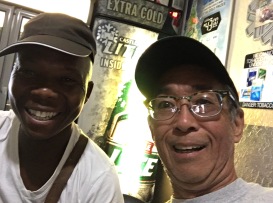
 Silver Sage Village featured residents: