Understanding the Tipping Point of Social Movements

I’m on the lookout for new stories. When Hemingway ran out of ideas, he joined the Army. I’m curious, but not that curious. There was another No Kings rally on October 18th. I used to go to those. I went to one in April and stayed home in June. The most recent time, I watched Wyoming football, and rationalized that I was at Boulder’s Central Park in spirit.

The rally I attended in April felt to me like a mix between a block party and a civics class. A few thousand of us milled around on South Broadway outside the National Oceanic and Atmospheric Administration (NOAA) building, along with a couple of my neighbors and some acquaintances.

The Department of Government Efficiency (DOGE) purged a bunch of scientists soon after the Inauguration in January. Weather research and forecasting had become too political. Climate change will do that. I made a sign that read “Melt ICE,” and caught the bus with a crowd of like-minded people. The slogan is a double entendre, referencing global warming thawing the icecaps, and ICE rounding up immigrants and sending them to points unknown.

We chanted and waved our signs. There were a few horn honks from well-wishers driving by.

The only real drama came when a red pickup roared by and blasted us with black diesel smoke. That was a rolling metaphor for the times.

The plume reminded me of the time I was walking in a crowd when soldiers tear-gassed us after Nixon’s inauguration in 1973. It’s ironic that I was waving my sign, since my first presidential vote was for Nixon and I was president of the now-infamous College Republicans at the University of Wyoming. I’m still regretting that vote.

It was chilly in April. We’d seen enough. The crowd dispersed, and we walked back toward town.

The pundits said these rallies mattered because democracy depends on people in the streets. The next morning, the same president was still in office, with the only visible change being that the dumpsters were now full of clever slogans scrawled on signs.
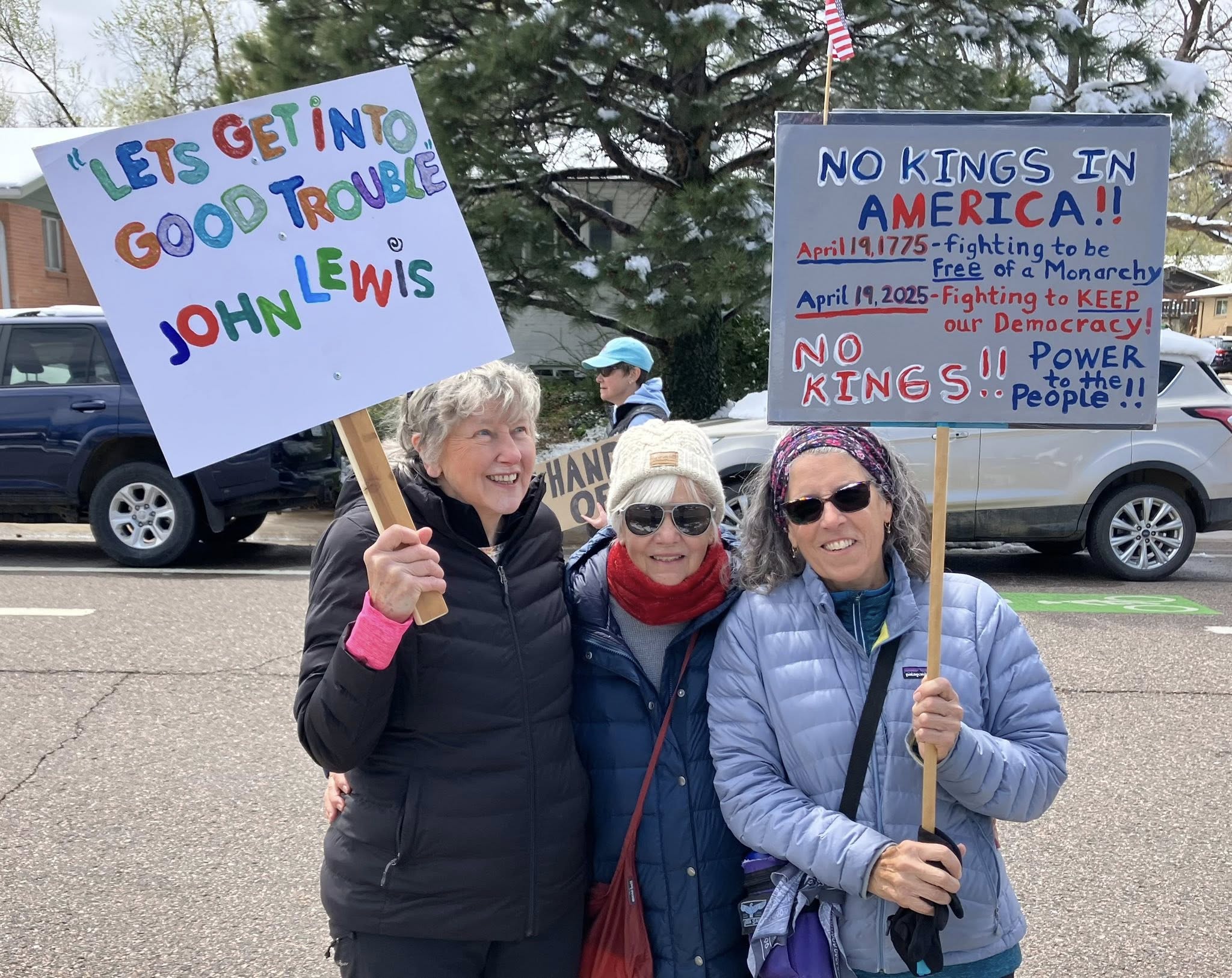
The rally in April stoked me up. I made a hat with my “Melt ICE” slogan. It gets reactions. Some are supportive, while others, not so much, but at least it starts conversations.

The novelty had worn off, and I had sat out the June event, but I was ready to go in October until I lost interest.

“The movement has lost steam,” I said to myself. There were too many mixed messages. Too many baby boomer faces who’d been protesting since Nixon, now armed with newer cardboard. The energy was real, but it felt scattered.

Then I heard the numbers.

The time I turned out in April, about 3 million marched.

In June, the number bloomed to around 5 million.

News reports estimated 7 million had hit the streets nationwide on October 18th.

That’s not a slump. That’s a surge.

What’s more interesting to me is who showed up. According to a survey from American University, women comprised 57 percent, and most were highly educated.

At first glance, that’s the same old coalition, but the data tell another story. Local media indicated campus groups joined in from places like Penn State, Towson University, and the University of Florida.

The same poll found that the median age of protesters in Washington, D.C. was 44. Younger voices mixed into the chorus.

I’m a Malcolm Gladwell fan. He wrote The Tipping PointNo Kings feels like what Gladwell defined as the mysterious moment when an idea stops needing to be pushed and starts growing under its own power.

Something has shifted over the past six months. Young people are showing up. Folks who don’t fit the old protester profile are finding their way into the crowd.

Maybe they don’t know exactly why they’re milling around, but they know they are mad as hell and not going to take it any more.

When democracy wakes up groggy, it’s slobbery, noisy, sluggish, but undeniably alive. Movements begin with emotion, not policy. It’s evolution, not chaos.

Maybe I was wrong to stand on the sidelines admiring the T-shirts with clever slogans and frog costumes. Spontaneous growth is immune to counter-messages.

Detractors paint the millions and millions of us as anti-American and paid to riot. I must have missed the gravy train.

The naysayers claim photos and videos documenting the 2,500 events around all 50 states were created by AI.

Pay no mind to the conspiracy theorists behind the curtain.

We each only have control over what we can control. The tipping point creates change on its own. For some, that’s marching. For me, it’s about mentoring, voting, or engaging with people who disagree with me.

The four-hour No Kings events are about participation. Being around people of like minds leads to the long, quiet actions that last beyond the rants and raves.

March if you must for the day, but keep moving, because change doesn’t live on a poster board.

Change begins in the streets, and tipping points gain momentum when the news cycle shifts to the next mass shooting or devastating flood.

No Kings rallies echo past protests. Now the crowds have expanded since April. The message is spreading, and people who once stayed home are finding their way into the crowds. Parents push baby strollers down the sidewalk. Kids show up and pass footballs around the medians.

It doesn’t matter where you are on the sociopolitical spectrum. Make something better. Make someone think. Make noise when the streets are quiet.

Copy and Paste this Post to Your Social Media

The No Kings rallies started as echoes of the past with the same signs and outrage. Something’s shifting. The crowds are growing. The energy is younger. The message is spreading.
What began as protests is turning into practice. We can’t control the whole storm, only how we show up in it. March if you must, but keep moving. Change doesn’t live on a poster board. It lives in what we build when the streets are quiet. #NoKings #MarchLessMoveMore #EverydayActivism #QuietChange #TippingPoint #MakeMeaning #DemocracyAlive #YouthMovement #DoTheWork #ZenOfAction https://alanohashi.com/2025/10/21/understanding-the-tipping-point-of-social-movements/TippingPoint #MakeMeaning #DemocracyAlive #YouthMovement #DoTheWork #ZenOfAction

Do You Have Questions? Start a Conversation with Alan Bot!

Go back

Your message has been sent

Warning
Warning
Warning
Warning.

How Satire Transformed America’s Presidential Perception

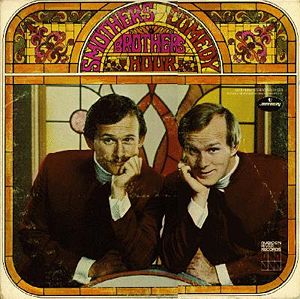
I was in high school when The Smothers Brothers Comedy Hour was on TV. Every Sunday night, Tom and Dick mixed music with political satire, and for the first time, I realized that jokes about presidents weren’t just late-night silliness.

Humor was a way to question the Vietnam War, civil rights, and the powers running the country. The Smothers Brothers were relentless. They invited George Segal to strum his guitar and sing The Draft Dodger Rag, with the brothers, a jab at the Vietnam War.

That was also when I caught the campaign bug. I started collecting political memorabilia during the 1968 election: buttons, bumper stickers, pamphlets, you name it.

Back then, campaign buttons were serious business. They weren’t ironic or clever; they were straightforward: “Nixon’s the One” or “Humphrey/Muskie ’68.” You wore them to declare your allegiance.

Pop culture turned buttons into little billboards of wit, protest, and rebellion. “Save Water, Shower With a Friend.” “Make Love, Not War.” “Lick Dick in ’72. – I Am Not a Crook.” Those were the short and sharable analog social media memes of the day, designed to shock or amuse, and passed from person to person like viral content before the internet existed.

Politics was alive in my household, too. The first presidential race I remember was 1964: Mom voted for Lyndon Johnson, Dad backed Barry Goldwater. We didn’t talk politics over teriyaki chicken.

By 1972, I was finally old enough to vote, and I cast my first presidential ballot for Richard Nixon, which I now regret. At the time, I thought I was joining the “silent majority.” What I didn’t realize was just how much Nixon despised being ridiculed.

If comedians poke fun at celebrities or everyday people, they risk lawsuits for defamation or invasion of privacy. When the target is a politician, the rules shift. Public officials are held to a higher standard, and satire is one of the strongest forms of protected speech under the First Amendment.

This principle was reinforced by the 1964 Supreme Court case New York Times v. Sullivan, which held that public officials must prove “actual malice” to win a defamation case. That means comedians, cartoonists, and satirists have wide latitude when mocking political figures.

Two presidents of the late 1960s,  Lyndon Johnson and Richard Nixon, illustrate how differently politicians can react when they become the butt of a national joke.

Johnson: Laughing in Public, Fuming in Private – On the surface, Lyndon Johnson looked like a good sport. When the Smothers Brothers sent him a letter apologizing for poking fun.

“It is part of the price of leadership of this great and free nation to be the target of clever satirists. You have given the gift of laughter to our people. May we never grow so somber or self-important that we fail to appreciate the humor in our lives,” he replied with words that sounded downright noble.

That sounds like a man who could chuckle at himself.

Behind the scenes, Johnson was anything but amused. He reportedly phoned CBS president William Paley, demanding, “Get those b@st@rds off my back.”

Despite the show’s popularity, CBS abruptly canceled the show in 1969, allegedly because scripts weren’t submitted in time to be reviewed by the censors. The brothers sued, won close to a million bucks in 1973, and cemented their reputation as countercultural heroes. They were effectively blacklisted from TV.

LBJ wasn’t humorless. He leaned on his Texas storytelling whenever he needed to break the tension. He’d spin long, folksy yarns in his Hill Country drawl, throwing in barnyard jokes and crude punchlines. He poked fun at himself after gallbladder surgery, joking with reporters that if they didn’t like seeing his scar, maybe he’d show them something else instead. He posed with his beagle, lifting Him up by his floppy ears. Johnson’s humor wasn’t polished or TV-friendly, but it worked in private and kept people off balance and under his control.

Nixon: The Image Makeover That Didn’t Stick – Nixon didn’t just dislike satire. He treated it like an enemy operation. Reports say he even hired a private investigator to dig up dirt on the Smothers Brothers.

At the same time, Nixon knew he had an image problem. He was seen as stiff, awkward, and humorless. So during the 1968 campaign, he made a surprise appearance on Rowan & Martin’s Laugh-In.

“Sock it to me?” was his short, awkward, and unforgettable line. For a moment, it worked. People laughed with him instead of at him. It was a PR masterstroke, the equivalent of today’s politicians appearing on The Late Show.

His charm offensive didn’t last. No comedy cameo could paper over Nixon’s deep paranoia and hostility toward critics. The same insecurity that made him lash out at satirists eventually unraveled his presidency in Watergate. All the jokes in the world couldn’t save him from resigning in disgrace on August 9, 1974.

Why It Matters – Here’s the bigger picture. By the late 1960s, satire had teeth, and politicians knew it. The law was clear. Comedians had wide First Amendment protection, especially after New York Times v. Sullivan. Legal protection is one thing, presidential pressure is another. That’s the tension I felt watching TV as a teenager. Could politicians take a joke, or would they try to silence the laughter? Half a century later, I think we’re still asking the same question.

Mockery, Fear, and Unity: The Rabbit Parable for Our Times

No rabbit is safe until all rabbits are safe: pride alone cannot protect.

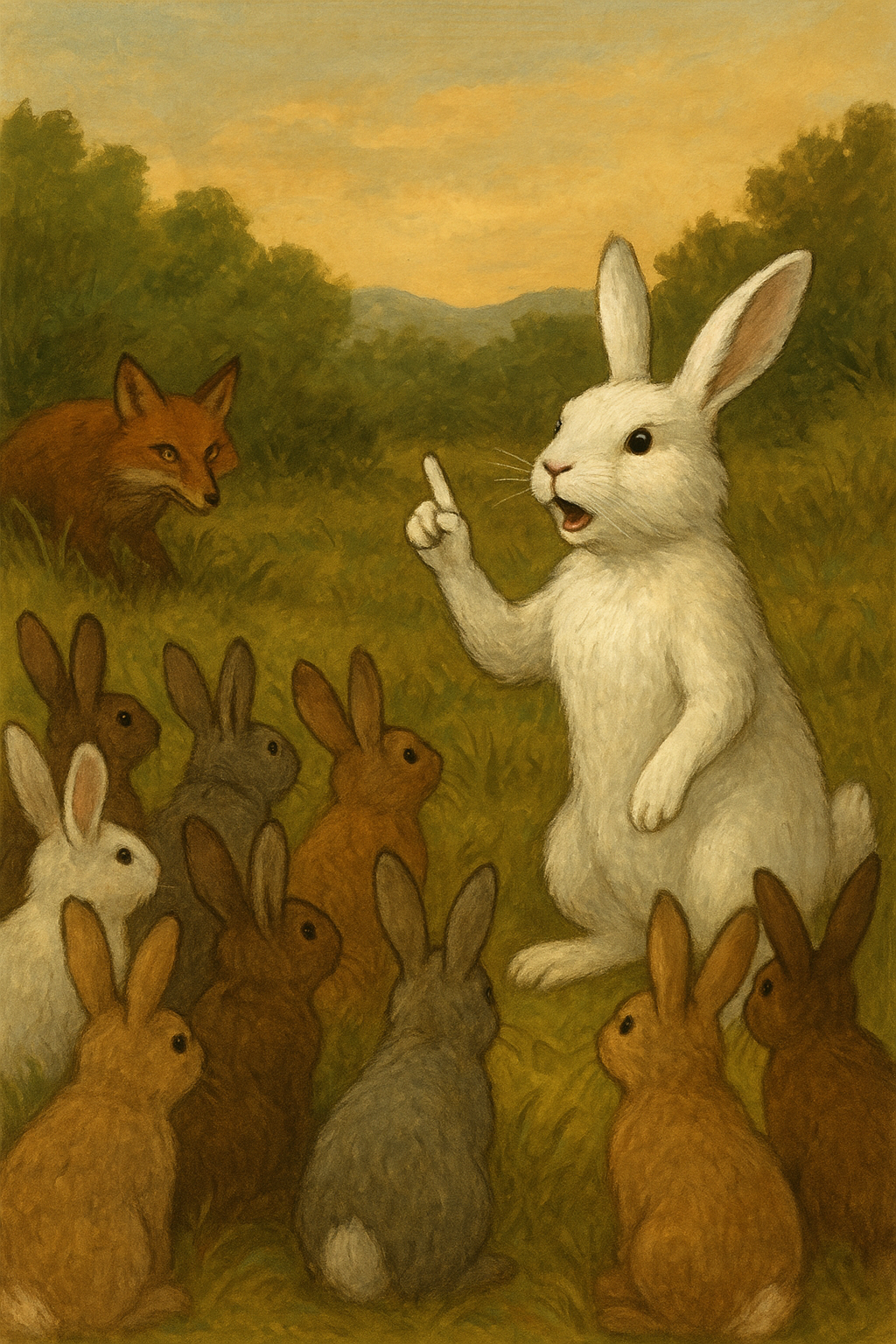
The meadow was restless. The dominant white rabbits, led by a sharp-tongued leader, strutted proudly. The leader mocked the brown, gray, and speckled rabbits, saying they were disorganized and weak. They quarreled among themselves, letting his insults go unanswered. His pride swelled as their voices shrank.

Then one twilight, a fox leaped from the thickets. It lunged for the mocking leader, leaving him cornered. His boasts turned to squeals, and for the first time, he felt the sting of fear. The few white rabbits who didn’t flee urged their invincible leader to fight.

Just as the fox’s teeth closed in, a band of brown, gray, and speckled rabbits dashed forward. Together they thumped, kicked, and nipped until the fox slunk away. The white rabbits’ leader lay trembling, saved not by his own kind but by those he had scorned.

Humbled, he bowed his head. “I was wrong. My words built walls, not warrens. You showed me that safety lives in unity, not in pride.”

From then on, the rabbits still argued, but over grass patches, burrow space, and thumping at night. No voice mocked another. They remembered that their true strength came when many colors of paws thumped the ground together.

Start a Conversation with Alan Bot! 

Copy and Paste this Post on Your Social Media

🐇✨ In the meadow, one proud rabbit mocked the rest… until the fox came.
When danger struck, it wasn’t words or pride that saved him. It was the paws of every rabbit working together. 🦊❌🤝🐇💡 #RabbitParable #UnityOverDivision #FableForOurTimes #FoxAndRabbits #TogetherStronger https://alanohashi.com/2025/09/12/mockery-fear-and-unity-the-rabbit-parable-for-our-times/

Go back

Your message has been sent

Warning
Warning
Warning
Warning.