

Documenting the Women’s March in Cheyenne, Wyoming was a big eye opener for me.
What’s been on my mind lately is how intentional communities can help bridge socio-economic divides. Over the years, I have learned that my influence is pretty much confined to communities and organizations that are closest to me.
What spurred me?
Rather than sitting back and arm-chair-quarterbacking, I prefer to be a part of the action. I was 15 when my activist efficacy began to develop. Being from Wyoming, my early influences were Republican. I’m still atoning for my first vote being for Richard Nixon in 1972, but I digress.
Back in January, I wanted to make last minute plans to check out the Washington DC Women’s March that followed Inauguration Day 2017. I facebooked east coast friends and colleagues, but their basements and couches were spoken for by others making the trek.

Around 2,000 participated in the Cheyenne, Wyoming Women’s March.
I had friends and neighbors who attended the main DC event and other marches around the country and resigned to sitting this one out. Meanwhile, a friend and colleague who, at the time, directed a Laramie, Wyoming-based activist organization asked me to document Women’s Marchers heading to nearby Cheyenne – my hometown. I make documentary movies, mostly about social change topics.
I hopped on the charter bus packed with mostly women, their allies and a bunch of signs and placards. We rumbled over Sherman Hill to Cheyenne where we unloaded and trekked up Capitol Avenue to the Wyoming Supreme Court Building lawn along with a 2,000 others.
Not a big crowd compared to metropolitan urban area standards, but for a city of 60,000 it was a gigantic turnout. Besides that, it was familiar being in my hometown.

I joined a bus load of Wyoming women and their allies walking in the Women’s March in January 2017.
It was surprising to see and visit with friends who turned out – some long lost from childhood, some not so much – mostly colleagues. We shared insights about social oppression, which is the last thing I expected to be talking about with high school classmates.
Noting that social change efforts are happening in a conservative place like Wyoming, it was then I decided to use what little influence I have to bridge socio-economic divides.
I live in a cohousing community – dubbed by some of my neighbors as a grand social experiment. After living here for a few years and volunteering for the National Cohousing Association, I’m convinced that intentional communities – including cohousing – are one way to help bridge cultural and socio-economic divides one community at a time.
The aura around various aspects of social and economic “privilege” is subtle, having experienced it most of my life. Breaking into a cohousing community hasn’t been easy, particularly since I didn’t know much about it in the first place.

My grandfather living in Wyoming was detained in California after Executive Order 9066 was signed.
Being a Japanese-American Baby Boomer, I grew up under the post World War II anti-Asian sentiment. My grandfather and uncle were detained in California shortly after FDR signed Executive Order 9066. My aunt was able to get them released back to the middle-of-nowhere Wyoming.
Later, while in college in Boston, my aunt wasn’t allowed into Canada due to sedition laws. While I may speak proper English with an American accent and am a third-generation Yankees fan, I continue to find myself as the brunt of privilege, which is a separate story.
My partner in crime, Diana, and I moved here from a nearby market-rate two-story townhouse a few years after the cohousing community had formed, was developed and occupied. A home in the community became available when the owner died. It was ground floor, no stairs and wheelchair accessible, which turned out to be important when I was in rehab recovering from a debilitating illness. Turned out, cohousing was a better fit than I imagined.
The founding group self selected themselves and were in the swing of things by the time we joined the community, which was good and bad. It was good in that we didn’t have to be involved with the organizational nuts-and-bolts decs-and-docs furniture-selection phase. It was bad in that the community was in a rhythm and not very open to new voices and ideas.
Since I’m usually one to jump right in and roll up my sleeves, it was pretty clear that my newbie role was to sit back and watch. Even today, I only participate at the minimum level and waiting on the sidelines until it’s my turn. That’s starting to happen with some of the founding shakers and movers backing off for one reason or another making way for newer neighbors like me.
A house is a house, but the community part is an entirely different component compared to the traditional subdivision structure where neighbors can choose to stick to themselves, paint their garage any color they want and otherwise bowl alone.
Complicating the social culture is that of market rate vs. affordable housing owners. The city housing authority provided free/cheap land to developers in exchange for 40% affordable homes. We were able to qualify for the local government affordable housing program and soon learned what it’s like to be “one of them.”
Collaborating with 3 dozen strangers over the years set in their ways is hard work. It’s a trick juggling regular life and community life and figuring out the balance. Having bought and sold two market rate homes we soon found that living in a house that is governed by a different set of rules was a big eye-opener.
Affordable homeowners are restricted by a set of rules in exchange for the low purchase prices. Some examples, appreciation values are limited compared to market rate-units, as are sales prices.
Being part of an affordable housing program, coupled with stereotypes about people who reside in affordable housing creates oppressive language – “charity cases,” “think different”, “lower class,” “no pride,” “don’t fit in,” ad nauseum. Those are long-engrained attitudes that are difficult to reverse even for the most progressive and socially aware.
For background, a cohousing community consists of individuals and families that choose to work with a developer to build a cohesive neighborhood consisting of privately owned homes and shared common spaces. Everyone lives independently, but share in some of the chores of maintaining their community.
How can cohousing bridge the cultural and socio-economic divide?

Marches and speeches are the start, social change begins when individuals act.
The current political climate doesn’t help things. Whether liberal or conservative, the national mood amplifies how individuals deal with their own perceptions about differences among people with regards to protected classes of race, gender identity, sexual orientation, ability and subjective measures like social and economic class perceptions.
The political climate makes it okay to unmask deep held oppressive beliefs and at the same time, forces others to step out of their boxes and learn how to be allies for people they may or may not know.
Unless communities and their members are intentional about unpacking their self-perceptions of privilege, “on the job” training can cause hard feelings. In my experience over the years, facilitating and being facilitated about diversity issues oppressors don’t like to be called on their sh*t by the oppressed.
I’ve learned to choose my fights, but it’s hard to let comments and passive aggressive behavior slide. Cultural competency is a long, ongoing process and it takes some stumbling and falling, losing friends and making new ones.

At a recent conference, diversity on the screen and behind the camera was one of the topics discussed
I’ve been presenting at a lot of different meetings lately. I just returned from an arts conference and a project outreaching to Native American youth, before that on an audio/video expo panel discussion that evolved into conversation with the audience about diversity, before that cultural competency workshops at a Tennessee affordable housing conference and the national cohousing conference.
The topic is certainly of interest to people, but these presentations were very high level “add-ons” to the content, with polite discussions. I was approached by attendees who agreed that they intellectually understand the importance of being more inclusive, but didn’t know how to change themselves and subsequently their organizations. They were eager to learn.
Feedback like that is encouraging, and I’m hoping folks got up out of their seats went home and began conversations in their groups, communities and organizations about what they can do to help close social and cultural divides.
What if each of us changes the way we look at the world and how we accept people who are different from ourselves?
The simple answer is to infuse cultural competency into the day-to-day tasks of the community. Cohousing communities are operated and maintained by the residents who join teams to manage the common house, maintain the common open space and the finances.
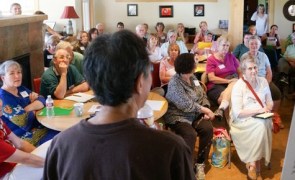
The National Cohousing Association has national and regional conferences at which topics of diversity are standard on the meeting agenda
cohousing vision statement has some mention of “valuing diversity.” When I talk with forming communities, I ask them to have frank and honest discussions about what influenced their views about diversity and some ways the vision can be implemented. Governance based on shared responsibility, rotated leadership, and adopted community norms about accountability are big departures from majority rule and top-down decision making.
There’s an entire industry that has cropped up around consensus decision-making, cultural competency and meeting facilitation.
That’s easier said than done, but if carried out efficiently, inclusivity happens without a “program,” diversity training or more meetings.
In my experience, settling into any neighborhood is stressful enough. What if you’re asked to jump right into discussing personal issues and views around the American Dream, money, race, class, gender identity and sexual preference? That adds an even more complex layer to neighborliness. I’d say mostly on the governance level when talking about home owner association fees, decisions about when individual “rights” end and the community “good” begins.
The best things about cohousing are the neighbors and the worst things about cohousing are the neighbors.
Don’t get me wrong. There are lots of positive things about living in a community – plenty of really great neighborly support if a ride is needed to the store, or help needed to move furniture, care giving for sick neighbors. Friendships are formed, informal barbecues happen spontaneously and formal community events are planned around holidays.
I’m also lay-developing an intentional community in Cheyenne, where those discussions will take place and will be key to forming a resilient group of neighbors. Alas, those discussions have made it as far as the facebook page and haven’t popped up on the radar screen ahead of water, curb, gutter and street construction issues.
I’ve taught cultural competency and diversity workshops over the past 15 years. Most recently, I’ve adapted the curricula for intentional community audiences. At least from the feedback I’ve received, participants gained a better understanding that while the bricks and mortar of cohousing are buildings where residents live, the members who form a community are the most important aspect. The intentional community mantle can overlay any housing configuration.
While my cohousing living experience hasn’t been perfect – maybe none of them are – the intentionality brings neighbors together to work through tough issues – even though some may be on the petty side, they might as well be matters of life and death.
The upshot? If there’s a community configuration that enables conversation among divergent opinions, intentionality is a good thing, but individual effort must be put into understanding the perspectives of others and changing personal courses of action.
Social change through cohousing is a steep uphill climb constrained by American social/cultural norms.
The American Dream, bigger being better. We are driven to pull ourselves up by our bootstraps, make a lot of money and make it to the top. Community founding members should have frank discussions among themselves about why cultural norms create roadblocks for the advancement of caring and interactive communities beyond what is familiar.
Cohousing communities, by definition, bring diverse people together. The only group to fully self-select who will be in the community, are the founding members. People may intellectually “value diversity”, but diversity doesn’t always play out, considering the typical cohouser is white, educated, high income and high-perceived social class and a woman.
Forming community members should discuss what they would be willing to give up – attitudinally and/or financially – to include diverse members. In one of my training sessions, I met a couple people from a forming community that is having this discussion and they decided to take some of the capital gains from their personal home sales to buy down houses to make them more affordable.
Reaching out to people different from oneself is a challenge and cultural brokers may need to be engaged. In my workshops, for example, attendees practice ways they can look at their personal histories and make changes so as to become more inclusive as opposed to only believing inclusivity is a good idea.
Personal introspection doesn’t end once the houses are constructed and residents unpack their boxes. Over time, the community evolves and residents need to keep unpacking their personal histories and values as families move, people pass away and new neighbors arrive.
While fair housing laws preclude discrimination, communities can provide information about the community, expectations of membership in the Homeowners Association (HOA).
Professional and lay cohousing developers can choose to make personal transformations. There are markets other than those of the “typical” cohouser, particularly in gentrifying and abandoned neighborhoods. Culturally competent developers expand their markets by finding easier outreach paths into diverse communities.
As a cultural broker myself, I know that the approach gets results and opens doors without the appearance of “tokenism.”
What are some next steps?
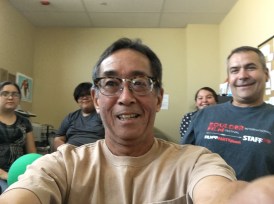
Hang out with people who are outside your usual circles.
Step out of your comfort zones to start.
Who do you sit next to in church? Sit next to a stranger.
Who do you call to go out for coffee? Ask someone you’ve wanted to get to know better.
Do you stand up as an ally? Take a risk when you hear offensive comments in the grocery store line.
Social justice marches and political elections may be personal inciting incidents that bring people together.
Whether or not you choose to take on the difficult task of becoming more culturally competent, it’s when individuals collaborate and alter their behaviors that bridges are built to close social and cultural divides – one community at a time.

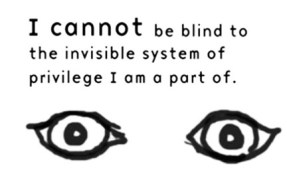 – Diversity and cultural competency cross cut when it comes to affordable cohousing.
 – I suggest you build the homes so they are all affordable to people / families of similar means. At Silver Sage, over the years, a perceived caste system arose. Dealing with a more socio-economically diverse community is a challenge for people, particularly since stereotyping may be involved.
 – I suggest you design the homes ala
 Views from Behind the Lens