
Musings about the cohousing ‘Dealing with Diverse Personalities Retreat’

arcosanti-class-pix
Arcosanti is an urban laboratory near Mayer, AZ. The Dealing with Diverse Personalities retreat was held there with 40 participants from around the country in attendance.

“Forget Arcosanti, we’ll always have Mayer …’

Movie line maloprops from “Forget Paris” and “Casablanca” struck me when I started writing these musings.

Good memories.

Besides, I have to make some sort of movie reference since it was my  “Dealing with Diverse Personalities” retreat presentation theme at Arcosanti in Arizona which wrapped in early October and sponsored by Cohousing USA.

If you’re reading this and didn’t attend the retreat, you’ll likely note a bunch of “inside baseball” references and I don’t expect you to understand them, but maybe that bit of mystery will entice you to a similar workshop at your community.

It was a lot of fun for me. I get personal satisfaction as a facilitator when participants learn something – at least I hope something stuck with each of them! I try to appeal to all learning styles with visual, audio and hands-on approaches.

We had 40 people from around the country attend who I hope learned a little bit more about themselves and why self-awareness is important while interacting with others.

I hope all who were there are still at least a little jazzed up with the experience. A lot of stuff was crammed into a short  weekend. I’ll send out periodic notes to our retreat group to keep the creative juices flowing and keep everyone connected, even if it’s virtually by way of email.
arcosanti wide

CoHoUSA is presented a retreat September 30 – October 2 called “Dealing with Diverse Personalities inn Community” at Arcosanti in Arizona.

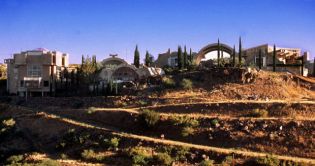
Arcosanti is an interesting urban community laboratory – not easily forgotten – established in 1970 just outside of Mayer, AZ – which is a bit hidden away just past Cordiss Junction.

The unique venue proved an apt setting for the retreat about dealing with diverse personalities in communities.

The cafeteria food was okay, but mostly because I didn’t have to cook it. I like eating at places where none of the meal serviceware matches.

Sharing food with others is always a great chance to know people better – like whether they use their salad fork through the entire meal, if they like ice in their water or not, etc. – as well as a little about their lives.

A cross section of folks attended who currently live in community, are starting a community or just interested in community. Building a cohousing neighborhood is a daunting task and getting compatible people to live together in the same place is the most fulfilling, but maybe the most difficult part of the process. There were plenty of war stories told and questions asked about cohousing.

If you’d like to see my notes from the two sessions I facilitated, you can download them from this flip book. My presentation style is a combination of lecture and interactivity. I generally don’t like power point presentations, but I think they are necessary to provide details about content as takeaways. The activities are intended to be hands-on applications of the information provided.

arcosanti-apse

The vaulted area of Arcosanti is one of the unique areas of the community which was a great gathering spot for the retreat.

The upshot of the retreat was to take a different look at diverse personalities and seal-realize that we all are diverse in our own ways, with moments of being difficult, conciliatory, positive and everything in between.

Getting to know potential residents at the superficial level is part of the process, like if they are readers, or knitters, or hikers.

But what about the nitty gritty? Is getting to  know if a person is a chronic over achiever/slacker, or a control freak important/complacent or introvert/extrovert important?

I say, “yes.

Knowing “who” a person is turns out to be more important than whether or not they like to go to the movies.

Remember, your group will be managers of the day-to-day business of the community.

We covered some techniques as to get a handle on the nitty gritty.
The other higher level component is for communities which consist of members of all types of personalities to agree upon norms and expectations to create an atmosphere of accountability, rather than setting up a typical “victim vs perpetrator” norm.

It is up to each of us, as individuals, to take responsibility for our actions. It’s then up to the community to determine the level at which its members agree to intentionally learn about one another, particularly about past experiences and histories.

ann-tour

Jeff Zucker is the resident Arcosanti architect and gave a tour of the place. Those spires are cypress trees.

I sensed that there was some push-back from this approach since it moved participants out of their comfort zones.

There were some who wanted more “practice” dealing with interpersonal conflicts between and among people who have personality traits that tend to rub people the wrong way.

The main drawback to “practicing” is, all scenarios are different, they occur at the moment, there are different people situations.

Practicing one set of variables will ALWAYS differ from what actually happens. My approach is for neighbors to better understand themselves and how they can monitor their reactions to prevent conflicts from happening in the first place.

img_5543

Cohousing USA President Jeff Zucker who lives in nearby Manzanita Village cohousing welcomes retreat goers at the Friday night mixer.

Nonetheless, the best way to practice is through interactive simulations. To get us all up and moving, my colleagues Mike and Jeff administered a self-evaluation form that classified us into various animal types, which was an interesting exercise and gave some insight into specific personality types.

Following that, a problem solving game was played with the upshot being that we all possess iterations of each of the personality types. Sometimes we play different roles in a group decision making setting.

I’ll likely be teaching a redux of the Arcosanti workshop, but entitled “Understanding Diverse Personalities” at the Cohousing Association National Conference in May 2017.

The Arcosanti content was received well, but I’ll tweak  the presentation for the May workshop. It will be new and approved particularly as it pertains to developers – so stay tuned.
img_5562

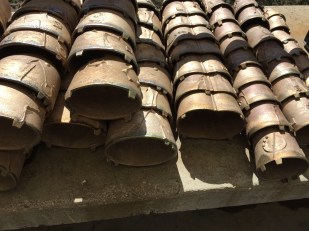
Does Arcosanti ring a bell?

I like smaller events like the Arcosanti retreat. I got to know some of my cohousing colleagues better and kindled some new friendships. I’ll likely return to Arcosanti, particularly since I forgot a piece of equipment there.

What will I remember?

I’ll remember scraping the under carriage of my VW in the dark of night. I have fond memories of the Cowboy Saloon in Mayer.

Whatever your experiences, I hope they are good ones, but keep in mind – “What happens in Vegas, Stays in Vegas!”

Keep affordable housing from being an elephant in the room

jim snow tree

Silver Sage Village in Boulder, Colorado consists of 10 market rate and six affordable homes.

The “Dealing with Diverse Personalities” retreat is coming up at the end of September – there’s still time time to sign up. The retreat is not for the faint of heart.

Like dealing with issues of housing affordability, it’s not an easy topic to discuss since it requires people to step out of their comfort zones.

Most affordable housing discussions are about density and development scale, parking, traffic, grants, public / private partnerships – the “stuff” of affordability.

Once built, however, affordable housing and the diversity that goes along with it can be sources of personal conflict which happen at the national, local and neighborhood levels. As a refresher, I’ve written about diversity and cultural competency as a prelude to the Arcosanti retreat and folds right into discussions about affordable housing.

There’s been quite a bit of discussion about affordability in cohousing. Here are a few of my observations about it which I originally wrote for the EcoEducation Village Institute.

In my past lives I was a city planner, then developed Habitat for Humanity affordable housing and served a term on the Boulder Planing Board. I currently live in an affordable cohousing home.

Silver Sage Village has 16 homes of which ten are market rate and six were built as part of the city of Boulder’s permanently affordable housing program.

Wild Sage cohousing across the street partnered with Habitat for Humanity as well as the city affordable program. Here are a few of my random thoughts and suggestions:

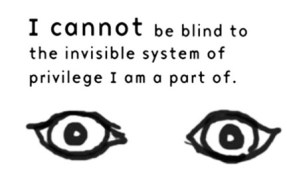
privilege– Diversity and cultural competency cross cut when it comes to affordable cohousing.

I suggest you have a serious and frank discussion among yourselves about why you personally – as opposed to philosophically – want affordable housing in your neighborhood.

Get strong commitments about all being willing to pay more money out of pocket to level the field for those who cannot otherwise afford to live there.

It’s obvious that partnering with others, rather than tackling affordable housing on your own is necessary. Even if you do find ways to subsidize building costs those don’t lower monthly Home Owner’s Association fees.

coho suburb aerial– I suggest you build the homes so they are all affordable to people / families of similar means. At Silver Sage, over the years, a perceived caste system arose. Dealing with a more socio-economically diverse community is a challenge for people, particularly since stereotyping may be involved.
The Silver Sage Village affordable homes are 800sqft and worth $150000 and limited in annual appreciation. The market rate homes are between 1100 and 2300sqft and valued at $500000 and $800000 and rising.

For the affordable home owners with limited appreciation, it’s a challenge to keep HOA fees equitable. Affordable homes are the same as market rate homes in the sense that the equity is earned differently. Rather than having to tie up large amounts of cash into a home, affordable homes are lesser expensive, in exchange for earning the equity in small annual chunks.

Becoming more culturally competent is a step toward breaking down the notions of privilege or lack, thereof.

– I suggest building all similar sized homes so the homeowner fees are more equally distributed. At Silver Sage fees range from $450+ to $650+/month which includes gas heat and water and build enough homes to spread around the fees. I think the sweet spot is around 32.

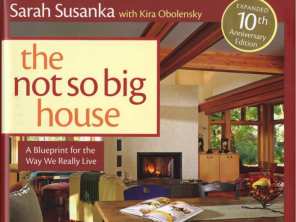
the-not-so-big-house– I suggest you design the homes ala “The not so big house” by Sarah Susanka to encourage residents to use the common house.

At Silver Sage the common house is used more by the affordable homeowners because our living spaces are smaller.

The common house here is used a majority of the time by by non-residents who rent it for studio and office space and outside events like meetings and classes. The market rate homes are designed like large homes in the suburbs and plopped into cohousing with large living rooms and big kitchens.

These are a few of my ideas and suggestions when considering whether or not you want to have affordable homes in your neighborhood / community. It’s not as easy decision to make, when you take into account the potential demographics of those who live in affordable housing.

Everyone each have different life experiences, current lifestyles, and it is imperative that all community members recognize these differences and learn how to embrace them in the contexts of their own lives.

If you  intellectually think affordable housing is a good idea, but not sure why it’s so hard for you to accept it emotionally, take a chance and step out of your comfort zones, sign up for the “Dealing for Diverse Personalities” retreat September 30 – October 2nd in Arcosanti, AZ.

Part III – Diverse Personalities: Let’s get personal with cultural competency

glinda dorothy oz

Click on the image of Dorothy and Glinda and watch the clip about how Dorothy always had the way to get back home.

Remember the climax of the “Wizard of Oz” when Dorothy gets herself back to Kansas?

Good Witch of the North Glinda lets Dorothy in on the secret that she’s always had the way to return home.

What do Dorothy and the interactive Dealing with Diverse Personalities retreat have in common?

Previously, I wrote about risk factors and how they may contribute to conflicts among diverse personalities and how protective factors can buffer against risks.

One strong protective factor is cultural competency.

We all are capable to become more culturally competent by evaluating ourselves and learning, sometimes through hard knocks, that we inherently have the ability to be more accepting of others  and their personalities and to better understand our own personality quirks which may cause difficulties for

Like Dorothy having to decide which Yellow Brick Road fork to take, evading flying monkeys, liquidating the Wicked Witch of the West, it takes work for each of us to realize that we possess the inherent abilities to understand ourselves and others. Sometimes we need a little help from our own Lion, Tin Man and Scarecrow.

What is cultural competency and why is it different from learning about diversity?

—If you do a google search, there are many iterations and definitions. For my purposes, cultural competency is a developmental process that evolves over an extended period of time. At any given moment, depending on past histories and experiences, individuals, groups and communities possess various levels of cultural awareness, knowledge and skills necessary to deal with other people – all of us are different.

It’s a very personal journey and at the Dealing with Diverse Personalities retreat, we’ll start the voyage by remembering our histories, developmental influences and how those experiences affect how we perceive and understand others.

Diversity, on the other hand, is descriptive of various groups. Learning aspects of diversity is daunting since there are so many ethnicities, nationalities, religions, languages, that the list is nearly endless. It’s not practical to try and learn them all.

On top of those is the endless list of personality types – extroverts / introverts; over achievers / passive; yes people / no people.

Because of our limited knowledge of diverse characteristics, judgements lead to unintentional stereotyping. Stereotyping is making decisions based on inaccurate or incomplete information.

Cultural competence is self-guided work that will begin or continue at the Dealing with Diverse Personalities retreat. Participants will realize that it is possible to shed behaviors, recognize privilege, understand the need to make personal sacrifices for the good of the whole. The process can be difficult, you may lose friends, but make better ones, and it takes time.

We appeal to all learning styles – auditory, visual and hands-on. Roll up your sleeves and join us. If you’re already on the journey, want to start a new voyage, are interested in helping your organization or community avoid conflicts among diverse personalities which may include yourself, then sign up for the Dealing with Diverse Personalities retreat September 30 – October 2nd.

“There’s no place like home.”