
Part I – Diverse Personalities: Do you proactively de-escalate disruptive people in your life?

arcosanti wide

CoHoUSA is presenting a retreat September 30 – October 2 called “Dealing with Diverse Personalities in Community” at Arcosanti. Click on the image to learn more about  and register for the $175.00 retreat.

Arcosanti, Arizona is an experimental community between Flagstaff and Phoenix built by a bunch of volunteers to demonstrate sustainable alternatives to urban sprawl and also the home to a bronze bell foundry.

September 30 to October 3 Arcosanti will be the location for another experiment of sorts as the venue for the “Dealing with Diverse Personalities in Community” retreat facilitated by Jeff Zucker and myself.

“De-escalation”has been in the news lately.

Our retreat will concentrate on how individuals within communities of any ilk can learn some skills about exploring the roots of their own diverse personalities, how to become aware of others’ diverse personality traits and how to de-escalate when personalities clash.

Regardless of your community – be it in your workplace, neighborhood, place of worship – all members have personalities and quirks that are annoying or pleasant with endless traits in between.

chickendifficultAt some point in our lives, we’ve likely been annoyed by someone or been the one annoying someone else.

I live in a cohousing community which, I’m finding, is an endless source of personality war stories. I spend a very small part of my time in cohousing mode, but last week, there was a huge blow up over a festering issue.

The unsuspecting target wandered by and offered salutations only to be greeted by one retaliator who had multi-faceted tension building up in him about the ‘inciting incident’ before letting loose with a vulgar verbal barrage. A second retaliator exchanged a few words and walked away.

There were a number of bystanders, a couple intervened from a far, but that didn’t slow him down. Another in the conversation tried to establish a boundary to no avail and left.

While sympathetic to the retaliator’s perspective on the issue, I didn’t gang up on the target, but rather, intervened and sent the target on his way which ended the incident. I later went up and talked to him about what happened, and what I viewed as elements of the perfect storm that triggered it.

This was an eye opener for me. I had heard about community skirmishes, but this is the first time I’d been in the middle of one.  The timing and circumstances that brought a particular group of otherwise good people together in one spot, caused this violent outburst and what might have prevented it would be a good case study.

I can see how a routine traffic stop can escalate into gunfire between cop and citizen.

The skirmish ended, but the issues and hard feelings continue to be proverbial elephants in the room, ignored until the next perfect storm brews.

It’s impossible to predict when personality flareups will happen and the Arcosanti retreat will provide participants with three workshops purveyed by hands-on activities, visual and audio presentations about how to be better prepared for community social emergencies. Each participant will also develop an action plan to take with them.

Not only will it be information packed, but the weekend is guaranteed to provide a good time for all!

The Spirit of Culture: Is diversity highly over rated? 

Click on the banner to read the full conference schedule.

Diversity, inclusiveness, cultural competency: are they just feel good buzz words?

Do they result in big benefits or big hassles in the long run?

I don’t know anyone who is AGAINST the tenets of equality and fair play in the abstract.

I don’t know anyone who considers themselves a “racist” but we’ll also talk about the roots of violence and privilege that play out in the 24 hour news cycle of today and enable bad behavior in smaller communities.

I’m leading a workshop at the “Aging Better Together” conference in Salt Lake City May 20-21 called “The Spirit of Culture” which addresses inclusion and diversity from first person perspectives – your prespectives.

Here’s a link to the slide presentation I’ll be making at the conference.

We’ll work as a group and as individuals while thinking back about our upbringing, the people of influence in our lives and how we can understand ourselves to better relate to others.

A cohousing community is a unique social construct that isn’t inherently in the American cultural DNA.

Another topic we’ll discuss in the context of cohousing is that of affordability – the types and prices of housing and the persons and families who live in them.

Workshoppers will leave some tips and exercises they can share with their communities.

This will be the most important workshop you’ll attend – if you dare.

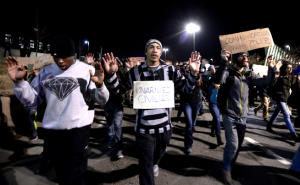
The #HandsUpDontShoot and #ICantBreathe protestors in Ferguson and NYC need closers

Protesters block highway 36 in Boulder, Colorado (Photo by the Daily Camera)

Protesters block highway 36 in Boulder, Colorado (Photo by the Daily Camera)

Even in white bread Boulder, Colorado protesters and marchers have taken it to the streets in the wake of the cop killings of  Michael Brown and Eric Garner.

The problem?

There’s no end game.

The movement needs closers.

Lot’s of glittering generalities scrawled on the placards – “justice for Mike”, “hands up don’t shoot”, “no killler cops” … reactionary causes like this are heavy on feel good symbolism and light on outcomes. I had high hopes for the Occupy movement, too, but that fizzled.

Already the Brown – Garner furor has waned and CNN is on to the next news cycle about CIA torture and vicious Sony emails.

That’s too bad.

About the only outlet that oppressed people have to get their larger communities to take notice is through civil and criminal disobedience and the willingness to accept the consequences of jail time and injury. The topic moved race relations to the forefront, though, even forcing Walmart to pull a TV ad.

Race riots around the country in 1964 got the nation's attention.

Race riots around the country in 1964 got the nation’s attention.

Back in the 1960s, segregation was a state’s right and legal in the south. The bus boycotts and restaurant sit-ins initially were not that successful but the 1964 riots in Chicago, Harlem and Philadelphia got people’s attention. This was also the first time there was TV news coverage.

What was the end game?

The Civil Rights Act of 1964.

This is the 50th anniversary of that legislation which passed by landslides in both houses of the US Congress and Lyndon Johnson’s trademark legislation carrying the torch for John Kennedy.

Half a century later, the country has come along way in civil rights, but what’s next?

No laws will change societal attitudes. That’s work that each person has to do on their own by looking in the mirror and deciding what kind of person they want to be; ask what values do they want to instill in their children and the children of others; decide if its work losing friends over their new outlooks.

It’s hard work.

You ask anyone and nobody will say they are “racist”.

Their rationales?

“I don’t burn churches and wear white hoods.” I hear people say they are “color blind.”

If a person is truly “color blind” they should be willing to give up personal power to people of color and oppressed people.

The work goes way beyond exchanging pleasantries at church coffees – although that’s a good start for some people.

the notion of cultural competency rears its head from time to time. It wouldn’t surprise me if there aren’t funds for this in the big federal program Obama unveiled the other day that would give money to local police departments to buy body cameras.  The problem is, cultural competency work is generally an “add-on” and not really integrated into the day to day workings. It gets discussed on a reactionary basis.

Quality of law enforcement can be plotted on a bell curve. On one end are bad cops that lie, cheat, steal and kill and on the other end are great cops that save kitties from trees, help a stranded motorist. We just need a whole bunch of okay cops, good cops. In fact, the vast majority are okay and good trying to make a living for themselves and their families. Here’s an example of a cop who caught a woman shoplifting eggs.

What were his choices?

He could embarrass her by a shake down in the store. He could call in back-up; He could see if the store wanted to press charges; or he could pay for the eggs, which he did. I doubt he got any special training to do this, but rather he’s just a nice guy.

I also think that people and police generally want to change their attitudes towards inclusion, but there aren’t any readily accessible day to day tools, other than, maybe through a church or nonprofit, or workplace.

Law enforcement officers catch the brunt of frustration and I think that’s just part of the job. If the protest groups get their acts together, what might be some outcomes for them for them to pursue? This is largely a local issue and here are a few ideas:

  • Work with civil service commissions police unions and citizen police boards to change their police testing and recruitment procedures to include stronger cultural competency indicators. Police departments do pretty good jobs weeding out the real bad apples and tests tend to be standardized and don’t control for race relations.
  • Work with police academies and college law enforcement departments to add additional training and classroom instruction about how to verbally deescalate situations. These two citizen killings escalated from stealing cigars and selling cigarettes to death. That’s a problem. There are companies that provide training about this. Deescalation classes should be a part of criminal justice college / university curricula and not just on the job workshops.
  • Develop new leadership by recruiting members for the city parks board, planning commission, housing committees. Once emerging leaders gain experience they can make runs for the city council or other elected offices.

About all the nationwide peaceful and violent demonstrations have accomplished is ruining the lives of two cops – Daniel Pantaleo and Darren Wilson – who will soon fade into oblivion and sold some newspapers. That’s not a very good return on investment, if you ask me.

The activists from the 1960s and 70s  are tired and there wasn’t much, if any, thought about passing on organizing skills to others. It’s a young people’s world now and there must be at least a few closers out in the fray …