Small Ways to Make a Big Difference in 2026

If you watch the news every day, you’d think the world is spinning out of control and that life in America couldn’t possibly be worse. Chaos is everywhere. Nothing is working. Everything is broken.

Here’s something worth remembering as we step into 2026. The news isn’t a record of normal life. It’s a record of exceptions.
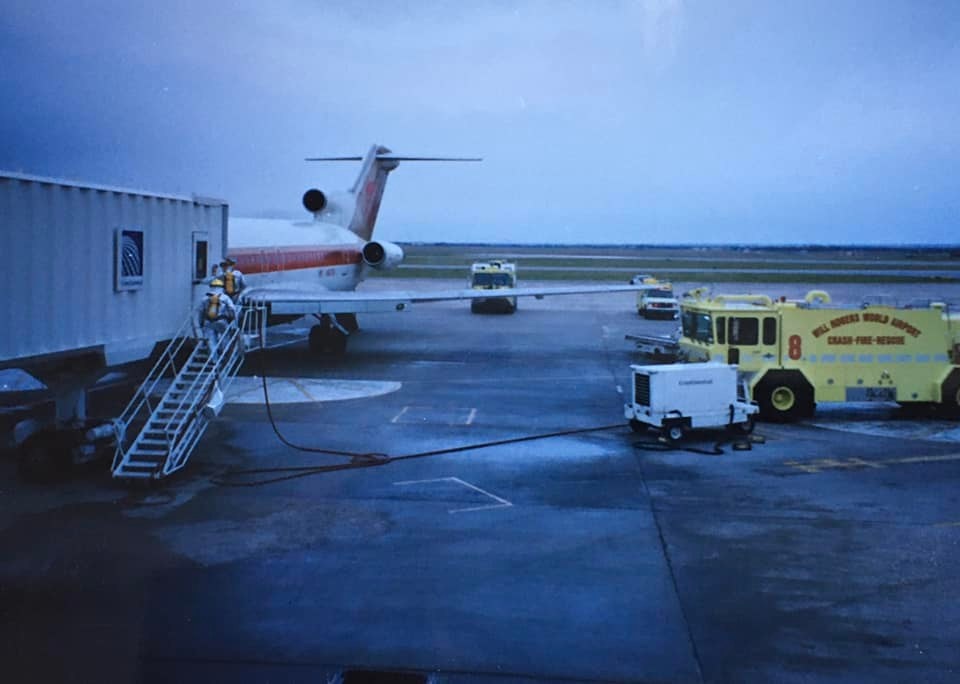
Roughly 100,000 airplane flights land safely every single day. No one reports on that. What makes the headlines is the one flight that nearly misses another by a few thousand feet. One rare, frightening moment becomes the story, while the ordinary success disappears into the atmosphere. I was on a flight that made an emergency landing in Oklahoma City after a cockpit fire.

We consume the world the same way.

Some people struggle, some far more than most. The economic imbalance in this country is real and long-standing. The top 10% of Americans hold nearly 60% of the nation’s wealth and control over 93% of the stock market. Meanwhile, the bottom 50%, most of us are included here, share only about 2.5 to 3% of total wealth.

That gap didn’t start yesterday, and it isn’t shocking anymore, which is exactly why it rarely makes headlines.

What doesn’t get covered is the homeless family struggling day after day, because that story has become tragically ordinary. Ironically, the moment that family does make the news is when a Good Samaritan shows up with a check and a camera, because that visible act of generosity is the exception.

I know my life isn’t newsworthy. I do well enough to get by. I’m not worried about myself. I’ll admit that I often feel stuck when I wonder how I can actually make life better for someone else in 2026.

I don’t have thousands of dollars to give away. I’m not going to trend on social media for doing the right thing. Maybe that’s the point.

What One Person Can Do in 2026

Making a difference doesn’t require a headline. It requires consistency. Here are a few ways I’m thinking about showing up quietly and imperfectly in the year ahead:
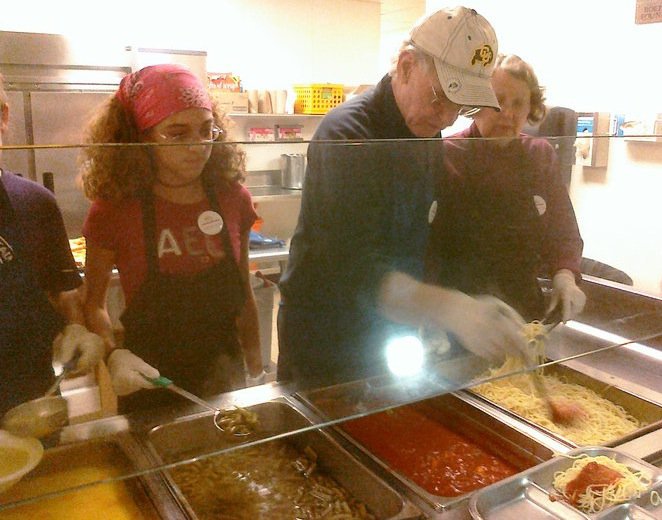
  • Support locally and repeatedly. On “Giving Tuesday,” I donate $5 to a bunch of small nonprofits. I either know someone who works there or have received services from them. Small and consistent giving matters more than one dramatic gesture. The image is from a night the Bethel Methodist Church volunteers served dinner at the Boulder Homeless Shelter.
  • Pay attention to proximity. The people who need help most are often the ones closest to us, like our neighbors, coworkers, and families in our community. Noticing is the first step.
  • Use skills, not just money. Skills such as teaching, writing, mentoring, repairing, and organizing can improve life in ways cash alone doesn’t.
  • Tell better stories. Share stories of resilience and dignity, rather than those about crisis. Remind people that struggle doesn’t erase humanity.
  • Vote with time and intention. Where we spend our time, our energy, and who wins our votes, quietly shapes the future more than outrage ever will.
  • Be a steady presence. Showing up again and again, especially when no one is watching, is how trust is built.

Widen your lens 2026

The start of a new year is when we usually turn inward. We resolve to lose weight, get a better job, quit gambling, drink less, and do more yoga. Those are good, necessary goals. Taking care of ourselves matters.
I don’t know anyone who truly wishes ill will on others. I don’t know anyone who doesn’t, at least in principle, want the world to be better than it is. Most of us are overwhelmed and not cruel. I get tired. I’m unsure where to begin.

In 2026, here’s where I’m starting.

Do good, and do no harm.

If you can help, help.
If you can’t help, don’t hurt.
If you’re unsure what to do, choose kindness over indifference.

I know that I can’t fix everything in the world. I doubt that I’ll grab a headline or a viral Facebook moment.

As we move into 2026, my hope for myself and for anyone reading this is that we strive to improve our own lives while remembering we’re not alone in this. Each of us needs to make one choice today that leaves someone else a little better off than they were before they crossed your path.

It might look like patience.
It might look like listening.
It might look like showing up when it’s inconvenient.

Those choices aren’t newsworthy, but they make life livable.

That’s a future worth building.

Leave a comment

Go back

Your message has been sent

Warning
Warning
Warning
Warning.

Musings about the cohousing ‘Dealing with Diverse Personalities Retreat’

arcosanti-class-pix
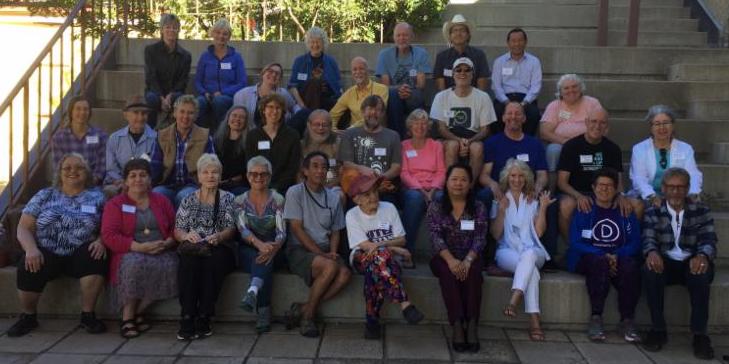
Arcosanti is an urban laboratory near Mayer, AZ. The Dealing with Diverse Personalities retreat was held there with 40 participants from around the country in attendance.

“Forget Arcosanti, we’ll always have Mayer …’

Movie line maloprops from “Forget Paris” and “Casablanca” struck me when I started writing these musings.

Good memories.

Besides, I have to make some sort of movie reference since it was my  “Dealing with Diverse Personalities” retreat presentation theme at Arcosanti in Arizona which wrapped in early October and sponsored by Cohousing USA.

If you’re reading this and didn’t attend the retreat, you’ll likely note a bunch of “inside baseball” references and I don’t expect you to understand them, but maybe that bit of mystery will entice you to a similar workshop at your community.

It was a lot of fun for me. I get personal satisfaction as a facilitator when participants learn something – at least I hope something stuck with each of them! I try to appeal to all learning styles with visual, audio and hands-on approaches.

We had 40 people from around the country attend who I hope learned a little bit more about themselves and why self-awareness is important while interacting with others.

I hope all who were there are still at least a little jazzed up with the experience. A lot of stuff was crammed into a short  weekend. I’ll send out periodic notes to our retreat group to keep the creative juices flowing and keep everyone connected, even if it’s virtually by way of email.

arcosanti wide

CoHoUSA is presented a retreat September 30 – October 2 called “Dealing with Diverse Personalities inn Community” at Arcosanti in Arizona.

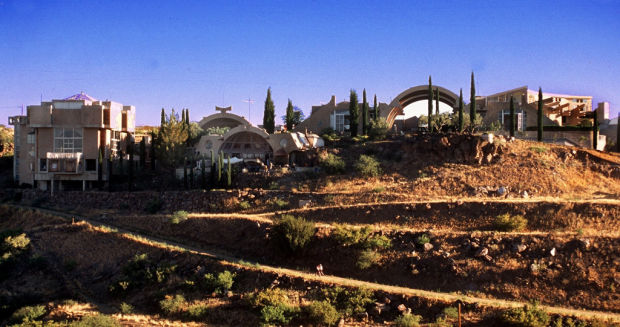
Arcosanti is an interesting urban community laboratory – not easily forgotten – established in 1970 just outside of Mayer, AZ – which is a bit hidden away just past Cordiss Junction.

The unique venue proved an apt setting for the retreat about dealing with diverse personalities in communities.

The cafeteria food was okay, but mostly because I didn’t have to cook it. I like eating at places where none of the meal serviceware matches.

Sharing food with others is always a great chance to know people better – like whether they use their salad fork through the entire meal, if they like ice in their water or not, etc. – as well as a little about their lives.

A cross section of folks attended who currently live in community, are starting a community or just interested in community. Building a cohousing neighborhood is a daunting task and getting compatible people to live together in the same place is the most fulfilling, but maybe the most difficult part of the process. There were plenty of war stories told and questions asked about cohousing.

If you’d like to see my notes from the two sessions I facilitated, you can download them from this flip book. My presentation style is a combination of lecture and interactivity. I generally don’t like power point presentations, but I think they are necessary to provide details about content as takeaways. The activities are intended to be hands-on applications of the information provided.

arcosanti-apse

The vaulted area of Arcosanti is one of the unique areas of the community which was a great gathering spot for the retreat.

The upshot of the retreat was to take a different look at diverse personalities and seal-realize that we all are diverse in our own ways, with moments of being difficult, conciliatory, positive and everything in between.

Getting to know potential residents at the superficial level is part of the process, like if they are readers, or knitters, or hikers.

But what about the nitty gritty? Is getting to  know if a person is a chronic over achiever/slacker, or a control freak important/complacent or introvert/extrovert important?

I say, “yes.

Knowing “who” a person is turns out to be more important than whether or not they like to go to the movies.

Remember, your group will be managers of the day-to-day business of the community.

We covered some techniques as to get a handle on the nitty gritty.
The other higher level component is for communities which consist of members of all types of personalities to agree upon norms and expectations to create an atmosphere of accountability, rather than setting up a typical “victim vs perpetrator” norm.

It is up to each of us, as individuals, to take responsibility for our actions. It’s then up to the community to determine the level at which its members agree to intentionally learn about one another, particularly about past experiences and histories.

ann-tour

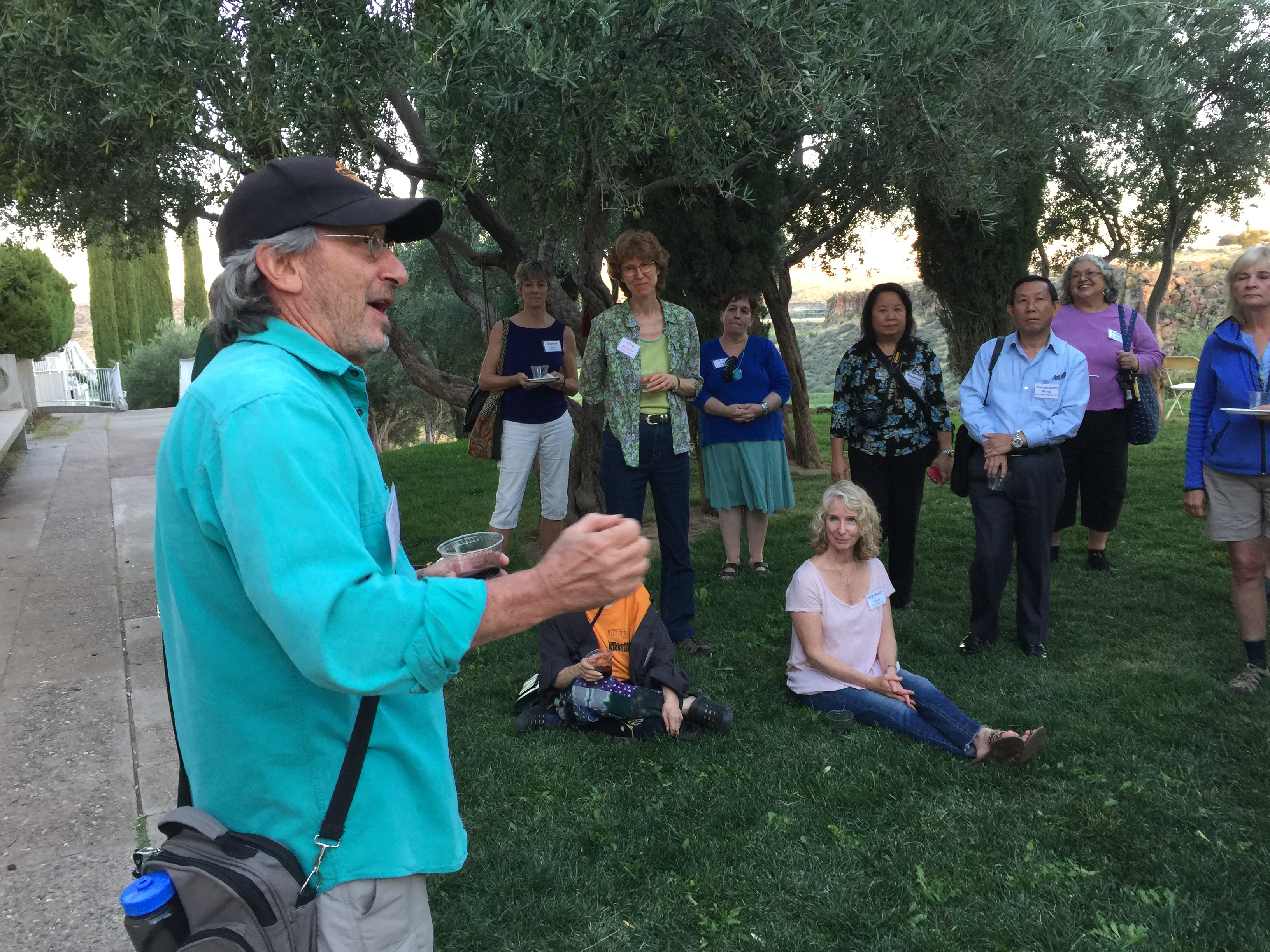
Jeff Zucker is the resident Arcosanti architect and gave a tour of the place. Those spires are cypress trees.

I sensed that there was some push-back from this approach since it moved participants out of their comfort zones.

There were some who wanted more “practice” dealing with interpersonal conflicts between and among people who have personality traits that tend to rub people the wrong way.

The main drawback to “practicing” is, all scenarios are different, they occur at the moment, there are different people situations.

Practicing one set of variables will ALWAYS differ from what actually happens. My approach is for neighbors to better understand themselves and how they can monitor their reactions to prevent conflicts from happening in the first place.

img_5543

Cohousing USA President Jeff Zucker who lives in nearby Manzanita Village cohousing welcomes retreat goers at the Friday night mixer.

Nonetheless, the best way to practice is through interactive simulations. To get us all up and moving, my colleagues Mike and Jeff administered a self-evaluation form that classified us into various animal types, which was an interesting exercise and gave some insight into specific personality types.

Following that, a problem solving game was played with the upshot being that we all possess iterations of each of the personality types. Sometimes we play different roles in a group decision making setting.

I’ll likely be teaching a redux of the Arcosanti workshop, but entitled “Understanding Diverse Personalities” at the Cohousing Association National Conference in May 2017.

The Arcosanti content was received well, but I’ll tweak  the presentation for the May workshop. It will be new and approved particularly as it pertains to developers – so stay tuned.

img_5562

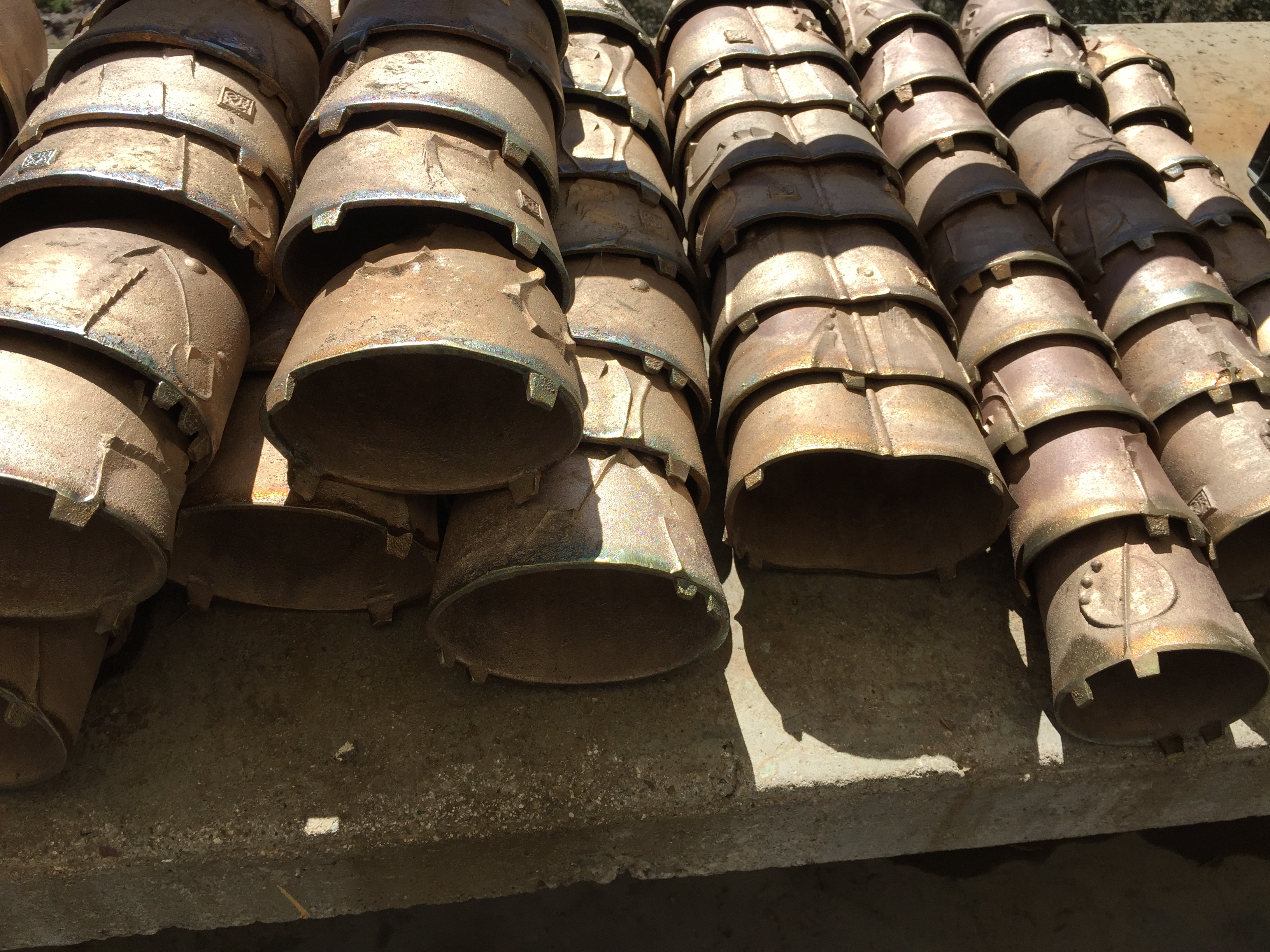
Does Arcosanti ring a bell?

I like smaller events like the Arcosanti retreat. I got to know some of my cohousing colleagues better and kindled some new friendships. I’ll likely return to Arcosanti, particularly since I forgot a piece of equipment there.

What will I remember?

I’ll remember scraping the under carriage of my VW in the dark of night. I have fond memories of the Cowboy Saloon in Mayer.

Whatever your experiences, I hope they are good ones, but keep in mind – “What happens in Vegas, Stays in Vegas!”