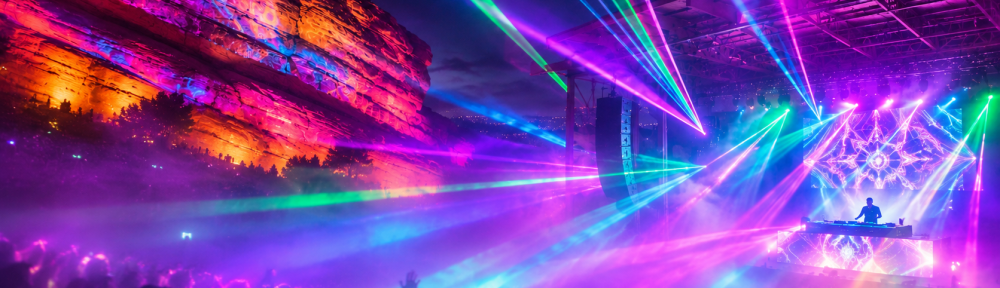
Three generations of music fans independently discovered the power of interpersonal connection.
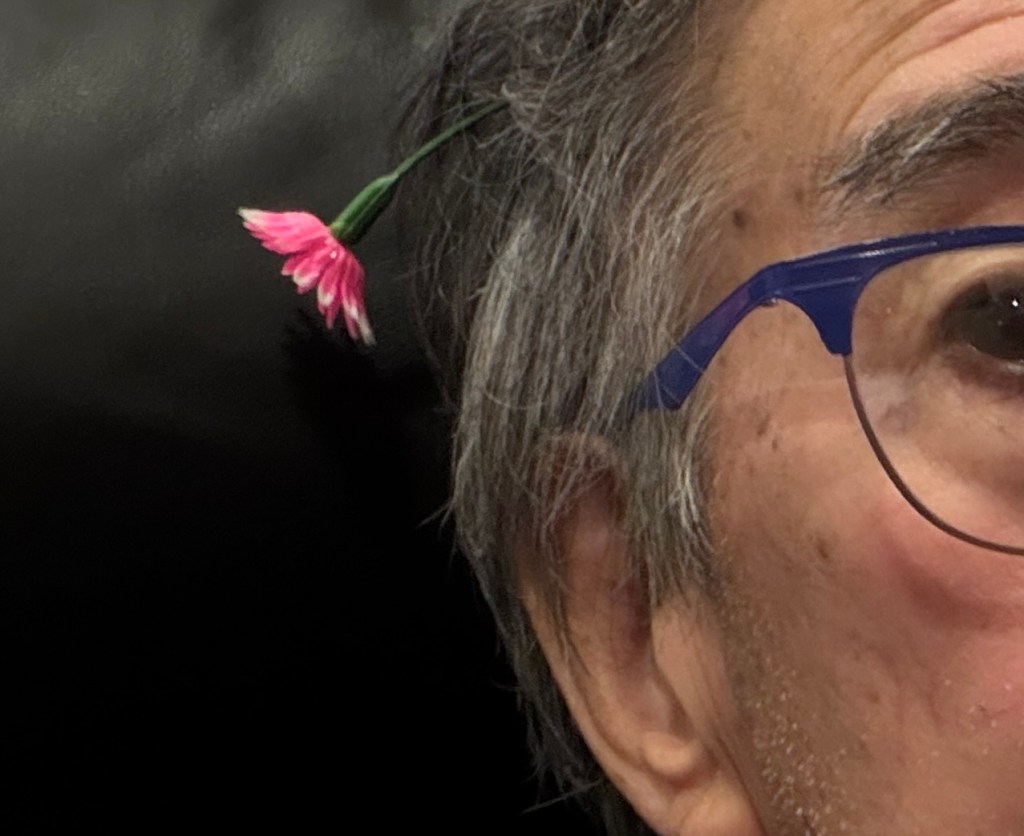
Three student members of my intergenerational writing class at CU presented on rave culture, characterized by Peace, Love, Unity, and Respect (PLUR). One PLUR ritual caught my attention. Ravers make colorful bead bracelets, called kandi, and exchange them with other ravers at shows. The bracelets are souvenirs and tokens of friendship, acceptance, and shared identity.
It was a playful gesture, a bit silly, and a way to be initiated into Rave culture. Bob surprised me when I felt him sprout a flower on the back of my head.
I gave my neighbor a flower, and she grasped my hand in PLUR fashion. We belonged to the same Rave community in our classroom.
I couldn’t help thinking about Taylor Swift’s fans.
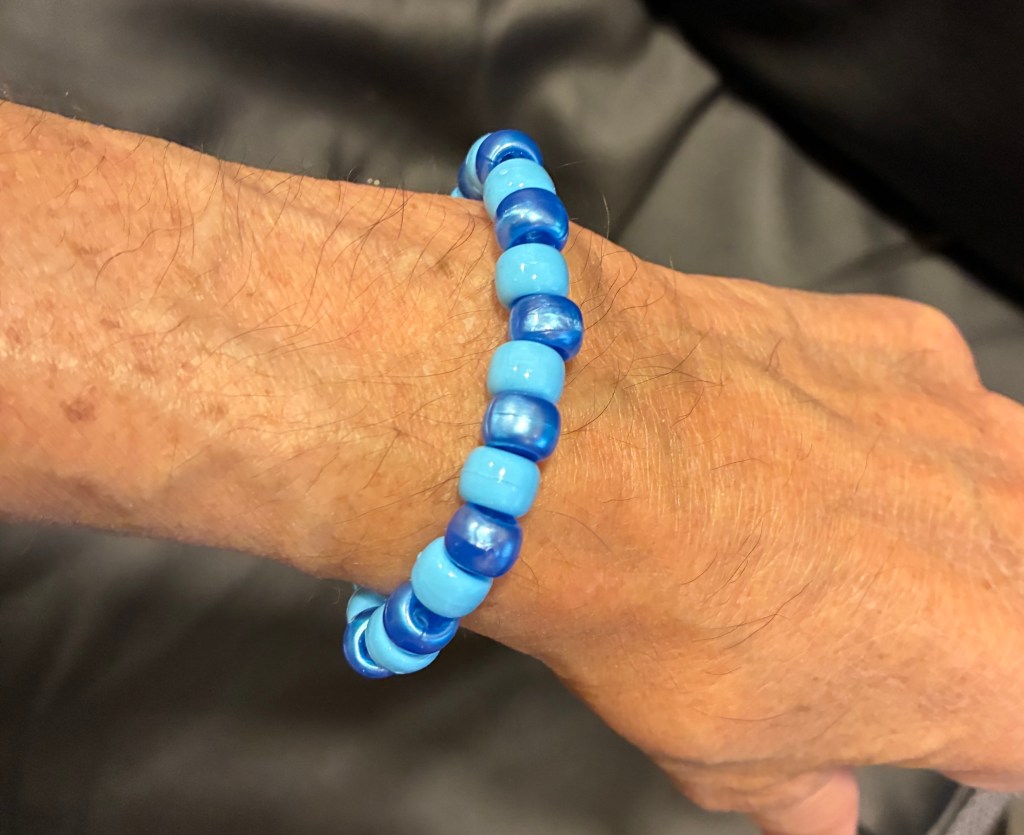
At the Eras Tour, Swifties made and exchanged friendship bracelets, inspired by a lyric in her song “You’re on Your Own, Kid.” The bracelets became a phenomenon. Fans arrived at concerts wearing dozens of them, trading with strangers and making connections with people who shared their enthusiasm for the music.
When I see handmade bracelets, I’ll know the wearer is either a Swifty or a Raver.
Didn’t ravers do this first?
The ritual before the ritual
Rave culture’s kandi tradition dates back to the underground electronic music scene of the 1990s. Making and exchanging bracelets became a way to express friendship and welcome others into the community.
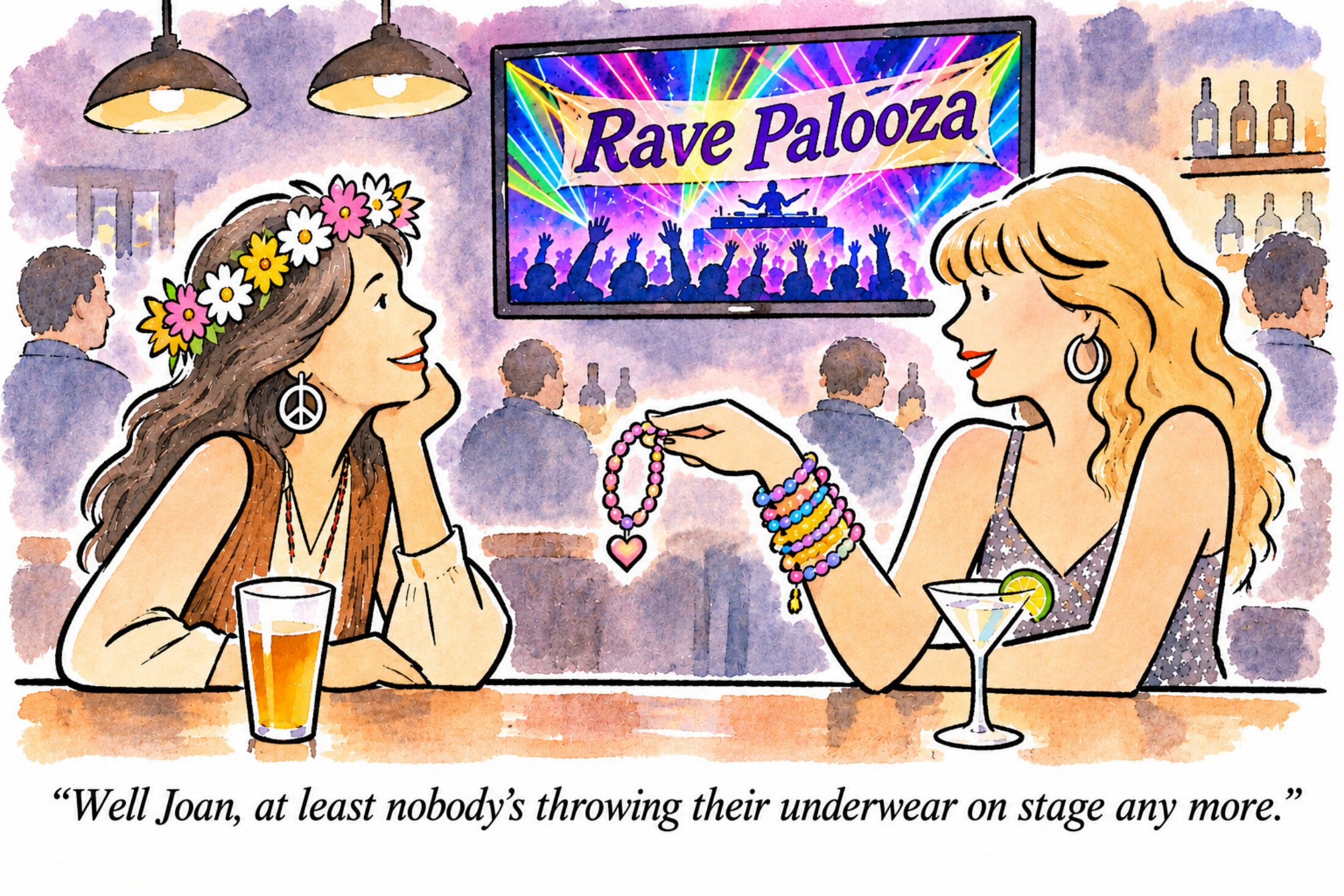
The Swifty friendship bracelet phenomenon arrived decades later. It’s tempting to think they borrowed the practice from Ravers, perhaps unknowingly. I wonder whether something more interesting is happening.
I thought back to my college biology classes and parallel evolution. Saber-tooth sloths and saber-tooth cats both evolved long, tusk-like teeth to better hunt.
Similarly, bracelets are an example of parallel cultural evolution: different communities, separated by generations and musical tastes, independently developing similar rituals to accomplish the same thing.
That sent me further back in time.
Flower power and the 1960s
The 1960s had its own visual language of belonging. Flower Children, mainly women, wore posies in their hair, peace symbols around their necks, love beads, and other handmade accessories.
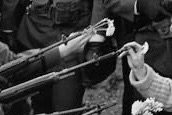
The flower became an emblem of the counterculture, particularly during the Summer of Love in San Francisco in 1967. It represented peace, love, and a rejection of conventional social expectations.
Women also found a voice in the more intimate folk-protest movement, rooted in small clubs and coffeehouses. Joan Baez, Judy Collins, and Buffy Sainte-Marie sang about civil rights, war, peace, and personal freedom. Their music brought women together around ideas that challenged their generation’s expectations.
There’s a famous 1967 photograph, “Flower Power,” by Bernie Boston, of a Vietnam War protester poking a daisy into a rifle barrel pointed at her by a National Guardsman.
Well-wishers also gave flowers to strangers. The gesture became associated with the era’s idealism and its desire to replace hostility with human connection.
I wondered whether the flower-sprouting ritual I experienced in the Rave presentation might have some cultural relationship to the flower children of the 1960s. I don’t know whether there’s a direct historical connection. It may be another example of people arriving independently at the same idea.
Collective Effervescence
Collective effervescence is a sociological term that helps explain what might be happening.
The presenters explained that Émile Durkheim used the term to describe the emotional energy people generate when they gather around a shared experience. A concert crowd singing together, a religious congregation, a political rally, or a dance floor full of strangers can all produce this feeling.
Individual identities give way to a collective experience. We become part of a movement larger than ourselves.
The bracelet and the flower become physical expressions of that experience.
The musical cultures may look different. One grew out of underground dance music, another out of mainstream pop, another out of the counterculture.
Yet the social function looks similar.
The physical exchange and personal connections matter most.
The object isn’t the point.
A concert T-shirt tells people what music you like. A button or a bumper sticker announces your affiliation. Giving a flower or a bracelet to a stranger requires another person to participate.
One person makes a bracelet and gives it away.
The receiver graciously accepts it.
The object is secondary to the interaction.
In the classroom, what mattered was that Bob placed the plastic flower in my hair, and I did the same for my neighbor. We participated in a ritual that temporarily dissolved the usual boundaries between strangers and acquaintances.
That’s why these practices keep appearing across generations and musical communities.
We live in a world where technology makes it easier than ever to communicate, yet meaningful human connections can be surprisingly difficult to establish. A handmade bracelet or a plastic flower can bridge that distance.
Maybe the ravers, the flower children and the Swifties aren’t so different after all.
They’ve discovered what sociologists have been trying to explain for generations: people need rituals, shared experiences, and tangible ways to express belonging.
All it takes is a flower in your hair or a bracelet around your wrist.
The objects may change from generation to generation. The human need to connect doesn’t.

