Unknown's avatar

About Alan O’Hashi, Whole Brain Thinker

I’ve been involved with community journalism since 1968 when I wrote for my junior school paper, the "Tumbleweed," through high school and college and then wrote for the "Wyoming State Journal." I put aside my newspaper pen and began Boulder Community Media in 2005. There wasn’t much community journalism opportunity, so I resurrected my writing career as a screenwriter. My first short screenplay, “Stardust”, won an award in the 2005 Denver Screenwriting Center contest. I've made a number of movies over the years. Filmmaking is time-consuming, labor and equipment intensive. I recently changed my workflow to first write a book and make a movie based on that content. - Electric Vehicle Anxiety and Advice - This is a memoir travelogue of three trips covering 2,600 EV miles around Wyoming (2022) - Beyond Heart Mountain - Winter Goose Publishers released my memoir in February (2022) - The Zen of Writing with Confidence and Imperfection - This is a book recounting how luck planed into my signing a book deal after a 15-minute pitch meeting. (2020) - True Stories of an Aging Baby Boomer - War stories about living in a cohousing and lessons others can learn when starting their communities (2021) - Beyond Sand Creek - About Arapaho tribal efforts to repatriate land in Colorado (PBS - TBA) - Beyond Heart Mountain - Based on my memoir about my childhood in Cheyenne facing overt and subtle racism toward the Japanese following World War II (PBS - 2021) - New Deal Artist Public Art Legacy - About artists who created work in Wyoming during the Great Depression (PBS - 2018) - Mahjong and the West - SAG indie feature which premiered at the semi-important Woodstock Film Festival (2014) Over the years, I’ve produced directed, filmed and/or edited several short movies, “Running Horses” (Runner Up – Wyoming Short Film Contest), “On the Trail: Jack Kerouac in Cheyenne” (Lowell Celebrates Kerouac Festival, Top 10 Wyoming Short Film Contest), “Gold Digger” (Boulder Asian Film Festival), “Adobo” (Boulder International Film Festival), “A Little Bit of Discipline” (Rosebud Film Series), and two feature length documentaries “Your Neighbor’s Child” (Wyoming PBS and Rocky Mountain PBS), and “Serotonin Rising” (American Film Market, Vail Film Festival). He also directed and produced the award winning stage play “Webster Street Blues” by my childhood friend Warren Kubota. Boulder Community Media is a non-profit production company dedicated to democratzing media in all their forms - large and small screens, printed page and stage by providing sustainable and community-based content. I mostly work with community-based media producers, organizations, and socially-responsible businesses to develop their content via – the written word, electronic and new media, the visual and performing arts in a culturally competent manner – I’m what’s commonly called a niche TV and movie producer. Along with all this is plying my forte’ – fund development through grant writing, sponsorship nurturing and event planning.

Lincoln Court Mixed Use Community housing $200K to $300K

lincoln court old postcard

Click on the post card image to download the draft business plan narrative.

The LINCOLN COURT mixed use development is an ambitious one but meets a variety of community needs. Plans are to develop on the 15 acre Back 40 Subdivision on the West End of Cheyenne, Wyoming consistent with the approved Missile Driver Corridor Plan.

The project is organized by Boulder Community Media dba ECOS. Download a copy of the draft business plan narrative.

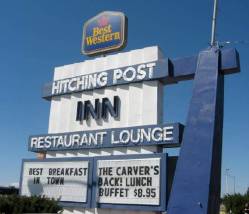
The property is adjacent to the former Hitching Post Inn site. The project name is homage to the Lincoln Court, a motor lodge that preceded the Hitching post, which fronted on the Historic Lincoln Highway (US 30).

The Lincoln Court project targets the affordable housing need with purchase price-points between $200,000 to $300,000. The vast majority of those needing housing will be those households who earn between 0 and 80% of the county’s Median Family Income. The project will work with Habitat for Humanity and the Wyoming Community Development Authority (WCDA) programs for first-time home buyers.

Based on a 2017 housing needs survey completed by the WCDA, Laramie county has 9,520 substandard housing units and based on incremental growth, an additional 4,074 dwelling units will be needed by 2020. Out of this need

WCM envisions a project positioned to target those wishing to incorporate more creativity in their business and day-to-day lives seeking to build equity in them selves or improving their housing situations. From a larger community perspective, the project supports and implements Cheyenne and Laramie County community development goals by enhancing the social and cultural experience for current and future residents through a mixed-use creative intentional community and possibly improving blighted property – the LINCOLN COURT alter-ego Hitching Post Inn site. The project also nurtures economic development by providing housing for primary jobs and also space for local low-impact businesses to expand and entrepreneurs to flourish.

Based on a 2014 economic development report by Cheyenne LEADS and a 2017 report by the Wyoming Community Development Authority there is a big need for housing, particularly affordable housing in Cheyenne and Laramie County.

wcdalogo

The WCDA offers down payment assistance programs for affordable housing and first time home buyers.

Lincoln Court offers the full range of benefits to Cheyenne with regards to affordable housing as a key economic development objective:

  • Available housing for all income groups helps a community retain jobs and retail stores, and helps business owners attract and retain quality and reliable workers.
  • The job creation and expansion impact is strongest if workers reside in the community. Employees are able to live near employment centers and thus are better able to report to work on time and have time to improve their job skills or get an education.
  • Improves ability of communities and businesses to attract and retain workers.
  • For a community, housing ties people together. It fosters a sense of place and local identity. It plays an important role in a economic sustainability and development.
  • New construction and management of a property creates new employment and generates multiple ripple effects that strengthen the local economy.
  • Workforce housing creates a more stable environment for children and helps them perform better in school.
  • Enables lower-wage earners to get into a home and begin building equity. A house payment is generally less expensive than rent, which increases disposable income.
  • Helps improve distressed areas and strengthen community and neighborhood pride.
  • Increases property values and property tax revenue to communities.
  • Creates family stability since wage earners work nearby and not commuter-distance away.
  • Housing plays a key role in individual welfare and often represents the single-largest family expense/investment.

The project meets this housing need through a mixed-use development consisting of owner occupied and rental, universally-accessible senior and intergenerational cohousing dwelling units – detached and duplexes, civic and community spaces and appropriate retail that would support the community such as a coffee shop, offices, live-work options. A site map is attached.

The LINCOLN COURT also is interested in innovative continuous care, including intergenerational “green houses” as championed by Bill Thomas for caregivers who could live “on site” in the cohousing community with their disabled family members who need more intensive and specialized health care nearby.

The target market is wide open and consists of intergenerational individuals and families, as well as seniors over 50 years of age, who may be local or from out of town “empty nesters” and wanting to downsize, “vigorous retired” people wanting to stay active and age in a community setting. In support of this, the project will investigate compatible services such as personal care, urgent care.

The project is a public – private partnership with strong private sector partners and the affordable housing component involving participation by local, state and federal government agencies. The project is economically viable with a balance among strong equity from the public and private non-profit sectors, debt financing and sales/lease.

Best Burgers in Wyoming?

mountain inn mountain view

Not many choices in Mountain View, but this place was pretty good.

I’ve been doing some research about the “Burgers of Wyoming.” A while back, I put out a note asking what place serves the “Best Hamburgers in Wyoming.”

Here are the 23 counties designated by license plate number with my picks and some suggestions from others.

Where in Wyoming have you eaten a pretty good ‘out of the way’ burger – that burger tucked away in a hole in the wall? (No national chains, please!)

1. Natrona County – Wonderbar in Casper. The place has changed hands. Is the food still the same, worse, better?

2. Laramie County – Two Doors Down all in Cheyenne. I originally had down the Plains Hotel, but that place has been going through some transitions lately.

3. Sheridan County – Wagon Box Inn in Storey; Rib and Chop House Sheridan – 1/2 pounder and try the squash casserole

4. Sweetwater County –

5. Albany County – Altitudes in Laramie

mangy moose riverside6. Carbon County –  The Virginian – The Bronc Stomper, open face burger topped with red or green chili – the fries are hand-cut. The Mangy Moose (not to be confused with the Teton County Mangy Moose).

7. Niobrara County –

8. Platte County – Howard’s in Glendo, recommended by Matt and Pete Mead

9. Big Horn County – The Hyattville Cafe – 1/2 pound mushroom – swiss

10. Fremont County – Gannett Grill in Lander;  Red Willow in the Wind River Casino – Mushroom Swiss Burger at Casino prices!

13. Converse County – The Koop in Douglas; The mushroom swiss burger at the Depot – add salad and soup

15. Hot Springs County – Butch’s in Kirby (closed on Sunday and Monday)

16. Johnson County – Dash Inn – The Bacon Cheeseburger with potato wedges and gravy in Buffalo

17. Campbell County – 

18. Crook County – 

19. Uinta County – Mountain View Drive Inn; Goin’ South in Lyman

20. Washakie County –

silver dollar bar cody21. Park County – Silver Dollar in Cody. I still like the Irma, but they allow smoking in the bar and the second hand smoke permeates the restaurant.

22. Teton County –

23. Sublette County – Stockgrowers in Pinedale; GRB – Daniel

This is a good start – what are your choices – if you have alternates to the ones listed, let us hear about them.


South Africa’s Memel Global community: A challenging place to walk your talk

Everyone thinks of changing the world, but no one thinks of changing himself – Leo Tolstoy

gandhi south africa mug

leo tolstoy mug

Be the change you wish to see in the world – Mohandas Gandhi

mandela old mug

I followed Gandhi’s strategy for as long as I could. There came a point in our struggle when the brute force of the oppressor could no longer be countered through passive resistance alone … We chose sabotage because it did not involve the loss of life, and it offered the best hope for future race relations. – Nelson Mandela

****************************

When I cleared customs in Chicago, the Homeland Security guy was more interested in how my visit to South Africa went than the packaged beef Biltong – potential contraband – I had in my bag.

biltong

Biltong is sliced spiced meat, similar to jerky. Click on the image and check out my pilot episode about my South Africa impressions.

“Did you know Gandhi got his start in South Africa?” he asked as he scanned my passport. This was the line for travelers with no checked luggage so we weren’t holding up people. “If I did, I’ve forgotten,” I answered. “I’ll do some research after I return home.”

My research resulted in a “pilot” travelogue of my recent trip to South Africa. You can check it out here.

When I was in South Africa, the latest news was about the unearthing of a new hominid’s remains – Homo naledi – in a South African cave. South Africa is one of the first places on earth occupied by humans.

That was 300,000 years ago.

zulu british fight

The British defeated the Dutch who trekked north, but encountered local resistance to the Zulu tribe who were eventually surrendered.

Fast-forward from prehistoric times through 17th and 18th century British and Dutch colonization and the 1994 fall of apartheid, South Africa is racially integrated, but social and economic equities are slow to improve living conditions for all.

I’m investigating a third story for the “Aging Gratefully” documentary series about the connection among cultural traditions, aging and the role of a community in native and non-native cultures.

Little did I know that Mohandas Gandhi might have been South Africa’s most controversial immigrant.

Gandhi’s work later inspired Nelson Mandela.

Come to find out, Gandhi formed a couple intentional communities in his efforts to improve life for Indian immigrants in the early 20th century.

Phoenix1903-1

The Phoenix community near Durban was purchased by Gandhi.

As a young lawyer, he purchased the Phoenix community near the town of Durban on the Indian Ocean. The community was influenced by the Catholic Trappist order and it’s simplistic monastic lifestyle.

Later, he partnered with a Johannesburg farm owner and formed the Tolstoy community named after the Russian author who was also his friend and colleague.

Jews, Muslims, Christians and Hindus lived and worked together in Tolstoy to eliminate discriminatory practices against other minority immigrant groups.

That brings me to my story about the possibilities of melding traditional community customs and rituals around multi-generational care for elders into contemporary indigenous society.

IMG_7229

Memel Organics is a permaculture CSA and gathering place for Memel Global.

To check things out, my travels took me to an intentional community development effort in South Africa called Memel Global, which is also the site of a organic community permaculture garden.

Not knowing what to expect, I tagged along with my neighbor and Memel Global project architect Bryan Bowen of Caddis Architects and his colleagues, Jamison and Molly.

They are working with Steven Ablondi and his wife Cindy Burns as they develop their project in the town of Memel and the township of Zamani in the Free State Province of South Africa. Steven and I are friends and colleagues on the National Cohousing Association board.

South African communities generally consist of towns like Memel, which under apartheid were inhabited by the white minority.

IMG_7225

Memel Global constructed some “rammed earth” houses in Zamani.

Adjacent townships like Zamani were the homes to the black majority who were were relocated there, in many cases, arbitrarily dividing traditional tribes and breaking up families.

Township homes have been government provided since the 1950s. That practice continues today.

Memel Global first focused on the SheWins non-governmental organization that empowers women and girls to transform their communities and meet their social needs.

marley soccer

Marley Hauser works with the SheWins soccer program.

Marley Hauser, a volunteer from Vermont,  originally arrived to be a soccer coach. In the “other duties as assigned” category, she’s helping develop a sanitary napkin manufacturing process for SheWins. The plan is to fill a community need and at the same time employ some people. The unemployment rate is at least 50 percent.

Memel Global is involved in a wide-ranging list of projects from housing for families and the elderly to while supporting health to primary education to sports programs to the arts.

shakes track

Shakes Mafanela works with the SheWins track team

Isaac “Shakes” Mafanela from the township of Soweto adjacent Johannesburg works with the SheWins sports program. His after school efforts include soccer and track teams.

Shakes was also my guide for a couple days. I was interested in township life and he showed me around Zamani and Soweto.

Memel Global has a wide-ranging mission. I’ve initially narrowed the scope of one documentary project down to community building and cohousing that taps into tribal culture and family traditions.

IMG_7240

Pieter Lombaard is a fellow filmmaker documenting Memel Global with Mark and Bright.

Over time, I hope to collaborate with a fellow filmmaker I met in Memel, Pieter Lombaard. He has a production company in Pretoria. So far, our story hasn’t become crystal clear.

He has been documenting Memel Global for the past couple years. Currently, he also is working to get artists to come to Memel, set up residencies and teach skills to local aspiring artists – painters, musicians, dancers.

I couldn’t have picked a more complex place than South Africa, but there’s a huge need for affordable housing.

The housing patterns made 50 years ago exist today. After apartheid, the government constructed township housing with the good intention of improving living conditions.

Even though separations based on race are technically no more, the reality is, South African society is separate but equal based on social and economic class.

Township residents are trapped with no other housing options since they can’t develop any equity.

Like Native Americans on reservations, township members don’t own their land but rather it is held “in trust” by the government.

In the United States, it is possible for tribes and tribal members to take their land out of trust status, which is counter-productive because they give up their sovereignty rights to the surrounding state and federal governments.

In South Africa, there are isolated pilot programs like one in Capetown that re-appropriates land to the occupier. Memel Global is working with the Memel town government to build housing on some of the uninhabited urban plots.

In my way of thinking, the path of least resistance would be to create a pilot project. A group of culturally related families would organize themselves into a community and jointly purchase the site. An outside funder – likely donors – could then finance and help the community construct the homes and common spaces. There could be a variety of ways. and combinations to deed land to the occupiers; swap property from government ownership elsewhere to the Memel site.

Why culturally related?

Having worked extensively with Native American tribes – particularly the Northern Arapaho – I am aware of the importance of ritual and clanship and how those define contemporary communities and physical territory. At one level, the Northern Arapaho Tribe governs for the common good, but at a deeper level, there are clan and spiritual overlays that cause conflicts and not apparent to the outside observer.

zamani woman.PCT-page-001

This Zamani resident would like to upgrade her housing, but can’t because the government owns the land.

I wanted to find out if that was also true in this particular part of South Africa. Shakes introduced me to a family in Zamani. The matriarch of the house explained that she would like to improve her housing conditions and expand her living area, but was not able to do so because the land and her home were provided by the government.

When asked whether she would move into a new community. She said she had other relatives who would move to Zamani and live in a community but only if members consisted of her family members. There could be a larger community of many clan-based subcommunities. This was the traditional social pattern before tribes and families were dispersed during apartheid.

The traditional way of living for South African tribal members is not only tribal based, but also family based. This is evident in the township housing design. The plot of land is fairly large. On it is a main building that has a living area and a master bedroom and bath and in some cases a kitchen.

In the back is generally a detached accessory dwelling unit that has three rooms. The uses vary from bedrooms, to a kitchen, to office space depending on family needs at any particular moment. There is detached water source and toilet. As for this Zamani family, there is an open space behind the house where the family performs rituals.

IMG_7375

In Soweto, one of the accessory dwelling rooms by the one I stayed as a guest was converted into a traditional medicine doctor’s office.

I stayed the night in Soweto with a friend of Shakes. That house was a similar layout. One detached bedroom was occupied by a family member, the second was an office space for the woman of the house to practice her traditional medicine and the third was an Air B&B-type room where I stayed.

Deteriorating housing and an inability to keep up with demand remain unintended legacies of apartheid more than 20 years after former President Nelson Mandela’s African National Congress came to power after the nation’s first multiracial vote.

Since that time approximately 4 million homes have been built by the national government. That may seem like a lot, but construction has not been able to keep pace with demand from an ever-growing population in both the rural and urban areas.

Unauthorized settlements are spring up near towns and townships, including the informal community of Foster near Memel and Zamani by settlers unwilling to wait for the government to get around to providing promised housing.

In 1994, the housing backlog was nearly 1.5 million. The need has swelled to well over 2 million as the population has grown by over 13-million people.
The middle class also victims of the housing crunch.

There are 15% of South Africa’s 15 million households earn enough to secure a private mortgage, but difficult to secure because the land can’t be collateralized.

About 60% earn less than R3500 or $270 per month and qualify for government housing. But because of the construction waiting list, those homes won’t be constructed anytime soon.

The middle class makes up 25% and includes law enforcement officers, health care providers, educators and the military. They fall between the cracks because they earn too little to qualify for bank financing and make too much to qualify for government housing. This group would be a good market for the intentional community pilot project.

How might cohousing help South Africa meet its housing gap?

Boulder Senior Cohousing Communities

Lindy Cook and Alan O’Hashi pull weeds from the garden of the community with other residents at Silver Sage Village. The active adult cohousing community for those 55 or older is setup like a usual condo community with every person having their own place, but the sense of community is what is unique. (Photo By Brent Lewis/The Denver Post)

The American cohousing template generally includes one or more people who are burning souls and strong advocates. They recruit other members who want to develop a place to live with others, own their private homes, and at the same time agree to maintain jointly owned spaces such as the common house and courtyard.

Cohousing community members are usually unrelated and may or may not share common values or rituals. That’s typical in American society that emphasizes pulling oneself up by their bootstraps and keeping to one’s self.

Cohousing, in a sense, pounds rugged individualism square pegs into community-based round holes.

Cohousing created around South African cultural norms may be a way to bring together tribes and families, which traditionally are more community oriented – a natural fit.

In the bigger picture, in a place like South Africa where social integration is a relatively new way of life, is cohousing a way to bring racially and culturally diverse multigenerational communities together?

Potentially, yes.

Using cultural brokerage, it’s possible to create a variety of black sub-communities: some traditionally family-based, some based on members from different traditions who practice their rituals elsewhere.

For whites and blacks to live together in a consensus community will take a special group of people willing to leave their cultural and social baggage behind.

Cohousing in America tends to be occupied by a white, liberal, educated, upper income demographic and encouraging diverse communities is a huge challenge.

Living in any intentional community is hard work, let alone living in one with neighbors way different.

IMG_7124

My first top in Zamani was the shebeen with Mark and Bright.

It’s not like being an accidental tourist for a week, or living in the college dorm for a semester. It’s day in, day out, month in month out.

It’s a lifestyle commitment.

Nonetheless, one thing all have in common is a need for interpersonal relationships at many levels including the care and respect friends and family particularly as we all get older.

The Memel Global communities approach is a step in the right direction and rekindling some of the South African intentional community flames.

Ghandi once said “The best way to find yourself is to lose yourself in the service of others.”

Supporting projects like the very ambitious Memel Global community is a great way to walk your talk.