Unknown's avatar

About Alan O’Hashi, Whole Brain Thinker

I’ve been involved with community journalism since 1968 when I wrote for my junior school paper, the "Tumbleweed," through high school and college and then wrote for the "Wyoming State Journal." I put aside my newspaper pen and began Boulder Community Media in 2005. There wasn’t much community journalism opportunity, so I resurrected my writing career as a screenwriter. My first short screenplay, “Stardust”, won an award in the 2005 Denver Screenwriting Center contest. I've made a number of movies over the years. Filmmaking is time-consuming, labor and equipment intensive. I recently changed my workflow to first write a book and make a movie based on that content. - Electric Vehicle Anxiety and Advice - This is a memoir travelogue of three trips covering 2,600 EV miles around Wyoming (2022) - Beyond Heart Mountain - Winter Goose Publishers released my memoir in February (2022) - The Zen of Writing with Confidence and Imperfection - This is a book recounting how luck planed into my signing a book deal after a 15-minute pitch meeting. (2020) - True Stories of an Aging Baby Boomer - War stories about living in a cohousing and lessons others can learn when starting their communities (2021) - Beyond Sand Creek - About Arapaho tribal efforts to repatriate land in Colorado (PBS - TBA) - Beyond Heart Mountain - Based on my memoir about my childhood in Cheyenne facing overt and subtle racism toward the Japanese following World War II (PBS - 2021) - New Deal Artist Public Art Legacy - About artists who created work in Wyoming during the Great Depression (PBS - 2018) - Mahjong and the West - SAG indie feature which premiered at the semi-important Woodstock Film Festival (2014) Over the years, I’ve produced directed, filmed and/or edited several short movies, “Running Horses” (Runner Up – Wyoming Short Film Contest), “On the Trail: Jack Kerouac in Cheyenne” (Lowell Celebrates Kerouac Festival, Top 10 Wyoming Short Film Contest), “Gold Digger” (Boulder Asian Film Festival), “Adobo” (Boulder International Film Festival), “A Little Bit of Discipline” (Rosebud Film Series), and two feature length documentaries “Your Neighbor’s Child” (Wyoming PBS and Rocky Mountain PBS), and “Serotonin Rising” (American Film Market, Vail Film Festival). He also directed and produced the award winning stage play “Webster Street Blues” by my childhood friend Warren Kubota. Boulder Community Media is a non-profit production company dedicated to democratzing media in all their forms - large and small screens, printed page and stage by providing sustainable and community-based content. I mostly work with community-based media producers, organizations, and socially-responsible businesses to develop their content via – the written word, electronic and new media, the visual and performing arts in a culturally competent manner – I’m what’s commonly called a niche TV and movie producer. Along with all this is plying my forte’ – fund development through grant writing, sponsorship nurturing and event planning.

Small Ways to Make a Big Difference in 2026

If you watch the news every day, you’d think the world is spinning out of control and that life in America couldn’t possibly be worse. Chaos is everywhere. Nothing is working. Everything is broken.

Here’s something worth remembering as we step into 2026. The news isn’t a record of normal life. It’s a record of exceptions.
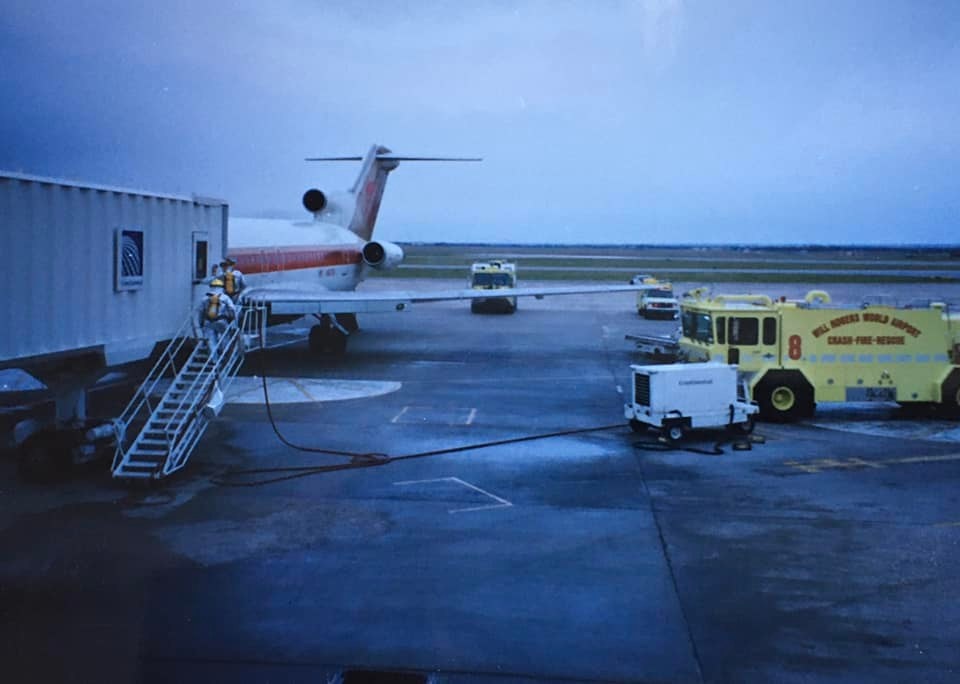
Roughly 100,000 airplane flights land safely every single day. No one reports on that. What makes the headlines is the one flight that nearly misses another by a few thousand feet. One rare, frightening moment becomes the story, while the ordinary success disappears into the atmosphere. I was on a flight that made an emergency landing in Oklahoma City after a cockpit fire.

We consume the world the same way.

Some people struggle, some far more than most. The economic imbalance in this country is real and long-standing. The top 10% of Americans hold nearly 60% of the nation’s wealth and control over 93% of the stock market. Meanwhile, the bottom 50%, most of us are included here, share only about 2.5 to 3% of total wealth.

That gap didn’t start yesterday, and it isn’t shocking anymore, which is exactly why it rarely makes headlines.

What doesn’t get covered is the homeless family struggling day after day, because that story has become tragically ordinary. Ironically, the moment that family does make the news is when a Good Samaritan shows up with a check and a camera, because that visible act of generosity is the exception.

I know my life isn’t newsworthy. I do well enough to get by. I’m not worried about myself. I’ll admit that I often feel stuck when I wonder how I can actually make life better for someone else in 2026.

I don’t have thousands of dollars to give away. I’m not going to trend on social media for doing the right thing. Maybe that’s the point.

What One Person Can Do in 2026

Making a difference doesn’t require a headline. It requires consistency. Here are a few ways I’m thinking about showing up quietly and imperfectly in the year ahead:
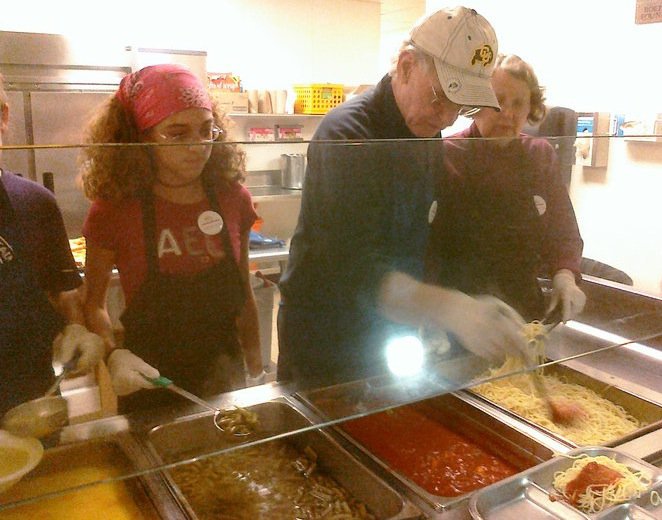
  • Support locally and repeatedly. On “Giving Tuesday,” I donate $5 to a bunch of small nonprofits. I either know someone who works there or have received services from them. Small and consistent giving matters more than one dramatic gesture. The image is from a night the Bethel Methodist Church volunteers served dinner at the Boulder Homeless Shelter.
  • Pay attention to proximity. The people who need help most are often the ones closest to us, like our neighbors, coworkers, and families in our community. Noticing is the first step.
  • Use skills, not just money. Skills such as teaching, writing, mentoring, repairing, and organizing can improve life in ways cash alone doesn’t.
  • Tell better stories. Share stories of resilience and dignity, rather than those about crisis. Remind people that struggle doesn’t erase humanity.
  • Vote with time and intention. Where we spend our time, our energy, and who wins our votes, quietly shapes the future more than outrage ever will.
  • Be a steady presence. Showing up again and again, especially when no one is watching, is how trust is built.

Widen your lens 2026

The start of a new year is when we usually turn inward. We resolve to lose weight, get a better job, quit gambling, drink less, and do more yoga. Those are good, necessary goals. Taking care of ourselves matters.
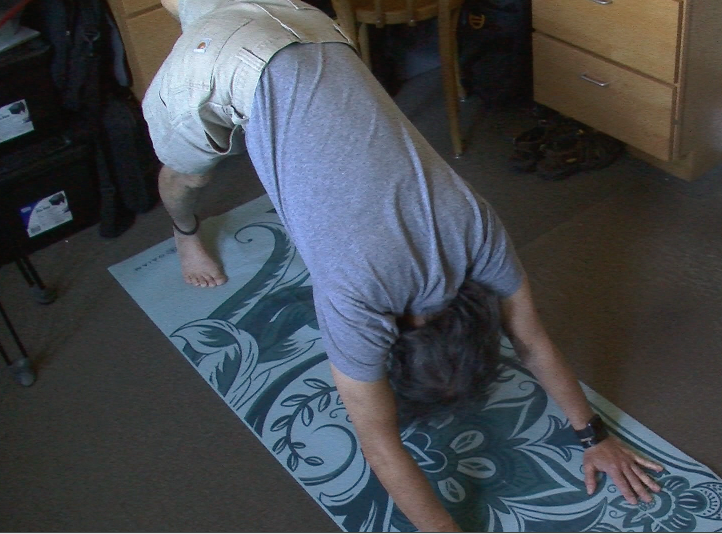
I don’t know anyone who truly wishes ill will on others. I don’t know anyone who doesn’t, at least in principle, want the world to be better than it is. Most of us are overwhelmed and not cruel. I get tired. I’m unsure where to begin.

In 2026, here’s where I’m starting.

Do good, and do no harm.

If you can help, help.
If you can’t help, don’t hurt.
If you’re unsure what to do, choose kindness over indifference.

I know that I can’t fix everything in the world. I doubt that I’ll grab a headline or a viral Facebook moment.

As we move into 2026, my hope for myself and for anyone reading this is that we strive to improve our own lives while remembering we’re not alone in this. Each of us needs to make one choice today that leaves someone else a little better off than they were before they crossed your path.

It might look like patience.
It might look like listening.
It might look like showing up when it’s inconvenient.

Those choices aren’t newsworthy, but they make life livable.

That’s a future worth building.

Leave a comment

← Back

Thank you for your response. ✨

Lessons from Meathead: Fighting Prejudice in America

I grew up in Wyoming in the 1960s when Superman’s American Way was pounded in my head the moment I popped out of the womb. You know, “faster than a speeding bullet, richer is better than poorer, acceptance by assimilation, and fighting for truth, justice, and the American Way?”

In the 70s, I realized that I was surrounded by adults who rarely questioned the subtle bigotry woven into everyday conversation. That was when “All in the Family” was the rage on network TV. I watched Rob Reiner as Meathead, punching toe-to-toe with Archie Bunker about prejudice and Nixon’s politics.

Meathead and Archie changed me.

It was the first time I saw someone on TV or in real life defend fairness against ignorance.

Two worlds had collided.  Reiner’s calm conviction made his moral convictions feel achievable.

“All in the Family” proved that challenging racism and standing up for every kind of person, regardless of their circumstances, reinvented the American Way toward Superman’s reimagined American Dream. Seeing Meathead versus Archie made me realize some people refused to accept hate as normal.

I decided to be one of them.

With all the murder and mayhem happening in the world today, it seems that we’ve forgotten that kindness belongs at the heart of every political choice.

Thank you, Rob Reiner. You inspired me to make movies and write books that raise awareness about social change.

I can handle the truth.

← Back

Thank you for your response. ✨

Understanding the Tipping Point of Social Movements

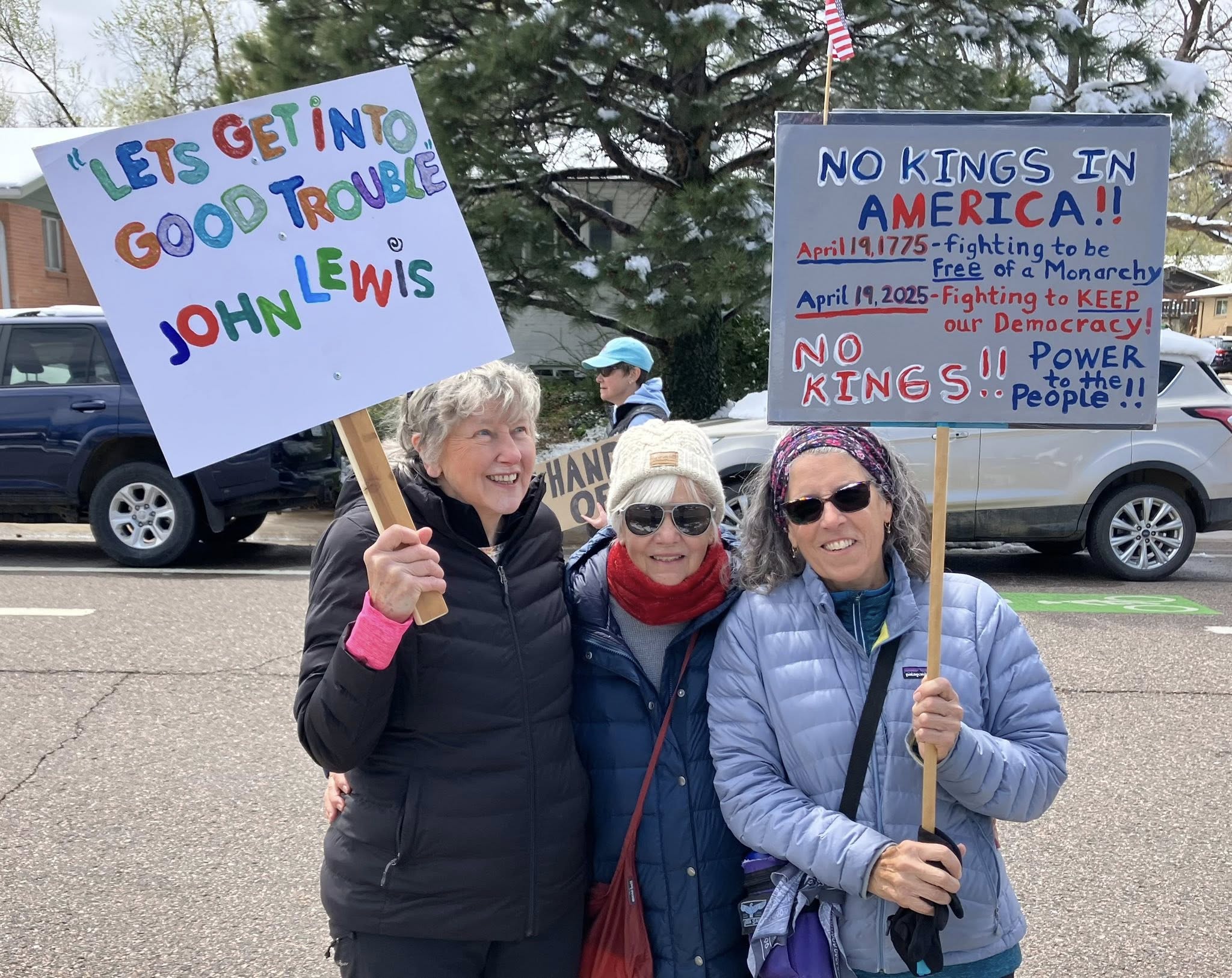
I’m on the lookout for new stories. When Hemingway ran out of ideas, he joined the Army. I’m curious, but not that curious. There was another No Kings rally on October 18th. I used to go to those. I went to one in April and stayed home in June. The most recent time, I watched Wyoming football, and rationalized that I was at Boulder’s Central Park in spirit.

The rally I attended in April felt to me like a mix between a block party and a civics class. A few thousand of us milled around on South Broadway outside the National Oceanic and Atmospheric Administration (NOAA) building, along with a couple of my neighbors and some acquaintances.

The Department of Government Efficiency (DOGE) purged a bunch of scientists soon after the Inauguration in January. Weather research and forecasting had become too political. Climate change will do that. I made a sign that read “Melt ICE,” and caught the bus with a crowd of like-minded people. The slogan is a double entendre, referencing global warming thawing the icecaps, and ICE rounding up immigrants and sending them to points unknown.

We chanted and waved our signs. There were a few horn honks from well-wishers driving by.

The only real drama came when a red pickup roared by and blasted us with black diesel smoke. That was a rolling metaphor for the times.

The plume reminded me of the time I was walking in a crowd when soldiers tear-gassed us after Nixon’s inauguration in 1973. It’s ironic that I was waving my sign, since my first presidential vote was for Nixon and I was president of the now-infamous College Republicans at the University of Wyoming. I’m still regretting that vote.

It was chilly in April. We’d seen enough. The crowd dispersed, and we walked back toward town.

The pundits said these rallies mattered because democracy depends on people in the streets. The next morning, the same president was still in office, with the only visible change being that the dumpsters were now full of clever slogans scrawled on signs.

The rally in April stoked me up. I made a hat with my “Melt ICE” slogan. It gets reactions. Some are supportive, while others, not so much, but at least it starts conversations.

The novelty had worn off, and I had sat out the June event, but I was ready to go in October until I lost interest.

“The movement has lost steam,” I said to myself. There were too many mixed messages. Too many baby boomer faces who’d been protesting since Nixon, now armed with newer cardboard. The energy was real, but it felt scattered.

Then I heard the numbers.

The time I turned out in April, about 3 million marched.

In June, the number bloomed to around 5 million.

News reports estimated 7 million had hit the streets nationwide on October 18th.

That’s not a slump. That’s a surge.

What’s more interesting to me is who showed up. According to a survey from American University, women comprised 57 percent, and most were highly educated.

At first glance, that’s the same old coalition, but the data tell another story. Local media indicated campus groups joined in from places like Penn State, Towson University, and the University of Florida.

The same poll found that the median age of protesters in Washington, D.C. was 44. Younger voices mixed into the chorus.

I’m a Malcolm Gladwell fan. He wrote The Tipping PointNo Kings feels like what Gladwell defined as the mysterious moment when an idea stops needing to be pushed and starts growing under its own power.

Something has shifted over the past six months. Young people are showing up. Folks who don’t fit the old protester profile are finding their way into the crowd.

Maybe they don’t know exactly why they’re milling around, but they know they are mad as hell and not going to take it any more.

When democracy wakes up groggy, it’s slobbery, noisy, sluggish, but undeniably alive. Movements begin with emotion, not policy. It’s evolution, not chaos.

Maybe I was wrong to stand on the sidelines admiring the T-shirts with clever slogans and frog costumes. Spontaneous growth is immune to counter-messages.

Detractors paint the millions and millions of us as anti-American and paid to riot. I must have missed the gravy train.

The naysayers claim photos and videos documenting the 2,500 events around all 50 states were created by AI.

Pay no mind to the conspiracy theorists behind the curtain.

We each only have control over what we can control. The tipping point creates change on its own. For some, that’s marching. For me, it’s about mentoring, voting, or engaging with people who disagree with me.

The four-hour No Kings events are about participation. Being around people of like minds leads to the long, quiet actions that last beyond the rants and raves.

March if you must for the day, but keep moving, because change doesn’t live on a poster board.

Change begins in the streets, and tipping points gain momentum when the news cycle shifts to the next mass shooting or devastating flood.

No Kings rallies echo past protests. Now the crowds have expanded since April. The message is spreading, and people who once stayed home are finding their way into the crowds. Parents push baby strollers down the sidewalk. Kids show up and pass footballs around the medians.

It doesn’t matter where you are on the sociopolitical spectrum. Make something better. Make someone think. Make noise when the streets are quiet.

Copy and Paste this Post to Your Social Media

The No Kings rallies started as echoes of the past with the same signs and outrage. Something’s shifting. The crowds are growing. The energy is younger. The message is spreading.
What began as protests is turning into practice. We can’t control the whole storm, only how we show up in it. March if you must, but keep moving. Change doesn’t live on a poster board. It lives in what we build when the streets are quiet. #NoKings #MarchLessMoveMore #EverydayActivism #QuietChange #TippingPoint #MakeMeaning #DemocracyAlive #YouthMovement #DoTheWork #ZenOfAction https://alanohashi.com/2025/10/21/understanding-the-tipping-point-of-social-movements/TippingPoint #MakeMeaning #DemocracyAlive #YouthMovement #DoTheWork #ZenOfAction

Do You Have Questions? Start a Conversation with Alan Bot!

← Back

Thank you for your response. ✨