
The Invasion of the Tomato Snatchers

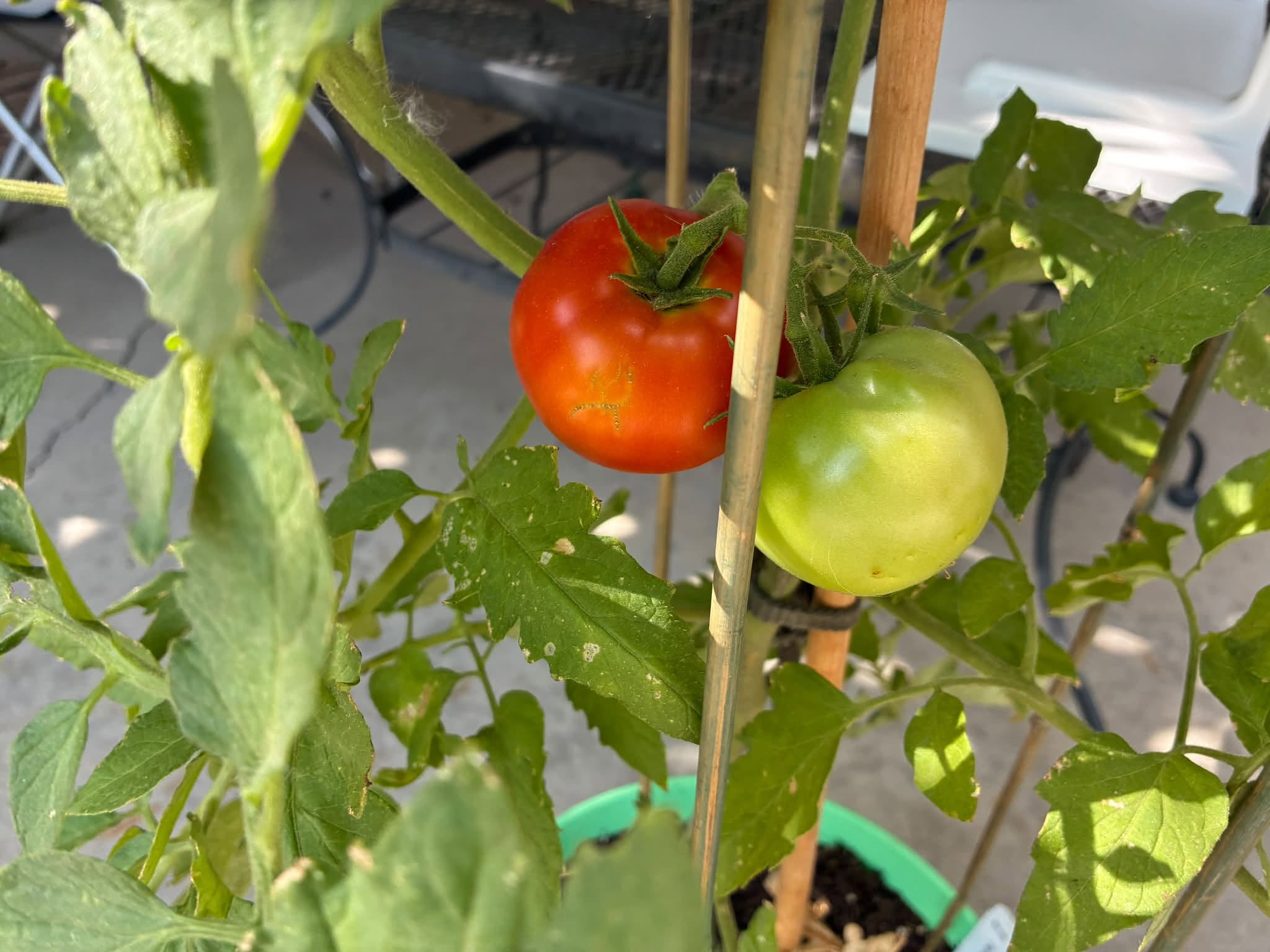
My $33 tomato venture has officially ended with the harvest of a third tomato, and the economics improved considerably, dropping the per-fruit cost to $11.
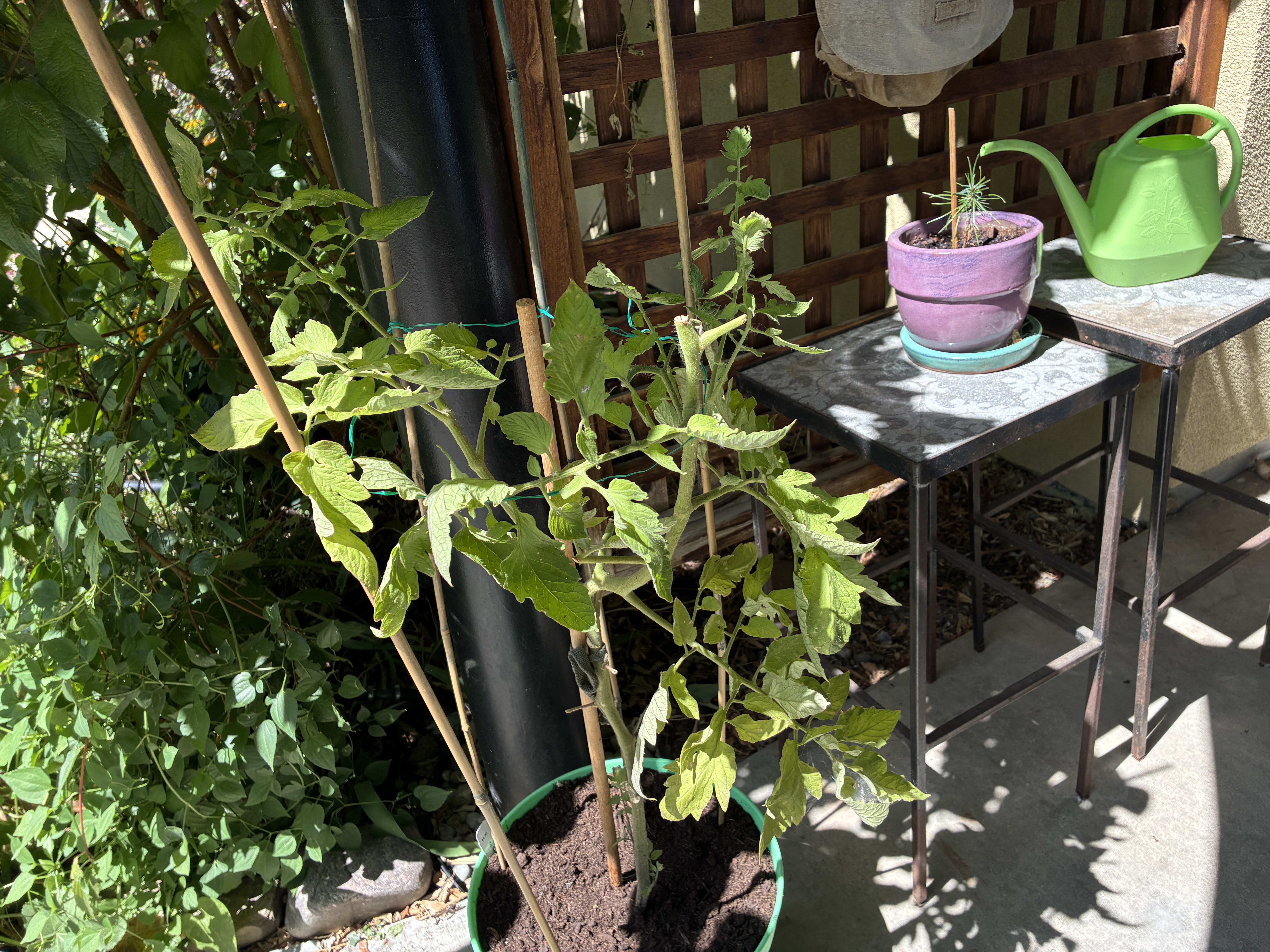
A green tomato plant in a pot with wooden stakes for support, placed beside a wooden trellis. In the background, a purple pot with a small plant and a green watering can are on a metal table.

I’m not calling it a successful business venture, but I learned to trust the division of labor and buy fresh produce from the food store.

I’ve heard that backyard gardening is a labor of love. I had optimistic thoughts of turning my brown thumb into a green one at the beginning of the summer.

Maybe I’m more of an arborist. The avocado tree has been doing much better. I’ve been nurturing a pine tree seedling that has survived for 18 months. It’s supposed to become a bonsai-worthy tree, assuming I can keep it alive long enough to find out. I’ll bring the pine tree inside soon.
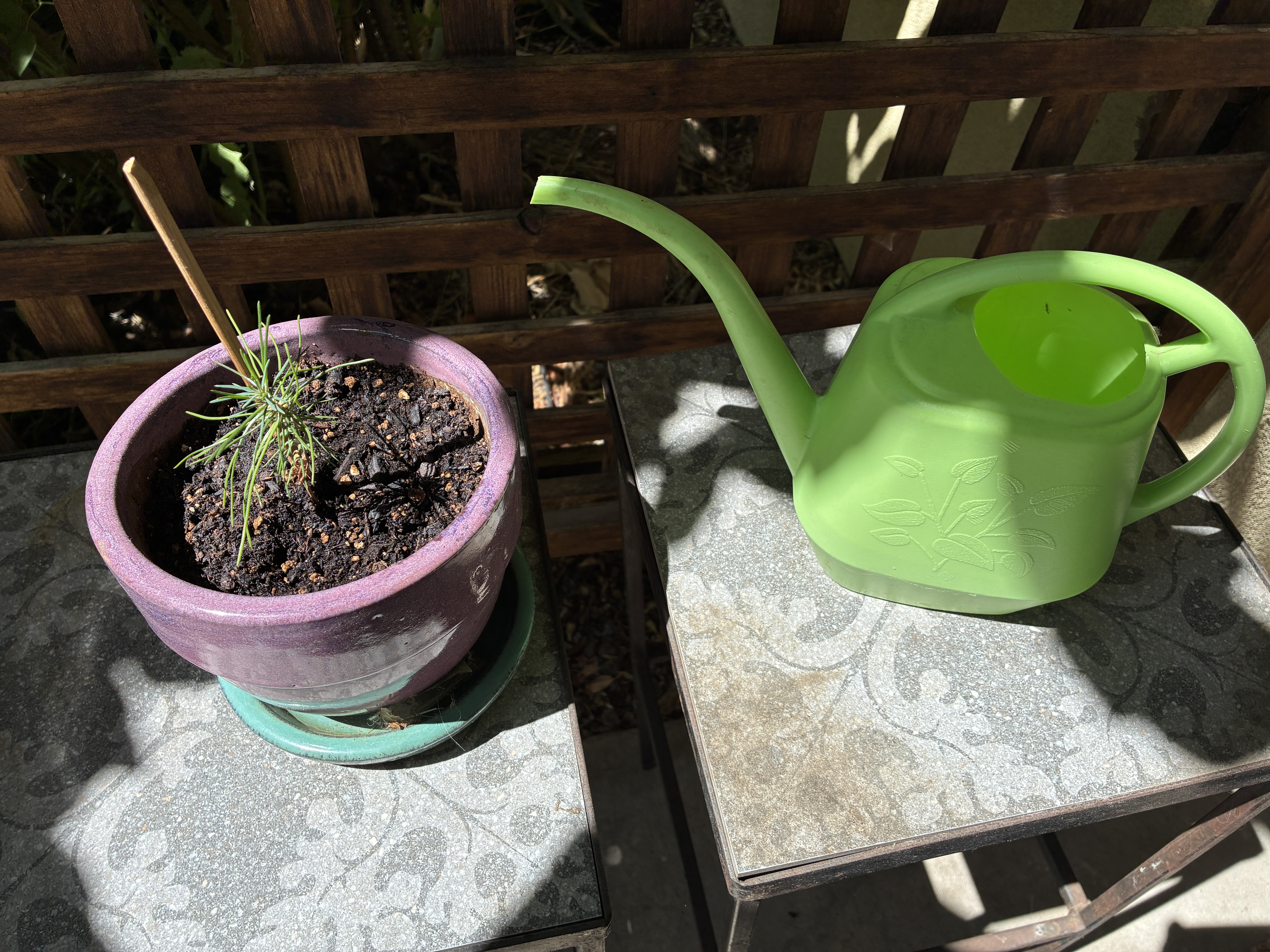
A small potted plant with green shoots in a purple pot, placed on a table next to a bright green watering can.

Across the sidewalk, I’ve been tending a patch of milkweed. Monarch butterflies migrate through Boulder in the summer, and milkweed gives them a place to lay their eggs.

They’ve grown tall, and I’ve tied them up with strong twine to keep them from flopping over and avoiding the purge by over-eager gardeners who think it’s time for them to go.
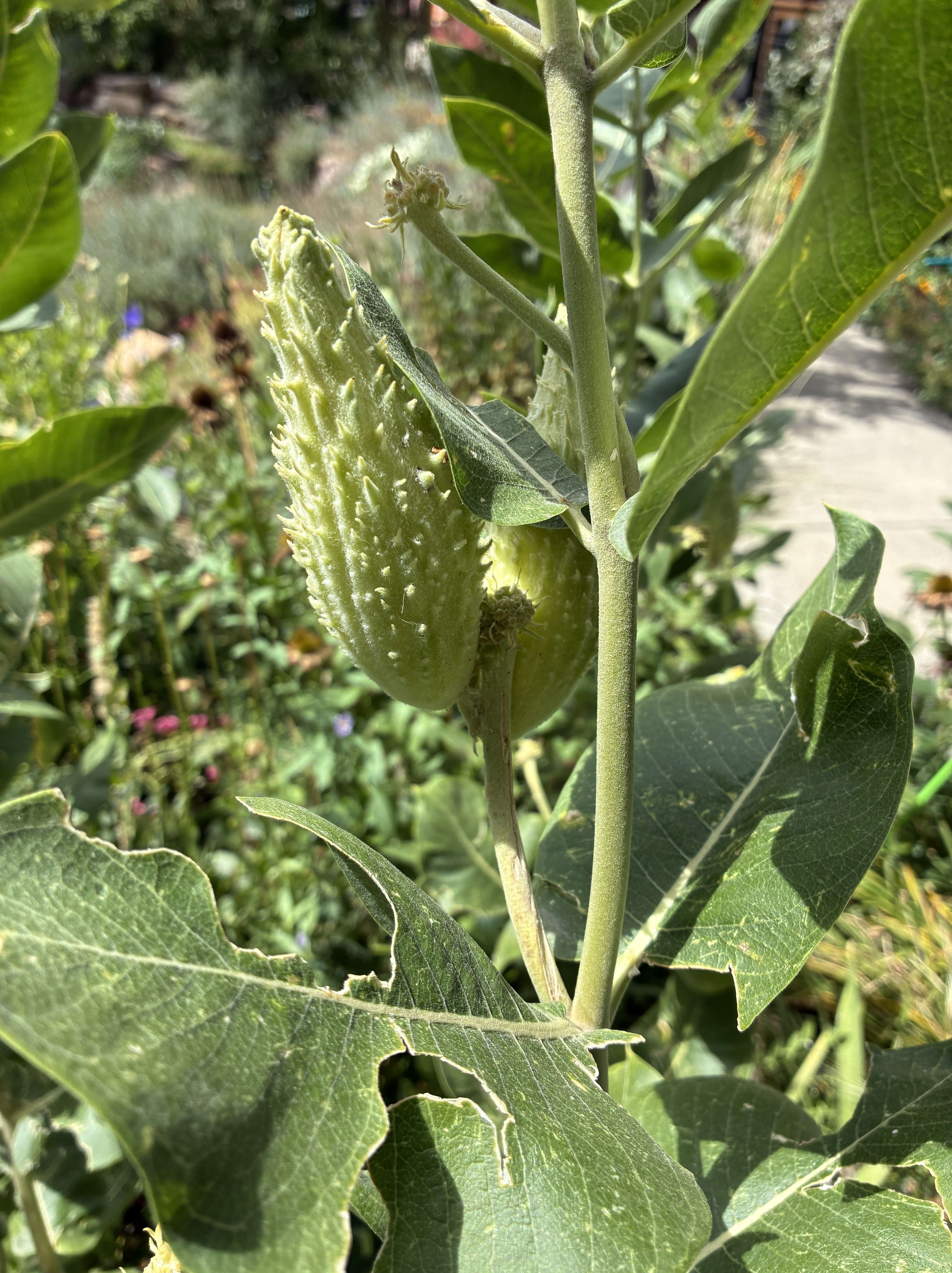
Close-up of a green, spiky fruit growing on a plant, surrounded by large green leaves.

Now the seed pods are finally forming. This is where my gardening project takes a turn toward science fiction.

The pods resemble miniature versions of the seed pods in Invasion of the Body Snatchers. In the 1956 movie, the pods are the machinery of an alien invasion.

The body-snatching Pod People grow duplicates of sleeping humans, absorbing the person’s physical form, memories, and characteristics. When the metamorphosis finishes, the original human disappears, leaving behind an emotionless replacement.

My milkweed pods, I assume, have no such ambitions.

I think of them as little botanical spacecraft carrying the next generation of milkweed seeds. The Monarchs are doing their own version of biological time travel, arriving each summer to lay eggs on the plants that will feed their caterpillars, which metamorphose into the next generation of butterflies.

I wonder who is tending whom.

I learned that this summer in my little garden, I’m not much of a farmer. Three tomatoes isn’t much of a harvest. Gardening is about the few fruits of my effort and the satisfaction of having kept an organism alive through its lifecycle.
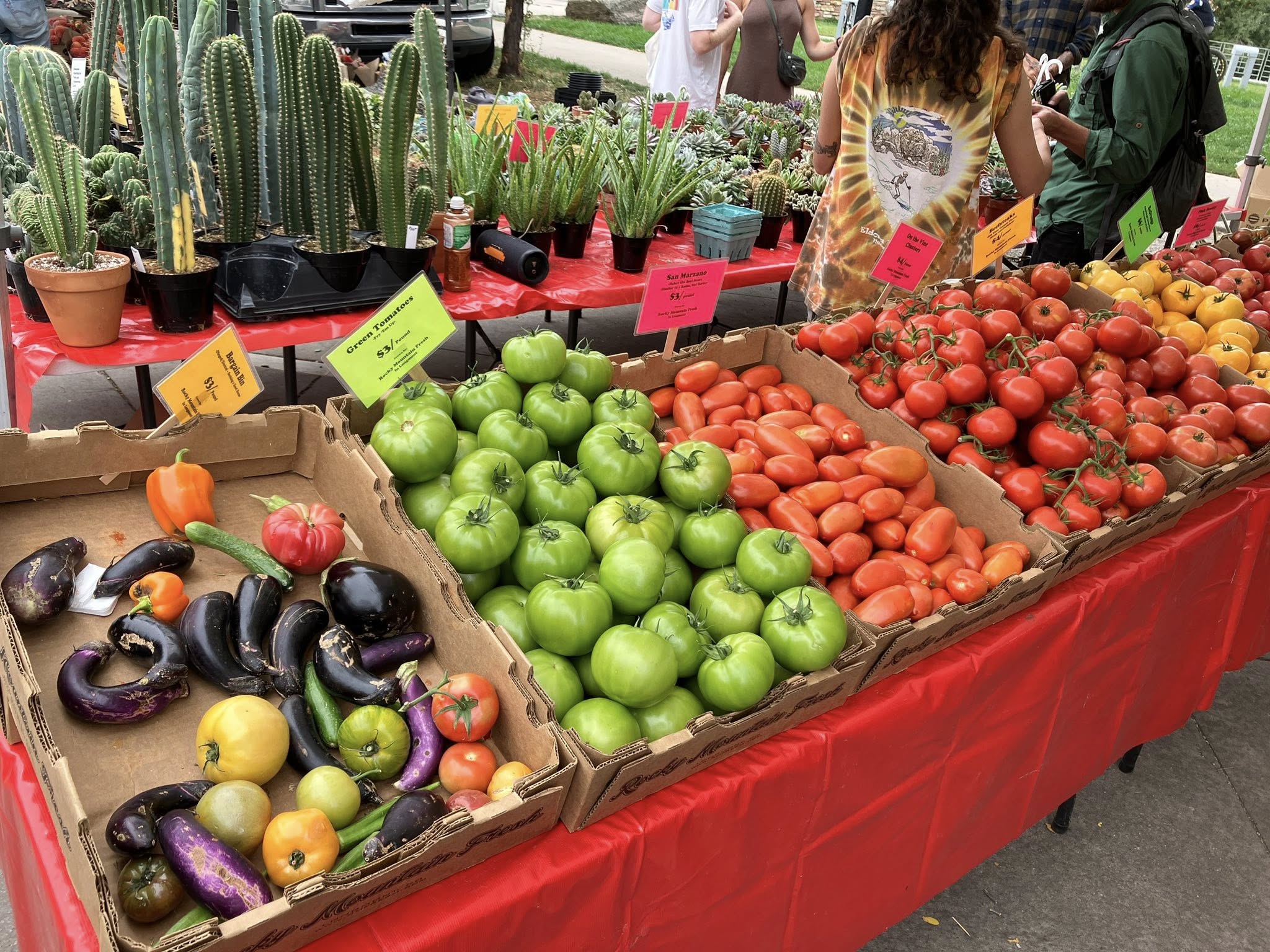
A colorful display of fresh vegetables at a farmers market, featuring green, red, yellow tomatoes, various types of eggplants, and a bell pepper arranged in cardboard boxes on a red table.

The pine tree is still growing. The avocado tree will have avocados in 20 years, and the milkweed is preparing its pods. The Monarchs have a nursery. I cut back the tomato plant, unaware that our business model had failed.

In the meantime, the farmers’ market runs through October.
My $33 tomato

How’s your garden this summer?

Last night, I decided to make a Chicago dog.

I had all the essentials lined up on the counter: a hot dog and bun, relish, peppers, sauerkraut instead of pickle, celery salt, and tomato.

The tomato was supposed to be the star of the show.

Earlier this summer, I decided to turn my brown thumb into a green thumb. A local nonprofit, Growing Gardens, held its annual vegetable plant sale. I came home with a single Beefsteak tomato plant. I repotted it, gave it fresh soil, watered it faithfully, and watched it take off like it had discovered its life purpose.

Every day I checked on it.

Every day it got bigger.

Eventually, one tomato emerged as the chosen one. While a few other blossoms appeared, the plant seemed determined to pour all its energy into producing a single magnificent fruit.

Today was harvest day.

I picked the tomato and admired it for about 30 seconds before noticing a blemish on the bottom. No problem, I thought. Tomatoes get spots.

Then I cut it open.

Half the inside had spoiled. It looked like a melanoma had taken over the fruit. The plant had spent weeks concentrating all of its resources on one tomato that had gone bad from the inside out.

I trimmed away the damaged sections and salvaged what I could. The remaining pieces made it onto the Chicago dog and, to be fair, tasted pretty good.

Still, I couldn’t help doing the math.

The tomato plant, $9.

The pot, $14.

The potting soil, $10.

That means the tomato on my Chicago dog carried an investment of $33.

Even by Boulder standards, that’s an expensive tomato.

Of course, gardening isn’t about return on investment. If it were, nobody would do it. Gardeners spend money on plants, soil, cages, hoses, and tools, then celebrate when they grow something they could have purchased at the grocery store for 99 cents.

Yet next spring, I’ll try again.

Gardening is an act of optimism. I planted the tomato because I believed that with enough sunshine, water, and patience, I’d harvest a bumper crop. I hoped for a basket of tomatoes. Instead, I got one expensive tomato with a tragic flaw.

Wall Street investors chase quarterly earnings reports. Gardeners stare at a few blossoms and convince themselves that next year’s harvest is going to be spectacular.

My first tomato may have been a financial disaster, but I’ve already caught myself checking on those remaining blossoms.

That’s how gardening gets you.

No matter what happened this season, there’s always another tomato growing somewhere on the vine.