In July 1976, I was working for the US National Park Service at Rocky Mountain National Park in Colorado for a second summer. I don’t know if this had any influence, but I had befriended Wayne Aspinall who was a guest scholar at the University of Wyoming political science department when I was in grad school there.
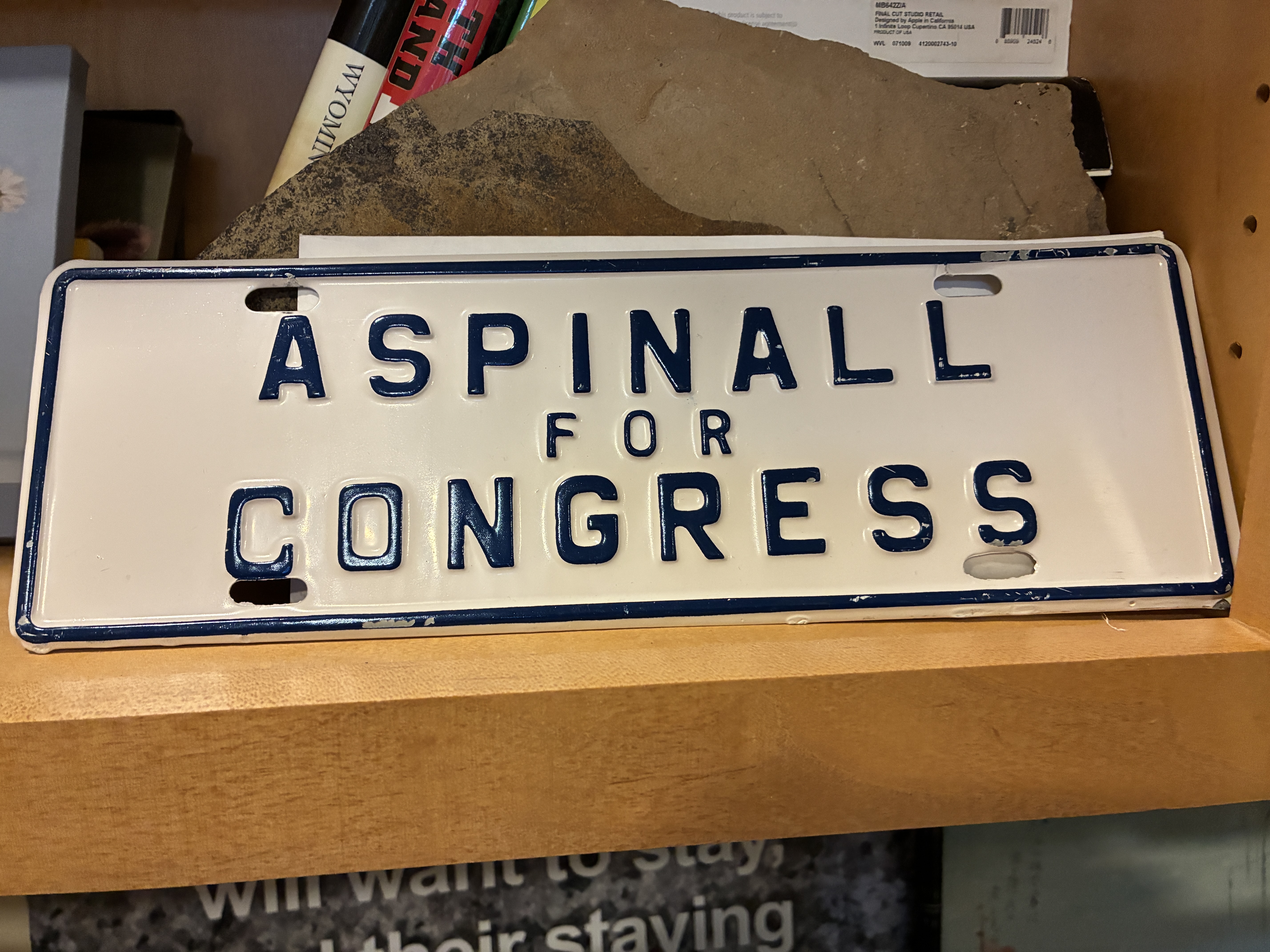
Wayne was the former chair of the US House Committee on Interior and Insular Affairs, a position he held for 14 years. I collected one of his campaign license plate toppers.
Back in those days I was a College Republican and we had some spirited discussions in class. Despite our ideological differences, he offered to write a few letters of recommendation for me to the USNPS in support of my job application.
I was told park ranger jobs were hard to come by and was happy to be hired to my first choice, since I applied all over the country.
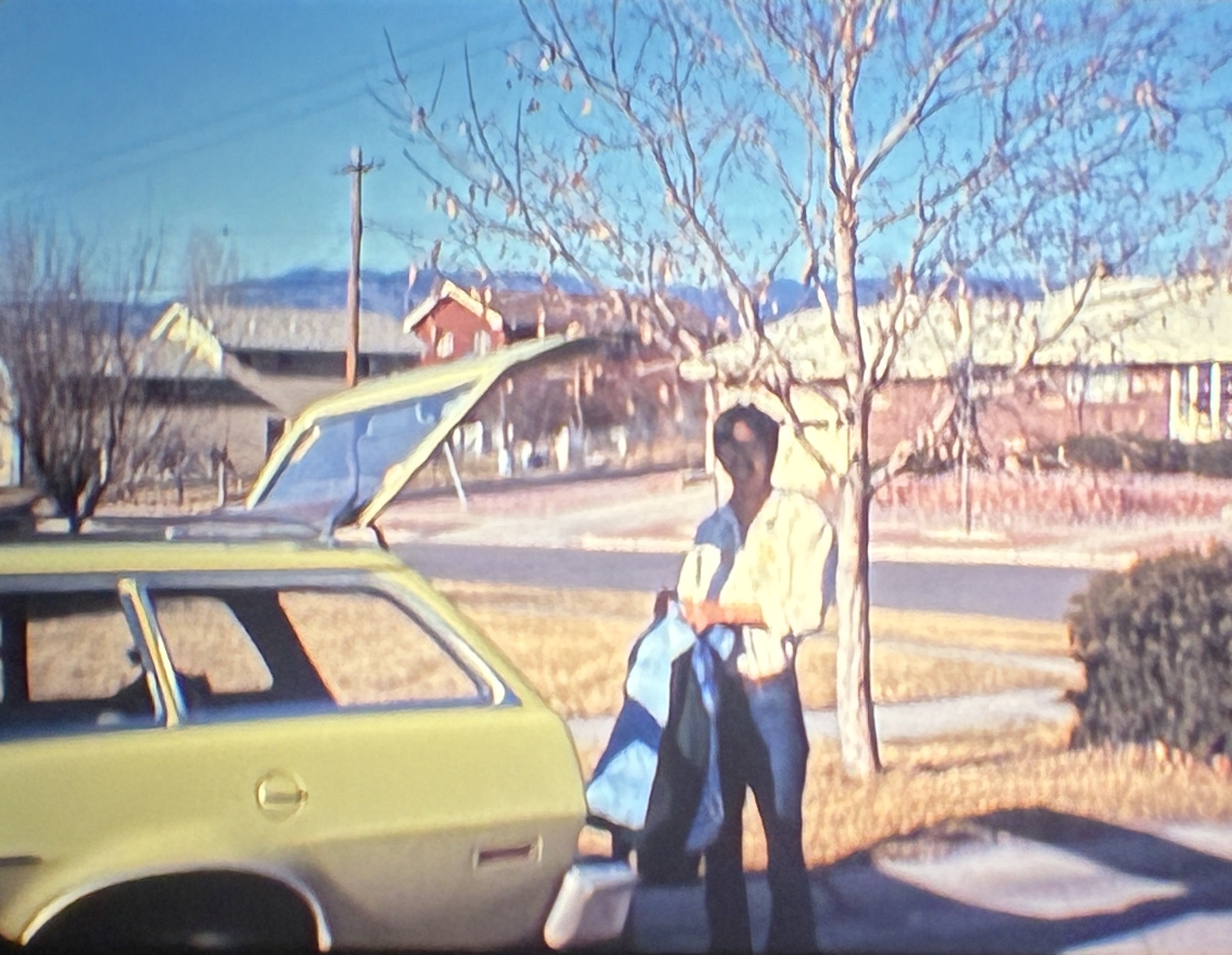
Anyway, I drove my pea green Ford Pinto to Cheyenne Frontier Days the last weekend in July. I met up with my friends Rick Thamer, John Accardo et al. for a weekend of jocularity. The Mayflower was still open and Downtown Cheyenne was still a happening place during CFD.
I don’t know what got into me, but I’ve never been one to miss out on the last weekend of “The Daddy of ’em all”.
It was Saturday night and rather than crash in Thamer’s basement, I chose to drive back to Colorado, over the very logical arguments posed by my friends. I had to work at the Glacier Basin Campground at 11:00am.
I would have made it in plenty of time.
When I turned onto Highway 34 into Loveland, the horizon was crimson red and solid black. “Red sky at night, sailor’s delight” – should be no problem.
After driving through town and entering The Narrows, a caravan of cars, trucks and RVs headed east on US 34. Why was I the only one heading west, toward the park?
I met a Colorado highway patrolman. He told mee there was some “bad water” ahead and to turn around at Drake.
I didn’t quite make it that far.
There was water streaming across the highway. All of a sudden, something that I couldn’t make out, was in the middle of the road in about six inches of run off. Then, uprooted trees, unrecognizable junk and debris floated by. I expected to see the Wicked Witch of the West hover by.
The car careened into the rising wall of water and suddenly the deluge came up to the hood of the car that stalled. There was a car filled with a family heading the opposite direction that had the interior lights on. That sedan floated to the edge of the road and then was swept away into the canyon’s darkness.
A porta-potty floated over and caught my bumper and ruddered the Pinto towards the canyon wall and not into the torrent. I wasn’t able to open the car door, but climbed out of the driver’s side window and waded to higher ground.
A few minutes later a State Highway Department truck pulled up with a bunch of other people. I climbed up and we were all dropped off at Rainbow Bend where we were allowed to crash in the guest bungalows there.
I can sleep through anything.
The next morning, when the waters subsided, the road was totally washed out, trophy-sized fish lay on what was left of the highway. The canyon wall was plastered with pine trees, crumpled trailers and cars. The little store at Rainbow Bend had food, I ate some cold hot dogs.
I don’t know how the rumors started, but we spent the day on high ground since word came from someplace that the Estes Park reservoir dam was ready to crest.
A Chinook helicopter eventually dropped in and flew us out to a Red Cross station in Loveland. The only thing I took from the provisions was a dry pair of socks.
When the big floods hit Colorado’s Front Range in September 2013, I had no desire to get out and inspect any of the high water or its aftermath. As it was, the radio news didn’t indicate any problems. I decided to leave Cheyenne and was stuck in Longmont and being anecdotally guided through town by facebook cronies.
All the routes on the Diagonal and SH 66 were all flooded out, except SH 66 to I-25 to Thornton – SH 402 exit closed; Johnstown exit closed, Berthoud exit closed.
I eventually snaked my way from 120th to US 36 and luckily the westbound lane was open. Overnight, the St Vrain River crested and filled the low spot between US 34 and SH 402. I would have been stranded for several days somewhere north of Longmont.
Okay, back to the story.
There was no reason to stick around Loveland. I bummed a ride to Cheyenne and was dropped off at the Leeper’s house on Oak Court. My family in Laramie was trying to make contact, but there was no phone service. I called home from Cheyenne and was picked up and carted over to Laramie.
There was no access to Rocky Mountain Park for several days. I was eventually able to drive the “family truckster” – an olive green Mercury station wagon with the fake wood paneling – back to work. My boss, Perry Thompson, was gracious enough not to dock my pay for the days I was gone.
The big regret at the time?
All my ranger pals were getting double time and a half for working the rescue, while I was one being rescued. I never did find out if my car turned up anywhere. It probably became rip-rap in Nebraska.
When it was all said and done, I was immediately issued a check by my insurance company and I purchased a sky blue Pinto wagon. I might add, it was involved in a rear end collision with an oil field truck while I was living in Gillette, Wyoming.
My housemate at the time, Tom Padget, worked over the insurance company for a settlement. The differential bolt was dented up against the gas tank, which, had it burst, the tank would have caused at least a fire.
The Pinto goes full circle.
I ended up selling the car to Rick Thamer who drove it to law school in Lubbock, Texas, where he and his wife Janie live today.
After the Big Thompson Flood event, I thought I was living on borrowed time and lived life a bit recklessly while in wild and crazy Gillette. I altered my perspective that I was given another chance, for some reason.
Hmmm, next up will be the attitude adjusting UFO incidents.