What a long strange trip it still is – aging and the power of my cohousing community

Auntie Jeannie is standing on the right end next to my mother. Alison is sitting second from the right, Alison's sister Leslie is being held by Auntie Elsie.

Auntie Jeannie is standing on the right end next to my mother. Alison is sitting second from the right, Alison’s sister Leslie is being held by Auntie Elsie.

My 82 year old Uncle Tom fell after getting off a four-wheeler. He was in the hospital for a short period of time. My cousin Margo called to let me know Tom died. I stopped at the hospital and saw him and had a chance to catch up with my cousins. My condolences go out to Margo, Kathy and Bobbi – they are all pictured in the photo on the left.

Margo’s phone call reminded me about a story from a few years ago.

_______________________________

October 29, 2016 – I got a call from my cousin, Alison, yesterday. These days, whenever relatives call, there’s generally some sort of family emergency. This time, Alison told me her mother – my Auntie Jeannie – had passed away. She had a stroke while sleeping and didn’t wake up. My condolences go out to my cousins Alison and Leslie and her sisters Carol Lou and Janice.

I’ve been attending funerals lately. Last week, it was for Eastern Shoshone tribal elder and one of my mentors Starr Weed in Fort Washakie.

It was my first open casket wake. I don’t know what I expected, but it was solemn and heart breaking. One of Starr’s grandsons, Layha Spoonhunter, was one of my Wind River Tribal College film students. His class project was an oral history of Starr Weed. I felt for him and his mom, Wilma, who is married to my former boss, Harvey, and his aunt Elaine who organizes the Gift of the Waters Pageant in Thermopolis.

A month or so ago, my Uncle Rich died. He had quite a few home health care workers supporting him after he returned from the hospital. He was a 442nd war veteran and in Army Intelligence. He was too small in stature for combat. I also learned after he died, my Aunt Sadako was moved to an assisted living place in Cheyenne.

I live in the Silver Sage Village senior cohousing community in North Boulder. There have been murmurs about it, but just recently the community began discussing “aging in community” which has been on my mind quite a bit, lately.

I’m making a documentary movie about my and my neighbors’ experiences of growing old in cohousing and their thoughts about the future. I’m also helping produce a national conference on the topic that will be held next year May 19 to 21 in Salt Lake City.

My movie won’t be anything earth shattering, but hopefully will give others wanting to start up an intentional community some insight into what to expect. These discussions are about the first ones we’ve had in the five years I’ve been living at Silver Sage Village where the topic has been about something more substantive than maintaining the buildings.

A bunch of people are reading “Being Mortal” by a doctor named Atul Gawande. His basic premise is that modern medicine is good about keeping people alive, while not knowing when it’s time to allow us to die not in a hospital but at home.

Gawande says that in the past, 80 percent of people used to die at home and 20 percent died in a hospital or medical facility. Now that number is reversed with 80 percent dying in a hospital and 20 percent dying at home.

Back to Auntie Jeannie.

I also learned that at 77, she was one of the primary care givers to my Auntie Elsie, well into her 90s. A few months ago, she broke her hip and Jeannie got her settled into a rehab / hospice center as well as helping Sadako get settled into her assisted living apartment. I surmise that what happened was Uncle Rich’s home care workers also did more for Sadako than anyone realized.

I imagine with all this care giving Jeannie was a bit stressed out.

Elders providing care for other elders is becoming common place anymore and a problem.

I can see myself in that boat particularly since my immediate family is strewn all over the place with their own lives and issues and I have no kids.

Like in Jeannie’s case, the work takes more out of the care giver than the patient.

Cohousing is a way to spread some of the load.

Jeannie was married to my Uncle Jake who was the youngest son on my dad’s side that had 13 total kids. It was a very strong extended family and everything revolved around my grand parents house.

Mainly during the summers, everyone would gather various places in Cheyenne and along with the rest of the Japanese community. On Memorial Day there were big picnics and on the 4th of July we all went out to Jeannie’s parents who lived out in the country and blasted off fireworks.

Back then, all the cousins were close, and all the aunts and uncles were close but there was a big diaspora after the grand parents died. We all became adults, had our own lives and lost the closeness we shared as children. Social media has helped keep us connected, but it’s still not the same as it was.

How do more seniors get engaged as caregivers for one another?

I had a brush with death and had a visit from the Ghost of Christmases Yet to Come and got a glimpse into my future. What if I couldn’t walk, feed myself, or breathe on my own, flat on my back in a hospital bed?

I can tell you it was lonely.

The hospital was 20 miles away and the rehab place 40 miles away in Denver. I didn’t broadcast that I was laid up but a few neighbors and friends managed to find out and dropped by. I thought it would be a good time to catch up on some editing.

I didn’t realize how doped up I was. A guy can only watch so many “Pawn Stars” reruns before boredom sets in.

I’m happy that I got a second chance to do things differently the next time around. I am grateful to be living at a place like Silver Sage Village. At the urging of Diana Helzer, we sold a place nearby with too many stairs in favor of Silver Sage Village that is on the ground floor with no steps and is fully accessible.

I really didn’t know much of anything about cohousing but am lucky to have neighbors who helped out by bringing by food and helping Diana with some of the care giving like transport in the dead of winter.

The downside of living in cohousing is antithetical to any care giving.

There are many conflicts about the day – to – day management of the place that arise and escalate, some cause hard feelings, but that’s part of life anywhere and shows how fragile community living can be among a whole variety of personality types. The differences seem more pronounced since everyone also is trying to get along.

In my experience, those sorts of relationships have been more work related, but much of living in cohousing is work related and I’ve had to learn how to separate out my personal life here from my business life here.

When I returned to Silver Sage Village after six weeks of hospital and rehab stints, I don’t know how it happened, but neighbors brought by meals and offers of help. I don’t know if neighborliness can be “organized” but however it came about was greatly appreciated. That, along with the layout of the fully accessible condo, was important in my continuing recovery.

It takes a village to raise a child but also takes a village to move an elder towards the end of life.

I don’t expect my neighbors to help me into the shower, or wipe my butt, but I hope they’ll continue to mostly be around.

Gawande talks about the importance of hospice that helps a person be comfortable and provides ways to navigate life.

Do I want my friends and family to be hovering over me out of some sort of self serving sense of duty when I’m delirious and out of it? Is that quality time to be with someone at the last breath?

I’ve put myself into self-imposed hospice now while I still have plenty of breaths left and want to be comfortable in my house living life to it’s fullest. I’d rather be around family and friends while we still have our wits about us.

Here I thought I was out of the event planning business.

Look out for the “Getting the Band Back Together Tour” truckin’ into a town year you – the Cousins Reunion; Cheyenne, Gillette, Lander, Boulder and points in between.

What a long strange trip it still is!
Lincoln Court affordable housing will be in nobody’s back yard

lincoln court development plan 2017

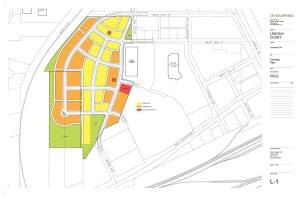
After a couple meetings with the city of Cheyenne planning office, the Lincoln Court mixed use affordable housing project is making some headway. Click on the image to read the latest.

I’m leaving for Nashville in a few hours to participate on a panel at the Tennessee Governor’s Conference on Affordable Housing.

Part of my presentation was about the Lincoln Court mixed use affordable housing project I’m pushing in my hometown of Cheyenne. Based on what I learned at an informational meeting last week about the project, my entire presentation is changed.

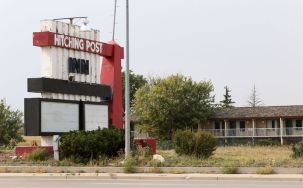
We’re getting a little press about the Lincoln Court mixed use affordable housing project. It’s a moving target with lots of things happening in the neighborhood with the likely Hitching Post demolition and the Atlas Motel now up for sale.

Project architect and also my across-the-street neighbor Bryan Bowen and I held a couple informational meetings in Cheyenne last week. The first was attended by stakeholders from the city, realtors and lenders.

The second was attended only by the newspaper reporter Austin and photographer Jacob. That was a little disappointing, but based on the comments we sought on social media, it wasn’t surprising.

Both of them have wondered about the lack of affordable housing in Cheyenne. Having been a newspaper reporter, I know that news gatherers aren’t exactly pulling down the big bucks. Jacob reported that he spends 50 percent of his monthly income on housing in Cheyenne. The generally-accepted housing cost is closer to 30 percent.

hitching post 2017

The city shut off the power and water to the Hitching Post Inn signalling a move to demolish the historic hotel.

Based on the intrepid reporters’ observations around Cheyenne, particularly about the, apparently, very active Not In My Back Yard (NIMBY) crowd, they, too are skeptical about whether Lincoln Court would actually happen because of the lack of community support for the idea of affordable housing.

Lincoln Court is the perfect project to satisfy the NIMBYs since it is bounded by Highway 30, Missile Drive and the railroad tracks – who in their right minds would want to live there, and to top it off how about 40 mph winds and 40 below?

This is a huge opportunity to anchor the redevelopment with a collaboration among the city, the Hitching Post Inn and the Atlas Motel to return the West End to the vibrant neighborhood it once was.

While comparing Boulder to Cheyenne is “apples and oranges,” Boulder’s Holiday Neighborhood is a strong corollary to what can happen on Cheyenne’s West End. Holiday is bounded by State Highway 93 (Broadway), US Highway 36 (to Estes Park). The surrounding land uses are industrial (peat moss yard), light industrial (garages, car lots, storage), trailer parks (Ponderosa and Meadows), risky recreation (two shooting ranges and a strip club – now closed).

Holiday ended up with over 333 homes with 40 percent permanently affordable on 27 acres. There are data from an affordable housing purveyer called Artspace that when new residents are introduced to slum and blighted areas, the land uses change and become vibrant.

This is generally identified negatively with the concept of gentrification where affordable housing is replaced with high end housing and kitschy boutiques and Starbucks.

What’s great about a place like the West End of Cheyenne is, there will be no displacement of current residents, but rather new ones will be attracted. No historic buildings will be demolished, but new ones built that keep memories alive through historic place making.

There is a huge housing gap not just in Cheyenne, but many places. On social media we asked for input and comments and heard from mostly skeptics about the meaning of “affordable housing” and whether or not the city government was going to lead or muddle through.

When housing is only reliant on market forces to set prices, developers typically nurture a niche that meets the needs of people who earn a good living, are of lower financial risk and able to purchase larger and more expensive houses.

In the absence of community supporting decent housing for all and no agreed upon definition for “affordable” anyone but those with an ability to buy what the market offers are literally left out in the cold. I think there is a WTE article coming out in the near future about people living in substandard conditions.

I’m not saying the public sector has to set up a bureaucracy to deal with affordable housing. One of the objectives of Lincoln Court is to come up with a way to market-regulate permanent affordability.

I have to say that the project is a bit frustrating since there’s a demonstrated need for lower cost housing in Cheyenne. The Lincoln Court wants to meet the heart-felt need to provide affordable and safe homes where individuals and families can thrive.

Lincoln Court Mixed Use Community housing $200K to $300K

lincoln court old postcard

Click on the post card image to download the draft business plan narrative.

The LINCOLN COURT mixed use development is an ambitious one but meets a variety of community needs. Plans are to develop on the 15 acre Back 40 Subdivision on the West End of Cheyenne, Wyoming consistent with the approved Missile Driver Corridor Plan.

The project is organized by Boulder Community Media dba ECOS. Download a copy of the draft business plan narrative.

The property is adjacent to the former Hitching Post Inn site. The project name is homage to the Lincoln Court, a motor lodge that preceded the Hitching post, which fronted on the Historic Lincoln Highway (US 30).

The Lincoln Court project targets the affordable housing need with purchase price-points between $200,000 to $300,000. The vast majority of those needing housing will be those households who earn between 0 and 80% of the county’s Median Family Income. The project will work with Habitat for Humanity and the Wyoming Community Development Authority (WCDA) programs for first-time home buyers.

Based on a 2017 housing needs survey completed by the WCDA, Laramie county has 9,520 substandard housing units and based on incremental growth, an additional 4,074 dwelling units will be needed by 2020. Out of this need

WCM envisions a project positioned to target those wishing to incorporate more creativity in their business and day-to-day lives seeking to build equity in them selves or improving their housing situations. From a larger community perspective, the project supports and implements Cheyenne and Laramie County community development goals by enhancing the social and cultural experience for current and future residents through a mixed-use creative intentional community and possibly improving blighted property – the LINCOLN COURT alter-ego Hitching Post Inn site. The project also nurtures economic development by providing housing for primary jobs and also space for local low-impact businesses to expand and entrepreneurs to flourish.

Based on a 2014 economic development report by Cheyenne LEADS and a 2017 report by the Wyoming Community Development Authority there is a big need for housing, particularly affordable housing in Cheyenne and Laramie County.

wcdalogo

The WCDA offers down payment assistance programs for affordable housing and first time home buyers.

Lincoln Court offers the full range of benefits to Cheyenne with regards to affordable housing as a key economic development objective:

  • Available housing for all income groups helps a community retain jobs and retail stores, and helps business owners attract and retain quality and reliable workers.
  • The job creation and expansion impact is strongest if workers reside in the community. Employees are able to live near employment centers and thus are better able to report to work on time and have time to improve their job skills or get an education.
  • Improves ability of communities and businesses to attract and retain workers.
  • For a community, housing ties people together. It fosters a sense of place and local identity. It plays an important role in a economic sustainability and development.
  • New construction and management of a property creates new employment and generates multiple ripple effects that strengthen the local economy.
  • Workforce housing creates a more stable environment for children and helps them perform better in school.
  • Enables lower-wage earners to get into a home and begin building equity. A house payment is generally less expensive than rent, which increases disposable income.
  • Helps improve distressed areas and strengthen community and neighborhood pride.
  • Increases property values and property tax revenue to communities.
  • Creates family stability since wage earners work nearby and not commuter-distance away.
  • Housing plays a key role in individual welfare and often represents the single-largest family expense/investment.

The project meets this housing need through a mixed-use development consisting of owner occupied and rental, universally-accessible senior and intergenerational cohousing dwelling units – detached and duplexes, civic and community spaces and appropriate retail that would support the community such as a coffee shop, offices, live-work options. A site map is attached.

The LINCOLN COURT also is interested in innovative continuous care, including intergenerational “green houses” as championed by Bill Thomas for caregivers who could live “on site” in the cohousing community with their disabled family members who need more intensive and specialized health care nearby.

The target market is wide open and consists of intergenerational individuals and families, as well as seniors over 50 years of age, who may be local or from out of town “empty nesters” and wanting to downsize, “vigorous retired” people wanting to stay active and age in a community setting. In support of this, the project will investigate compatible services such as personal care, urgent care.

The project is a public – private partnership with strong private sector partners and the affordable housing component involving participation by local, state and federal government agencies. The project is economically viable with a balance among strong equity from the public and private non-profit sectors, debt financing and sales/lease.