Apple AirTag vs Spotminders: Which Tracker is Right for You?

I’ve been seeing a lot of ads for credit card trackers lately. You know the kind. Slip one into your wallet, and you’ll never lose track of your money, or at least the wallet containing it. I’m also thinking a tracker could help you find loved ones who wander because of memory decline.
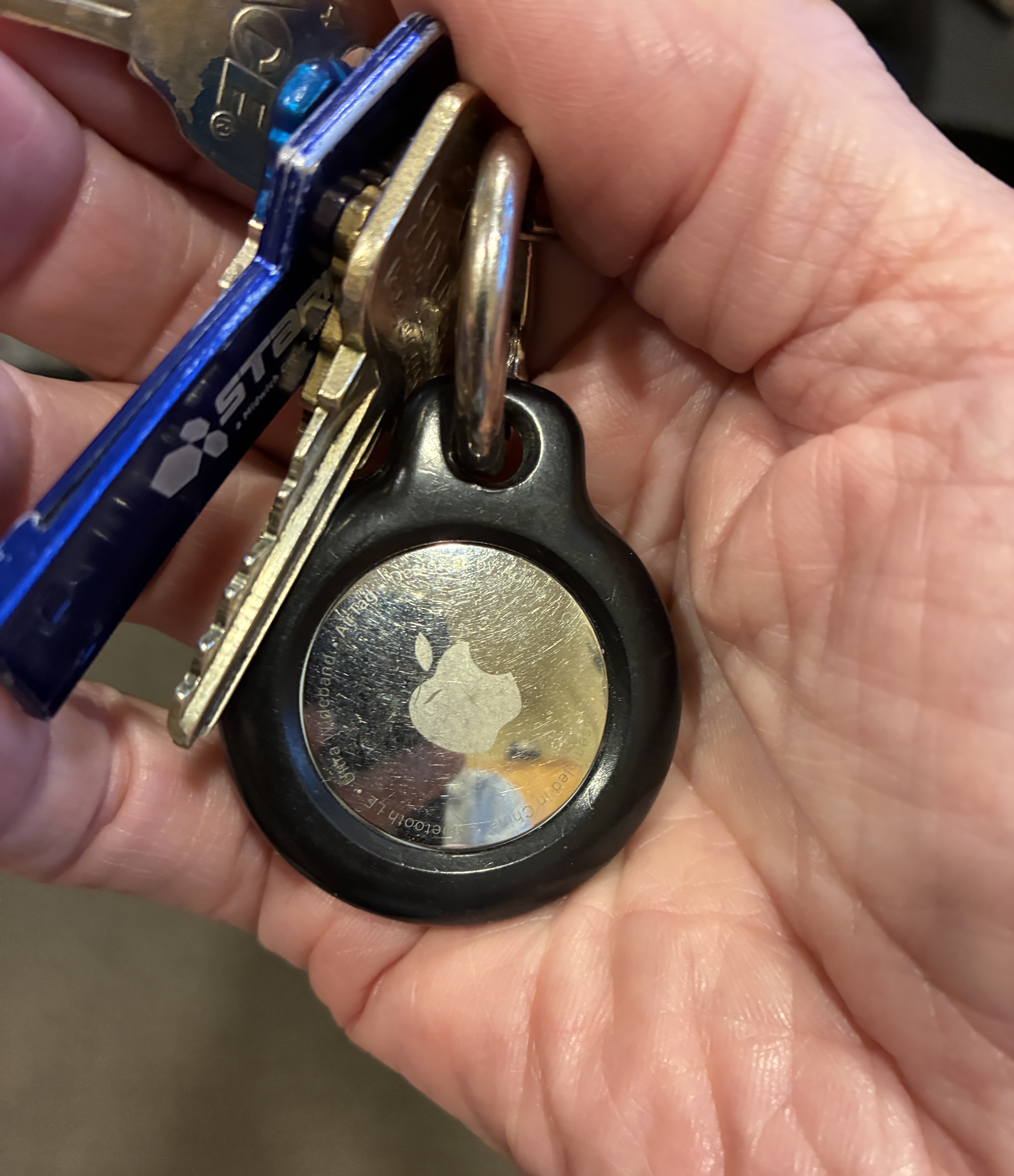
A person's hand holding a set of keys with a metallic Apple AirTag attached.

A cat’s been hanging around my neighborhood with an AirTag attached to its collar. I’ve wondered if the battery is dead.

I’m a brand-loyal kind of guy. I already have an Apple AirTag attached to my key ring. It gives me a certain amount of comfort knowing I can find my keys without turning the house upside down.

I wondered about the Spotminders Tracking Cards and watched ad featuring an airline pilot. She promised much the same peace of mind, only in a package thin enough to slip into my billfold.

Is it time to cheat on Apple?

Let’s investigate.

Two Trackers, One Apple Ecosystem

First, an interesting discovery: A Spotminders isn’t an alternative to Apple. Its Tracking Card uses Apple’s Find My network, just like an AirTag.

Both devices send out Bluetooth signals. When a compatible Apple device passes within range, it can detect the tracker and anonymously relay its location to Apple’s Find My network. You can then see the reported location on your iPhone. Spotminders only works on iPhones.
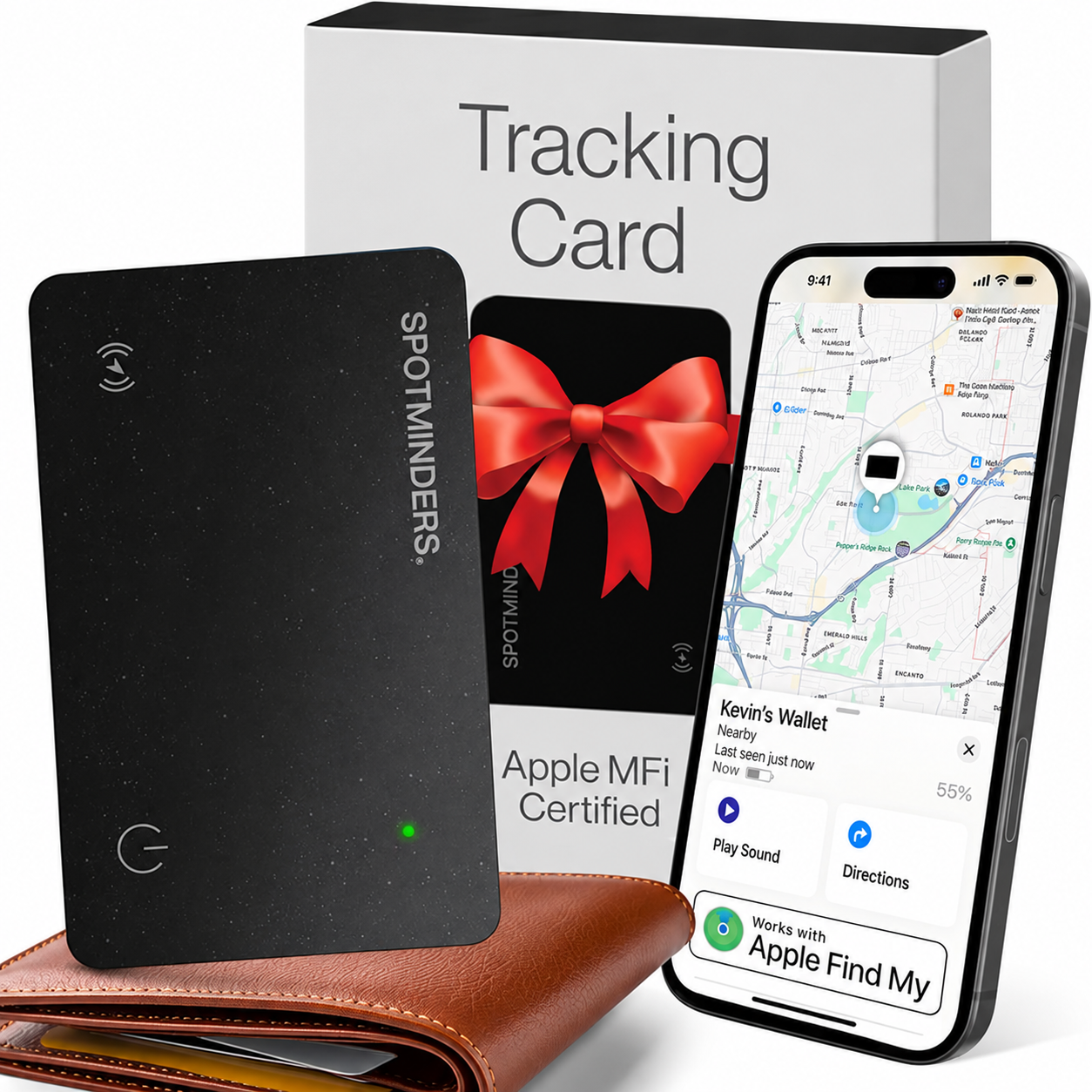
A black tracking card from SpotMinders, presented in a box with a red bow, next to a smartphone displaying a map and location information for Kevin's Wallet.

Neither device needs its own cellular subscription, and neither requires a monthly tracking fee.

The main difference is what you attach it to or where you slip the tracker.

An AirTag is a little round disc, perfect for a key ring, backpack, or suitcase. A Spotminders card is about the size of a credit card and 1.8 millimeters thick. It fits inside a wallet or passport holder without adding much bulk.

Apple has your keys. Spotminders wants your wallet.

The Feature Face-Off

FeatureApple AirTagSpotminders Tracking Card
Tracking networkApple Find MyApple Find My
FormRound, key-ring-friendlyThin, credit-card-sized
BatteryReplaceable coin batteryRechargeable
Battery lifeAbout one yearUp to 8 months per charge
SoundBuilt-in speakerBuilt-in sound alert
Nearby precision findingSupported on iPhones. Androids not supported. Precision finding.Supported on iPhones. Androids not supported. No precision finding.
Monthly feeNoneNone
Best useKeys, bags, luggageWallets, passports, slim bags

One practical advantage of the AirTag is its replaceable battery, which lasts around eight months. When it runs down, I can pop in a new coin battery.

Spotminders requires recharging. That’s not a dealbreaker, but it’s another thing to remember. The card’s big advantage is its slim design.

If you’re already an iPhone user, you don’t have to learn a new app. AirTags and Spotminders cards both work through Find My. Neither is Android-compatible. There are Android-compatible tracker cards.

Lost Pets: Potentially Useful

For a dog or cat, an AirTag can work surprisingly well if the animal gets lost in an area with lots of Apple devices. The AirTag broadcasts Bluetooth, and nearby Apple devices can anonymously relay its location through Find My.
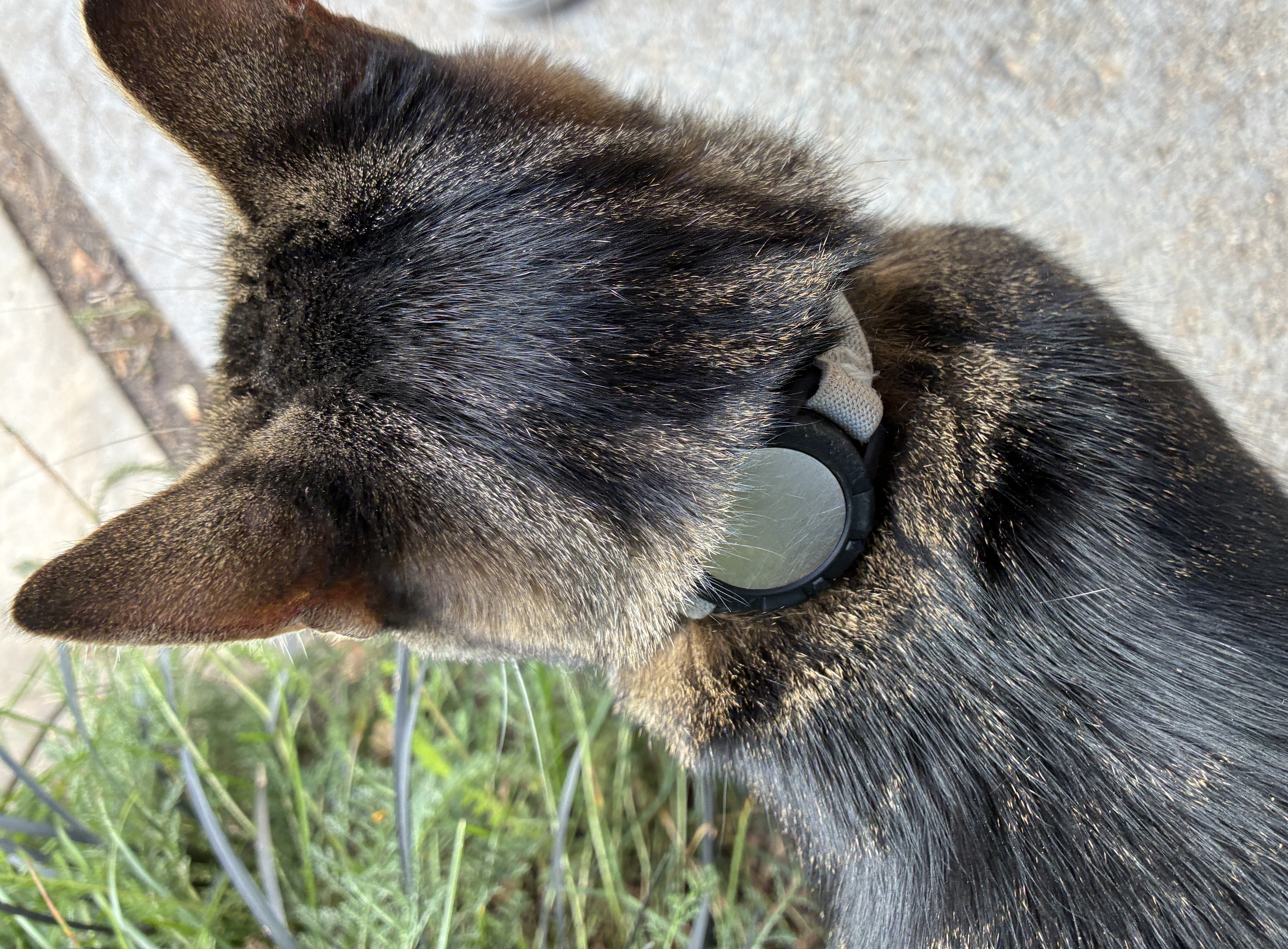
Close-up view of the back of a cat's head with a collar and a round tag, surrounded by greenery.

The big weakness is rural territory. If the cat in my neighborhood had wandered from the foothills it would have a good chance of being tracked. If a town cat got lost in a rural area, you may get no new location updates until somebody with an Apple device comes within range.

That’s quite different from a GPS pet tracker, which gets its position from satellites and typically sends that information over a cellular network.

I’d favor an AirTag over a Spotminders card for a pet because there’s an AirTag adapter for a band and it has a replaceable battery. Spotminders is a very thin Find My accessory designed for wallets, luggage, and backpacks. Its card is waterproof, but that’s not the same thing as being designed to survive life on a dog’s collar.

Lost People: Much Trickier

For someone with memory impairment who is prone to wandering, an AirTag or a Spotminders card could be one layer in a broader containment/safety plan:

  • AirTag or Spotminders card on clothing, shoes, a keychain, or in a bag. If the person wanders into an area with Apple devices nearby, Find My provides a location.
  • Family/caregivers can check Find My instead of immediately starting a neighborhood-wide search.
  • Both trackers would be useful in crowded environments. If the person gets lost in a shopping center, airport, cruise ship, or downtown area where lots of Apple devices are likely to be present, Find My will send out the location.
  • My Find trackers shouldn’t be the only safety measure. In a rural area, underground garage, or other place with few Apple devices, location updates may be sparse or nonexistent.
  • For someone who routinely wanders, a dedicated GPS/cellular device may provide more dependable continuous location information than an AirTag or a Spotminders card.

Am I Switching?

I’m keeping my AirTag on my key ring. It already does the job, and I like the convenience of its replaceable battery and Precision Finding feature on compatible iPhones.

I can see the appeal of the Spotminders Tracking Card, but the AirTag is $10 cheaper, and I can stick the disc in my wallet. It’s not a hockey puck. I may try a Spotminders for the heck of it.

The tracker’s shape matters less than the network behind it. Both rely on Apple’s Find My ecosystem, and neither is a magical, always-connected satellite tracker.

My brand loyalty remains intact. It’s just a matter of time before Apple flattens the AirTag into the iCard.
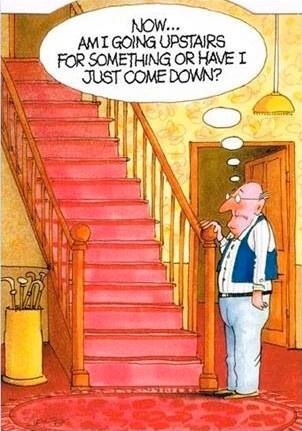
I forget … and I blame it on ‘Future Shock’

I still know the difference between coming and going but have to work harder on names.

I still know the difference between coming and going but have to work harder on names.

I’ve been noticing that I have to think harder.

Not because I can’t solve problems, but because I remember the wrong stuff.

I’ve always been a trivia buff and sometimes wish I could dump some of that gunk out of my head.

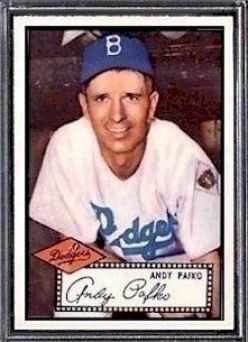
I can remember that card #1 of the 1952 Topps baseball card set is Andy Pafko, but I have to keep repeating to myself that I need to buy a new flapper for the toilet tank.

My long term memory is still sharp, but I wish I could purge my brain of some of it.

My long term memory is still sharp, but I wish I could purge my brain of some of it.

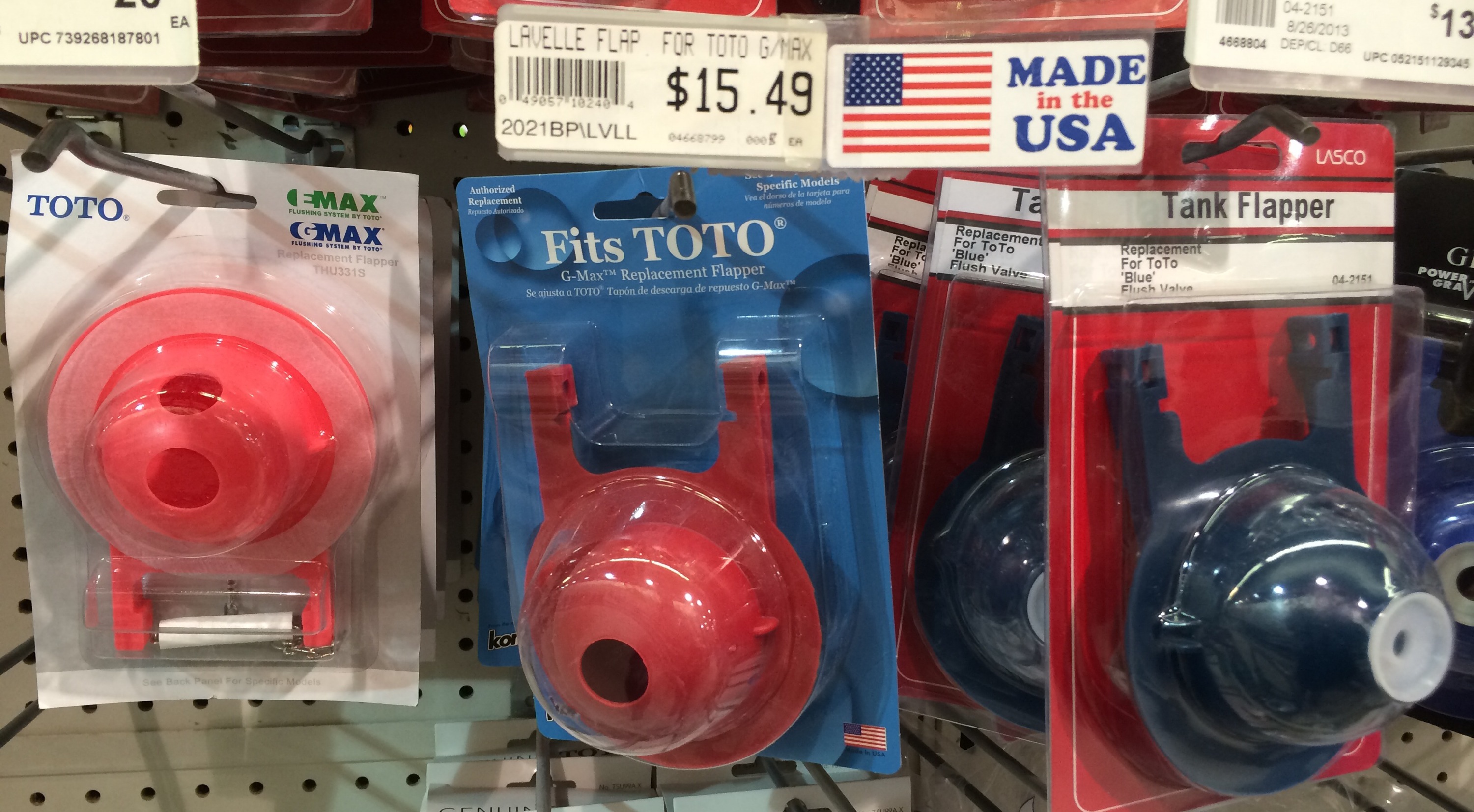
Add to that, no less than 20 flapper choices ranging in price from $6 to $20! I spent way too much time at the hardware store today.

I settled on the TOTO for $15 – made in the USA, USA, USA.

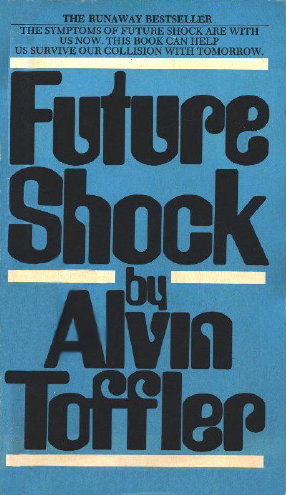
Alvin Toffler wrote “Future Shock” in 1970. The book is about personal perceptions of “too much change in too short a period of time”.

Alvin Toffler’s “Future Shock” came out when I was in high school. It was quite prophetic.

Ain’t that the truth.

My too-many-flappers conundrum is future shock come to pass and I notice I spend too much brain power on cluttered decisions like this.

“There have been a lot of advancements over the years,” the green – vested McGuckin plumbing department guy said of his collection of rubber plugs to keep toilet tanks full of water until the next flush.

toto flapper

I had too many flapper choices, but the one I bought, did the trick.

Add unexpected flapperology lessons to my lack of motivation and general lethargy arising from my illness recovery over the past few months and it’s a double whammy.

As a hedge against my future shock, folks encouraged me to arrange the clutter by writing lists for this and that.

I began to jot things down in a calendar book like meetings and dentist appointments appointments, but write a list?

Fuhgettaboutit!

Will someone find me a pen?

My first batch of green chili turned out, thanks to the readily available fresh veggies.

My first batch of green chili turned out, thanks to the readily available fresh veggies.

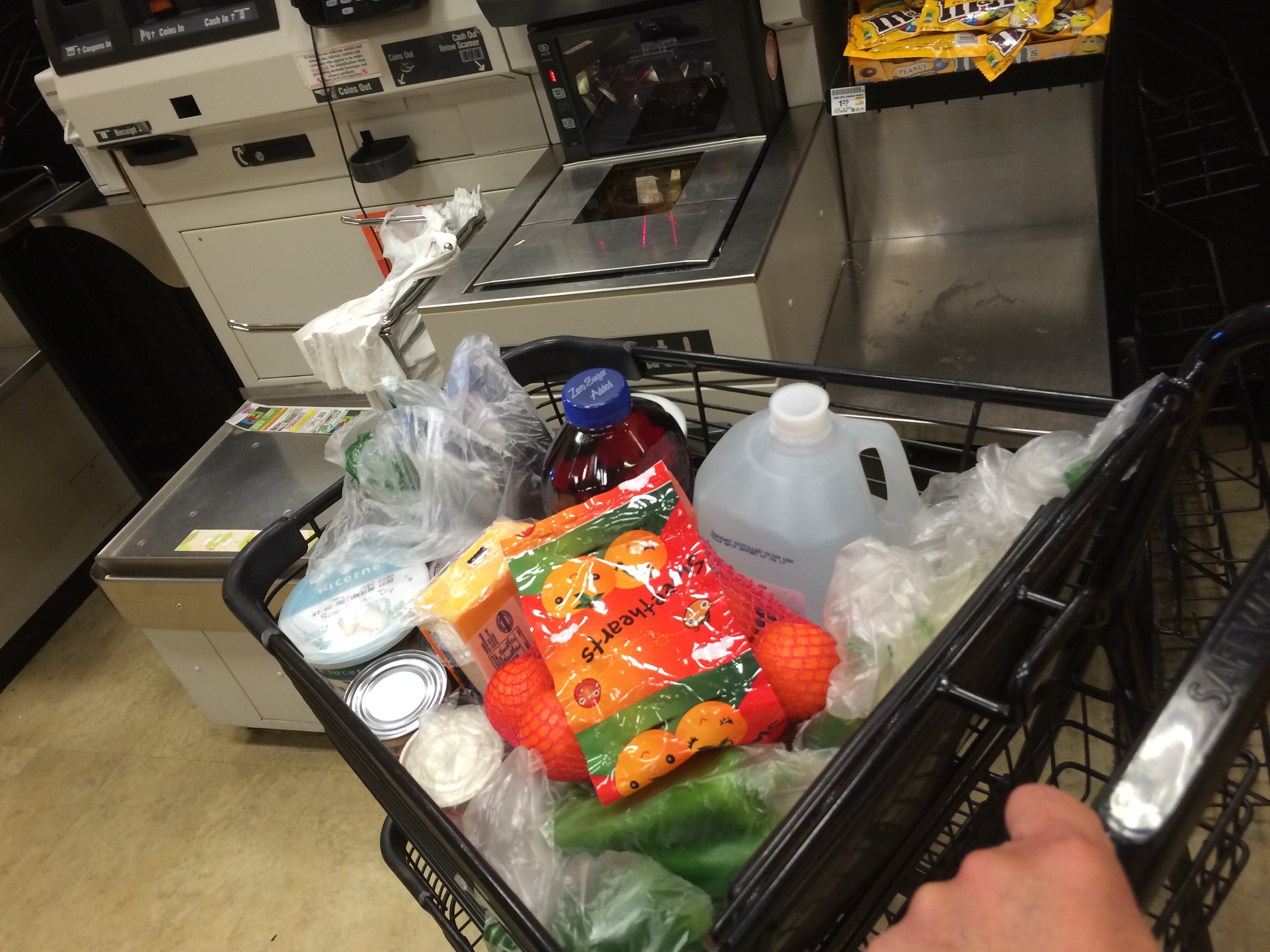
I started cooking more food from scratch and use recipes from allrecipes.com mostly because the mobile phone app works pretty well in the food store, with or without WiFi.

The parts list is at my fingertips.

Tonight, I tried my hand at a pot of green chili. In the olden days – 10 years ago, even – it was not possible to cook dishes like this because of the limited number of oddball ingredients that were available in the average grocery store. For instance, I needed:
– jalapeño peppers
– anaheim peppers
– tomatillos

While reading recipes, I could tell the older ones because they called for x-number of cans – Ortega green chiles.

The food stores stock lots of product that didn't used to be offered.

The food stores stock lots of product that didn’t used to be offered.

Safeway now offers peppers galore – pablano, habanero, banana, orange ones, yellow ones, red ones, those long slender ones you get on Chicago dogs.

The chili was good, but turned out a little spicier than I thought and I’ll tweak the recipe for the faint of heart. I used to improvise a lot, but have since learned that there’s a lot of chemistry involved in cooking, and not everything has to have tomato sauce in it.

I’ve not only started keeping a virtual recipe box, I keep my contact list up to date to help me remember people. I’m still pretty good with names, but I have to repeat them to myself more than in the past.

When I see people after a year, I can remember when we met, where we met, what they do for work. Sometimes, sometimes not, the name will come to me.

It’s very frustrating.

I learned from my nonprofit development director days that there are very expensive computer programs written to keep track of donors and prospects. I use my phone contact list to remind me about people.

I started keeping a hard copy record after I heard a couple nightmares about losing contact info in the “cloud.”

When I go places now, I have to study who may be there. I could just ask people their name, but that’s no fun.

My neighbor, Henry, says that proper name memory is the first to go – something to do with the hippocampus. That’s a bit reassuring.

Jerry Seinfeld had trouble remembering his girl friend's name that rhymes with a female body part.

Jerry Seinfeld had trouble remembering his girl friend’s name that rhymes with a female body part.

This reminds me of the Seinfeld episode when Jerry can’t remember his girlfriend’s name that rhymes with a part of the female anatomy.

There’s an Alzheimer’s disease ad playing on TV about a husband that finds his wife’s car keys in the fridge.

So far, I haven’t done anything like that, but then again, I’ve been misplacing things for years like my wallet, phone, coats. I always have gotten everything back, though.

When that luck runs out, I should start worrying.

In the meantime, I’ll just go with my future shock flow and keep absorbing baseball trivia, keep my choices simple and remember names by way of mnemonic devices.

“Oh … DELORES!”