I’ve been seeing a lot of ads for credit card trackers lately. You know the kind. Slip one into your wallet, and you’ll never lose track of your money, or at least the wallet containing it. I’m also thinking a tracker could help you find loved ones who wander because of memory decline.
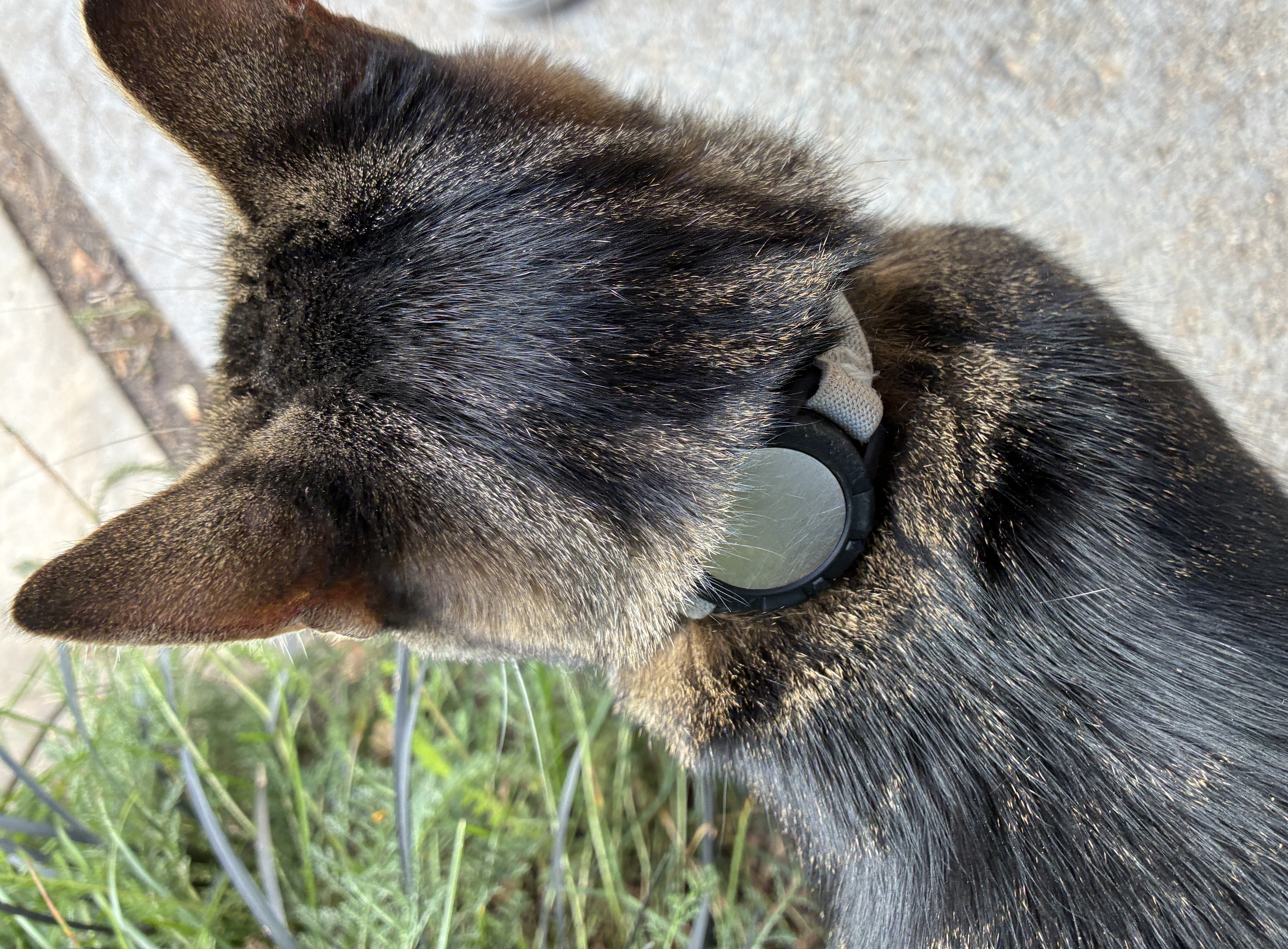
A cat’s been hanging around my neighborhood with an AirTag attached to its collar. I’ve wondered if the battery is dead.
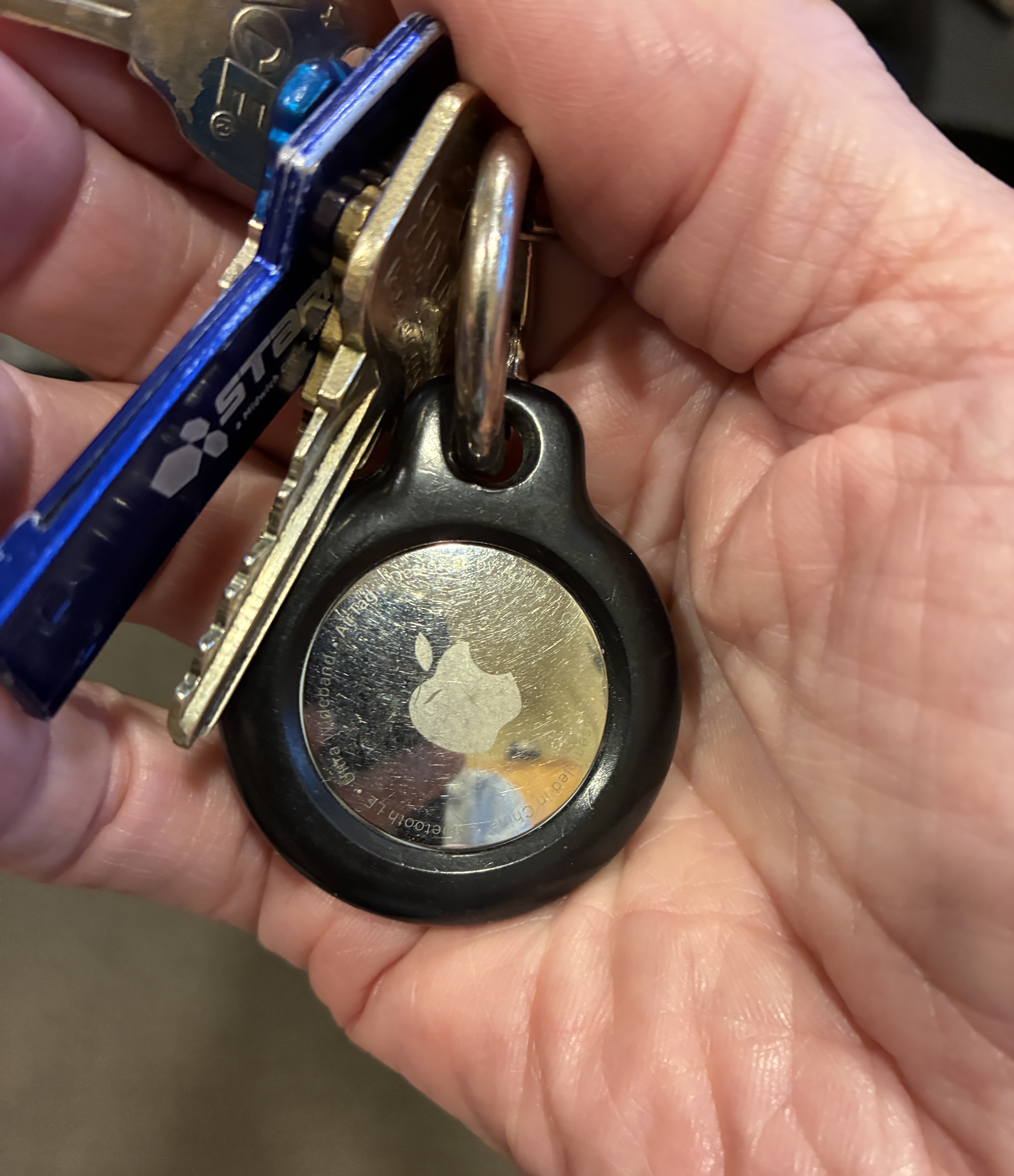
I’m a brand-loyal kind of guy. I already have an Apple AirTag attached to my key ring. It gives me a certain amount of comfort knowing I can find my keys without turning the house upside down.
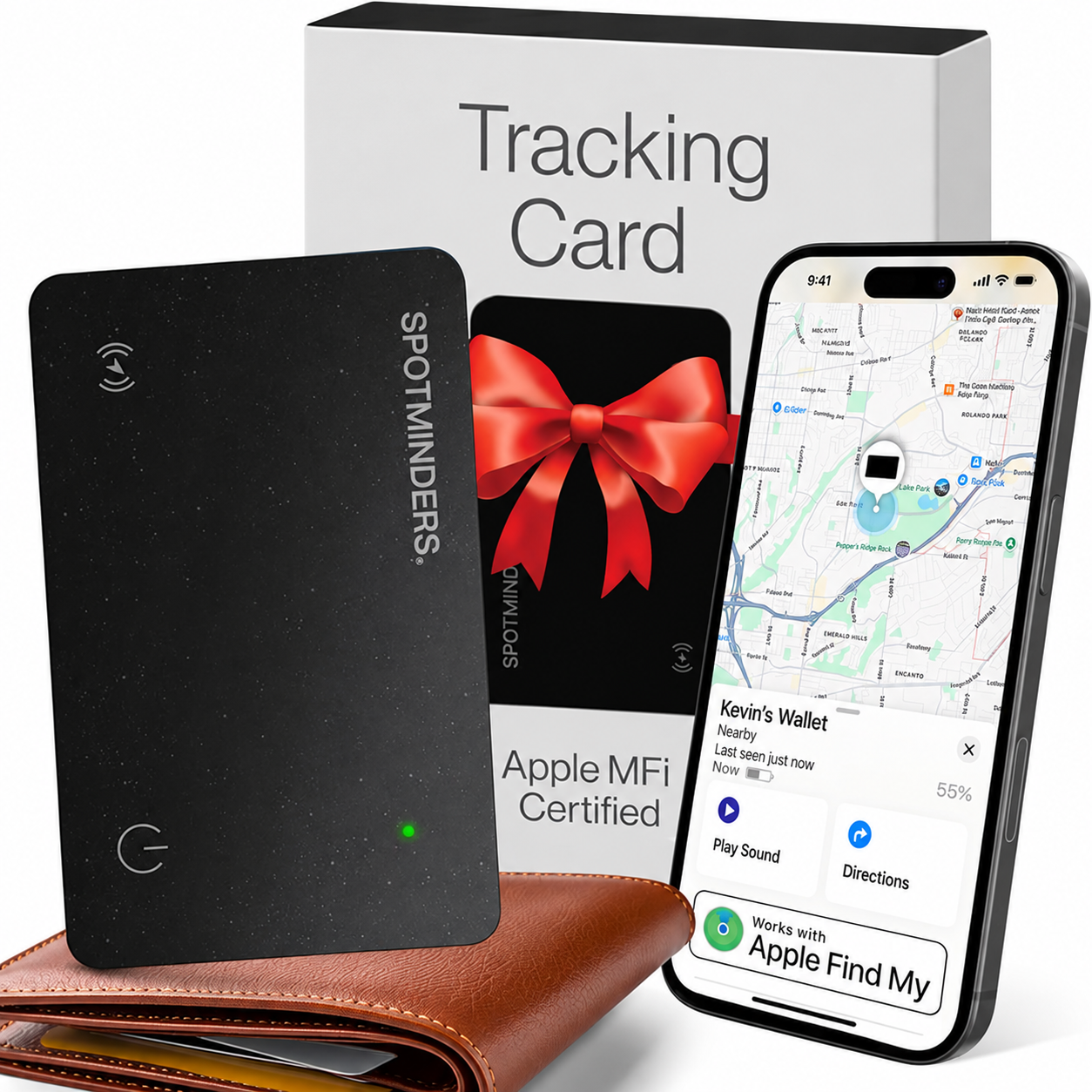
I wondered about the Spotminders Tracking Cards and watched ad featuring an airline pilot. She promised much the same peace of mind, only in a package thin enough to slip into my billfold.
Is it time to cheat on Apple?
Let’s investigate.
Two Trackers, One Apple Ecosystem
First, an interesting discovery: A Spotminders isn’t an alternative to Apple. Its Tracking Card uses Apple’s Find My network, just like an AirTag.
Both devices send out Bluetooth signals. When a compatible Apple device passes within range, it can detect the tracker and anonymously relay its location to Apple’s Find My network. You can then see the reported location on your iPhone. Spotminders only works on iPhones.
Neither device needs its own cellular subscription, and neither requires a monthly tracking fee.
The main difference is what you attach it to or where you slip the tracker.
An AirTag is a little round disc, perfect for a key ring, backpack, or suitcase. A Spotminders card is about the size of a credit card and 1.8 millimeters thick. It fits inside a wallet or passport holder without adding much bulk.
Apple has your keys. Spotminders wants your wallet.
The Feature Face-Off
| Feature | Apple AirTag | Spotminders Tracking Card |
| Tracking network | Apple Find My | Apple Find My |
| Form | Round, key-ring-friendly | Thin, credit-card-sized |
| Battery | Replaceable coin battery | Rechargeable |
| Battery life | About one year | Up to 8 months per charge |
| Sound | Built-in speaker | Built-in sound alert |
| Nearby precision finding | Supported on iPhones. Androids not supported. Precision finding. | Supported on iPhones. Androids not supported. No precision finding. |
| Monthly fee | None | None |
| Best use | Keys, bags, luggage | Wallets, passports, slim bags |
One practical advantage of the AirTag is its replaceable battery, which lasts around eight months. When it runs down, I can pop in a new coin battery.
Spotminders requires recharging. That’s not a dealbreaker, but it’s another thing to remember. The card’s big advantage is its slim design.
If you’re already an iPhone user, you don’t have to learn a new app. AirTags and Spotminders cards both work through Find My. Neither is Android-compatible. There are Android-compatible tracker cards.
Lost Pets: Potentially Useful
For a dog or cat, an AirTag can work surprisingly well if the animal gets lost in an area with lots of Apple devices. The AirTag broadcasts Bluetooth, and nearby Apple devices can anonymously relay its location through Find My.
The big weakness is rural territory. If the cat in my neighborhood had wandered from the foothills it would have a good chance of being tracked. If a town cat got lost in a rural area, you may get no new location updates until somebody with an Apple device comes within range.
That’s quite different from a GPS pet tracker, which gets its position from satellites and typically sends that information over a cellular network.
I’d favor an AirTag over a Spotminders card for a pet because there’s an AirTag adapter for a band and it has a replaceable battery. Spotminders is a very thin Find My accessory designed for wallets, luggage, and backpacks. Its card is waterproof, but that’s not the same thing as being designed to survive life on a dog’s collar.
Lost People: Much Trickier
For someone with memory impairment who is prone to wandering, an AirTag or a Spotminders card could be one layer in a broader containment/safety plan:
- AirTag or Spotminders card on clothing, shoes, a keychain, or in a bag. If the person wanders into an area with Apple devices nearby, Find My provides a location.
- Family/caregivers can check Find My instead of immediately starting a neighborhood-wide search.
- Both trackers would be useful in crowded environments. If the person gets lost in a shopping center, airport, cruise ship, or downtown area where lots of Apple devices are likely to be present, Find My will send out the location.
- My Find trackers shouldn’t be the only safety measure. In a rural area, underground garage, or other place with few Apple devices, location updates may be sparse or nonexistent.
- For someone who routinely wanders, a dedicated GPS/cellular device may provide more dependable continuous location information than an AirTag or a Spotminders card.
Am I Switching?
I’m keeping my AirTag on my key ring. It already does the job, and I like the convenience of its replaceable battery and Precision Finding feature on compatible iPhones.
I can see the appeal of the Spotminders Tracking Card, but the AirTag is $10 cheaper, and I can stick the disc in my wallet. It’s not a hockey puck. I may try a Spotminders for the heck of it.
The tracker’s shape matters less than the network behind it. Both rely on Apple’s Find My ecosystem, and neither is a magical, always-connected satellite tracker.
My brand loyalty remains intact. It’s just a matter of time before Apple flattens the AirTag into the iCard.