How Acronyms Shape Xenophobia in America

The Alphabet of Exclusion: The bureaucratic lexicon included “acronyms” to save time. In the history of American xenophobia, acronyms save face. Three-letter shorthand compresses the jagged edges of state power into something smooth, portable, and easy to swallow.

Today, we see ICE (Immigration and Customs Enforcement) and DHS (Department of Homeland Security) dominating the headlines.
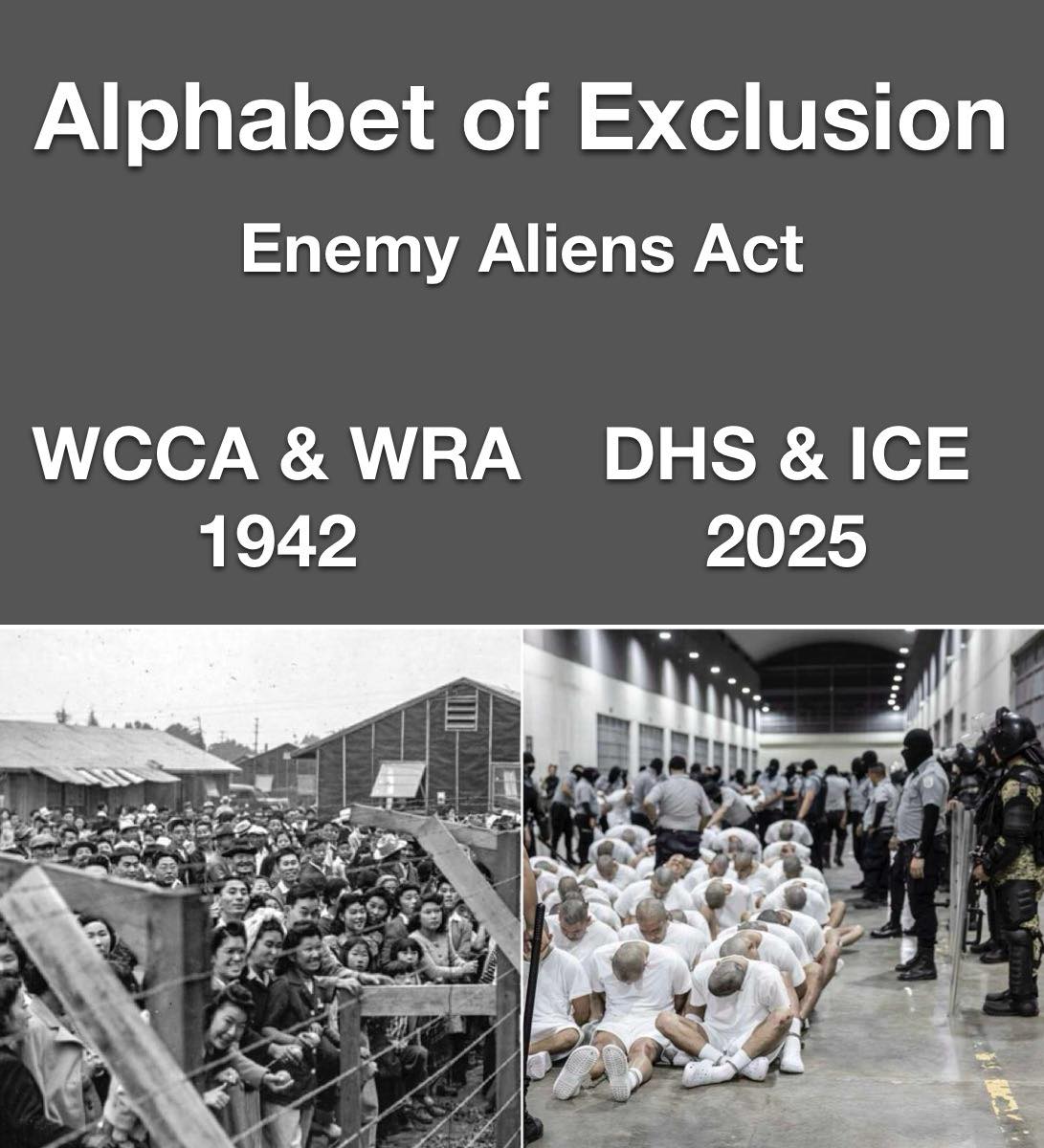
These acronyms are the latest entries in a century-long glossary of exclusion.

Our Long Memory of Othering: Linguistic distancing is an ingrained feature of American domestic and foreign policy.

The names change, but the grammar of “the outsider” remains consistent.

• The Precedent – The Chinese Exclusion Act (1882): Before the era of modern acronyms, this was the first significant law that restricted immigration based on a specific race.

The Act codified the idea that certain people wouldn’t assimilate, establishing a legal basis for the federal government to exclude anyone deemed a threat to the nation’s homogeneity.

• The Prototype – EO (Executive Order) 9066 (1942): Eighty-four years ago, on February 19, 1942, the ink dried on EO 9066. With a stroke of a pen, FDR (Franklin Delano Roosevelt) authorized a military action and birthed a new “alphabet soup” of exclusion.

The WCCA (Wartime Civil Control Administration) and the WRA (War Relocation Authority) were established as wartime agencies for prison management.

By World War II, the language had become clinical. EO 9066 did not mention Japanese people or any specific ethnic group.


Instead, it authorized the Secretary of War to define “military areas” from which “any or all persons” could be excluded, a neutral phrase that allowed the WCCA and the WRA (War Relocation Authority) to operate with stoic efficiency.

By the time the public learned to say these new initials, 125,000 Japanese Americans had been rounded up from the West Coast, and filed away under the euphemistic labels of “evacuees” in “relocation centers.”

• The Modern Pivot – 9/11 and the Muslim Ban: The 21st-century xenophobia found its shorthand in the wake of 9/11. We saw the DHS implement NSEERS (National Security Entry-Exit Registration System), which targeted men from predominantly Muslim countries.

Later, the “Muslim Ban” (EO 13769) echoed the 1942 rationale and used the national security blanket to cover the profiling of a specific faith.

• The Present – ICE and the DHS Deportation Machine: Currently, the conversation centers on ICE and the DHS’s overly aggressive deportation tactics.

A three-letter enforcement agency reduced the complexity of migration and the history of Latin American labor by stripping away human dignity.

History suggests that when we stop using names and start using initials, take actions, and hold beliefs we’d rather not hold to account.

The WRA and WCCA have been abolished, replaced by DHS and ICE.

The letters changed, and digital databases replaced the paper files.

The underlying belief that certain populations must be registered, monitored, and managed for the safety of the collective “us” remains the durable dark side of the American grand experiment.
Hasbro Announces Venezuela Replaced by Ecuador on the new Risk board

CARACAS (SNS)  In a move that has sent shockwaves through both the geopolitical and tabletop gaming communities, Hasbro Inc. announced today that all future printings of the board game Risk will officially scrub “Venezuela” from the map.

The territory, a longtime staple of South America and a favorite jumping-off point for players looking to harass North America, will be replaced by Ecuador.

Too Expensive to Play

According to unnamed sources familiar with the situation, the decision came after a “playtesting disaster” in which players who conquered the Venezuela territory were immediately forced to repair hundreds of defunct oil wells.

“It was ruining the game’s flow,” said one lead designer. “In the old version, you’d take Venezuela with three infantries. In the new version, the moment you roll a six, you are legally responsible for the territory’s external debt, its crumbling power grid.”

The Ecuador Swap

The decision to swap in Ecuador was described as a stability play.

“Ecuador is manageable,” the source continued. “It’s compact, it’s got great tourism potential, and the U.S. dollar is the accepted currency.”

The change has drawn mixed reviews. Casual gamers are happy they no longer have to manage hyperinflation during family game night, but hardcore strategy fans are disappointed.

“The Venezuela-to-Ecuador swap takes the teeth out of the game,” said one Grandmaster-ranked player. “Part of the fun of Risk was the high-stakes taunting. Now, if I occupy South America, I just get a reasonable trade agreement and a steady supply of bananas. Where’s the drama in that?”

At press time, sources say Hasbro is also considering replacing Ukraine with a “Permanently Contested Neutral Zone” consisting entirely of mud and broken drone parts to “better reflect the 2026 gaming meta data.”

Understanding the Tipping Point of Social Movements

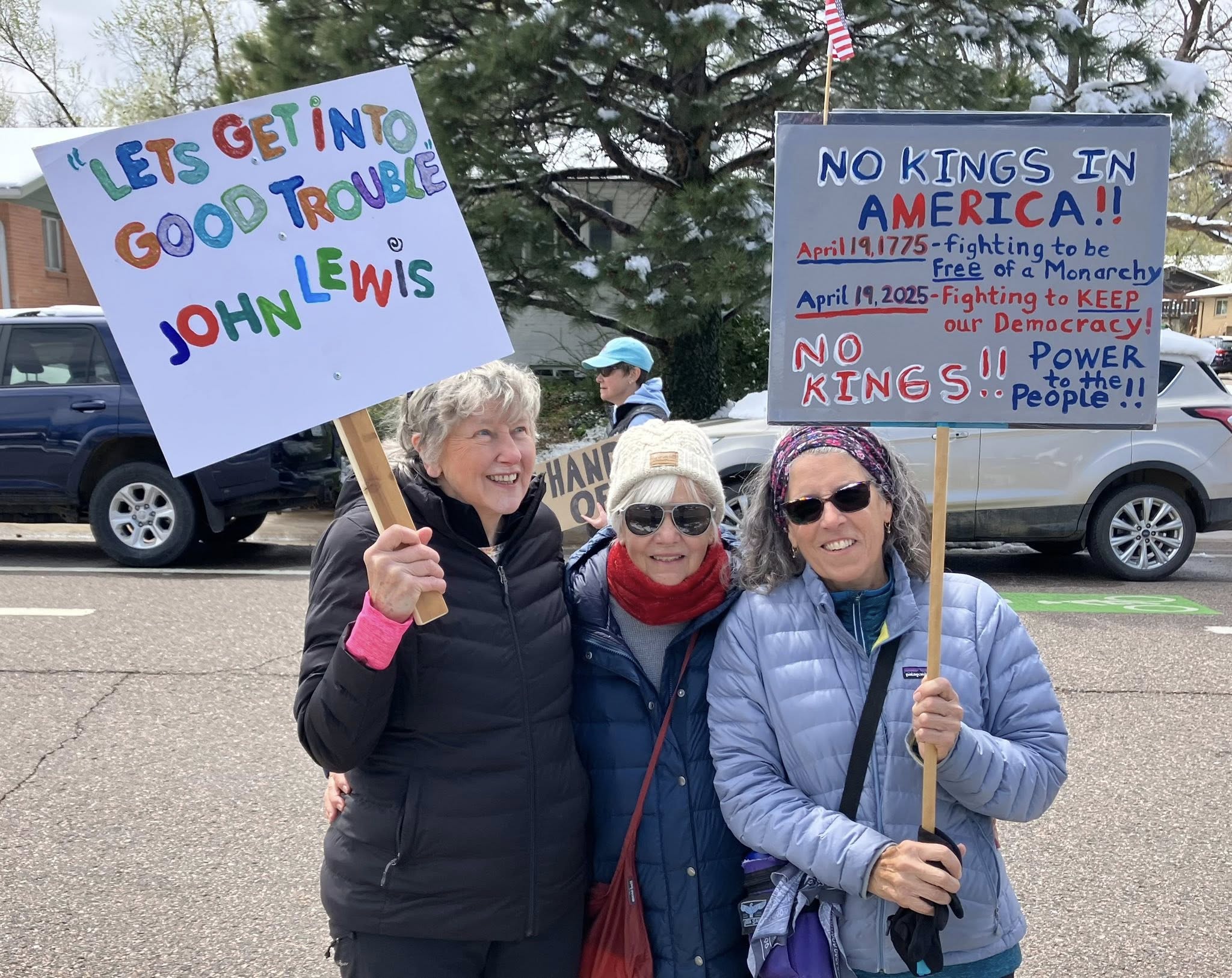
I’m on the lookout for new stories. When Hemingway ran out of ideas, he joined the Army. I’m curious, but not that curious. There was another No Kings rally on October 18th. I used to go to those. I went to one in April and stayed home in June. The most recent time, I watched Wyoming football, and rationalized that I was at Boulder’s Central Park in spirit.

The rally I attended in April felt to me like a mix between a block party and a civics class. A few thousand of us milled around on South Broadway outside the National Oceanic and Atmospheric Administration (NOAA) building, along with a couple of my neighbors and some acquaintances.

The Department of Government Efficiency (DOGE) purged a bunch of scientists soon after the Inauguration in January. Weather research and forecasting had become too political. Climate change will do that. I made a sign that read “Melt ICE,” and caught the bus with a crowd of like-minded people. The slogan is a double entendre, referencing global warming thawing the icecaps, and ICE rounding up immigrants and sending them to points unknown.

We chanted and waved our signs. There were a few horn honks from well-wishers driving by.

The only real drama came when a red pickup roared by and blasted us with black diesel smoke. That was a rolling metaphor for the times.

The plume reminded me of the time I was walking in a crowd when soldiers tear-gassed us after Nixon’s inauguration in 1973. It’s ironic that I was waving my sign, since my first presidential vote was for Nixon and I was president of the now-infamous College Republicans at the University of Wyoming. I’m still regretting that vote.

It was chilly in April. We’d seen enough. The crowd dispersed, and we walked back toward town.

The pundits said these rallies mattered because democracy depends on people in the streets. The next morning, the same president was still in office, with the only visible change being that the dumpsters were now full of clever slogans scrawled on signs.

The rally in April stoked me up. I made a hat with my “Melt ICE” slogan. It gets reactions. Some are supportive, while others, not so much, but at least it starts conversations.

The novelty had worn off, and I had sat out the June event, but I was ready to go in October until I lost interest.

“The movement has lost steam,” I said to myself. There were too many mixed messages. Too many baby boomer faces who’d been protesting since Nixon, now armed with newer cardboard. The energy was real, but it felt scattered.

Then I heard the numbers.

The time I turned out in April, about 3 million marched.

In June, the number bloomed to around 5 million.

News reports estimated 7 million had hit the streets nationwide on October 18th.

That’s not a slump. That’s a surge.

What’s more interesting to me is who showed up. According to a survey from American University, women comprised 57 percent, and most were highly educated.

At first glance, that’s the same old coalition, but the data tell another story. Local media indicated campus groups joined in from places like Penn State, Towson University, and the University of Florida.

The same poll found that the median age of protesters in Washington, D.C. was 44. Younger voices mixed into the chorus.

I’m a Malcolm Gladwell fan. He wrote The Tipping PointNo Kings feels like what Gladwell defined as the mysterious moment when an idea stops needing to be pushed and starts growing under its own power.

Something has shifted over the past six months. Young people are showing up. Folks who don’t fit the old protester profile are finding their way into the crowd.

Maybe they don’t know exactly why they’re milling around, but they know they are mad as hell and not going to take it any more.

When democracy wakes up groggy, it’s slobbery, noisy, sluggish, but undeniably alive. Movements begin with emotion, not policy. It’s evolution, not chaos.

Maybe I was wrong to stand on the sidelines admiring the T-shirts with clever slogans and frog costumes. Spontaneous growth is immune to counter-messages.

Detractors paint the millions and millions of us as anti-American and paid to riot. I must have missed the gravy train.

The naysayers claim photos and videos documenting the 2,500 events around all 50 states were created by AI.

Pay no mind to the conspiracy theorists behind the curtain.

We each only have control over what we can control. The tipping point creates change on its own. For some, that’s marching. For me, it’s about mentoring, voting, or engaging with people who disagree with me.

The four-hour No Kings events are about participation. Being around people of like minds leads to the long, quiet actions that last beyond the rants and raves.

March if you must for the day, but keep moving, because change doesn’t live on a poster board.

Change begins in the streets, and tipping points gain momentum when the news cycle shifts to the next mass shooting or devastating flood.

No Kings rallies echo past protests. Now the crowds have expanded since April. The message is spreading, and people who once stayed home are finding their way into the crowds. Parents push baby strollers down the sidewalk. Kids show up and pass footballs around the medians.

It doesn’t matter where you are on the sociopolitical spectrum. Make something better. Make someone think. Make noise when the streets are quiet.

Copy and Paste this Post to Your Social Media

The No Kings rallies started as echoes of the past with the same signs and outrage. Something’s shifting. The crowds are growing. The energy is younger. The message is spreading.
What began as protests is turning into practice. We can’t control the whole storm, only how we show up in it. March if you must, but keep moving. Change doesn’t live on a poster board. It lives in what we build when the streets are quiet. #NoKings #MarchLessMoveMore #EverydayActivism #QuietChange #TippingPoint #MakeMeaning #DemocracyAlive #YouthMovement #DoTheWork #ZenOfAction https://alanohashi.com/2025/10/21/understanding-the-tipping-point-of-social-movements/TippingPoint #MakeMeaning #DemocracyAlive #YouthMovement #DoTheWork #ZenOfAction

Do You Have Questions? Start a Conversation with Alan Bot!

← Back

Thank you for your response. ✨