What a long strange trip it still is – aging and the power of my cohousing community

Auntie Jeannie is standing on the right end next to my mother. Alison is sitting second from the right, Alison's sister Leslie is being held by Auntie Elsie.

Auntie Jeannie is standing on the right end next to my mother. Alison is sitting second from the right, Alison’s sister Leslie is being held by Auntie Elsie.

My 82 year old Uncle Tom fell after getting off a four-wheeler. He was in the hospital for a short period of time. My cousin Margo called to let me know Tom died. I stopped at the hospital and saw him and had a chance to catch up with my cousins. My condolences go out to Margo, Kathy and Bobbi – they are all pictured in the photo on the left.

Margo’s phone call reminded me about a story from a few years ago.

_______________________________

October 29, 2016 – I got a call from my cousin, Alison, yesterday. These days, whenever relatives call, there’s generally some sort of family emergency. This time, Alison told me her mother – my Auntie Jeannie – had passed away. She had a stroke while sleeping and didn’t wake up. My condolences go out to my cousins Alison and Leslie and her sisters Carol Lou and Janice.

I’ve been attending funerals lately. Last week, it was for Eastern Shoshone tribal elder and one of my mentors Starr Weed in Fort Washakie.

It was my first open casket wake. I don’t know what I expected, but it was solemn and heart breaking. One of Starr’s grandsons, Layha Spoonhunter, was one of my Wind River Tribal College film students. His class project was an oral history of Starr Weed. I felt for him and his mom, Wilma, who is married to my former boss, Harvey, and his aunt Elaine who organizes the Gift of the Waters Pageant in Thermopolis.

A month or so ago, my Uncle Rich died. He had quite a few home health care workers supporting him after he returned from the hospital. He was a 442nd war veteran and in Army Intelligence. He was too small in stature for combat. I also learned after he died, my Aunt Sadako was moved to an assisted living place in Cheyenne.

I live in the Silver Sage Village senior cohousing community in North Boulder. There have been murmurs about it, but just recently the community began discussing “aging in community” which has been on my mind quite a bit, lately.

I’m making a documentary movie about my and my neighbors’ experiences of growing old in cohousing and their thoughts about the future. I’m also helping produce a national conference on the topic that will be held next year May 19 to 21 in Salt Lake City.

My movie won’t be anything earth shattering, but hopefully will give others wanting to start up an intentional community some insight into what to expect. These discussions are about the first ones we’ve had in the five years I’ve been living at Silver Sage Village where the topic has been about something more substantive than maintaining the buildings.

A bunch of people are reading “Being Mortal” by a doctor named Atul Gawande. His basic premise is that modern medicine is good about keeping people alive, while not knowing when it’s time to allow us to die not in a hospital but at home.

Gawande says that in the past, 80 percent of people used to die at home and 20 percent died in a hospital or medical facility. Now that number is reversed with 80 percent dying in a hospital and 20 percent dying at home.

Back to Auntie Jeannie.

I also learned that at 77, she was one of the primary care givers to my Auntie Elsie, well into her 90s. A few months ago, she broke her hip and Jeannie got her settled into a rehab / hospice center as well as helping Sadako get settled into her assisted living apartment. I surmise that what happened was Uncle Rich’s home care workers also did more for Sadako than anyone realized.

I imagine with all this care giving Jeannie was a bit stressed out.

Elders providing care for other elders is becoming common place anymore and a problem.

I can see myself in that boat particularly since my immediate family is strewn all over the place with their own lives and issues and I have no kids.

Like in Jeannie’s case, the work takes more out of the care giver than the patient.

Cohousing is a way to spread some of the load.

Jeannie was married to my Uncle Jake who was the youngest son on my dad’s side that had 13 total kids. It was a very strong extended family and everything revolved around my grand parents house.

Mainly during the summers, everyone would gather various places in Cheyenne and along with the rest of the Japanese community. On Memorial Day there were big picnics and on the 4th of July we all went out to Jeannie’s parents who lived out in the country and blasted off fireworks.

Back then, all the cousins were close, and all the aunts and uncles were close but there was a big diaspora after the grand parents died. We all became adults, had our own lives and lost the closeness we shared as children. Social media has helped keep us connected, but it’s still not the same as it was.

How do more seniors get engaged as caregivers for one another?

I had a brush with death and had a visit from the Ghost of Christmases Yet to Come and got a glimpse into my future. What if I couldn’t walk, feed myself, or breathe on my own, flat on my back in a hospital bed?

I can tell you it was lonely.

The hospital was 20 miles away and the rehab place 40 miles away in Denver. I didn’t broadcast that I was laid up but a few neighbors and friends managed to find out and dropped by. I thought it would be a good time to catch up on some editing.

I didn’t realize how doped up I was. A guy can only watch so many “Pawn Stars” reruns before boredom sets in.

I’m happy that I got a second chance to do things differently the next time around. I am grateful to be living at a place like Silver Sage Village. At the urging of Diana Helzer, we sold a place nearby with too many stairs in favor of Silver Sage Village that is on the ground floor with no steps and is fully accessible.

I really didn’t know much of anything about cohousing but am lucky to have neighbors who helped out by bringing by food and helping Diana with some of the care giving like transport in the dead of winter.

The downside of living in cohousing is antithetical to any care giving.

There are many conflicts about the day – to – day management of the place that arise and escalate, some cause hard feelings, but that’s part of life anywhere and shows how fragile community living can be among a whole variety of personality types. The differences seem more pronounced since everyone also is trying to get along.

In my experience, those sorts of relationships have been more work related, but much of living in cohousing is work related and I’ve had to learn how to separate out my personal life here from my business life here.

When I returned to Silver Sage Village after six weeks of hospital and rehab stints, I don’t know how it happened, but neighbors brought by meals and offers of help. I don’t know if neighborliness can be “organized” but however it came about was greatly appreciated. That, along with the layout of the fully accessible condo, was important in my continuing recovery.

It takes a village to raise a child but also takes a village to move an elder towards the end of life.

I don’t expect my neighbors to help me into the shower, or wipe my butt, but I hope they’ll continue to mostly be around.

Gawande talks about the importance of hospice that helps a person be comfortable and provides ways to navigate life.

Do I want my friends and family to be hovering over me out of some sort of self serving sense of duty when I’m delirious and out of it? Is that quality time to be with someone at the last breath?

I’ve put myself into self-imposed hospice now while I still have plenty of breaths left and want to be comfortable in my house living life to it’s fullest. I’d rather be around family and friends while we still have our wits about us.

Here I thought I was out of the event planning business.

Look out for the “Getting the Band Back Together Tour” truckin’ into a town year you – the Cousins Reunion; Cheyenne, Gillette, Lander, Boulder and points in between.

What a long strange trip it still is!
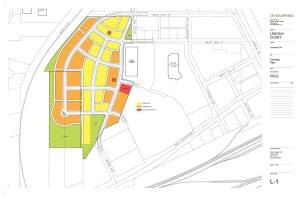
Lincoln Court affordable housing will be in nobody’s back yard

lincoln court development plan 2017

After a couple meetings with the city of Cheyenne planning office, the Lincoln Court mixed use affordable housing project is making some headway. Click on the image to read the latest.

I’m leaving for Nashville in a few hours to participate on a panel at the Tennessee Governor’s Conference on Affordable Housing.

Part of my presentation was about the Lincoln Court mixed use affordable housing project I’m pushing in my hometown of Cheyenne. Based on what I learned at an informational meeting last week about the project, my entire presentation is changed.

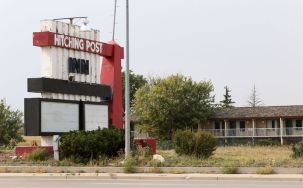
We’re getting a little press about the Lincoln Court mixed use affordable housing project. It’s a moving target with lots of things happening in the neighborhood with the likely Hitching Post demolition and the Atlas Motel now up for sale.

Project architect and also my across-the-street neighbor Bryan Bowen and I held a couple informational meetings in Cheyenne last week. The first was attended by stakeholders from the city, realtors and lenders.

The second was attended only by the newspaper reporter Austin and photographer Jacob. That was a little disappointing, but based on the comments we sought on social media, it wasn’t surprising.

Both of them have wondered about the lack of affordable housing in Cheyenne. Having been a newspaper reporter, I know that news gatherers aren’t exactly pulling down the big bucks. Jacob reported that he spends 50 percent of his monthly income on housing in Cheyenne. The generally-accepted housing cost is closer to 30 percent.

hitching post 2017

The city shut off the power and water to the Hitching Post Inn signalling a move to demolish the historic hotel.

Based on the intrepid reporters’ observations around Cheyenne, particularly about the, apparently, very active Not In My Back Yard (NIMBY) crowd, they, too are skeptical about whether Lincoln Court would actually happen because of the lack of community support for the idea of affordable housing.

Lincoln Court is the perfect project to satisfy the NIMBYs since it is bounded by Highway 30, Missile Drive and the railroad tracks – who in their right minds would want to live there, and to top it off how about 40 mph winds and 40 below?

This is a huge opportunity to anchor the redevelopment with a collaboration among the city, the Hitching Post Inn and the Atlas Motel to return the West End to the vibrant neighborhood it once was.

While comparing Boulder to Cheyenne is “apples and oranges,” Boulder’s Holiday Neighborhood is a strong corollary to what can happen on Cheyenne’s West End. Holiday is bounded by State Highway 93 (Broadway), US Highway 36 (to Estes Park). The surrounding land uses are industrial (peat moss yard), light industrial (garages, car lots, storage), trailer parks (Ponderosa and Meadows), risky recreation (two shooting ranges and a strip club – now closed).

Holiday ended up with over 333 homes with 40 percent permanently affordable on 27 acres. There are data from an affordable housing purveyer called Artspace that when new residents are introduced to slum and blighted areas, the land uses change and become vibrant.

This is generally identified negatively with the concept of gentrification where affordable housing is replaced with high end housing and kitschy boutiques and Starbucks.

What’s great about a place like the West End of Cheyenne is, there will be no displacement of current residents, but rather new ones will be attracted. No historic buildings will be demolished, but new ones built that keep memories alive through historic place making.

There is a huge housing gap not just in Cheyenne, but many places. On social media we asked for input and comments and heard from mostly skeptics about the meaning of “affordable housing” and whether or not the city government was going to lead or muddle through.

When housing is only reliant on market forces to set prices, developers typically nurture a niche that meets the needs of people who earn a good living, are of lower financial risk and able to purchase larger and more expensive houses.

In the absence of community supporting decent housing for all and no agreed upon definition for “affordable” anyone but those with an ability to buy what the market offers are literally left out in the cold. I think there is a WTE article coming out in the near future about people living in substandard conditions.

I’m not saying the public sector has to set up a bureaucracy to deal with affordable housing. One of the objectives of Lincoln Court is to come up with a way to market-regulate permanent affordability.

I have to say that the project is a bit frustrating since there’s a demonstrated need for lower cost housing in Cheyenne. The Lincoln Court wants to meet the heart-felt need to provide affordable and safe homes where individuals and families can thrive.

On the Road: Total solar eclipse and advanced umbraphilia

IMG_8065

Click on the image and watch the total eclipse movie. Thanks to Jeff Geyer rigged a filter and recorded totality.

The total solar Eclipse-a-palooza happened on August 21st and stretched coast to coast from South Carolina to Oregon.

Not knowing what to expect, I became a born again umbraphile.”

One who loves eclipses, often traveling to see them.

I’ve had a mild case of umbraphilia. Over the years, I’ve seen several partial eclipses through the pinhole cameras we fashioned out of grocery store boxes in grade school.

Looking at a picture of the eclipse was better for my eyes, but the experience didn’t cut it for me.

In 1979 there was a total eclipse when I was in Lander and the paper-frame eclipse glasses were first commercially available. In fact, I still had them in a box and took them with me.

After August 21st, my umbraphilia has become aggressive.

00840501.JPG

Looking at a picture of the eclipse just wasn’t cutting it for me.

For background purposes, eclipses happen when the moon orbits between the earth and sun which casts its umbra – shadow – on the earth.

The fact that the moon orbit around and the earth and the earth / moon orbit around the sun have to perfectly line up is very amazing to me. Total solar eclipses are evidence to me that the universe isn’t random.

The eclipse totality cover image was shot by my neighbor, Henry Kroll, in Arthur, Nebraska. He shot in available light with a stopped down lens through a slight haze.

I made plans with a group of friends to head to Glendo, Wyoming, but the enthusiasm among my crowd waned and it ended up being just me on another solo adventure.

Since I could only be in one location for the eclipse, I wanted to make a home movie based on video and photos taken by my friends and neighbors from across the country.

columbus eclipse

Columbus was revered in what is now Jamaica because he “predicted” a total eclipse in 1504.

It was a strange experience.

I can see how 14th and 15th century people would have been freaked out during a total eclipse. There was a war between the Medes and the Lydians in 585 BC that supposedly was stopped because of a total solar eclipse.

Columbus dazzled the people in what is now Jamaica with his eclipse “prediction” in 1504.

These days, big-time celestial events bring people together – family reunions, informal gatherings, and community festivals. Everyone I know who saw the eclipse became an umbraphile.

IMG_7985

McGuckin Hardware in Boulder recalled Y2K.

There was quite a bit of sensational hype about getting ready for the eclipse akin to nuclear war preparations or the Y2K scare. I bought into it. Not knowing what to expect, I brought along:

  • 10 gallons of water – there was water all over the place
  • camping toilet – there were port-potties all over the place
  • gas stove and cooking equipment – there was food for sale all over the place
  • fueled up the car three times – there were gas stations open all over the place

Nonetheless, I headed out on Saturday morning. The roads were clear and a straight shot to Cheyenne. My rounds include a stop at the Paramount Coffee Shop for a boba tea. I wandered across the street to Phoenix Books and Music to visit Don McKee.

IMG_7995

The 2nd state Beatles “butcher” album

He had a 2nd state “Yesterday and Today” record album that I bought on an impulse. I intended on returning to pick it up on Monday after the eclipse, but didn’t make it until much later.

My friends, the Keenans, are breaking in a new service dog named Moose.

They live in north Cheyenne. They weren’t home, but through the miracles of technology, they took a movie of me on their porch and texted me about stopping in to visit them at Culver’s. Bill headed to Wheatland on eclipse day.

IMG_7998

Bill, Susan, Alek and Moose

On my way out of town on the Eclipse Trail, there were bootleggers selling T-shirts and eclipse glasses for inflated prices, thinking there would be no more. The Cheyenne facebook garage sale page had eclipse glasses listed for $20 to $40 a pair.

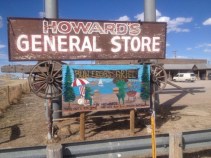
I got back on I-25 and uneventfully pulled into Glendo. My first stop was Howard’s truck stop. I go there whenever I drive by for my favorite road meal.

howards-glendo

I came here with Matt Mead and his son, Pete, who recommended the fried taco.

The biggest disappointment of the weekend was when I learned that the deep fried tacos are no longer on the menu. “Amy doesn’t work here anymore, ” the lunch counter matron said.

I’ll have to settle on a new “go-to” food item.

My friends Doug and Carrie Quinn have 60 acres in the Glendo city limits and staying there was my destination. Carrie is originally from Glendo. They were renting out spots for RVs, tents and cars.

Doug, Carrie and couple of their friends were busy greeting visitors.

It soon became so busy, that a bunch of others including myself were drafted into being parking lot attendants.

carny cfd

I worked at the Cheyenne Frontier Days carnival for a newspaper column.

This gig was a throwback to my carnival days when I learned that I was pretty good at getting people to give me money for nothing. I worked in the pop-the-balloon game during Cheyenne Frontier Days many years ago.

There was an umbraphile next to me from Germany who traveled to Glendo. He travels all over the place to watch total solar eclipses. He said, “You get hooked.”

I wanted to get there early to take in the festivities. Saturday night was hoppin’ in Glendo. There was a street show with the Jalan Crossland Band.

IMG_8014

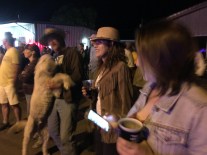
Del trips the light fantastic with Cooper, Sally and Katy.

I whooped it up with Del and Sally Lummis. They were part of my original party and weren’t going to come, but decided otherwise at the last minute.

There were a lot of people like that who jumped in the car and made a quick road trip.

I didn’t get a chance to look around much because parking cars was so much fun shooting the breeze with eclipse goers. Besides, I’d been to Glendo many times before and being mostly a land-lubber, checking out the water wasn’t appealing to me.

On Sunday morning a steady flow of vehicles from all over the place stopped for information. There was quick-get-away parking that cost $20 and free parking in Glendo State Park and the Glendo Airport. The free parking spot exit was bottle-necked.

glendo eclipse traffic

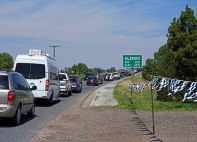
In Glendo with 50,000 of my closest friends.

Traffic was heavy on eclipse day. Glendo did a great job organizing the crowds. The population swelled from 225 to 50,000. At least that’s what one t-shirt said. I walked into town early in the morning looking for something to eat.

Downtown Glendo isn’t very accessible, which is a good thing because foot traffic is encouraged. I walked over to check out the morning action.

IMG_8046

Angler’s and $5 coffee

The few food places had lines around the corner and rather than join the crowd, I went into Angler’s Rest thinking there may be some bar food.

No food, but asked to refill my coffee. The bar keep said it was $5, which I thought was pricey even for eclipse prices. He said everything was $5 and I might as well get it with a shot of whiskey. I haven’t had Irish coffee for a while.

I made my way back after cruising by the souvenir stand, which was nearly sold out. I’m a skinny guy and don’t wear the large sizes.

IMG_8052

Part of my parking lot attendant group.

I wasn’t in the mood for a T-shirt. They were the iron-on designs as opposed to silk screened and settled on an under stated Glendo cap. Some of the others had slogans like, “I blacked out in Glendo.”

After parking a few stragglers, I set up a 360 virtual reality camera and turned it on about 15minutes before totality and made a VR movie which can be viewed online and in goggles through a smartphone.

One of the guys in my group, Jeff Geyer, rigged up his camera with a filter and captured the totality.

richard mathern lusk traffic

Slow moving traffic

As advertised, after 2nd contact, cars streamed out making for traffic jams throughout the night.

I lingered with my crowd and decided to venture out around 3pm, thinking traffic may be less.

My play all along was to return on the back roads. Everyone else had that idea, too. My first mistake was heading north to Orrin Junction and go through Lusk. Once I got to the exit the traffic loosened up until just south of Torrington.

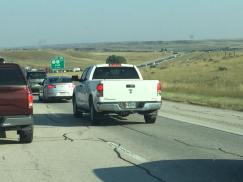
I ran into bumper-to-bumper slow moving traffic on Highway 30 and cut over to Chugwater on Wyoming 312. Then I saw all the taillights on I-25.

Traffic moved along, but I didn’t get back to Boulder until midnight. All things considered, the trip was a good one. It was fun parking cars and meeting some new people.

The next total eclipse is 2019 in South America. After that, there’s one in North America in 2014. Those two events are incentive enough to keep taking my medicine. Umbraphilia will keep me young.

No matter what your memories are about the eclipse, I hope they are fond ones.