How Congress Can Make Housing More Affordable for Americans

When the 120th Congress takes office on January 3, 2027, the new majority has many promises to fulfill. Honestly, there’s not much the legislative branch can do if the sitting president threatens to veto any legislation that reaches his desk.

Housing affordability affects everyone, regardless of ideology. Younger people can’t afford to buy their first homes. Renters struggle to keep up with rising costs. Older Americans worry about finding housing that fits their budgets and changing needs.

It’s worth asking whether the traditional American dream of homeownership is still attainable for the next generation. Plenty of existing housing programs can be tweaked administratively, provided the various executive departments are willing to bend, given presidential threats to disallow any substantive changes.

After World War II, returning veterans and their families helped fuel an extraordinary housing boom. The GI Bill provided mortgage guarantees that encouraged private lenders to finance home purchases on favorable terms.

I, along with three colleagues, rented a house in Gillette, Wyoming when we landed our first jobs there. Tom, a Vietnam War veteran, asked us if we wanted to buy a house together. We couldn’t turn down a 100 percent loan guarantee, so we bought a brand-new split-level home in a new subdivision.

Group of people wearing Roman and Greek-inspired costumes gathered indoors

Our house became known as the 3003 Club, where Mom is never home.

FHA mortgage insurance also helped make long-term mortgages more accessible, including my first condo purchase in Boulder. Private builders responded with mass-produced suburban developments, offering modest houses on individual lots.

For millions of families, particularly during the baby-boom years, the formula worked: find a job, obtain an affordable mortgage, buy a house and raise a family. The federal government didn’t build all those houses. It helped create the financial conditions that encouraged private developers and lenders to make homeownership possible.

That postwar model had serious shortcomings. Black veterans and other minorities frequently encountered discriminatory lending practices, restrictive covenants, and redlining that denied them equal access to the benefits. We shouldn’t romanticize a system that excluded so many Americans. The underlying idea of using public policy to encourage private investment in housing remains worth considering.

Today’s economics are considerably different. Land costs more, construction materials and labor are expensive, mortgage rates and down-payment requirements put homeownership out of reach for many households, and desirable locations often have restrictive zoning and limited housing supply.

The modest postwar house on a single suburban lot, financed with a government-backed mortgage, isn’t a realistic option for today’s young families, at least not in many of the places where jobs and opportunities are concentrated.

Another development worth examining is the growing presence of large institutional investors and corporate landlords in the housing market. Some companies have purchased existing single-family homes in bulk, converting what might otherwise have been owner-occupied houses into rental properties. Others have developed entire neighborhoods of homes intended for rent rather than sale.

There is nothing inherently wrong with rental housing or private investment. Many people need or prefer to rent. But when large companies accumulate substantial housing portfolios, particularly in concentrated local markets, questions arise about competition, affordability, and the landlord-tenant relationship.

Corporate ownership can bring economies of scale, but it can also create opportunities for exploitation. Tenants have raised concerns about escalating rents, additional fees, maintenance problems, and dealing with distant corporate management rather than a local property owner. When a handful of large operators control a significant share of rental homes in a neighborhood, tenants may have fewer alternatives.

This isn’t an argument that institutional investors own most American homes. They don’t, but their influence can be considerably greater in particular metropolitan areas and neighborhoods than national statistics suggest. Congress should pay attention to local market concentration, require greater transparency in corporate ownership and rental practices, and make sure competition laws protect both prospective homeowners and renters.

So what can Congress realistically do?

I don’t think either party wants the federal government to become a national homebuilder. Nor should that be the starting point. Housing in America has largely been a private-market function. Builders, developers, lenders, investors, and local governments determine what gets built and where.

The federal government’s more useful role is to encourage private investment and make existing housing programs work better.

Rather than inventing another massive federal housing bureaucracy, Congress could tweak and amend existing programs. Here are some common threads:

  • Modernize mortgage guarantees. Improve existing FHA, VA, and USDA loan programs to help qualified first-time buyers obtain financing without taking on unreasonable financial risks. If Congress wants changes, it will have to work with lenders. Banks want to make more money, and expanding the number of potential borrowers should be a good problem to solve.
  • Encourage starter-home construction. Use existing tax incentives and financing programs to encourage private builders to construct smaller, more affordable houses, townhomes, and duplexes. Private sector approaches could be scaled, such as expanding the owner sweat equity model used by Habitat for Humanity.
  • Expand affordable rental development. Improve existing Low-Income Housing Tax Credit and HOME programs to attract private investment in reasonably priced rental housing. This is the U.S. Department of Housing and Urban Development’s primary business.
  • Reward communities that make room for housing. Use federal infrastructure and housing grants to encourage local governments to streamline permitting and allow more residential construction near jobs, transportation, and services.
  • Encourage alternative construction. Support modular and manufactured housing, updated building techniques, and other approaches that can reduce construction time and costs. This is largely a local issue because building codes govern construction.
  • Protect renters and prospective homeowners. Improve transparency in corporate ownership, rental fees, and property management, and examine practices that reduce competition in local housing markets. This is a place for national legislation. Whether Congress has the will to buck big construction and investors in the “own-to-rent” conversions is a big unknown.

No single federal program will solve the housing shortage. Congress can’t dictate what a house should cost in Boulder, Boise, or Birmingham. Local zoning, land availability, permitting, and infrastructure decisions matter enormously.

Congress can use the programs and financial tools it already has to encourage private developers to build more housing at prices people can afford.

The objective shouldn’t be to recreate the suburbs of the 1950s. It should give the next generation a reasonable chance to achieve the same economic security that homeownership provided to millions of postwar families.

The American dream shouldn’t depend on inheriting a house from your parents.

Health Care Reform: A Practical Path to Affordable Coverage

Health care should be a top priority for the incoming 120th Congress, which has recently announced priorities. Sweeping health care reform likely won’t happen, mainly because any legislation is likely to be vetoed. Much could be accomplished administratively, if executive departments are open to incremental changes.

Health care affects everyone, but not everyone experiences the system in the same way. Some Americans receive insurance through their employers. Others buy individual policies, are self-employed, rely on Medicare or Medicaid, receive veterans’ or military health benefits, or have no insurance.

Person in a wheelchair in a carpeted hallway of a care facility

Citizens may never have enrolled in Medicare or Medicaid, but they still have a stake in how those programs work. They pay taxes, support family members who rely on public programs, and experience the same rising health care costs that affect everyone else.

According to the U.S. Census Bureau’s 2025 report, employer-sponsored insurance remains the largest source of coverage, reaching 53.5 percent of the population. Medicare covers 20.1 percent, Medicaid 17.1 percent, and individually purchased insurance 10.5 percent. Veterans and military health programs cover additional populations. Approximately 26.7 million Americans went the entire year without health insurance.

These categories overlap, but they show the many ways Americans obtain health care coverage.

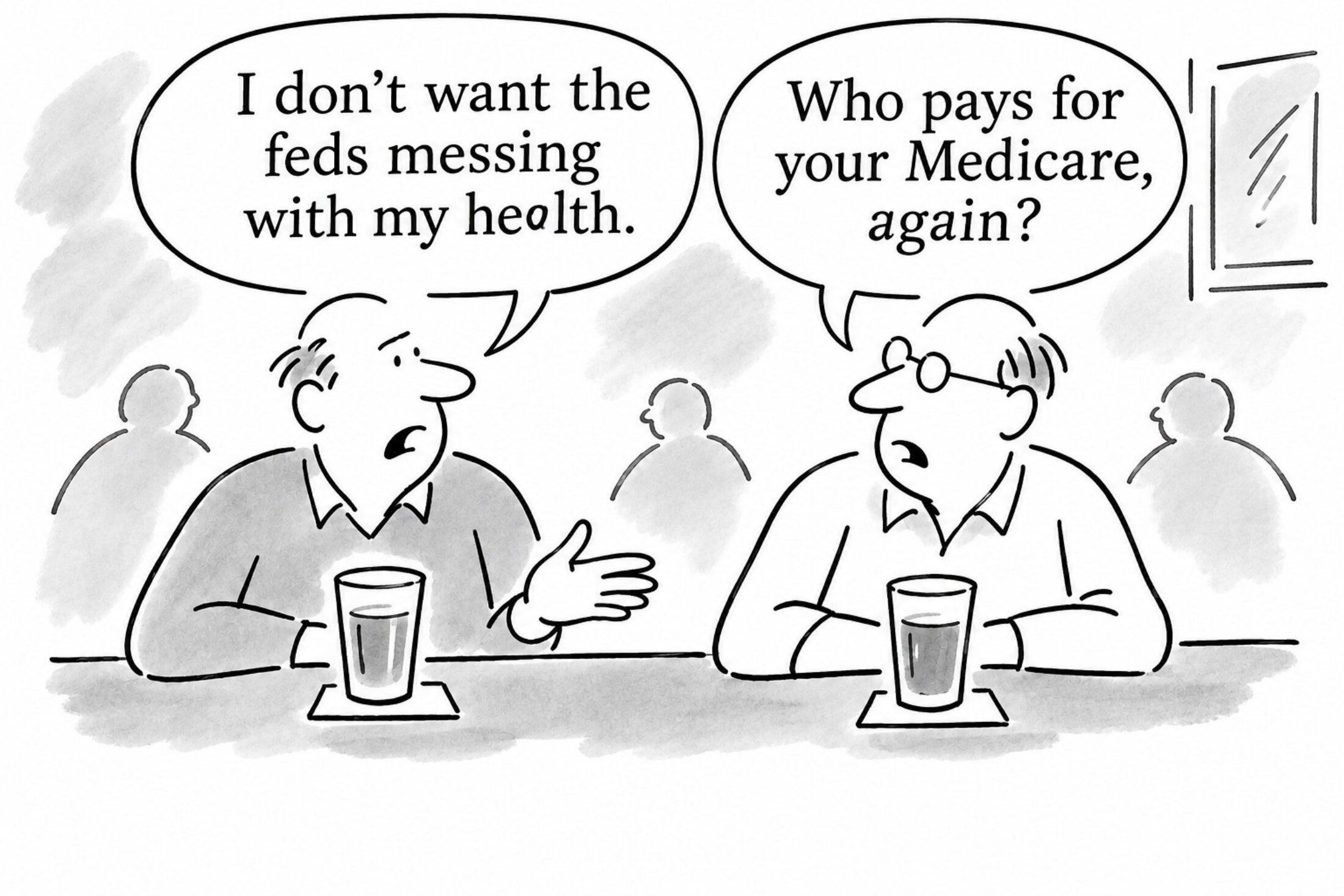
We also need to clear up a misconception about Medicare for All. Publicly financed health care isn’t necessarily socialized medicine. The government doesn’t own most hospitals or employ most doctors who treat Medicare patients. Medicare pays independent physicians, private hospitals, clinics, laboratories, and other health care providers for the services they deliver. Medicaid also relies heavily on private and community-based providers, alongside public facilities.

In other words, government financing and private health care delivery already coexist. Expanding coverage doesn’t automatically mean eliminating private hospitals, independent doctors, or the health care businesses that serve patients.

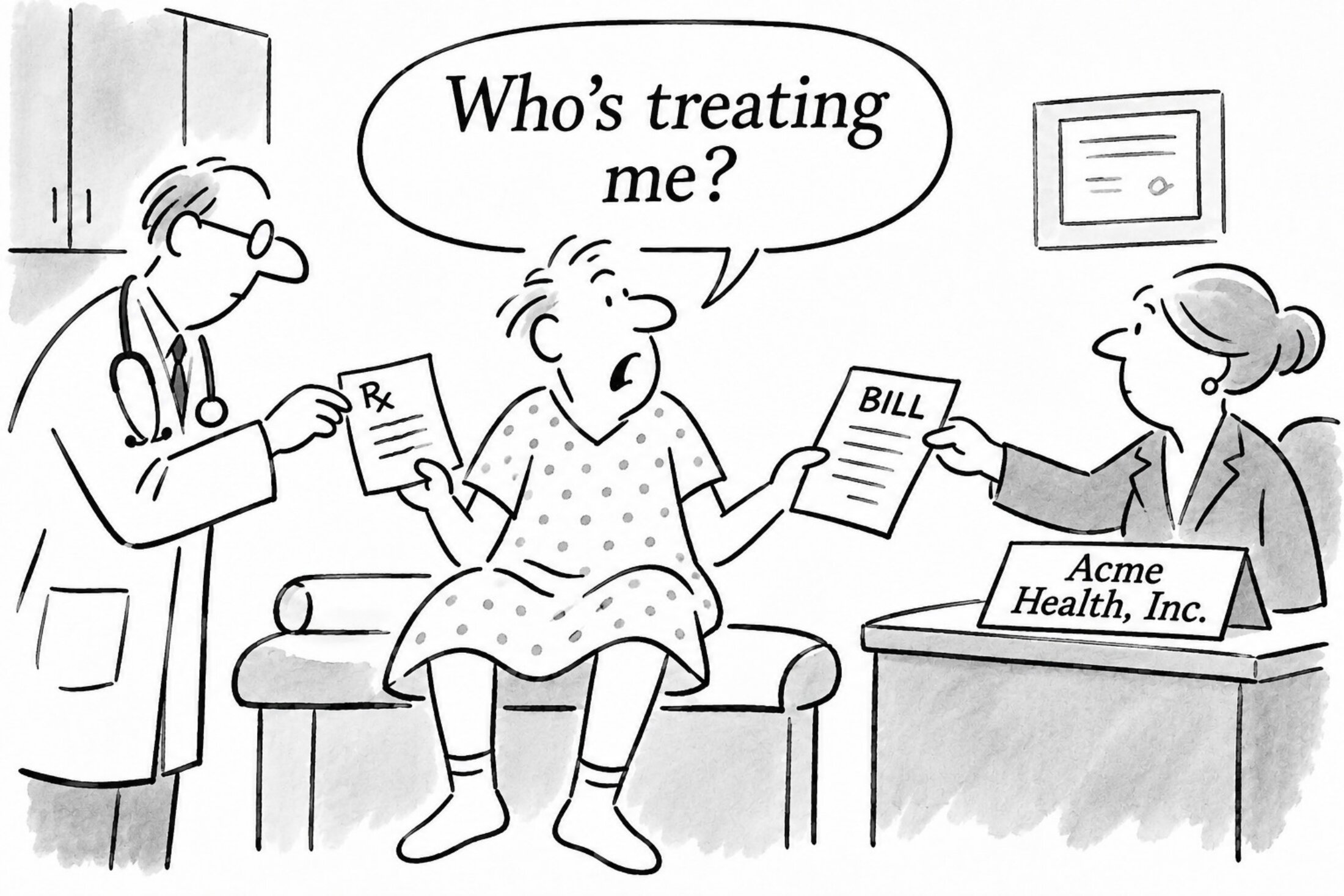
There is a distinction between preserving private health care delivery and preserving the existing insurance business model. Some Medicare for All proposals would replace much of the private insurance market for covered services. Insurance companies could lose some of their current business, although other models could retain them in administrative, supplemental, or other roles. Hospitals and physicians would continue delivering care, but payment arrangements and reimbursement rates could change.

The overall goal should be affordable, accessible health care, not winning an ideological argument about whether to finance it through socialism vs. capitalism. Rather than making the debate about government versus the private sector, Democrats can start with common-sense objectives that people across the political spectrum can recognize:

  • Lower prescription drug prices and out-of-pocket medication costs. The current administration is already doing this.
  • Reduce insurance premiums, deductibles, and unexpected medical bills. Many states, like Colorado, have approved “No Surprises” legislation. Premiums and deductibles are the sticking points.
  • Protect rural hospitals and expand community health centers. The “Big Beautiful Bill” provided for some assistance.
  • Improve access to primary care, mental health services, and addiction treatment.
  • Make health insurance more portable so people don’t risk losing coverage when they change jobs. Employers may still provide one plan for their workers, but the aggregate premium may be lower if employees assume part of the premium payment. Under Medicare, recipients pay around $200 per month.
  • Simplify the paperwork and administrative costs that burden patients, providers, and employers. I’ve seen my health insurance provider do this to better manage care and gather patient feedback to improve service delivery.
  • Thanks to Obamacare, people with preexisting conditions are still covered under most plans, as are dependents under 26. Medicare offers Medigap insurance to cover gaps. Medicare for All would likely include supplemental coverage policies.

I believe in an incremental approach. We don’t have to settle every argument about Medicare for All, single-payer insurance, or the role of private companies before we begin improving the system. We can build on existing programs, identify what works, address what doesn’t, and expand access as we go.

Unless you study Medicare and Medicaid—or rely on one yourself—you may not realize Medicare already offers a model that combines public financing with private insurance.

The Clinton administration and Congress established Medicare Part C through the bipartisan Balanced Budget Act of 1997. Originally called Medicare+Choice, it allowed beneficiaries to receive their Medicare benefits through private insurance plans rather than traditional fee-for-service Medicare. The program began in 1999 and was renamed Medicare Advantage in 2003.

Under Part C, Medicare pays approved private insurance companies a fixed monthly amount for each enrollee. The insurers assume financial risk for providing covered care. Most plans offer additional benefits, such as dental and vision coverage, along with copayments and annual out-of-pocket limits.

This isn’t socialized medicine. The government finances and regulates coverage, but private insurance companies administer the plans, while hospitals, physicians, and other health care providers deliver care.

Why not consider using this existing public-private model as a starting point for expanding affordable health coverage? Advantage plans also offer “dual coverage” for those on Medicaid and Medicare. Advantage plans offer Medicare for All. A universal system could borrow features of Medicare Advantage, extending access to regulated private plans and comprehensive benefits beyond today’s Medicare population.

We don’t have to settle the entire Medicare for All debate before making meaningful progress. We can start with what already works, address what doesn’t, and build toward affordable, accessible health care for everyone.

People with employer-sponsored insurance shouldn’t feel that universal health care means their doctors, hospitals, or insurance choices will automatically disappear. Medicare beneficiaries shouldn’t have to defend a system that works well enough for them. Veterans shouldn’t worry about losing specialized care. Small-business owners shouldn’t have to choose between providing health benefits and keeping their businesses afloat. People without insurance shouldn’t have to wait until a medical emergency to receive care.

Finding common threads starts by recognizing that Americans don’t have to agree on the ultimate design of the health care system to agree that getting sick shouldn’t threaten their financial security.

Democrats’ Path to a Lasting Majority: Common Threads

My mother’s Stitch and Bitch club might have a few lessons for the next Congress.

My mother belonged to a handwork club called the “Stitch and Bitch.” The name pretty much said it all. Women gathered around their handiwork, shared stories, exchanged opinions and, I imagine, solved a few of the world’s problems along the way.

I’ve been thinking about that club while watching the political aftermath of the 2026 midterm elections. My mom’s sewing circle picked a theme, and each member gave their interpretation. They disagreed, but accepted each other’s version as long as it fit the underlying theme.

It occurred to me that Democrats could learn a lesson from a group of women sitting around a table with needles, thread, and different ideas about what they wanted to make.

If Democrats want to turn the 2026 blue wave into a lasting governing majority, they need a bigger hoop going into the first 100 days of 2027.

To be honest, the new majority won’t be able to do much if President Trump keeps his word and vetoes any legislation that comes to his desk.

Regardless, the November 2026 general election delivered Democrats an opportunity. It didn’t deliver a mandate for a uniformly progressive agenda. The blue wave swept through some traditionally conservative states and districts, bringing along voters who don’t necessarily share the Democratic Party’s most progressive positions.

That’s an important distinction.

Democrats have spent considerable time arguing among themselves about their own members’ political leanings. Pennsylvania Senator John Fetterman, former West Virginia Senator Joe Manchin, and former Arizona Senator Kyrsten Sinema all drew criticism from Democrats when they broke with the party on particular issues.

Their critics treated those disagreements as evidence of political disloyalty. Elected representatives have a responsibility to represent the people who sent them to Washington.

In 2009, incumbent Representative Marilyn Musgrave of Congressional District 4 focused on culture wars and aligned herself with an unpopular president.

Sound familiar? CD 4 is now the home of Lauren Boebert.

A newcomer, Betsy Markey, soundly defeated Musgrave. The Democrats coerced her into voting for Obamacare. Two years later, she lost by 12 points to Republican Corey Gardner. Markey’s loss created a domino effect. In 2014, Gardner upset incumbent Democrat Mark Udall and became an integral member of the so-called “Make America Great Again” coalition.

The moral of the story? A Democrat representing a conservative constituency faces different political realities than a Democrat representing Boulder, Manhattan, or San Francisco.

The incoming Congress will include more Democrats representing places where progressive politics don’t resonate, like South Carolina, Mississippi, and Texas. If party leaders expect those members to vote as though they represent the same constituency, they risk turning an electoral victory into a political liability.

Look what happened in 2026.

Democrats don’t have to abandon their principles or move wholesale to the right. A successful political coalition needs room for different opinions.

The common thread: Getting through life with fewer financial burdens

If Democrats want to govern, they should begin with issues that matter to people regardless of their political affiliation.

They don’t have to agree on every policy detail. They need to identify problems that Americans share and find practical ways to address them.

Over the next few days, I’ll share some ideas on how the new Congressional majority can improve everyday life.

What could Democrats accomplish if they spent less time arguing over ideological purity and more time addressing shared concerns?

Here’s a teaser about six places to start:

  • Bring down prices. Help families manage the cost of groceries, utilities, housing, childcare, and other expenses that eat into their paychecks.
  • Provide less expensive healthcare. Lower prescription drug and insurance costs while protecting access to doctors, hospitals, mental health services, and addiction treatment.
  • Build more entry-level houses. Give younger families a realistic shot at homeownership and make rental housing more affordable for people at every stage of life.
  • Invest in jobs and practical education. Expand trade schools, apprenticeships, community colleges, and workforce training while continuing to support universities and research.
  • Make communities safer. Support effective local law enforcement, police accountability, responsible gun ownership, and practical efforts to reduce violence.
  1. Invest in jobs and practical education. Expand trade schools, apprenticeships, community colleges, and workforce training while continuing to support universities and research.Fix immigration. Secure the border, enforce immigration laws, maintain a workable legal immigration system, and create a fair process for people who have built their lives here.- Keep energy affordable and reliable in the age of AI. Modernize the electric grid, develop dependable energy sources, and address the enormous power and water demands of data centers.

None of these issues belong exclusively to one political party. Democrats don’t have to agree on every solution, but they should be able to find enough common thread to get something done. That’s what creating multiple designs in a bigger embroidery hoop is all about.