Unknown's avatar

About Alan O’Hashi, Whole Brain Thinker

I’ve been involved with community journalism since 1968 when I wrote for my junior school paper, the "Tumbleweed," through high school and college and then wrote for the "Wyoming State Journal." I put aside my newspaper pen and began Boulder Community Media in 2005. There wasn’t much community journalism opportunity, so I resurrected my writing career as a screenwriter. My first short screenplay, “Stardust”, won an award in the 2005 Denver Screenwriting Center contest. I've made a number of movies over the years. Filmmaking is time-consuming, labor and equipment intensive. I recently changed my workflow to first write a book and make a movie based on that content. - Electric Vehicle Anxiety and Advice - This is a memoir travelogue of three trips covering 2,600 EV miles around Wyoming (2022) - Beyond Heart Mountain - Winter Goose Publishers released my memoir in February (2022) - The Zen of Writing with Confidence and Imperfection - This is a book recounting how luck planed into my signing a book deal after a 15-minute pitch meeting. (2020) - True Stories of an Aging Baby Boomer - War stories about living in a cohousing and lessons others can learn when starting their communities (2021) - Beyond Sand Creek - About Arapaho tribal efforts to repatriate land in Colorado (PBS - TBA) - Beyond Heart Mountain - Based on my memoir about my childhood in Cheyenne facing overt and subtle racism toward the Japanese following World War II (PBS - 2021) - New Deal Artist Public Art Legacy - About artists who created work in Wyoming during the Great Depression (PBS - 2018) - Mahjong and the West - SAG indie feature which premiered at the semi-important Woodstock Film Festival (2014) Over the years, I’ve produced directed, filmed and/or edited several short movies, “Running Horses” (Runner Up – Wyoming Short Film Contest), “On the Trail: Jack Kerouac in Cheyenne” (Lowell Celebrates Kerouac Festival, Top 10 Wyoming Short Film Contest), “Gold Digger” (Boulder Asian Film Festival), “Adobo” (Boulder International Film Festival), “A Little Bit of Discipline” (Rosebud Film Series), and two feature length documentaries “Your Neighbor’s Child” (Wyoming PBS and Rocky Mountain PBS), and “Serotonin Rising” (American Film Market, Vail Film Festival). He also directed and produced the award winning stage play “Webster Street Blues” by my childhood friend Warren Kubota. Boulder Community Media is a non-profit production company dedicated to democratzing media in all their forms - large and small screens, printed page and stage by providing sustainable and community-based content. I mostly work with community-based media producers, organizations, and socially-responsible businesses to develop their content via – the written word, electronic and new media, the visual and performing arts in a culturally competent manner – I’m what’s commonly called a niche TV and movie producer. Along with all this is plying my forte’ – fund development through grant writing, sponsorship nurturing and event planning.

What a long strange trip it still is – aging and the power of my cohousing community

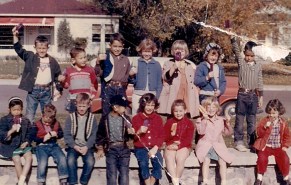
Auntie Jeannie is standing on the right end next to my mother. Alison is sitting second from the right, Alison's sister Leslie is being held by Auntie Elsie.

Auntie Jeannie is standing on the right end next to my mother. Alison is sitting second from the right, Alison’s sister Leslie is being held by Auntie Elsie.

My 82 year old Uncle Tom fell after getting off a four-wheeler. He was in the hospital for a short period of time. My cousin Margo called to let me know Tom died. I stopped at the hospital and saw him and had a chance to catch up with my cousins. My condolences go out to Margo, Kathy and Bobbi – they are all pictured in the photo on the left.

Margo’s phone call reminded me about a story from a few years ago.

_______________________________

October 29, 2016 – I got a call from my cousin, Alison, yesterday. These days, whenever relatives call, there’s generally some sort of family emergency. This time, Alison told me her mother – my Auntie Jeannie – had passed away. She had a stroke while sleeping and didn’t wake up. My condolences go out to my cousins Alison and Leslie and her sisters Carol Lou and Janice.

I’ve been attending funerals lately. Last week, it was for Eastern Shoshone tribal elder and one of my mentors Starr Weed in Fort Washakie.

It was my first open casket wake. I don’t know what I expected, but it was solemn and heart breaking. One of Starr’s grandsons, Layha Spoonhunter, was one of my Wind River Tribal College film students. His class project was an oral history of Starr Weed. I felt for him and his mom, Wilma, who is married to my former boss, Harvey, and his aunt Elaine who organizes the Gift of the Waters Pageant in Thermopolis.

A month or so ago, my Uncle Rich died. He had quite a few home health care workers supporting him after he returned from the hospital. He was a 442nd war veteran and in Army Intelligence. He was too small in stature for combat. I also learned after he died, my Aunt Sadako was moved to an assisted living place in Cheyenne.

I live in the Silver Sage Village senior cohousing community in North Boulder. There have been murmurs about it, but just recently the community began discussing “aging in community” which has been on my mind quite a bit, lately.

I’m making a documentary movie about my and my neighbors’ experiences of growing old in cohousing and their thoughts about the future. I’m also helping produce a national conference on the topic that will be held next year May 19 to 21 in Salt Lake City.

My movie won’t be anything earth shattering, but hopefully will give others wanting to start up an intentional community some insight into what to expect. These discussions are about the first ones we’ve had in the five years I’ve been living at Silver Sage Village where the topic has been about something more substantive than maintaining the buildings.

A bunch of people are reading “Being Mortal” by a doctor named Atul Gawande. His basic premise is that modern medicine is good about keeping people alive, while not knowing when it’s time to allow us to die not in a hospital but at home.

Gawande says that in the past, 80 percent of people used to die at home and 20 percent died in a hospital or medical facility. Now that number is reversed with 80 percent dying in a hospital and 20 percent dying at home.

Back to Auntie Jeannie.

I also learned that at 77, she was one of the primary care givers to my Auntie Elsie, well into her 90s. A few months ago, she broke her hip and Jeannie got her settled into a rehab / hospice center as well as helping Sadako get settled into her assisted living apartment. I surmise that what happened was Uncle Rich’s home care workers also did more for Sadako than anyone realized.

I imagine with all this care giving Jeannie was a bit stressed out.

Elders providing care for other elders is becoming common place anymore and a problem.

I can see myself in that boat particularly since my immediate family is strewn all over the place with their own lives and issues and I have no kids.

Like in Jeannie’s case, the work takes more out of the care giver than the patient.

Cohousing is a way to spread some of the load.

Jeannie was married to my Uncle Jake who was the youngest son on my dad’s side that had 13 total kids. It was a very strong extended family and everything revolved around my grand parents house.

Mainly during the summers, everyone would gather various places in Cheyenne and along with the rest of the Japanese community. On Memorial Day there were big picnics and on the 4th of July we all went out to Jeannie’s parents who lived out in the country and blasted off fireworks.

Back then, all the cousins were close, and all the aunts and uncles were close but there was a big diaspora after the grand parents died. We all became adults, had our own lives and lost the closeness we shared as children. Social media has helped keep us connected, but it’s still not the same as it was.

How do more seniors get engaged as caregivers for one another?

I had a brush with death and had a visit from the Ghost of Christmases Yet to Come and got a glimpse into my future. What if I couldn’t walk, feed myself, or breathe on my own, flat on my back in a hospital bed?

I can tell you it was lonely.

The hospital was 20 miles away and the rehab place 40 miles away in Denver. I didn’t broadcast that I was laid up but a few neighbors and friends managed to find out and dropped by. I thought it would be a good time to catch up on some editing.

I didn’t realize how doped up I was. A guy can only watch so many “Pawn Stars” reruns before boredom sets in.

I’m happy that I got a second chance to do things differently the next time around. I am grateful to be living at a place like Silver Sage Village. At the urging of Diana Helzer, we sold a place nearby with too many stairs in favor of Silver Sage Village that is on the ground floor with no steps and is fully accessible.

I really didn’t know much of anything about cohousing but am lucky to have neighbors who helped out by bringing by food and helping Diana with some of the care giving like transport in the dead of winter.

The downside of living in cohousing is antithetical to any care giving.

There are many conflicts about the day – to – day management of the place that arise and escalate, some cause hard feelings, but that’s part of life anywhere and shows how fragile community living can be among a whole variety of personality types. The differences seem more pronounced since everyone also is trying to get along.

In my experience, those sorts of relationships have been more work related, but much of living in cohousing is work related and I’ve had to learn how to separate out my personal life here from my business life here.

When I returned to Silver Sage Village after six weeks of hospital and rehab stints, I don’t know how it happened, but neighbors brought by meals and offers of help. I don’t know if neighborliness can be “organized” but however it came about was greatly appreciated. That, along with the layout of the fully accessible condo, was important in my continuing recovery.

It takes a village to raise a child but also takes a village to move an elder towards the end of life.

I don’t expect my neighbors to help me into the shower, or wipe my butt, but I hope they’ll continue to mostly be around.

Gawande talks about the importance of hospice that helps a person be comfortable and provides ways to navigate life.

Do I want my friends and family to be hovering over me out of some sort of self serving sense of duty when I’m delirious and out of it? Is that quality time to be with someone at the last breath?

I’ve put myself into self-imposed hospice now while I still have plenty of breaths left and want to be comfortable in my house living life to it’s fullest. I’d rather be around family and friends while we still have our wits about us.

Here I thought I was out of the event planning business.

Look out for the “Getting the Band Back Together Tour” truckin’ into a town year you – the Cousins Reunion; Cheyenne, Gillette, Lander, Boulder and points in between.

What a long strange trip it still is!

Is refusing to sell a gentile kosher wine, kosher?

I heard off-Passover season wine has corn syrup. 

Wearing my Christmas cap, I went to my usual liquor store. The store is handy – a couple blocks away.

Tonight is the first night of Hanukkah – I celebrate the Jewish holidays and asked if he had kosher wine for the community candle lighting.

He said not and I went to the next store down and there was an ample selection.

The question is, if my neighborhood guy does carry Manischewitz but didn’t sell it to me because I wasn’t Jewish is that a violation of my civil rights?

Bridging social and cultural divides one community at a time

IMG_6369

Documenting the Women’s March in Cheyenne, Wyoming was a big eye opener for me.

What’s been on my mind lately is how intentional communities can help bridge socio-economic divides. Over the years, I have learned that my influence is pretty much confined to communities and organizations that are closest to me.

What spurred me?

Rather than sitting back and arm-chair-quarterbacking, I prefer to be a part of the action. I was 15 when my activist efficacy began to develop. Being from Wyoming, my early influences were Republican. I’m still atoning for my first vote being for Richard Nixon in 1972, but I digress.

Back in January, I wanted to make last minute plans to check out the Washington DC Women’s March that followed Inauguration Day 2017. I facebooked east coast friends and colleagues, but their basements and couches were spoken for by others making the trek.

IMG_6362

Around 2,000 participated in the Cheyenne, Wyoming Women’s March.

I had friends and neighbors who attended the main DC event and other marches around the country and resigned to sitting this one out. Meanwhile, a friend and colleague who, at the time, directed a Laramie, Wyoming-based activist organization asked me to document Women’s Marchers heading to nearby Cheyenne – my hometown. I make documentary movies, mostly about social change topics.

I hopped on the charter bus packed with mostly women, their allies and a bunch of signs and placards. We rumbled over Sherman Hill to Cheyenne where we unloaded and trekked up Capitol Avenue to the Wyoming Supreme Court Building lawn along with a 2,000 others.

Not a big crowd compared to metropolitan urban area standards, but for a city of 60,000 it was a gigantic turnout. Besides that, it was familiar being in my hometown.

IMG_6344

I joined a bus load of Wyoming women and their allies walking in the Women’s March in January 2017.

It was surprising to see and visit with friends who turned out – some long lost from childhood, some not so much – mostly colleagues. We shared insights about social oppression, which is the last thing I expected to be talking about with high school classmates.

Noting that social change efforts are happening in a conservative place like Wyoming, it was then I decided to use what little influence I have to bridge socio-economic divides.

I live in a cohousing community – dubbed by some of my neighbors as a grand social experiment. After living here for a few years and volunteering for the National Cohousing Association, I’m convinced that intentional communities – including cohousing – are one way to help bridge cultural and socio-economic divides one community at a time.

The aura around various aspects of social and economic “privilege” is subtle, having experienced it most of my life. Breaking into a cohousing community hasn’t been easy, particularly since I didn’t know much about it in the first place.

ohashi lobster

My grandfather living in Wyoming was detained in California after Executive Order 9066 was signed.

Being a Japanese-American Baby Boomer, I grew up under the post World War II anti-Asian sentiment. My grandfather and uncle were detained in California shortly after FDR signed Executive Order 9066. My aunt was able to get them released back to the middle-of-nowhere Wyoming.

Later, while in college in Boston, my aunt wasn’t allowed into Canada due to sedition laws.  While I may speak proper English with an American accent and am a third-generation Yankees fan, I continue to find myself as the brunt of privilege, which is a separate story.

My partner in crime, Diana, and I moved here from a nearby market-rate two-story townhouse  a few years after the cohousing community had formed, was developed and occupied. A home in the community became available when the owner died. It was ground floor, no stairs and wheelchair accessible, which turned out to be important when I was in rehab recovering from a debilitating illness. Turned out, cohousing was a better fit than I imagined.

The founding group self selected themselves and were in the swing of things by the time we joined the community, which was good and bad. It was good in that we didn’t have to be involved with the organizational nuts-and-bolts decs-and-docs furniture-selection phase. It was bad in that the community was in a rhythm and not very open to new voices and ideas.

Since I’m usually one to jump right in and roll up my sleeves, it was pretty clear that my newbie role was to sit back and watch. Even today, I only participate at the minimum level and waiting on the sidelines until it’s my turn. That’s starting to happen with some of the founding shakers and movers backing off for one reason or another making way for newer neighbors like me.

A house is a house, but the community part is an entirely different component compared to the traditional subdivision structure where neighbors can choose to stick to themselves, paint their garage any color they want and otherwise bowl alone.

Complicating the social culture is that of market rate vs. affordable housing owners. The city housing authority provided free/cheap land to developers in exchange for 40% affordable homes. We were able to qualify for the local government affordable housing program and soon learned what it’s like to be “one of them.”

Collaborating with 3 dozen strangers over the years set in their ways is hard work. It’s a trick juggling regular life and community life and figuring out the balance. Having bought and sold two market rate homes we soon found that living in a house that is governed by a different set of rules was a big eye-opener.

Affordable homeowners are restricted by a set of rules in exchange for the low purchase prices. Some examples, appreciation values are limited compared to market rate-units, as are sales prices.

Being part of an affordable housing program, coupled with stereotypes about people who reside in affordable housing creates oppressive language – “charity cases,” “think different”, “lower class,” “no pride,” “don’t fit in,” ad nauseum. Those are long-engrained attitudes that are difficult to reverse even for the most progressive and socially aware.

For background, a cohousing community consists of individuals and families that choose to work with a developer to build a cohesive neighborhood consisting of privately owned homes and shared common spaces. Everyone lives independently, but share in some of the chores of maintaining their community.

How can cohousing bridge the cultural and socio-economic divide?

IMG_6351

Marches and speeches are the start, social change begins when individuals act.

The current political climate doesn’t help things. Whether liberal or conservative, the national mood amplifies how individuals deal with their own perceptions about differences among people with regards to protected classes of race, gender identity, sexual orientation, ability and subjective measures like social and economic class perceptions.

The political climate makes it okay to unmask deep held oppressive beliefs and at the same time, forces others to step out of their boxes and learn how to be allies for people they may or may not know.

Unless communities and their members are intentional about unpacking their self-perceptions of privilege, “on the job” training can cause hard feelings. In my experience over the years, facilitating and being facilitated about diversity issues oppressors don’t like to be called on their sh*t by the oppressed.

I’ve learned to choose my fights, but it’s hard to let comments and passive aggressive behavior slide. Cultural competency is a long, ongoing process and it takes some stumbling and falling, losing friends and making new ones.

IMG_8617

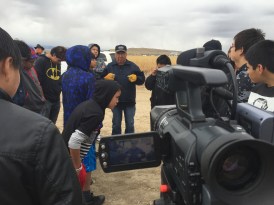
At a recent conference, diversity on the screen and behind the camera was one of the topics discussed

I’ve been presenting at a lot of different meetings lately. I just returned from an arts conference and a project outreaching to Native American youth, before that on an audio/video expo panel discussion that evolved into conversation with the audience about diversity, before that cultural competency workshops at a Tennessee affordable housing conference and the national cohousing conference.

The topic is certainly of interest to people, but these presentations were very high level “add-ons” to the content, with polite discussions. I was approached by attendees who agreed that they intellectually understand the importance of being more inclusive, but didn’t know how to change themselves and subsequently their organizations. They were eager to learn.

Feedback like that is encouraging, and I’m hoping folks got up out of their seats went home and began conversations in their groups, communities and organizations about what they can do to help close social and cultural divides.

What if each of us changes the way we look at the world and how we accept people who are different from ourselves?

The simple answer is to infuse cultural competency into the day-to-day tasks of the community. Cohousing communities are operated and maintained by the residents who join teams to manage the common house, maintain the common open space and the finances.

ssv coho alan boulder 2

The National Cohousing Association has national and regional conferences at which topics of diversity are standard on the meeting agenda

cohousing vision statement has some mention of “valuing diversity.” When I talk with forming communities, I ask them to have frank and honest discussions about what influenced their views about diversity and some ways the vision can be implemented. Governance based on shared responsibility, rotated leadership, and adopted community norms about accountability are big departures from majority rule and top-down decision making.

There’s an entire industry that has cropped up around consensus decision-making, cultural competency and meeting facilitation.

That’s easier said than done, but if carried out efficiently, inclusivity happens without a “program,” diversity training or more meetings.

In my experience, settling into any neighborhood is stressful enough. What if you’re asked to jump right into discussing personal issues and views around the American Dream, money, race, class, gender identity and sexual preference? That adds an even more complex layer to neighborliness. I’d say mostly on the governance level when talking about home owner association fees, decisions about when individual “rights” end and the community “good” begins.

The best things about cohousing are the neighbors and the worst things about cohousing are the neighbors.

Don’t get me wrong. There are lots of positive things about living in a community – plenty of really great neighborly support if a ride is needed to the store, or help needed to move furniture, care giving for sick neighbors. Friendships are formed, informal barbecues happen spontaneously and formal community events are planned around holidays.

I’m also lay-developing an intentional community in Cheyenne, where those discussions will take place and will be key to forming a resilient group of neighbors. Alas, those discussions have made it as far as the facebook page and haven’t popped up on the radar screen ahead of water, curb, gutter and street construction issues.

I’ve taught cultural competency and diversity workshops over the past 15 years. Most recently, I’ve adapted the curricula for intentional community audiences. At least from the feedback I’ve received, participants gained a better understanding that while the bricks and mortar of cohousing are buildings where residents live, the members who form a community are the most important aspect. The intentional community mantle can overlay any housing configuration.

While my cohousing living experience hasn’t been perfect – maybe none of them are – the intentionality brings neighbors together to work through tough issues – even though some may be on the petty side, they might as well be matters of life and death.

The upshot? If there’s a community configuration that enables conversation among divergent opinions, intentionality is a good thing, but individual effort must be put into understanding the perspectives of others and changing personal courses of action.

Social change through cohousing is a steep uphill climb constrained by American social/cultural norms.

The American Dream, bigger being better. We are driven to pull ourselves up by our bootstraps, make a lot of money and make it to the top. Community founding members should have frank discussions among themselves about why cultural norms create roadblocks for the advancement of caring and interactive communities beyond what is familiar.

Cohousing communities, by definition, bring diverse people together. The only group to fully self-select who will be in the community, are the founding members. People may intellectually “value diversity”, but diversity doesn’t always play out, considering the typical cohouser is white, educated, high income and high-perceived social class and a woman.

Forming community members should discuss what they would be willing to give up – attitudinally and/or financially – to include diverse members. In one of my training sessions, I met a couple people from a forming community that is having this discussion and they decided to take some of the capital gains from their personal home sales to buy down houses to make them more affordable.

Reaching out to people different from oneself is a challenge and cultural brokers may need to be engaged. In my workshops, for example, attendees practice ways they can look at their personal histories and make changes so as to become more inclusive as opposed to only believing inclusivity is a good idea.

Personal introspection doesn’t end once the houses are constructed and residents unpack their boxes. Over time, the community evolves and residents need to keep unpacking their personal histories and values as families move, people pass away and new neighbors arrive.

While fair housing laws preclude discrimination, communities can provide information about the community, expectations of membership in the Homeowners Association (HOA).

Professional and lay cohousing developers can choose to make personal transformations. There are markets other than those of the “typical” cohouser, particularly in gentrifying and abandoned neighborhoods. Culturally competent developers expand their markets by finding easier outreach paths into diverse communities.

As a cultural broker myself, I know that the approach gets results and opens doors without the appearance of “tokenism.”

What are some next steps?

IMG_7879

Hang out with people who are outside your usual circles.

Step out of your comfort zones to start.

Who do you sit next to in church? Sit next to a stranger.

Who do you call to go out for coffee? Ask someone you’ve wanted to get to know better.

Do you stand up as an ally? Take a risk when you hear offensive comments in the grocery store line.

Social justice marches and political elections may be personal inciting incidents that bring people together.

Whether or not you choose to take on the difficult task of becoming more culturally competent, it’s when individuals collaborate and alter their behaviors that bridges are built to close social and cultural divides – one community at a time.