Immigration Reform: Can the 120th Congress Find a Common Thread?

Immigration reform should be one issue where Democrats and Republicans can find common ground. I have a particular interest, since in 1991, I was detained at gunpoint for being an undocumented worker in Mexico. I reported to the Mexican Embassy in Denver and was approved for the correct visa.

Mexican federal police busted me for working in Zacatecas, Mexico, using a tourist visa from Mazatlan. I obtained the proper "green card" at the Mexican Embassy in Denver.

The sharp decline in unauthorized border encounters was a good thing. A country has a responsibility to know who enters, enforce its laws, and maintain an orderly immigration process. Stronger border security addressed a legitimate public concern.

Securing the border and reforming immigration are two different challenges. We need to do both.

Republicans aren’t opposed to immigration. Many support legal immigration, provided people follow an established process. That’s a reasonable starting point for a bipartisan discussion.

Ronald Reagan understood that distinction. In 1986, he signed the bipartisan Immigration Reform and Control Act. The legislation strengthened border enforcement, penalized employers who knowingly hired undocumented workers, and provided legal status to approximately 2.7 million people who met its requirements.

It recognized a practical reality that millions of people had established lives in America. They worked, raised families, paid taxes, and contributed to their communities. Rather than attempt to remove everyone, Congress created an opportunity for eligible people to earn legal status and eventually become citizens.

A pathway to citizenship isn’t a bad thing. People who have lived here for years, worked, paid taxes, and contributed to their communities deserve consideration for an earned pathway. Background checks, tax compliance, and other reasonable requirements should be part of the process.

Legalizing an immigrant’s status means finding a way to bring people into compliance. Finding them all, arresting them all, and deporting them all is expensive, disruptive, and daunting.

ICE needs accountability, not abolition.

Immigration enforcement has a legitimate purpose. ICE has an important role in enforcing federal immigration laws. Abolishing or defunding the agency isn’t the answer.

The way ICE carries out that mission matters.

Broad enforcement sweeps, questionable arrests, detention conditions, use-of-force incidents, and concerns about due process have raised legitimate questions about the administration’s tactics.

The answer isn’t to eliminate immigration enforcement. It’s to establish reasonable priorities, respect due process, identify officers, require appropriate training and accountability, and concentrate resources on genuine public safety concerns.

The distinction is important. Enforcing immigration laws and treating people fairly aren’t mutually exclusive.

What can the 120th Congress actually do?

Here’s where the legislative process gets complicated.

The Constitution gives Congress broad authority over immigration. Courts have described this as plenary power. Congress writes the laws governing who may enter the country, who may remain, and under what conditions.

Congress doesn’t manage ICE’s daily operations.

Over the years, Congress has delegated substantial authority to the Department of Homeland Security and its agencies. The executive branch determines enforcement priorities, including whom to arrest, detain, and deport. It also establishes operational policies governing raids, detention practices, and enforcement tactics.

The new Congress cannot tell ICE agents to change their procedures through a committee vote. It does have several tools.

Investigate and provide oversight.

With Democrats controlling both chambers, congressional committees can hold hearings, subpoena administration officials, demand records, investigate detention conditions, and examine allegations of excessive force or due process violations.

They can also demand a detailed accounting of how ICE spends its money.

Oversight won’t immediately change enforcement policies, but public hearings and investigations can expose abuses and create pressure for administrative changes.

Put conditions on future funding.

Congress controls federal appropriations. It can attach restrictions to future annual funding bills, requiring officer identification, body cameras, use-of-force reporting, training standards, and clearer rules governing detention and arrests.

There’s an obstacle.

The 119th Congress approved enormous amounts of additional funding through two reconciliation laws in 2025 and 2026. Together, they provided approximately $261 billion in multi-year funding for DHS, including roughly $113 billion specifically for ICE.

Much of that money remains available through 2029. Cutting the next annual ICE budget won’t automatically recover money Congress has already appropriated.

To rescind or redirect those existing funds, the new Congress would need to pass another law. President Trump could veto it.

Rewrite immigration laws.

Congress can amend the Immigration and Nationality Act to establish clearer enforcement priorities, strengthen due-process protections, establish detention standards, and provide additional resources for immigration courts.

It can also address the legal immigration system itself. Long delays, inadequate staffing, complicated visa requirements, and an overloaded asylum process contribute to the problems Congress needs to solve.

The Senate also has a role in confirming senior agency leadership. It can scrutinize future nominees and block candidates who don’t meet its expectations. That gives senators some leverage, although it doesn’t give them direct control over ICE operations.

Find bipartisan legislation.

This may be the most productive approach.

The bipartisan Dignity Act, for example, offers a starting point for discussions about combining border security, legal immigration reform, and a pathway to legal status for eligible immigrants.

Congress could also revisit legislation protecting Dreamers, people brought to the United States as children, many of whom have grown up here and know no other home.

There is no shortage of proposals. The challenge is finding enough common ground to pass them.

The political reality

The incoming 120th Congress will have a Democratic majority in both chambers, but President Trump remains in the White House.

Major immigration legislation will need 60 votes in the Senate to overcome a filibuster, followed by the president’s signature. A presidential veto would require two-thirds of both chambers to override.
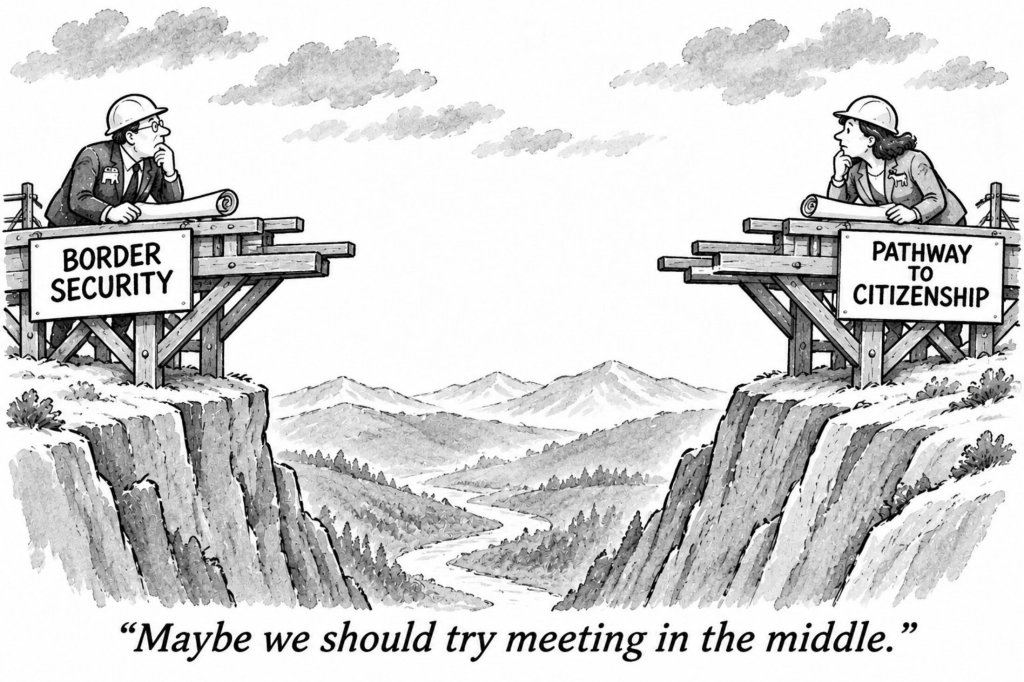
Trump recently acknowledged that his deportation approach may have been too aggressive and suggested he might work with Democrats. On the other hand, his administration has said its enforcement policies haven’t changed. An opening for negotiations isn’t the same as an agreement.

Democrats should resist turning immigration into another partisan contest over who can sound tougher or more compassionate.

They should work with Republicans on secure borders, effective enforcement, a functioning legal immigration system, and an earned pathway for people who have established lives here.

Secure borders, enforceable laws, legal immigration, and humane treatment aren’t mutually exclusive.

The 120th Congress has the constitutional authority to reshape immigration law. Whether it has the political will to do so is another question.

Fixing immigration will require a willingness to compromise, which Washington has lacked.

Rethinking Immigration: Lessons from the ‘No Kings’ March

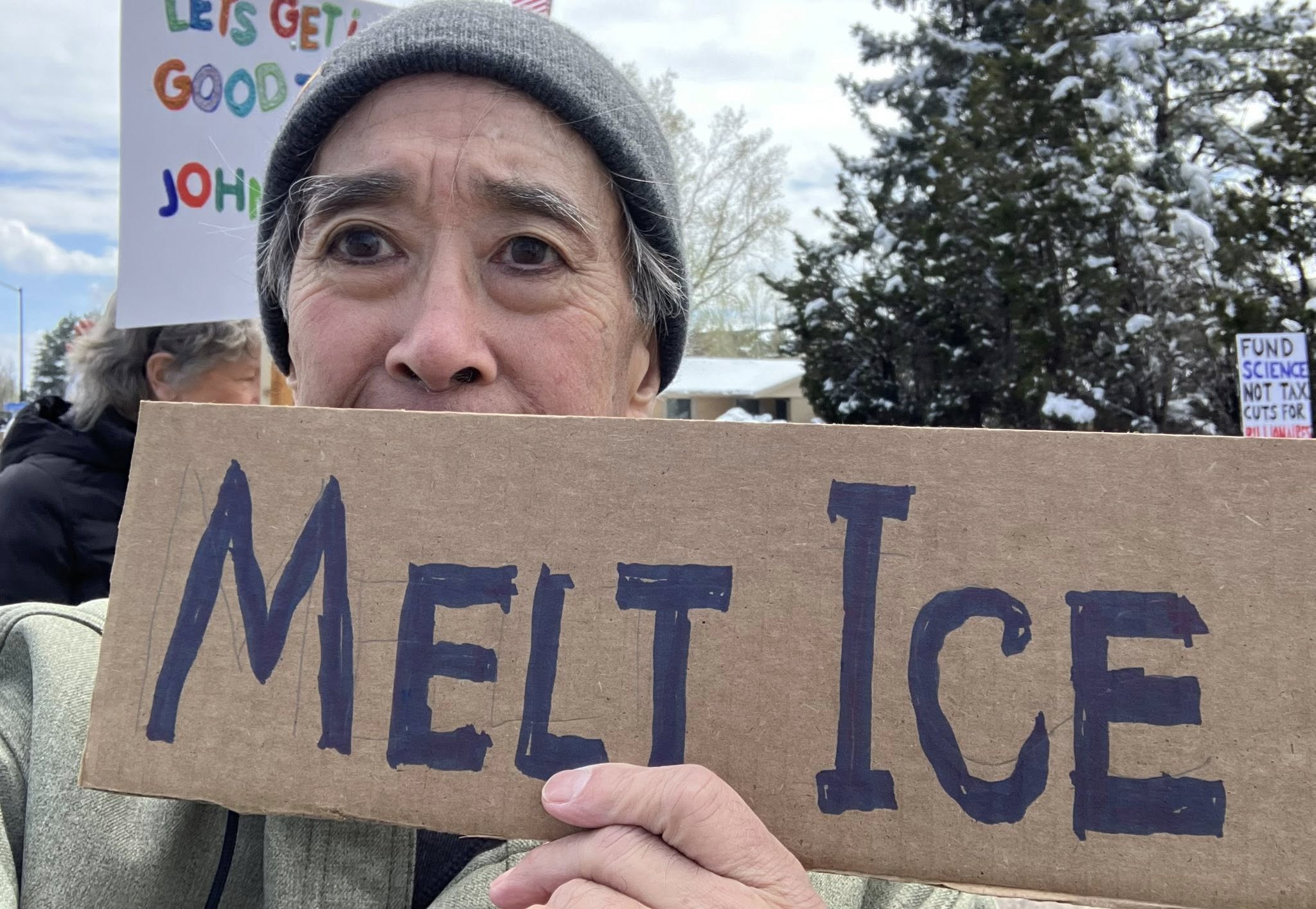
Today, I attended the “No Kings” march. The crowd seemed smaller than at previous demonstrations I’ve attended, but the messages on the posters stayed the same. Signs scattered throughout the gathering condemned ICE, challenged its tactics, demanded accountability, and called for the agency’s abolition.

A person taking a selfie at the Boulder Farmers Market, with information booths and a crowd visible in the background. The person wears sunglasses and a cap, and there are colorful market tents set up.

Those signs got me thinking about how we arrived at this moment and whether we’ve learned anything from our history.

Controlling borders and regulating immigration are legitimate government responsibilities. How we carry out those responsibilities matters. An immigration system that separates families, instills fear in communities, and treats people as security threats before considering their individual circumstances deserves more than a budget increase and a political talking point.

It deserves a fundamental rethink.

How We Got Here

Immigration enforcement in the United States didn’t always work the way we know it today.

The U.S. Customs Service dates to 1789, when the federal government needed to collect tariffs and generate revenue. The Immigration Act of 1891 established a centralized federal role in immigration control. The following year, Ellis Island opened as a major immigration inspection station. Congress created the U.S. Border Patrol in 1924 to police land borders between official ports of entry.

In 1933, the government consolidated immigration functions into the Immigration and Naturalization Service (INS). In 1940, the agency transferred to the Department of Justice and administered legal immigration and naturalization while enforcing immigration laws and deporting people who violated them.

That arrangement had its shortcomings, but it recognized that immigration involved more than enforcement. People applied for citizenship. Others faced removal proceedings.

Then came September 11, 2001.

A view of a street with a construction fence and debris in the background, showing the remains of a demolished building. A person in a coat stands on the sidewalk, with other buildings and cables visible.

In the aftermath of the terrorist attacks, Congress passed the Homeland Security Act of 2002. The government dismantled the INS and transferred its functions, along with those of the U.S. Customs Service, into the newly established Department of Homeland Security.

By 2003, three agencies had taken shape:

  • U.S. Customs and Immigration Service (CIS), responsible for administering lawful immigration and citizenship applications.
  • Customs and Border Protection (CBP), responsible for border security and enforcement at ports of entry.
  • Immigration and Customs Enforcement (ICE), responsible for interior immigration enforcement, detention, deportation, and certain criminal investigations.

The restructuring reflected a new national security environment, placing immigration enforcement within a department built to protect the country from security threats.

Crossing a border unlawfully is not automatically the same thing as posing a threat to national security. Yet the post-9/11 framework embeds immigration enforcement within a broader security system, where the tools, priorities, and institutional culture emphasize apprehension and removal over the circumstances of individual people.

We should be asking whether that approach serves the country today.

Reagan, IRCA, and a Different Approach

Immigration reform wasn’t always the political third rail it has become.

A blue campaign button featuring the word 'REAGAN' in bold white letters, with the slogan 'Let's make America great again' underneath.

In 1986, President Ronald Reagan signed the Immigration Reform and Control Act (IRCA). The law provided a path to legal status for approximately 2.7 million undocumented immigrants who met its eligibility requirements, including continuous residence in the United States since January 1, 1982.

Reagan understood that millions of people had already established lives here. They worked, raised families, paid bills, and contributed to their communities. Removing everyone who lacked legal status would have been an enormous undertaking, with consequences extending far beyond the individuals targeted.

IRCA offered a compromise. It combined legalization for eligible immigrants with employer sanctions for hiring unauthorized workers and increased resources for immigration enforcement. The legislation was imperfect, and its enforcement provisions created their own problems. Nevertheless, it demonstrated that a conservative president and a bipartisan Congress could acknowledge an uncomfortable reality: an immigration system that ignores the lives people have built here will never resolve the problem simply by ordering them to leave.

I have a personal reason for thinking about that history.

The Tanaka Farm: A Local Lesson in Immigration Policy

Near Longmont, the history of the Tanaka Brothers Farms offers a revealing local chapter in the complicated relationship between agriculture, immigration, and federal policy.

A weathered white building with a red roof is situated in an open field, surrounded by sparse trees and grass under a partly cloudy sky.

The Tanaka family’s agricultural story stretches back through the experiences of Japanese Americans who built lives and businesses in Colorado, including people whose families endured incarceration during World War II. The family’s farming operation relied on immigrant labor.

IRCA’s employer-sanctions provisions eventually extended to agricultural employers, bringing new compliance obligations to an industry dependent on seasonal labor. By the early 1990s, the Tanaka Brothers Farms operation had entered bankruptcy proceedings.

The timing invites questions about how immigration policy, labor requirements, agricultural economics, and the treatment of farmworkers intersected. It does not, by itself, establish that IRCA caused the farm’s collapse. That history deserves a closer look at the evidence, the decisions, and the people who lived through the consequences.

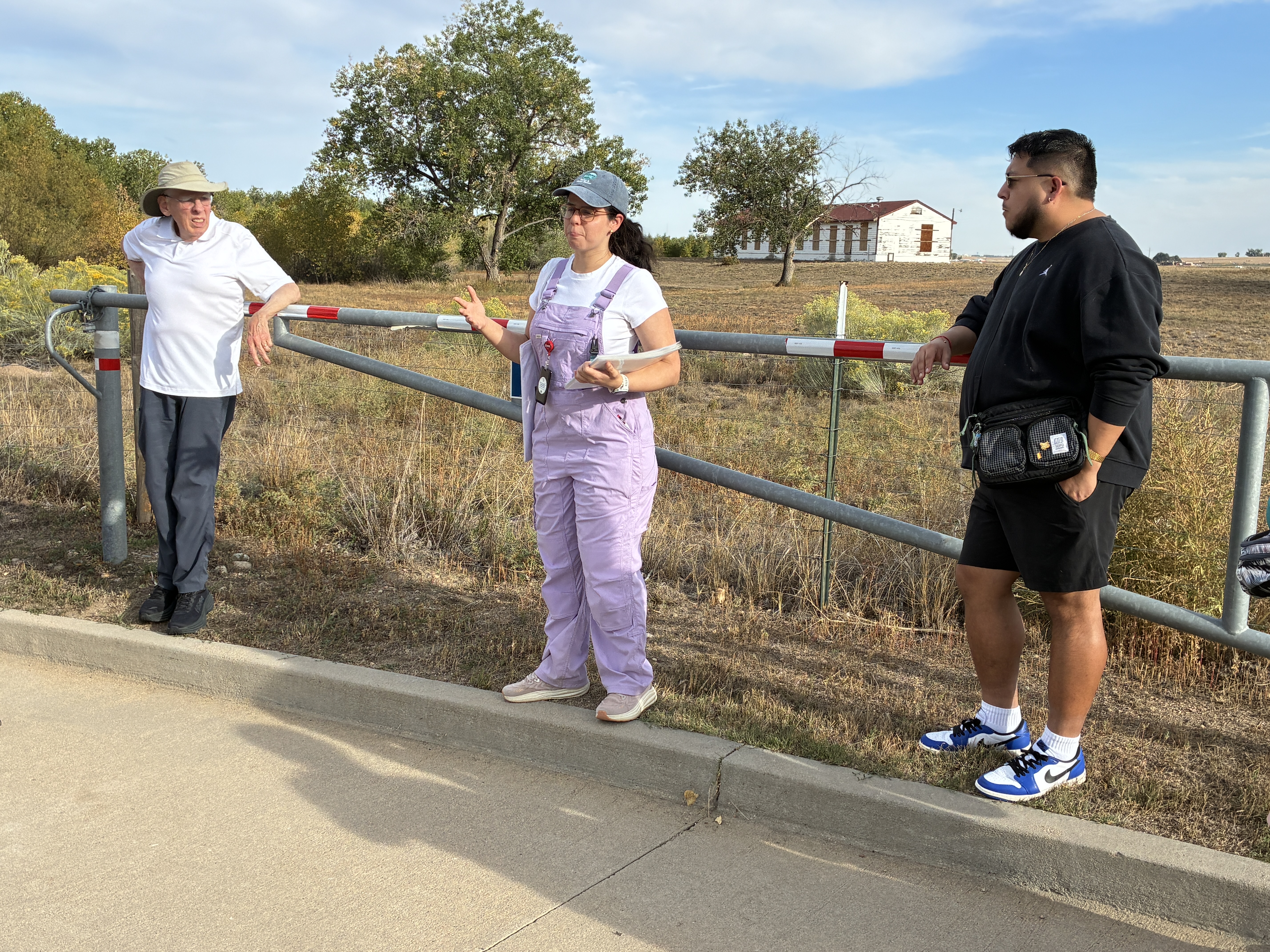
Three individuals engaged in conversation by a gate outdoors, with a grassy area and a building in the background.

I’m pursuing those questions in a book and documentary project that examines the Tanaka farm and the larger agricultural history of the Boulder-Longmont area, including the Japanese American community, migrant labor, and the forces that shaped who worked the land—and who ultimately benefited from it.

Local history can reveal what national political arguments often obscure. Immigration policy doesn’t exist in a vacuum. It reaches into fields, workplaces, families, and communities, with consequences that can last for generations.

Where Do We Go From Here?

Today’s turnout may have been smaller than I expected. That doesn’t make its message less urgent. Public attention comes and goes, but federal enforcement policies continue to affect people’s lives long after demonstrators return home.

A person wearing a gray beanie holds a cardboard sign that reads 'Melt Ice' at a protest, with other protesters and signs visible in the background.

We need to distinguish between enforcing immigration law and treating enforcement itself as the ultimate goal.

An alternative would preserve legitimate border controls while establishing clear limits on enforcement powers, meaningful independent oversight, due process, and humane treatment. It would create workable legal pathways for people with deep roots here, meet the demand for immigrant labor, and let employers and workers comply with the law without turning entire communities into targets.

We should also ask whether ICE, as currently structured, is the best way to accomplish those objectives. No federal agency deserves immunity from scrutiny because Congress created it, presidents reshaped it, and changing political priorities gave it new missions.

What government builds, government can change.

Reagan’s IRCA compromise reminds us that immigration policy need not be a choice between unrestricted entry and mass deportation. The history of the Tanaka farm reminds us that federal decisions can have consequences far beyond the halls of Congress and the headlines of the day.

The “No Kings” march reminded me that government derives its authority from the people. That principle must mean more than showing up with a sign once or twice a year. It means insisting that government agencies remain accountable to the public they serve.

If our immigration system produces fear without lasting solutions, divides families without addressing the forces that draw people here, and consumes public resources without resolving the problems it was created to solve, then defending the status quo is not responsible governance. It is a refusal to learn.

We can secure our borders without abandoning our humanity. We can enforce laws without treating every undocumented person as a threat. And we can demand accountability without pretending that the only choices are to accept the system as it stands or abolish every form of immigration enforcement.

That work shouldn’t end when the march ends.