
Rethinking Immigration: Lessons from the ‘No Kings’ March

Today, I attended the “No Kings” march. The crowd seemed smaller than at previous demonstrations I’ve attended, but the messages on the posters stayed the same. Signs scattered throughout the gathering condemned ICE, challenged its tactics, demanded accountability, and called for the agency’s abolition.

A person taking a selfie at the Boulder Farmers Market, with information booths and a crowd visible in the background. The person wears sunglasses and a cap, and there are colorful market tents set up.

Those signs got me thinking about how we arrived at this moment and whether we’ve learned anything from our history.

Controlling borders and regulating immigration are legitimate government responsibilities. How we carry out those responsibilities matters. An immigration system that separates families, instills fear in communities, and treats people as security threats before considering their individual circumstances deserves more than a budget increase and a political talking point.

It deserves a fundamental rethink.

How We Got Here

Immigration enforcement in the United States didn’t always work the way we know it today.

The U.S. Customs Service dates to 1789, when the federal government needed to collect tariffs and generate revenue. The Immigration Act of 1891 established a centralized federal role in immigration control. The following year, Ellis Island opened as a major immigration inspection station. Congress created the U.S. Border Patrol in 1924 to police land borders between official ports of entry.

In 1933, the government consolidated immigration functions into the Immigration and Naturalization Service (INS). In 1940, the agency transferred to the Department of Justice and administered legal immigration and naturalization while enforcing immigration laws and deporting people who violated them.

That arrangement had its shortcomings, but it recognized that immigration involved more than enforcement. People applied for citizenship. Others faced removal proceedings.

Then came September 11, 2001.

A view of a street with a construction fence and debris in the background, showing the remains of a demolished building. A person in a coat stands on the sidewalk, with other buildings and cables visible.

In the aftermath of the terrorist attacks, Congress passed the Homeland Security Act of 2002. The government dismantled the INS and transferred its functions, along with those of the U.S. Customs Service, into the newly established Department of Homeland Security.

By 2003, three agencies had taken shape:

  • U.S. Customs and Immigration Service (CIS), responsible for administering lawful immigration and citizenship applications.
  • Customs and Border Protection (CBP), responsible for border security and enforcement at ports of entry.
  • Immigration and Customs Enforcement (ICE), responsible for interior immigration enforcement, detention, deportation, and certain criminal investigations.

The restructuring reflected a new national security environment, placing immigration enforcement within a department built to protect the country from security threats.

Crossing a border unlawfully is not automatically the same thing as posing a threat to national security. Yet the post-9/11 framework embeds immigration enforcement within a broader security system, where the tools, priorities, and institutional culture emphasize apprehension and removal over the circumstances of individual people.

We should be asking whether that approach serves the country today.

Reagan, IRCA, and a Different Approach

Immigration reform wasn’t always the political third rail it has become.
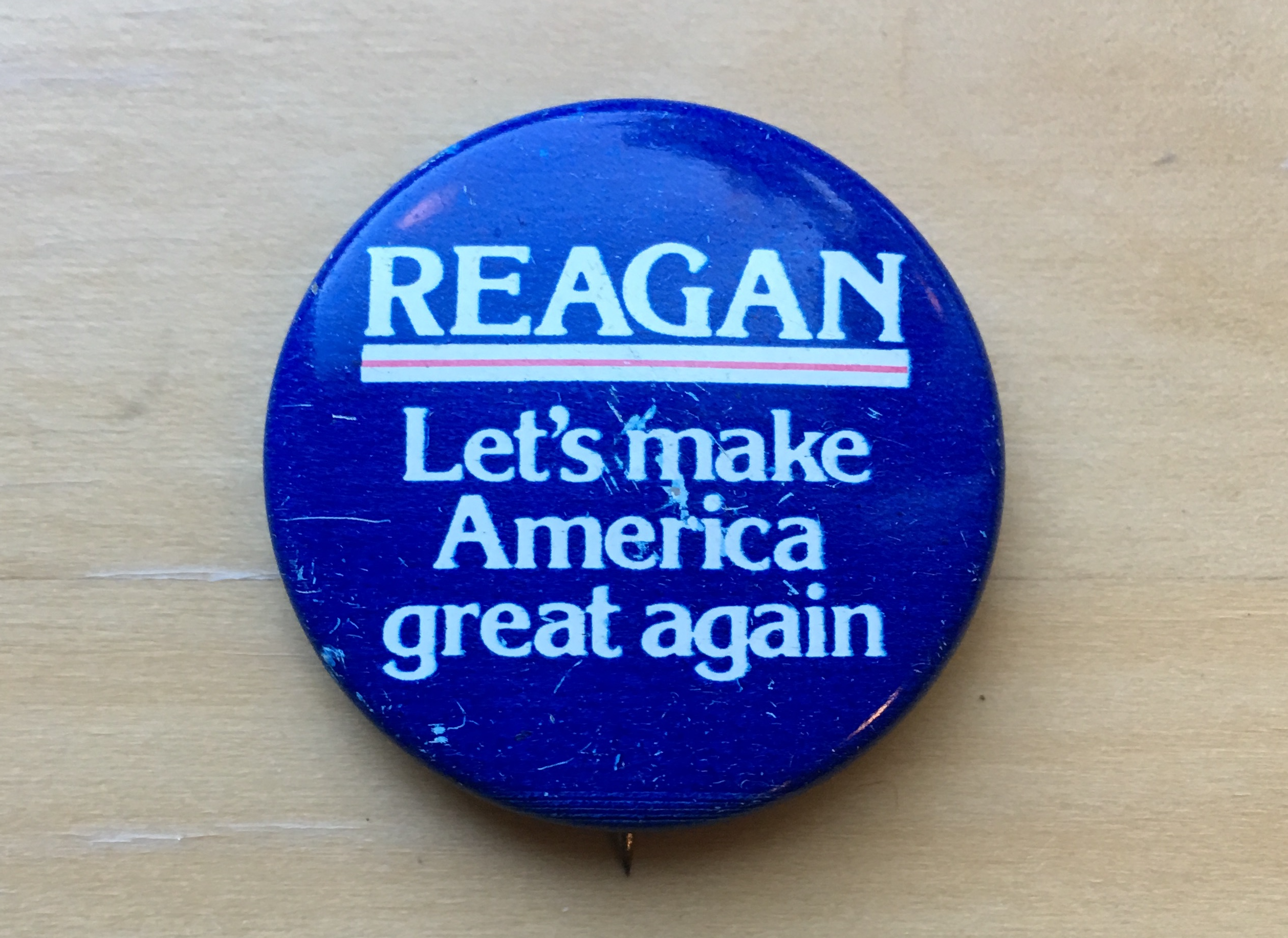
A blue campaign button featuring the word 'REAGAN' in bold white letters, with the slogan 'Let's make America great again' underneath.

In 1986, President Ronald Reagan signed the Immigration Reform and Control Act (IRCA). The law provided a path to legal status for approximately 2.7 million undocumented immigrants who met its eligibility requirements, including continuous residence in the United States since January 1, 1982.

Reagan understood that millions of people had already established lives here. They worked, raised families, paid bills, and contributed to their communities. Removing everyone who lacked legal status would have been an enormous undertaking, with consequences extending far beyond the individuals targeted.

IRCA offered a compromise. It combined legalization for eligible immigrants with employer sanctions for hiring unauthorized workers and increased resources for immigration enforcement. The legislation was imperfect, and its enforcement provisions created their own problems. Nevertheless, it demonstrated that a conservative president and a bipartisan Congress could acknowledge an uncomfortable reality: an immigration system that ignores the lives people have built here will never resolve the problem simply by ordering them to leave.

I have a personal reason for thinking about that history.

The Tanaka Farm: A Local Lesson in Immigration Policy

Near Longmont, the history of the Tanaka Brothers Farms offers a revealing local chapter in the complicated relationship between agriculture, immigration, and federal policy.

A weathered white building with a red roof is situated in an open field, surrounded by sparse trees and grass under a partly cloudy sky.

The Tanaka family’s agricultural story stretches back through the experiences of Japanese Americans who built lives and businesses in Colorado, including people whose families endured incarceration during World War II. The family’s farming operation relied on immigrant labor.

IRCA’s employer-sanctions provisions eventually extended to agricultural employers, bringing new compliance obligations to an industry dependent on seasonal labor. By the early 1990s, the Tanaka Brothers Farms operation had entered bankruptcy proceedings.

The timing invites questions about how immigration policy, labor requirements, agricultural economics, and the treatment of farmworkers intersected. It does not, by itself, establish that IRCA caused the farm’s collapse. That history deserves a closer look at the evidence, the decisions, and the people who lived through the consequences.
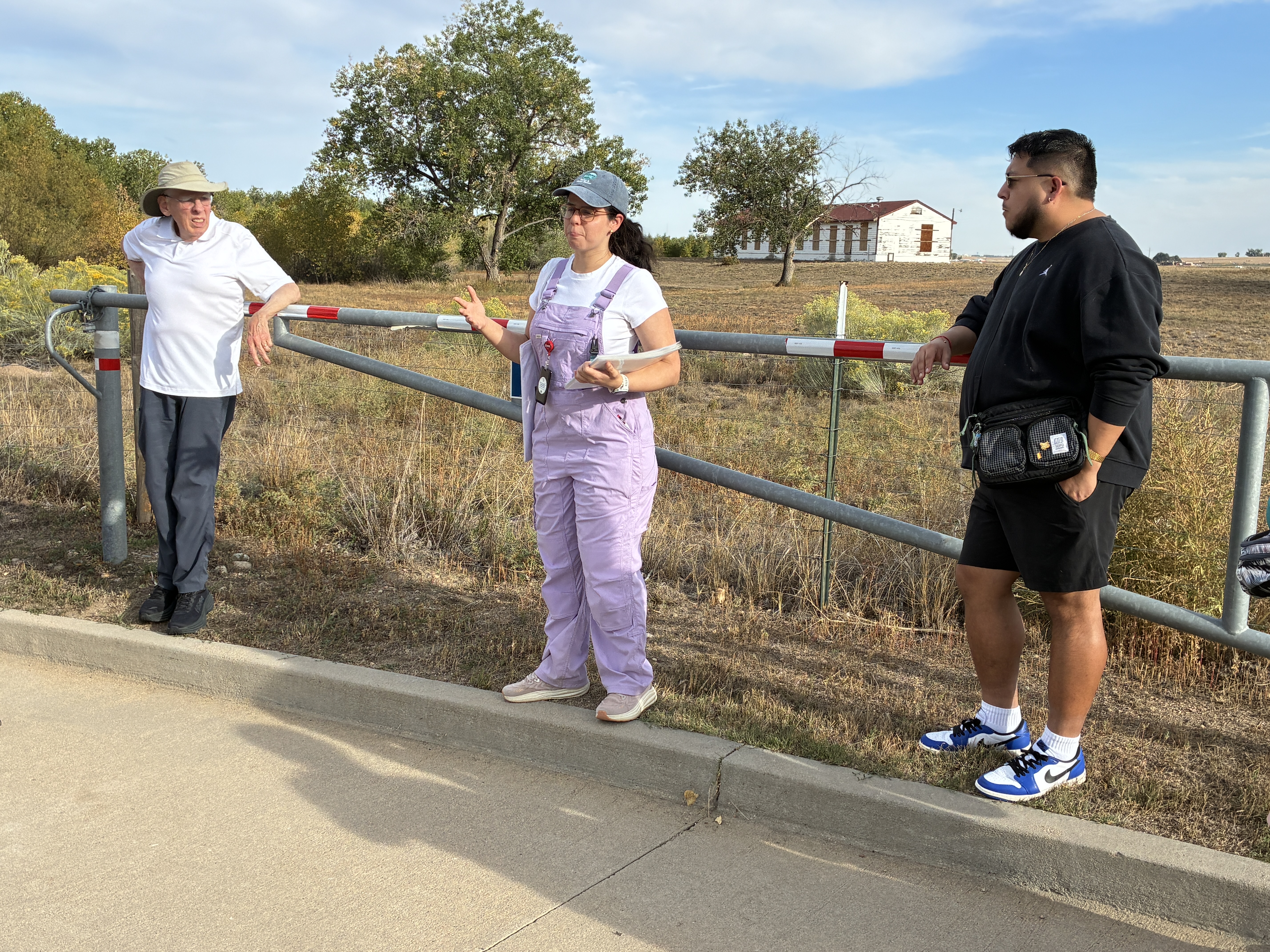
Three individuals engaged in conversation by a gate outdoors, with a grassy area and a building in the background.

I’m pursuing those questions in a book and documentary project that examines the Tanaka farm and the larger agricultural history of the Boulder-Longmont area, including the Japanese American community, migrant labor, and the forces that shaped who worked the land—and who ultimately benefited from it.

Local history can reveal what national political arguments often obscure. Immigration policy doesn’t exist in a vacuum. It reaches into fields, workplaces, families, and communities, with consequences that can last for generations.

Where Do We Go From Here?

Today’s turnout may have been smaller than I expected. That doesn’t make its message less urgent. Public attention comes and goes, but federal enforcement policies continue to affect people’s lives long after demonstrators return home.
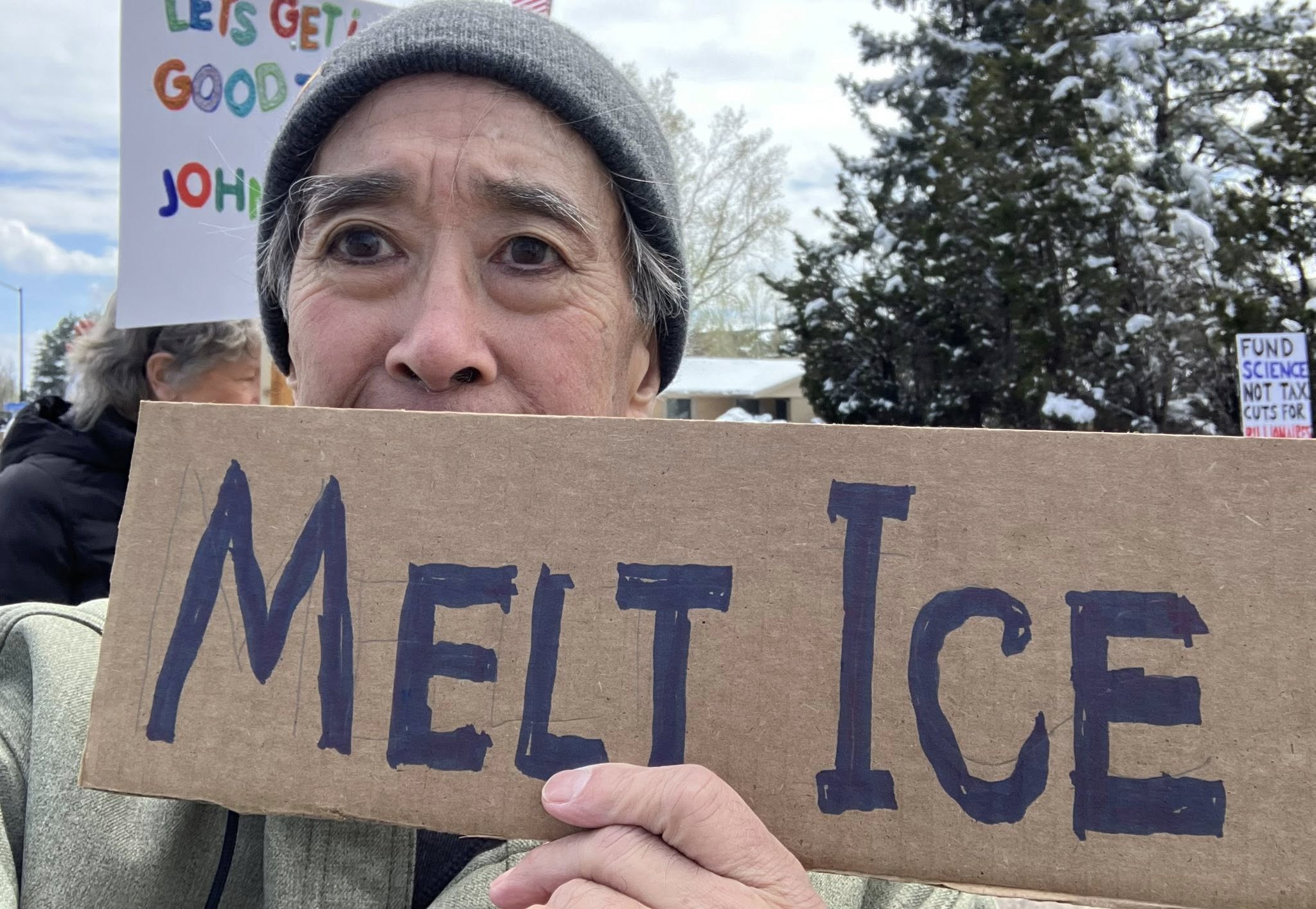
A person wearing a gray beanie holds a cardboard sign that reads 'Melt Ice' at a protest, with other protesters and signs visible in the background.

We need to distinguish between enforcing immigration law and treating enforcement itself as the ultimate goal.

An alternative would preserve legitimate border controls while establishing clear limits on enforcement powers, meaningful independent oversight, due process, and humane treatment. It would create workable legal pathways for people with deep roots here, meet the demand for immigrant labor, and let employers and workers comply with the law without turning entire communities into targets.

We should also ask whether ICE, as currently structured, is the best way to accomplish those objectives. No federal agency deserves immunity from scrutiny because Congress created it, presidents reshaped it, and changing political priorities gave it new missions.

What government builds, government can change.

Reagan’s IRCA compromise reminds us that immigration policy need not be a choice between unrestricted entry and mass deportation. The history of the Tanaka farm reminds us that federal decisions can have consequences far beyond the halls of Congress and the headlines of the day.

The “No Kings” march reminded me that government derives its authority from the people. That principle must mean more than showing up with a sign once or twice a year. It means insisting that government agencies remain accountable to the public they serve.

If our immigration system produces fear without lasting solutions, divides families without addressing the forces that draw people here, and consumes public resources without resolving the problems it was created to solve, then defending the status quo is not responsible governance. It is a refusal to learn.

We can secure our borders without abandoning our humanity. We can enforce laws without treating every undocumented person as a threat. And we can demand accountability without pretending that the only choices are to accept the system as it stands or abolish every form of immigration enforcement.

That work shouldn’t end when the march ends.

My top stories from 2014: Mork, Gutless NFL, Soft on Commies, Homeland and ISIS, Blues blow it, and more …

My yoga teacher at The Little Yoga Studio told a story about why we should avoid New Years resolutions about making us perfect, since we are imperfect beings.

My yoga teacher at The Little Yoga Studio told a story about why we should avoid New Years resolutions about making us perfect, since we are imperfect beings.

When I was working in the newspaper business, at the end of the year, the staff sat around and came up with the top news stories. I was the sports editor and came up with the top sports stories. The yoga teacher the other day was talking about how none of us are perfect. Rather than striving for perfection with New Years resolutions, we should figure out ways to work within our imperfections to make life better for ourselves and for others.

Now that I’m an arm chair journalist, here are my top 10 picks mostly about the foibles of people and how they may have an impact on our daily lives, in no particular order:

The GOP took control of the Senate with Harry Reid leaving as President Pro - tem and Mitch McConnell on tap to take the job.

The GOP took control of the Senate with Harry Reid leaving as President Pro -tem and Mitch McConnell on tap to take the job. (Photo Fair Use)

Democrats blow midterms, lose US Senate – The biggest domestic story that happened was on election day when the GOP took control fo the US Senate. Harry Reid is out and Mitch McConnell is in as President Pro-tem. Politicians like these two guys are an odd lot. Neither wants to budge from their  extreme positions. I wonder if McConnell will soften up now that he’s in charge. It was a weird election – stock market strong, gas prices low, unemployment rate low. As near as I can figure, the Democrats blew it by not getting out the vote. This midterm election was decided by 36 percent of the electorate. It will be interesting to see how things change starting in January.

Ray Rice, Janay Rice

Washed up Baltimore Ravens running back had a roller coaster ride after slugging his wife and getting away with it for a while until a movie surfaced of the bludgeoning.(Photo Fair Use)

NFL cuts DV perps slack – Having worked in the domestic violence prevention field for a number of years, I was intrigued by how incompetent the National Football League was in dealing with the Ray Rice issue. His domestic violence proclivity brought the issue to light in big time sports. Whether or not there will be any long lasting changes, we’ll have to wait and see. I have a MPA degree from CU – Denver in domestic violence prevention. One of my thesis advisors, National Coalition Against Domestic Violence Executive Director Rita Smith is a member of the NFL advisory group. So far, the issue has become irrelevant with the playoffs on the horizon. Ray Rice still doesn’t have a job and unlikely to get one.

mr november

I was in Yankee Stadium when Derek Jeter was dubbed Mr. November during the 2001 World Series against the Arizona Diamondbacks. (Photo Fair Use)

Jeter calls it a career –  He hung up his spikes after 19 years in pinstripes. This is the best “feel good” story of the 10 I picked. I think Jeter is truly a good guy. Playing shortstop for the Yankees was always my dream job, but it was always taken. I had a chance to watch him play a few times when the Yankees played the Colorado Rockies and in the 2001 World Series. It was scheduled later in October than usual because of the 9/11 attacks in New York. I was at the game when he was dubbed “Mr. November” after he hit a game winning home run to knot the series against the Arizona Diamondbacks at two games apiece. Derek says he wants to settle down and have a family. I imagine he’ll be giving a lot back to the community, whether it’s in New York or his home town of Kalamazoo Michigan.

NBC reporter Nancy Snyderman was one of the biggest stories when she broke quarantine and went to a coffee shop in her neighborhood and got caught.

NBC reporter Nancy Snyderman was one of the biggest stories when she broke quarantine and went to a coffee shop in her neighborhood and got caught. (Photo Fair Use)

Ebola non-story keeps voters at home – A couple of the cable TV stations had a heyday with a few people getting sick from ebola. You would have thought that ebola was spreading like weeds. When the election was over, suddenly, the US ebola epidemic was over – four cases, one death. Contrast that with the 30 pediatric flu deaths as of September 2014 and 36 states reporting widespread flu occurrences as December 20th.  Cable TV was also airing that Dustin Hoffman – Renee Russo movie “Outbreak” during this time period, just to get us all in the worst possible scenario mood. I hope people look at stories holistically, rather than in a reactionary fashion.

There was a big to do about "The Interview" which was reportedly the reason Sony's internet security was breached.

There was a big to do about “The Interview” which was reportedly the reason Sony’s internet security was breached. (Photo Fair Use)

Sony hacked, sets up “The Interview” publicity stunt – Everyone pretty much knows about the Sony hack job that’s been reported in the popular media. The FBI is still blaming North Korea because of the James Franco – Seth Rogen movie, “The Interview” about the assassination plot of the Kim Jung Un. Turns out, it may have been an opportune publicity stunt riding the wave of an inside Sony hack job by a band of disgruntled employees. Nonetheless, reading the private emails between angst – filled studio execs was quite revealing and entertaining. I’m planning a watch “The Interview” party on January 6th. Moral of this story is, don’t write down stuff you don’t others to see in emails.

A man backs away as law enforcement officials close in on him and eventually detain him during protests over the death of Michael Brown, an unarmed black teenager killed by a police officer, in Ferguson, Mo.

Ominous US Army surplus riot gear supposedly added to the schism between citizens and cops in Ferguson, MO (Photo Fair Use)

“Stand Up Don’t Shoot” “I Can’t Breathe” movement needs closers – This is another story that everyone must have heard a little something about. There is definitely more awareness about the “us versus them” mentality that is evident in at least some police departments. The unarmed black kid shot by a white cop in a suburb of St. Louis and riots and protests ensued around the country. I’m not sure where it all will be headed, but protesting and tossing cars will soon become old hat. The “Hands Up Don’t Shoot” movement needs some closers. Also on the shirt tail of this shooting is that of the band of cops who strangled a guy selling loosey cigarettes on a New York City sidewalk. That added fuel to the fire. I hope this movement doesn’t end up like Occupy.

The Showtime cable series "Homeland" has brought ISIS into the living room. Carrie picks off snipers.

The Showtime cable series “Homeland” has brought ISIS into the living room. Carrie picks off snipers.

“Homeland” CIA crew fights ISIS in our living rooms – I’m a big “Homeland” fan. That’s the cable TV series on Showtime that just wrapped it’s fourth season. Homeland’s Carrie – who has been dealing with bipolar illness – somehow keeps afloat in a very high stress job. She and former CIA director Saul have normalized the US fight against ISIS and brought it into our living rooms. The last three episodes were about ineptitude in the US Embassy. In real life, the Islamic State, as near as I can figure is quite enterprising. They raise millions in cash from family oil fortunes; revenues from their own oil fields; contraband in the forms of drugs and stolen ancient artifacts. The US pulled out of Afghanistan, just in time to keep soldiers employed as the US re-escalates in Iraq and Syria. I can’t wait for the next season of “Homeland” to air next summer! I’m not quite sure what to think about the war with ISIS. It’s seems like another non-starter and a no-win situation. The US has less at stake since domestic fuel production is at an all time high.

The Mork and Mindy house in Boulder was turned into a shrine for the late Robin Williams.

The Mork and Mindy house in Boulder was turned into a shrine for the late Robin Williams. (Photo Fair Use)

Mork from Ork leaves this world – Around Boulder, this was a pretty big story since his 1970s classic sitcom “Mork and Mindy” was set in Boulder during the 1970s. He committed suicide, which is always too bad but he must have been fighting off demons. I don’t think he spent much time in Boulder during the series. Based on the tributes placed at the Boulder TV house, you’d think he flew in from Ork and lived in Boulder his entire alien life. I must admit that I made a pilgrimage to the Mork and Mindy house this summer – Nanu Nanu …! He could have been so much more prolific. If you feel like you need help for a mental illness, get to the doctor.

Air Asia and Malaysian Airlines were at the center of three air disasters this year. (Photo Fair Use)

Air Asia and Malaysian Airlines were at the center of three air disasters this year. (Photo Fair Use)

Asia-based airlines go down in flames with three disasters  – It wasn’t a great year for Asia – based airlines. This week, Air Asia flight 8501 was lost and the remains found in the Java Sea with no survivors of the 162 passengers on board . Malaysian Airlines 370 dropped off the radar screen and vanished with 239 passengers. The Malaysian transportation minister tried to stonewall the story but finally came around and said that no wreckage had been found. On top of that, Malaysian Airlines 17 carrying 298 passengers was shot down over the Ukraine by separatist renegades. These crashes certainly are not everyday occurrences, but give me a train ride any day!

President Obama and Pope Frances were involved in negotiations with Raul Castro to normal relations with Cuba. (Photo Fair Use)

President Obama and Pope Frances were involved in negotiations with Raul Castro to normal relations with Cuba. (Photo Fair Use)

Obama and Pope soft on the Cuban commies – This story just came out of nowhere, even though it was in the making for several months and included intervention by Pope Francis. President Obama announced that the full diplomatic relations would be renewed with the Raul Castro regime and that an American Embassy would be opened in Havana.

The Cuban baseball player market will be open with normalized relations between Cuba and the US. Sal Maglie played for a Cuban baseball team

The Cuban baseball player market will be open with normalized relations between Cuba and the US. Sal Maglie played for a Cuban baseball team.

The Cuban baseball player market will be open with normalized relations between Cuba and the US. There are a bunch of people who think this is a bad idea since they have been working on getting the government to change its tactics. The recent announcement, put the kibosh on their efforts.

The biggest benefit I see is baseball players won’t have to defect or risk drowning at sea in make-shift rafts. I went to visit family in Peru and flew on AeroPeru. The plane made a late night stop in Havana, not enough time to get off the plane, but I count that as being in Cuba.

The Little Yoga Studio is, in fact little, buck has a great welcoming environment for beginners to expert yoga practitioners.

The Little Yoga Studio is, in fact little, buck has a great welcoming environment for beginners to expert yoga practitioners. I like this place because of  the stories.

There are many more stories, but these are 10 I picked out as significant in 2014.

I picked stories mostly about people with flaws and I hope that we can learn from their stories.

My life in 2014 really wasn’t that memorable, but if you had some great experiences, good or bad I hope they will help inform your decisions and choices in 2015.