Rethinking Immigration: Lessons from the ‘No Kings’ March

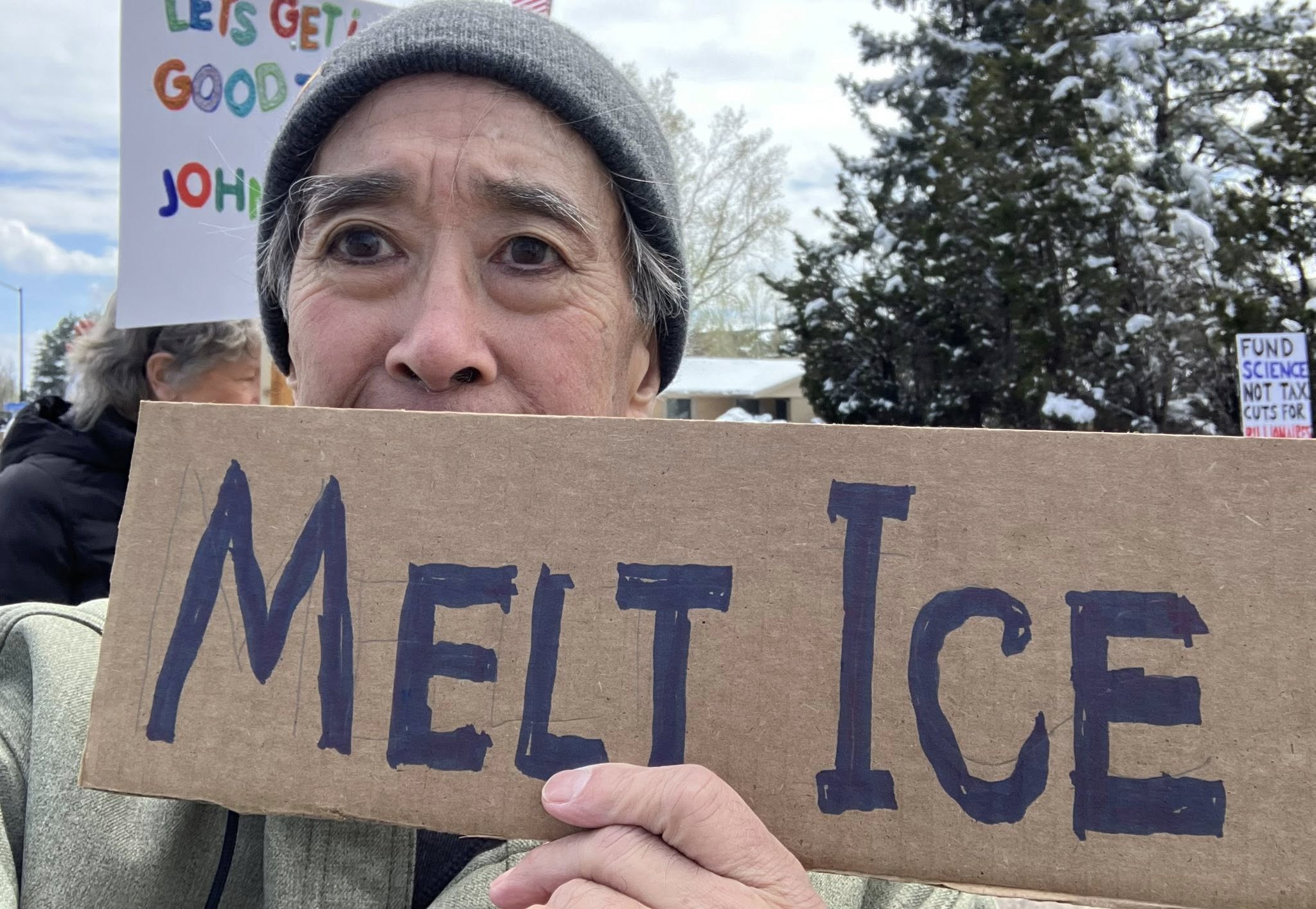
Today, I attended the “No Kings” march. The crowd seemed smaller than at previous demonstrations I’ve attended, but the messages on the posters stayed the same. Signs scattered throughout the gathering condemned ICE, challenged its tactics, demanded accountability, and called for the agency’s abolition.

A person taking a selfie at the Boulder Farmers Market, with information booths and a crowd visible in the background. The person wears sunglasses and a cap, and there are colorful market tents set up.

Those signs got me thinking about how we arrived at this moment and whether we’ve learned anything from our history.

Controlling borders and regulating immigration are legitimate government responsibilities. How we carry out those responsibilities matters. An immigration system that separates families, instills fear in communities, and treats people as security threats before considering their individual circumstances deserves more than a budget increase and a political talking point.

It deserves a fundamental rethink.

How We Got Here

Immigration enforcement in the United States didn’t always work the way we know it today.

The U.S. Customs Service dates to 1789, when the federal government needed to collect tariffs and generate revenue. The Immigration Act of 1891 established a centralized federal role in immigration control. The following year, Ellis Island opened as a major immigration inspection station. Congress created the U.S. Border Patrol in 1924 to police land borders between official ports of entry.

In 1933, the government consolidated immigration functions into the Immigration and Naturalization Service (INS). In 1940, the agency transferred to the Department of Justice and administered legal immigration and naturalization while enforcing immigration laws and deporting people who violated them.

That arrangement had its shortcomings, but it recognized that immigration involved more than enforcement. People applied for citizenship. Others faced removal proceedings.

Then came September 11, 2001.

A view of a street with a construction fence and debris in the background, showing the remains of a demolished building. A person in a coat stands on the sidewalk, with other buildings and cables visible.

In the aftermath of the terrorist attacks, Congress passed the Homeland Security Act of 2002. The government dismantled the INS and transferred its functions, along with those of the U.S. Customs Service, into the newly established Department of Homeland Security.

By 2003, three agencies had taken shape:

  • U.S. Customs and Immigration Service (CIS), responsible for administering lawful immigration and citizenship applications.
  • Customs and Border Protection (CBP), responsible for border security and enforcement at ports of entry.
  • Immigration and Customs Enforcement (ICE), responsible for interior immigration enforcement, detention, deportation, and certain criminal investigations.

The restructuring reflected a new national security environment, placing immigration enforcement within a department built to protect the country from security threats.

Crossing a border unlawfully is not automatically the same thing as posing a threat to national security. Yet the post-9/11 framework embeds immigration enforcement within a broader security system, where the tools, priorities, and institutional culture emphasize apprehension and removal over the circumstances of individual people.

We should be asking whether that approach serves the country today.

Reagan, IRCA, and a Different Approach

Immigration reform wasn’t always the political third rail it has become.
A blue campaign button featuring the word 'REAGAN' in bold white letters, with the slogan 'Let's make America great again' underneath.

In 1986, President Ronald Reagan signed the Immigration Reform and Control Act (IRCA). The law provided a path to legal status for approximately 2.7 million undocumented immigrants who met its eligibility requirements, including continuous residence in the United States since January 1, 1982.

Reagan understood that millions of people had already established lives here. They worked, raised families, paid bills, and contributed to their communities. Removing everyone who lacked legal status would have been an enormous undertaking, with consequences extending far beyond the individuals targeted.

IRCA offered a compromise. It combined legalization for eligible immigrants with employer sanctions for hiring unauthorized workers and increased resources for immigration enforcement. The legislation was imperfect, and its enforcement provisions created their own problems. Nevertheless, it demonstrated that a conservative president and a bipartisan Congress could acknowledge an uncomfortable reality: an immigration system that ignores the lives people have built here will never resolve the problem simply by ordering them to leave.

I have a personal reason for thinking about that history.

The Tanaka Farm: A Local Lesson in Immigration Policy

Near Longmont, the history of the Tanaka Brothers Farms offers a revealing local chapter in the complicated relationship between agriculture, immigration, and federal policy.

A weathered white building with a red roof is situated in an open field, surrounded by sparse trees and grass under a partly cloudy sky.

The Tanaka family’s agricultural story stretches back through the experiences of Japanese Americans who built lives and businesses in Colorado, including people whose families endured incarceration during World War II. The family’s farming operation relied on immigrant labor.

IRCA’s employer-sanctions provisions eventually extended to agricultural employers, bringing new compliance obligations to an industry dependent on seasonal labor. By the early 1990s, the Tanaka Brothers Farms operation had entered bankruptcy proceedings.

The timing invites questions about how immigration policy, labor requirements, agricultural economics, and the treatment of farmworkers intersected. It does not, by itself, establish that IRCA caused the farm’s collapse. That history deserves a closer look at the evidence, the decisions, and the people who lived through the consequences.
Three individuals engaged in conversation by a gate outdoors, with a grassy area and a building in the background.

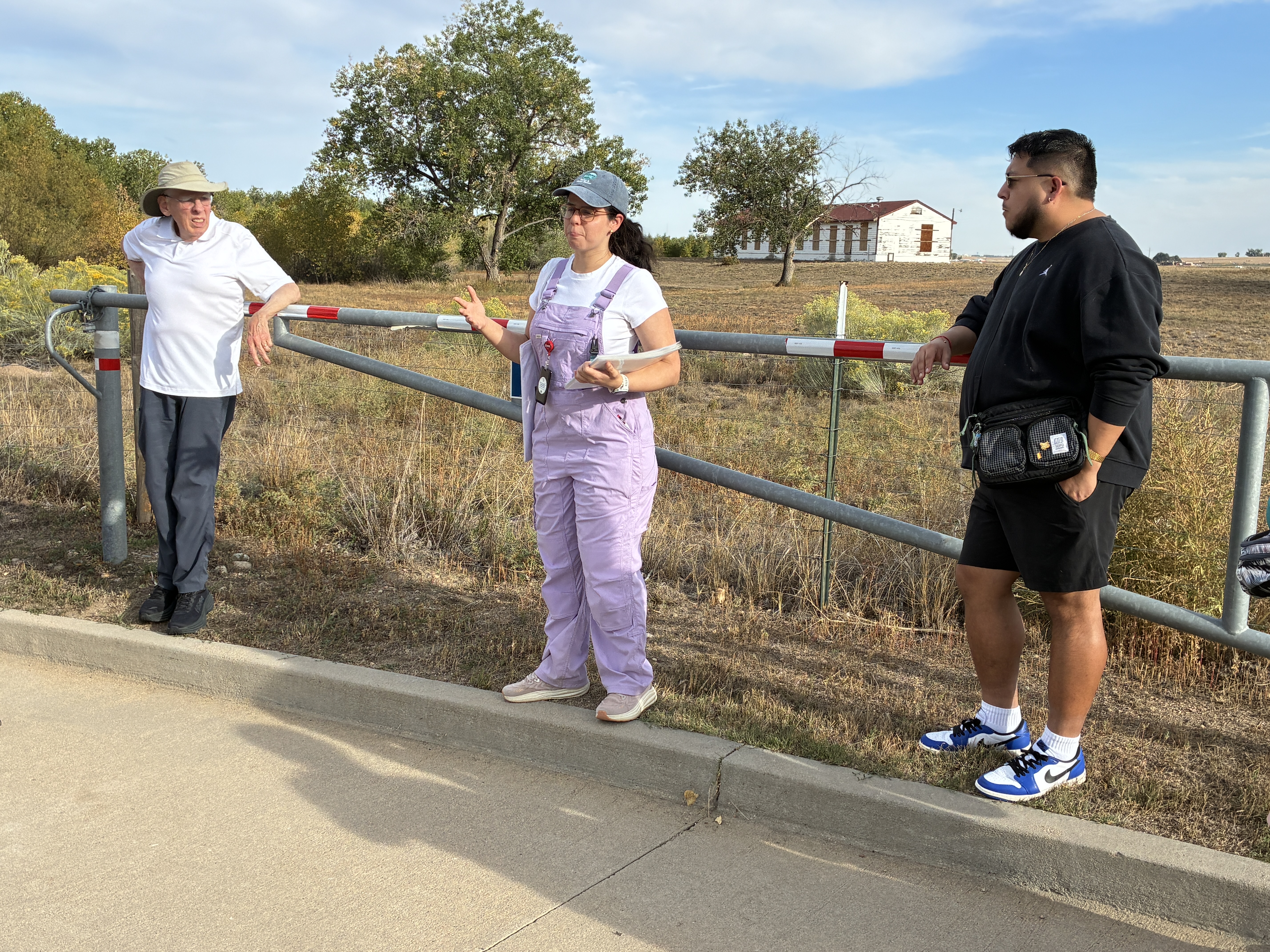
I’m pursuing those questions in a book and documentary project that examines the Tanaka farm and the larger agricultural history of the Boulder-Longmont area, including the Japanese American community, migrant labor, and the forces that shaped who worked the land—and who ultimately benefited from it.

Local history can reveal what national political arguments often obscure. Immigration policy doesn’t exist in a vacuum. It reaches into fields, workplaces, families, and communities, with consequences that can last for generations.

Where Do We Go From Here?

Today’s turnout may have been smaller than I expected. That doesn’t make its message less urgent. Public attention comes and goes, but federal enforcement policies continue to affect people’s lives long after demonstrators return home.
A person wearing a gray beanie holds a cardboard sign that reads 'Melt Ice' at a protest, with other protesters and signs visible in the background.

We need to distinguish between enforcing immigration law and treating enforcement itself as the ultimate goal.

An alternative would preserve legitimate border controls while establishing clear limits on enforcement powers, meaningful independent oversight, due process, and humane treatment. It would create workable legal pathways for people with deep roots here, meet the demand for immigrant labor, and let employers and workers comply with the law without turning entire communities into targets.

We should also ask whether ICE, as currently structured, is the best way to accomplish those objectives. No federal agency deserves immunity from scrutiny because Congress created it, presidents reshaped it, and changing political priorities gave it new missions.

What government builds, government can change.

Reagan’s IRCA compromise reminds us that immigration policy need not be a choice between unrestricted entry and mass deportation. The history of the Tanaka farm reminds us that federal decisions can have consequences far beyond the halls of Congress and the headlines of the day.

The “No Kings” march reminded me that government derives its authority from the people. That principle must mean more than showing up with a sign once or twice a year. It means insisting that government agencies remain accountable to the public they serve.

If our immigration system produces fear without lasting solutions, divides families without addressing the forces that draw people here, and consumes public resources without resolving the problems it was created to solve, then defending the status quo is not responsible governance. It is a refusal to learn.

We can secure our borders without abandoning our humanity. We can enforce laws without treating every undocumented person as a threat. And we can demand accountability without pretending that the only choices are to accept the system as it stands or abolish every form of immigration enforcement.

That work shouldn’t end when the march ends.
Braceros, Traqueros: Don’t Ask, Don’t Tell

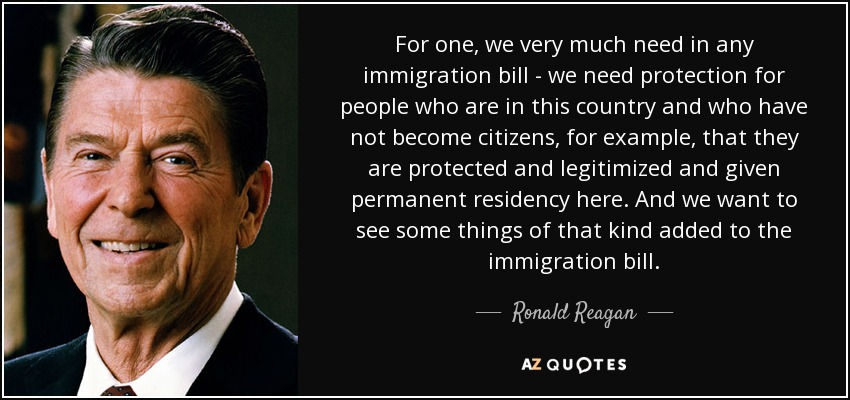
reagan quote immigration

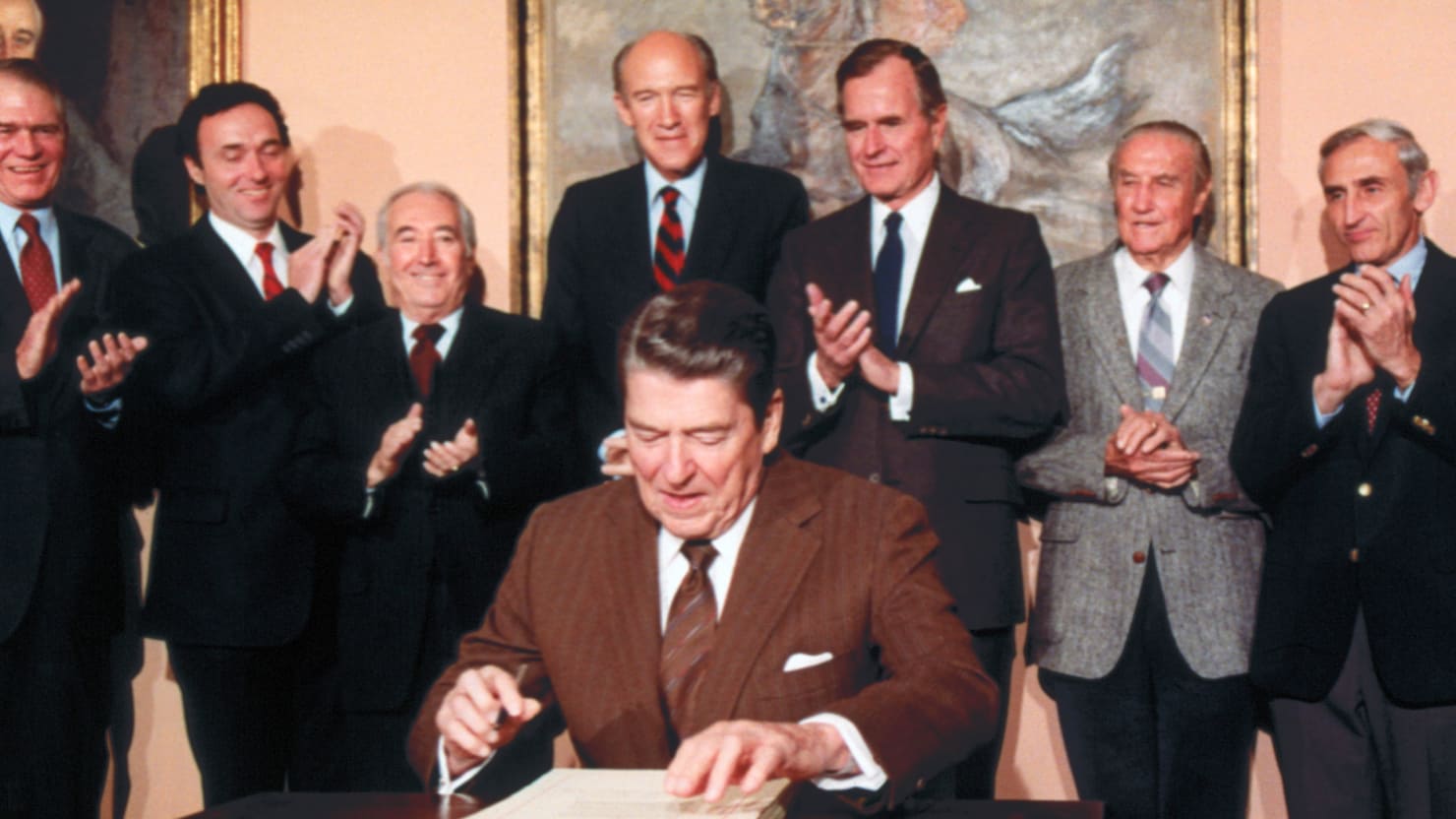
Ronald Reagan signed immigration reform into law in 1986 that was sponsored by former Wyoming US Senator Alan Simpson. The law gave amnesty to 3 million undocumented people.

For the past 150 years, the US government, railroads and agricultural industries welcomed immigrant workers from Mexico. How did they end up coming to the United States in the first place?

Rather than keep immigrants seeking asylum detained, why not give them all temporary visas and put them to work. That’s why they trudged hundreds, if not thousands of miles to America.

I heard there are upwards to 50,000 asylum seekers currently being held around the country awaiting court hearings.

They’re fleeing danger in their homelands, need local sponsors and something to do once they are granted asylum. Anyone who thinks they are going to take their jobs, that’s just hyperbolic race-bait ranting.

What work needs to be done? Here are a couple ideas:

  • Rebuild crumbling roads and bridges
  • Building affordable housing

For the record, I’m not in favor of cutting illegal immigrants any slack. I was an illegal alien and kicked out of Mexico in 1991 for working in Zacatecas on a tourist visa from Jalisco.

My business partner and I were stopped by the federal police, held at machine gun point in the middle of nowhere between a small town of Sombrerete and Fresnillo.

One soldier questioned me in English, my partner in Spanish hoping we would give conflicting stories.

They tossed our pick up truck, groped through my luggage, put everything back and searched again. I think they were looking for drugs. Around this time, the United States and Mexico agreed to stifle cocaine and marijuana traffic. Zacatecas is just south of Colorado.

Luckily for me, they let us go.

I was caught using a Mazatlan tourist visa, but actually working in Zacatecas. I ended up getting my paperwork together and made formal application, along with $97.00 USD and obtained the equivalent of a green card.

A year or so ago, I listened to a presentation by Lu Rocha at a workshop organized by my grad school Center on Domestic Violence at CU-Denver.

She gave a history of the Latino/a/x/ labor force in the United States that dates back to the construction of the transcontinental railroad in the 1800s and propping up the war efforts between 1942 until it’s repeal in 1964.

Immigration issues have been in the news lately. There’s talk of expanding the number of immigrant detention centers in Texas reminiscent of the three war relocation camps set up during World War II to detain and intern Japanese mostly from the West Coast.

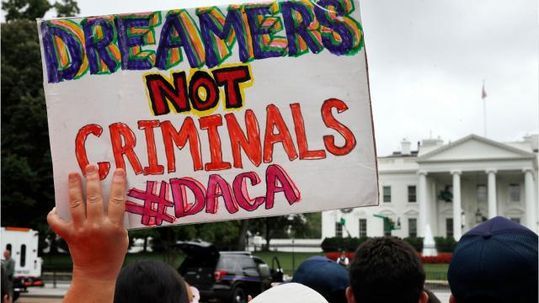
daca sign

POTUS 45 repealed DACA put in place by President Obama in 2012 as a stop-gap measure to protect kids of undocumented residents.

The Reagan administration signed the Immigration Reform and Control Act in 1986 which heightened border security but also granted amnesty to 3 million undocumented immigrants. This was a bi-partisan effort led in the US Senate by Wyoming’s Al Simpson.

Red and Blue presidents and congresses failed to act on immigration reform until Obama in his lame duck term issued the Deferred Action on Childhood Arrives (DACA) executive order which cut some slack to kids brought to the US by their undocumented parents. It was a compassionate Band Aid.

POTUS 45 used his bully pulpit, but failed to overturn DACA. Congress continues to be at a standstill, more so now because the House flipped Democratic in 2018.

Immigration reform is a wedge issue for Republicans. They are against immigrants, generally, because of they supposed are “taking of American jobs.” Are all Republicans cleaning toilets, picking beans, or loading dishwashers over at Denny’s in fear of losing their jobs?

At the same time, American business is reliant on immigrant laborers who perform low-end work that regular Americans won’t do which is a throwback to the transcontinental railroad construction and World War II worker shortage.

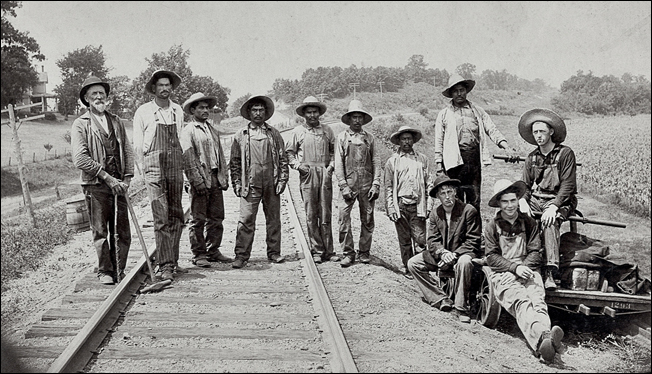
traqueros

The Transcontinental Railroad was completed by laborers from Mexico.

Traqueros – In 1881 Governor Luis Terrazas of Chihuahua drove a silver spike completing a rail line linking Mexico and United States which allowed immigrants transport to the United States and coincided with the West’s construction of the transcontinental railroad.

Mexicans were the dominant immigrant labor laying track in the late 19th and early 20th centuries. Despite low wages compared to their native born coworkers and discrimination, immigrant Mexican laborers became permanent residents, not by law but by fact. By the time of the Great Depression, workers moved to the cities in search of other low-skill work.

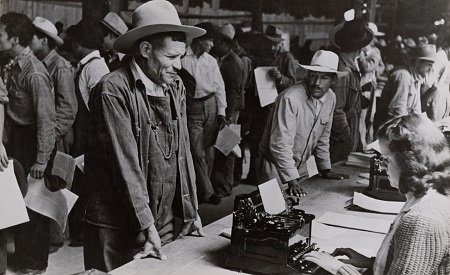
Bracero Program

The US Department of Labor and the Immigration and Naturalization Service collaborated on the Bracero Program at the start of World War II. Braceros were allowed in to the US to provide help on farms during wartime.

Braceros – The bracero program (Spanish for manual laborer) began in 1942 and operated as a joint program of the State Department, the Department of Labor, and the Immigration and Naturalization Services (INS), as it was known then, in the Department of Justice.

Laborers from Mexico were promised better living conditions in camps, including housing, meals and toilet facilities. They eventually were paid a minimum wage of 30 cents / hour. The pact also stated that braceros supposedly would not be subjected to discrimination and exclusion from “white-only” areas.

During World War II, the bracero program intention was to fill the labor gap, particularly in agriculture. The program lasted 22 years and offered employment contracts to 5 million braceros in 24 U.S. states—becoming the largest foreign worker program in U.S. history.

The bracero program caused problems on both sides of the border with labor shortages in the northern states in Mexico and resulted in illegal immigrants who remained in the United States. Millions of Mexican Americans attribute their roots to their fathers and grandfathers who crossed the border as braceros.

DACA MASS WALKOUTDACA – Circle back to DACA kids. They are the modern day traquero/a/x and bracero/a/x. They are people who arrived in the United States under the radar as children.

Like the braceros and traqueros, while they should have returned to Mexico, those families have remained – while looking over their shoulders – without documentation and became productive members of their communities.

The DACA kids ended up with high school and college educations, contribute to society in professional jobs, have families of their own with kids in local school systems. They pay taxes and volunteer in their communities.

DACA kids aren’t Manson women who ran underground and assumed new identities.

When the Bracero Program was ended in 1964, the positive outcomes were better working conditions for farm workers thanks to advocacy by activists including Cesar Chavez and Delores Huerta. There were no immigration laws that turned traqueros back to Mexico.

DACA was a short term fix when Obama acted because Congress didn’t. The immigration issue has come full circle from 1986.

Whether Congress and POTUS 45 get their acts together on immigration reform will be a defining moment for the Republicans like it was for Republicans and Ronald Reagan.

Until then let’s figure out how to engage asylum seekers in useful ways while they awaiting their hearings.

simpson reagan signing“We have consistently supported a legalization program which is both generous to the alien and fair to the countless thousands of people throughout the world who seek legally to come to America. The legalization provisions in this act will go far to improve the lives of a class of individuals who now must hide in the shadows, without access to many of the benefits of a free and open society. Very soon many of these men and women will be able to step into the sunlight and, ultimately, if they choose, they may become Americans.” Ronald Reagan on November 6, 1986 upon signing the Immigration Control and Reform Act.
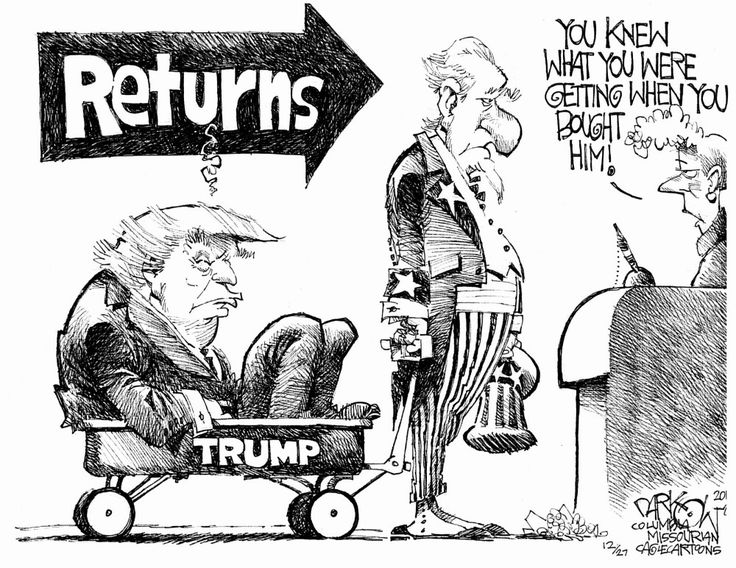


Democrats: Is there a better story other than ‘POTUS IS A BUFFOON’?

trump cartoon

Whether you like POTUS or not the only way to change things is at the voting booth.

I’m growing tired of my progressive friends espousing what they despise about our sitting president.

Yeah, he’s a womanizer, disrespectful of people different from himself, a pathologic liar and otherwise a dastardly dotard – not to mention his staff members.

But those are given.

In which case, why rehash all that day-in and day-out?

Democrats have no identity, let alone a story boiled down to an elevator speech.

It’s like arguing that cigarettes cause cancer. We all know that. Even the tobacco companies believe it. It’s printed on every cigarette pack. I won’t even get into the “it was the Russians” or “it was the electoral college” or any of the other red-herring issues. The Trump campaign was just a little smarter, but I digress.

Why waste time, words and energy?

Every anti-POTUS comment translates into a free ads for the sitting president that energize his base even more. POTUS stands for “Making America Great Again” but his roadshow casts that in a different light. Witness his recent whistle stop in Montana.

If you’re not in favor of making America great again, what do you believe?

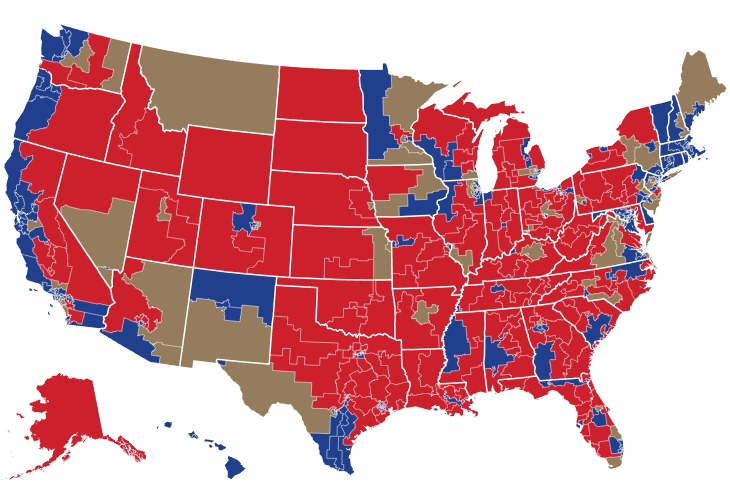
Screen Shot 2018-07-08 at 7.24.28 AM

As of June 2018, this map shows there are 90 competitive districts (brown). You can rest assured that the Republicans are out in force.

Here it is 2018 – the midterm election cycle – and there is no coherent message from the Democratic Party.

Debbie Wasserman Schultz is trying to reinvent herself; Elizabeth Warren is on the stump; I still get emails from Bernie. But it’s the same old anti-POTUS schtick.

If I’m wrong on this, please set me straight.

Sure there are candidates who have this figured out, like MJ Hegar and Alexandria Ocasio-Cortez running for congressional seats in Texas and New York City.

Based on Hegar’s video, I put down $5 and am following her congressional race. No facts and figures cluttering up the really great story.

The map on the right shows where the contested districts are located. If you live in a safe district, like me in Colorado’s 2nd CD, send your money and pound the pavement for candidates who may have a chance turn the tide. In the fall of 2017, I spent a lot of cyber-time helping get Doug Jones elected. As an analog action I had pizza delivered to volunteers in Huntsville.

There’s a lot a volunteer can do from afar.

img_0979

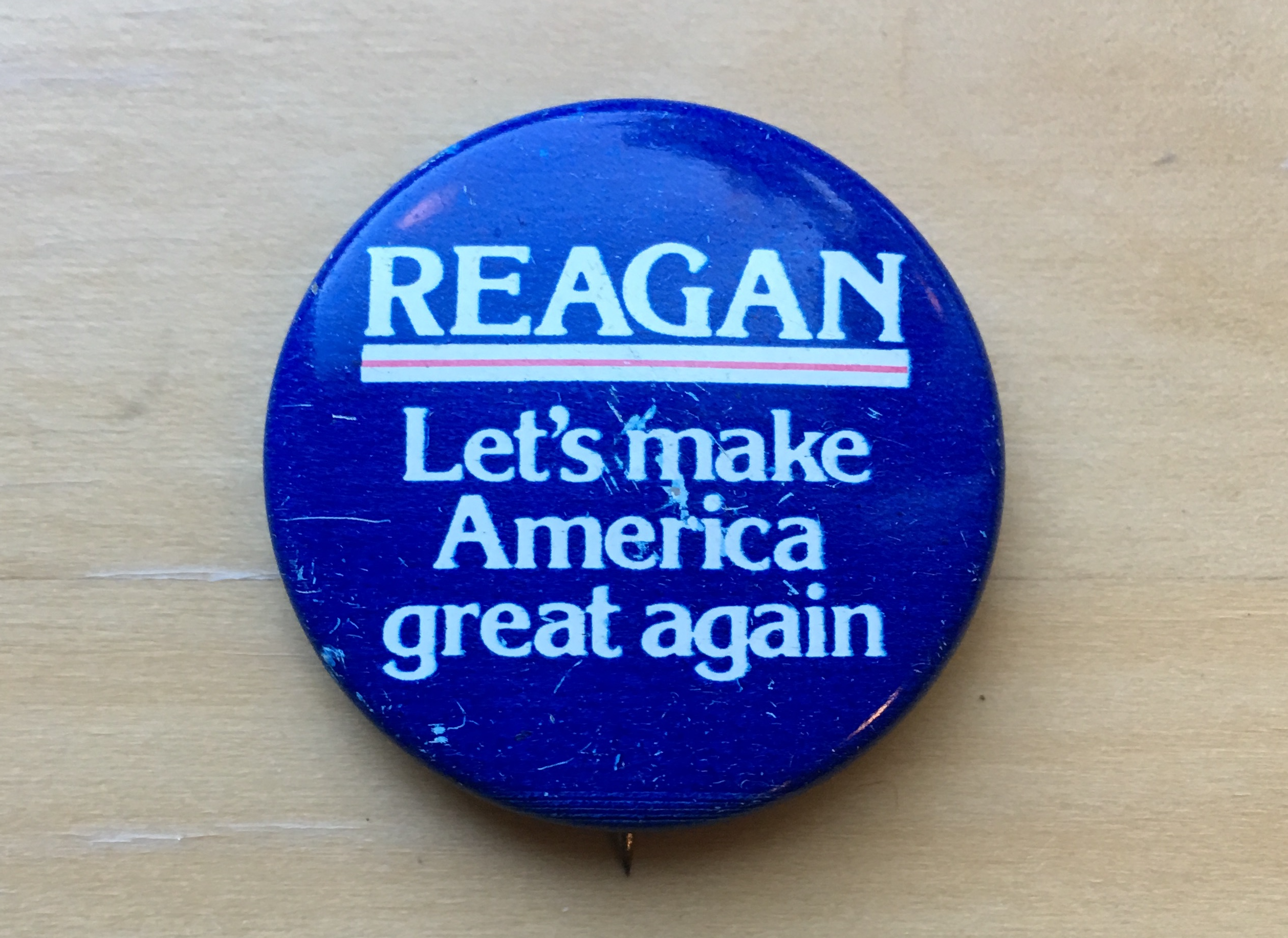
This is a 1980 Ronald Reagan “Make America Great Again” campaign button from my collection.

Republicans are really good at principled messaging. I think it was Ronald Reagan who originally coined “Make America Great Again” slogan and articulated what people feel in his famous “morning in America” ads.

Obama took a page out of the Reagan playbook, with his “Hope and Change” campaign. He was a very principled, retail politician. Unlike his Democratic predecessors he told stories rather than spouting facts and figures.

I picked up a book called “The Political Brain” by Drew Weston. The book shows how a different view of the mind and brain leads to a different way of talking with voters about issues that have tied the tongues of Democrats for much of forty years—such as abortion, guns, taxes, and race. You can’t change the structure of the brain. But you can change the way you appeal to it.

BUSH DUKAKIS DEBATE 1988

Michael Dukakis was unable to recover from his non-principled responses during a debate with George HW Bush.

In 1988, Mike Dukakis is asked during a debate if he would favor the death penalty for a rapist if he assaulted and murdered his wife, Kitty. His response wasn’t about how horrific the crime is, or how he would feel or his wife’s anguish, he responds with the data show that the death penalty isn’t a crime deterrent.

Sheesh.

Republicans have boiled down Democrats to “tax and spend liberals.” That’s a throwback to the 1932 New Deal and the 1965 Great Society. Democrats haven’t gone on the offensive and come up with a four-word stereotype for Republicans.

More recently, NeoCons call progressives “libtards”, a term that has largely gone with no response, but a term that galvanizes their base.

democrat republican stereotypes

Despite the stereotypes, Republicans have a better story.

When I engage in a conversation. I’ve thought about a principled response and say something like,  “I stand for strong family values – a safe home to raise kids; a strong neighborhood and excellent schools.” It’s usually the end of the conversation.

Restating this in a non-principled jargon-laced light, “I stand for marriage equality, affordable housing, community policing and a low student – teacher ratio.” This would cast me as pro-gay, handouts to poor people, anti-gun and pro-teacher unions.

Not that there’s anything wrong with these stances, but based on the Political Brain, voters will better relate to a candidate based on emotions rather than policy and data.

One of my hobbies is collecting political campaign memorabilia. Here are a few slogans I think are principled. I’ve surmised that candidates who include references to themselves have lost more times than those with visionary slogans. I’ll list them without election year or candidate:

  • Patriotism, Protection, and Prosperity
  • Peace and Prosperity
  • Making us Proud Again
  • Prosperity and Progress
  • Believe in America

Now what?