Democrats’ Path to a Lasting Majority: Common Threads

My mother’s Stitch and Bitch club might have a few lessons for the next Congress.

My mother belonged to a handwork club called the “Stitch and Bitch.” The name pretty much said it all. Women gathered around their handiwork, shared stories, exchanged opinions and, I imagine, solved a few of the world’s problems along the way.
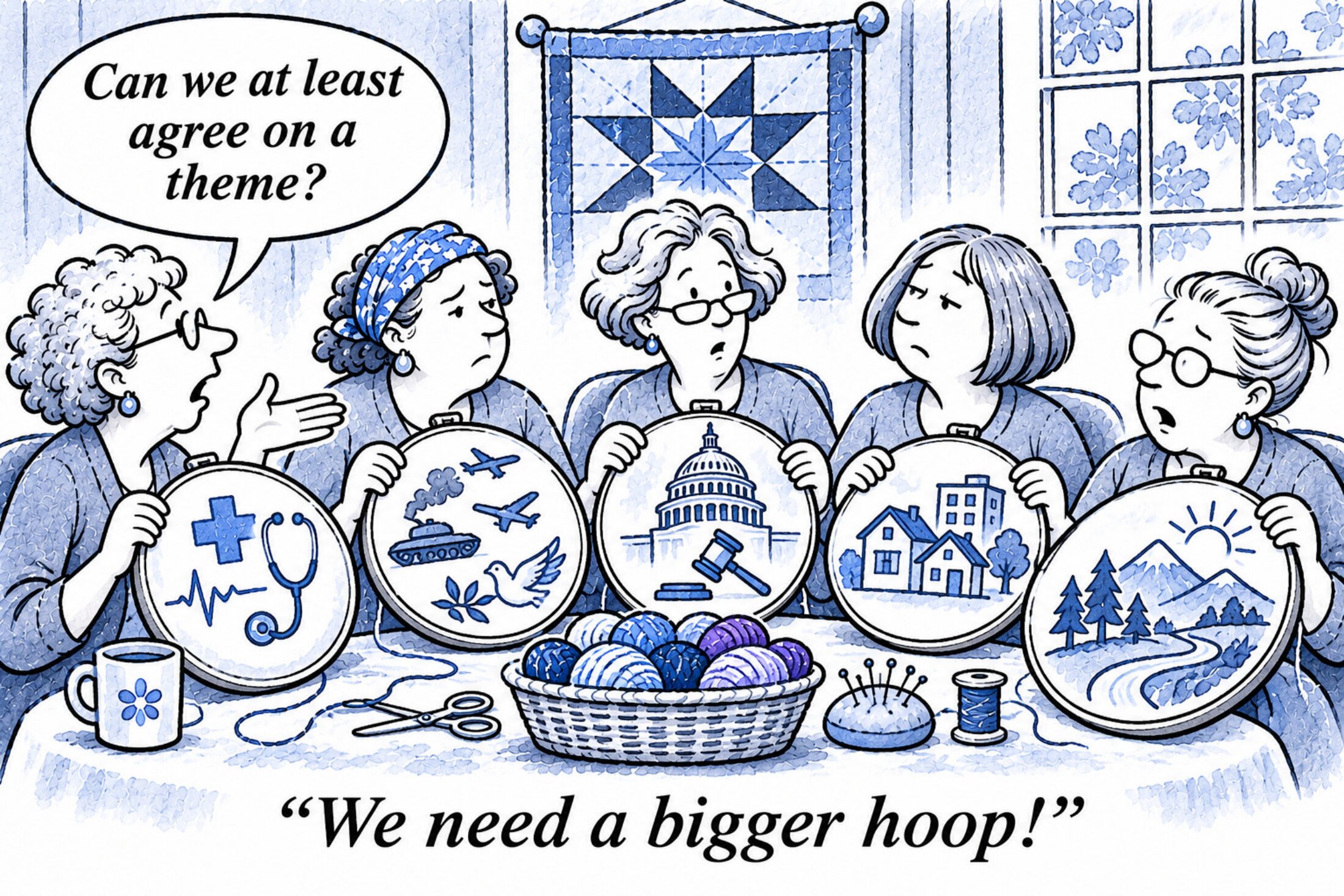
I’ve been thinking about that club while watching the political aftermath of the 2026 midterm elections. My mom’s sewing circle picked a theme, and each member gave their interpretation. They disagreed, but accepted each other’s version as long as it fit the underlying theme.

It occurred to me that Democrats could learn a lesson from a group of women sitting around a table with needles, thread, and different ideas about what they wanted to make.

If Democrats want to turn the 2026 blue wave into a lasting governing majority, they need a bigger hoop going into the first 100 days of 2027.

To be honest, the new majority won’t be able to do much if President Trump keeps his word and vetoes any legislation that comes to his desk.

Regardless, the November 2026 general election delivered Democrats an opportunity. It didn’t deliver a mandate for a uniformly progressive agenda. The blue wave swept through some traditionally conservative states and districts, bringing along voters who don’t necessarily share the Democratic Party’s most progressive positions.

That’s an important distinction.

Democrats have spent considerable time arguing among themselves about their own members’ political leanings. Pennsylvania Senator John Fetterman, former West Virginia Senator Joe Manchin, and former Arizona Senator Kyrsten Sinema all drew criticism from Democrats when they broke with the party on particular issues.

Their critics treated those disagreements as evidence of political disloyalty. Elected representatives have a responsibility to represent the people who sent them to Washington.

In 2009, incumbent Representative Marilyn Musgrave of Congressional District 4 focused on culture wars and aligned herself with an unpopular president.

Sound familiar? CD 4 is now the home of Lauren Boebert.

A newcomer, Betsy Markey, soundly defeated Musgrave. The Democrats coerced her into voting for Obamacare. Two years later, she lost by 12 points to Republican Corey Gardner. Markey’s loss created a domino effect. In 2014, Gardner upset incumbent Democrat Mark Udall and became an integral member of the so-called “Make America Great Again” coalition.

The moral of the story? A Democrat representing a conservative constituency faces different political realities than a Democrat representing Boulder, Manhattan, or San Francisco.

The incoming Congress will include more Democrats representing places where progressive politics don’t resonate, like South Carolina, Mississippi, and Texas. If party leaders expect those members to vote as though they represent the same constituency, they risk turning an electoral victory into a political liability.

Look what happened in 2026.

Democrats don’t have to abandon their principles or move wholesale to the right. A successful political coalition needs room for different opinions.

The common thread: Getting through life with fewer financial burdens

If Democrats want to govern, they should begin with issues that matter to people regardless of their political affiliation.

They don’t have to agree on every policy detail. They need to identify problems that Americans share and find practical ways to address them.

Over the next few days, I’ll share some ideas on how the new Congressional majority can improve everyday life.

What could Democrats accomplish if they spent less time arguing over ideological purity and more time addressing shared concerns?

Here’s a teaser about six places to start:

  • Bring down prices. Help families manage the cost of groceries, utilities, housing, childcare, and other expenses that eat into their paychecks.
  • Provide less expensive healthcare. Lower prescription drug and insurance costs while protecting access to doctors, hospitals, mental health services, and addiction treatment.
  • Build more entry-level houses. Give younger families a realistic shot at homeownership and make rental housing more affordable for people at every stage of life.
  • Invest in jobs and practical education. Expand trade schools, apprenticeships, community colleges, and workforce training while continuing to support universities and research.
  • Make communities safer. Support effective local law enforcement, police accountability, responsible gun ownership, and practical efforts to reduce violence.
  1. Invest in jobs and practical education. Expand trade schools, apprenticeships, community colleges, and workforce training while continuing to support universities and research.Fix immigration. Secure the border, enforce immigration laws, maintain a workable legal immigration system, and create a fair process for people who have built their lives here.- Keep energy affordable and reliable in the age of AI. Modernize the electric grid, develop dependable energy sources, and address the enormous power and water demands of data centers.

None of these issues belong exclusively to one political party. Democrats don’t have to agree on every solution, but they should be able to find enough common thread to get something done. That’s what creating multiple designs in a bigger embroidery hoop is all about.
Democrats: Is there a better story other than ‘POTUS IS A BUFFOON’?

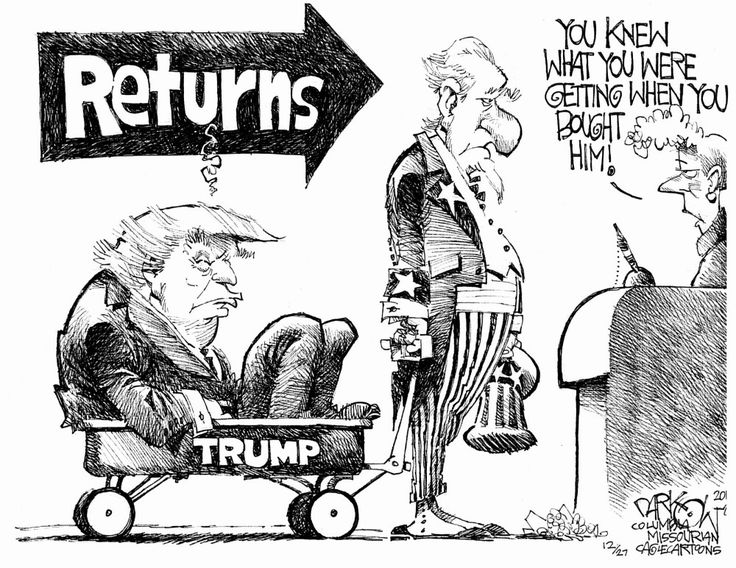
trump cartoon

Whether you like POTUS or not the only way to change things is at the voting booth.

I’m growing tired of my progressive friends espousing what they despise about our sitting president.

Yeah, he’s a womanizer, disrespectful of people different from himself, a pathologic liar and otherwise a dastardly dotard – not to mention his staff members.

But those are given.

In which case, why rehash all that day-in and day-out?

Democrats have no identity, let alone a story boiled down to an elevator speech.

It’s like arguing that cigarettes cause cancer. We all know that. Even the tobacco companies believe it. It’s printed on every cigarette pack. I won’t even get into the “it was the Russians” or “it was the electoral college” or any of the other red-herring issues. The Trump campaign was just a little smarter, but I digress.

Why waste time, words and energy?

Every anti-POTUS comment translates into a free ads for the sitting president that energize his base even more. POTUS stands for “Making America Great Again” but his roadshow casts that in a different light. Witness his recent whistle stop in Montana.

If you’re not in favor of making America great again, what do you believe?

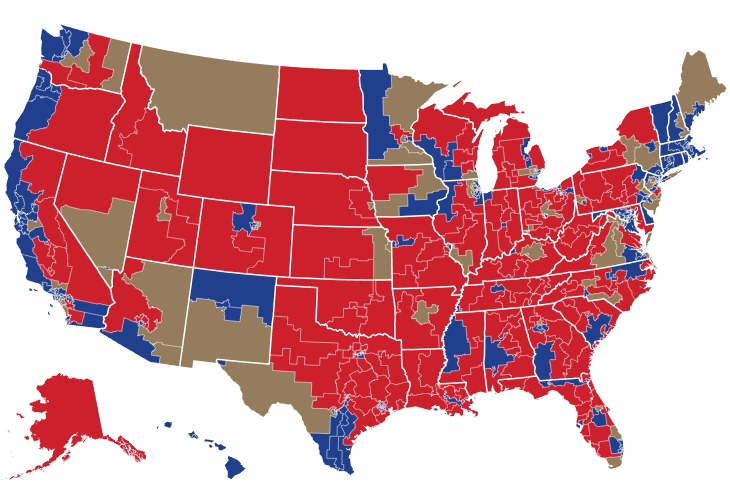
Screen Shot 2018-07-08 at 7.24.28 AM

As of June 2018, this map shows there are 90 competitive districts (brown). You can rest assured that the Republicans are out in force.

Here it is 2018 – the midterm election cycle – and there is no coherent message from the Democratic Party.

Debbie Wasserman Schultz is trying to reinvent herself; Elizabeth Warren is on the stump; I still get emails from Bernie. But it’s the same old anti-POTUS schtick.

If I’m wrong on this, please set me straight.

Sure there are candidates who have this figured out, like MJ Hegar and Alexandria Ocasio-Cortez running for congressional seats in Texas and New York City.

Based on Hegar’s video, I put down $5 and am following her congressional race. No facts and figures cluttering up the really great story.

The map on the right shows where the contested districts are located. If you live in a safe district, like me in Colorado’s 2nd CD, send your money and pound the pavement for candidates who may have a chance turn the tide. In the fall of 2017, I spent a lot of cyber-time helping get Doug Jones elected. As an analog action I had pizza delivered to volunteers in Huntsville.

There’s a lot a volunteer can do from afar.

img_0979

This is a 1980 Ronald Reagan “Make America Great Again” campaign button from my collection.

Republicans are really good at principled messaging. I think it was Ronald Reagan who originally coined “Make America Great Again” slogan and articulated what people feel in his famous “morning in America” ads.

Obama took a page out of the Reagan playbook, with his “Hope and Change” campaign. He was a very principled, retail politician. Unlike his Democratic predecessors he told stories rather than spouting facts and figures.

I picked up a book called “The Political Brain” by Drew Weston. The book shows how a different view of the mind and brain leads to a different way of talking with voters about issues that have tied the tongues of Democrats for much of forty years—such as abortion, guns, taxes, and race. You can’t change the structure of the brain. But you can change the way you appeal to it.

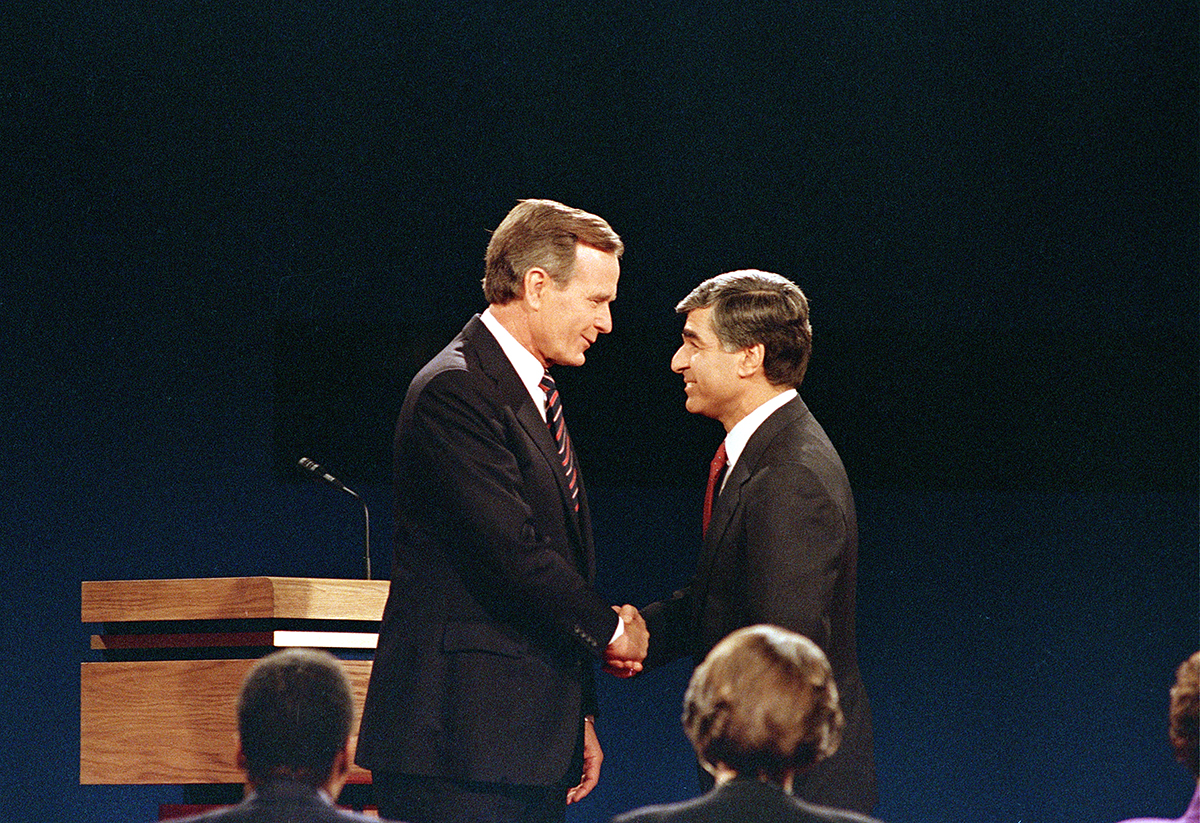
BUSH DUKAKIS DEBATE 1988

Michael Dukakis was unable to recover from his non-principled responses during a debate with George HW Bush.

In 1988, Mike Dukakis is asked during a debate if he would favor the death penalty for a rapist if he assaulted and murdered his wife, Kitty. His response wasn’t about how horrific the crime is, or how he would feel or his wife’s anguish, he responds with the data show that the death penalty isn’t a crime deterrent.

Sheesh.

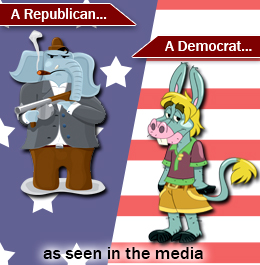
Republicans have boiled down Democrats to “tax and spend liberals.” That’s a throwback to the 1932 New Deal and the 1965 Great Society. Democrats haven’t gone on the offensive and come up with a four-word stereotype for Republicans.

More recently, NeoCons call progressives “libtards”, a term that has largely gone with no response, but a term that galvanizes their base.

democrat republican stereotypes

Despite the stereotypes, Republicans have a better story.

When I engage in a conversation. I’ve thought about a principled response and say something like,  “I stand for strong family values – a safe home to raise kids; a strong neighborhood and excellent schools.” It’s usually the end of the conversation.

Restating this in a non-principled jargon-laced light, “I stand for marriage equality, affordable housing, community policing and a low student – teacher ratio.” This would cast me as pro-gay, handouts to poor people, anti-gun and pro-teacher unions.

Not that there’s anything wrong with these stances, but based on the Political Brain, voters will better relate to a candidate based on emotions rather than policy and data.

One of my hobbies is collecting political campaign memorabilia. Here are a few slogans I think are principled. I’ve surmised that candidates who include references to themselves have lost more times than those with visionary slogans. I’ll list them without election year or candidate:

  • Patriotism, Protection, and Prosperity
  • Peace and Prosperity
  • Making us Proud Again
  • Prosperity and Progress
  • Believe in America

Now what?