Apple AirTag vs Spotminders: Which Tracker is Right for You?

I’ve been seeing a lot of ads for credit card trackers lately. You know the kind. Slip one into your wallet, and you’ll never lose track of your money, or at least the wallet containing it. I’m also thinking a tracker could help you find loved ones who wander because of memory decline.
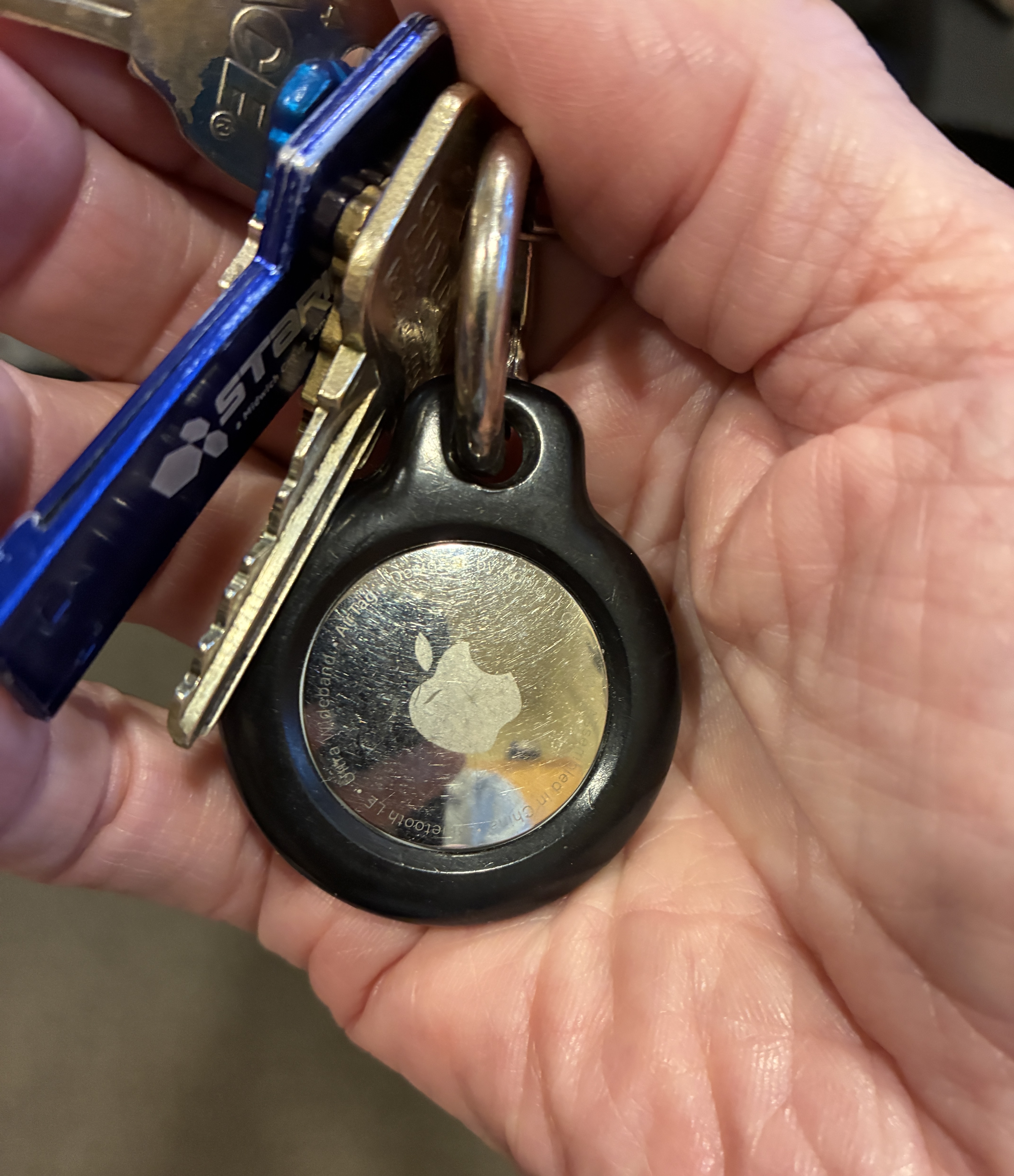
A person's hand holding a set of keys with a metallic Apple AirTag attached.

A cat’s been hanging around my neighborhood with an AirTag attached to its collar. I’ve wondered if the battery is dead.

I’m a brand-loyal kind of guy. I already have an Apple AirTag attached to my key ring. It gives me a certain amount of comfort knowing I can find my keys without turning the house upside down.

I wondered about the Spotminders Tracking Cards and watched ad featuring an airline pilot. She promised much the same peace of mind, only in a package thin enough to slip into my billfold.

Is it time to cheat on Apple?

Let’s investigate.

Two Trackers, One Apple Ecosystem

First, an interesting discovery: A Spotminders isn’t an alternative to Apple. Its Tracking Card uses Apple’s Find My network, just like an AirTag.

Both devices send out Bluetooth signals. When a compatible Apple device passes within range, it can detect the tracker and anonymously relay its location to Apple’s Find My network. You can then see the reported location on your iPhone. Spotminders only works on iPhones.
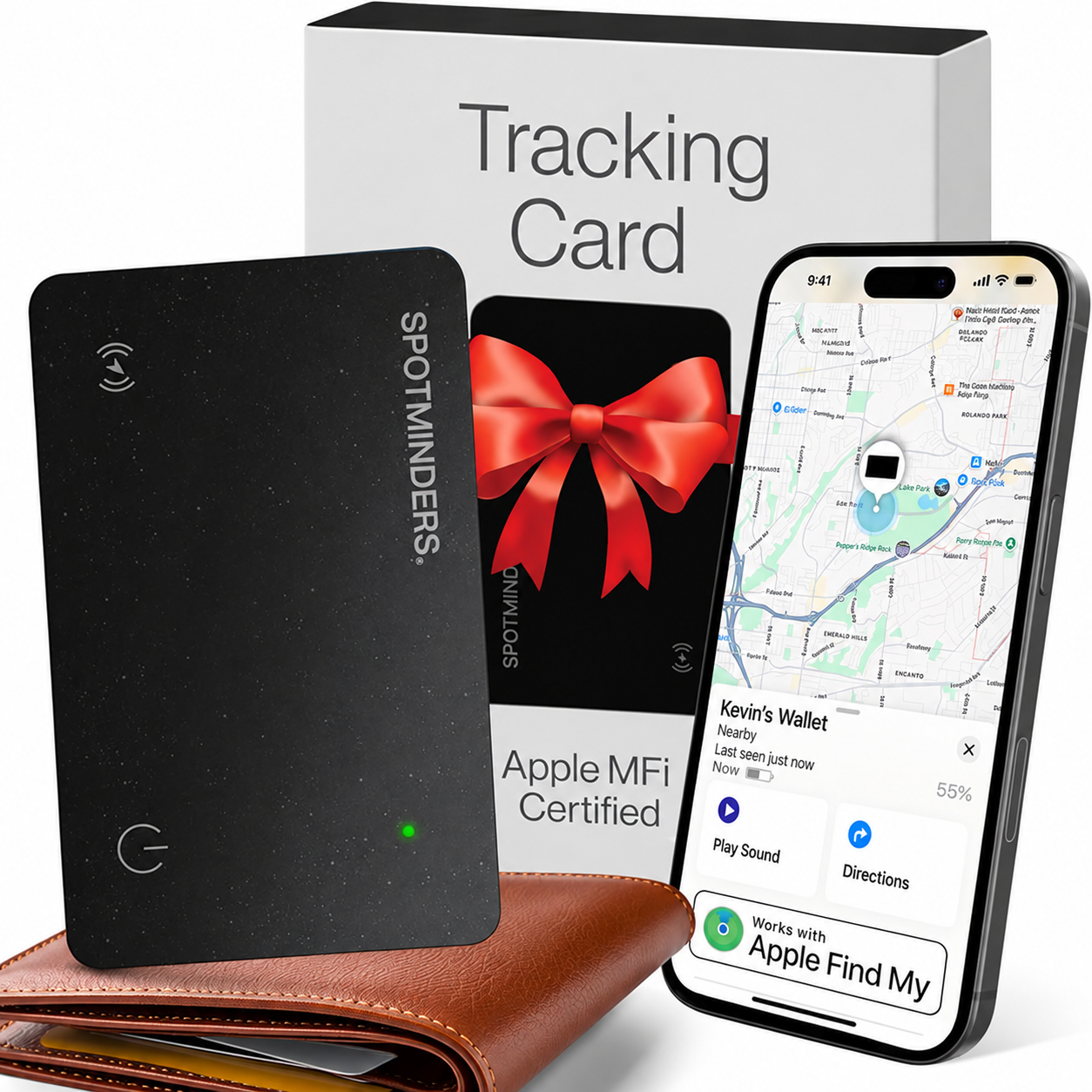
A black tracking card from SpotMinders, presented in a box with a red bow, next to a smartphone displaying a map and location information for Kevin's Wallet.

Neither device needs its own cellular subscription, and neither requires a monthly tracking fee.

The main difference is what you attach it to or where you slip the tracker.

An AirTag is a little round disc, perfect for a key ring, backpack, or suitcase. A Spotminders card is about the size of a credit card and 1.8 millimeters thick. It fits inside a wallet or passport holder without adding much bulk.

Apple has your keys. Spotminders wants your wallet.

The Feature Face-Off

FeatureApple AirTagSpotminders Tracking Card
Tracking networkApple Find MyApple Find My
FormRound, key-ring-friendlyThin, credit-card-sized
BatteryReplaceable coin batteryRechargeable
Battery lifeAbout one yearUp to 8 months per charge
SoundBuilt-in speakerBuilt-in sound alert
Nearby precision findingSupported on iPhones. Androids not supported. Precision finding.Supported on iPhones. Androids not supported. No precision finding.
Monthly feeNoneNone
Best useKeys, bags, luggageWallets, passports, slim bags

One practical advantage of the AirTag is its replaceable battery, which lasts around eight months. When it runs down, I can pop in a new coin battery.

Spotminders requires recharging. That’s not a dealbreaker, but it’s another thing to remember. The card’s big advantage is its slim design.

If you’re already an iPhone user, you don’t have to learn a new app. AirTags and Spotminders cards both work through Find My. Neither is Android-compatible. There are Android-compatible tracker cards.

Lost Pets: Potentially Useful

For a dog or cat, an AirTag can work surprisingly well if the animal gets lost in an area with lots of Apple devices. The AirTag broadcasts Bluetooth, and nearby Apple devices can anonymously relay its location through Find My.
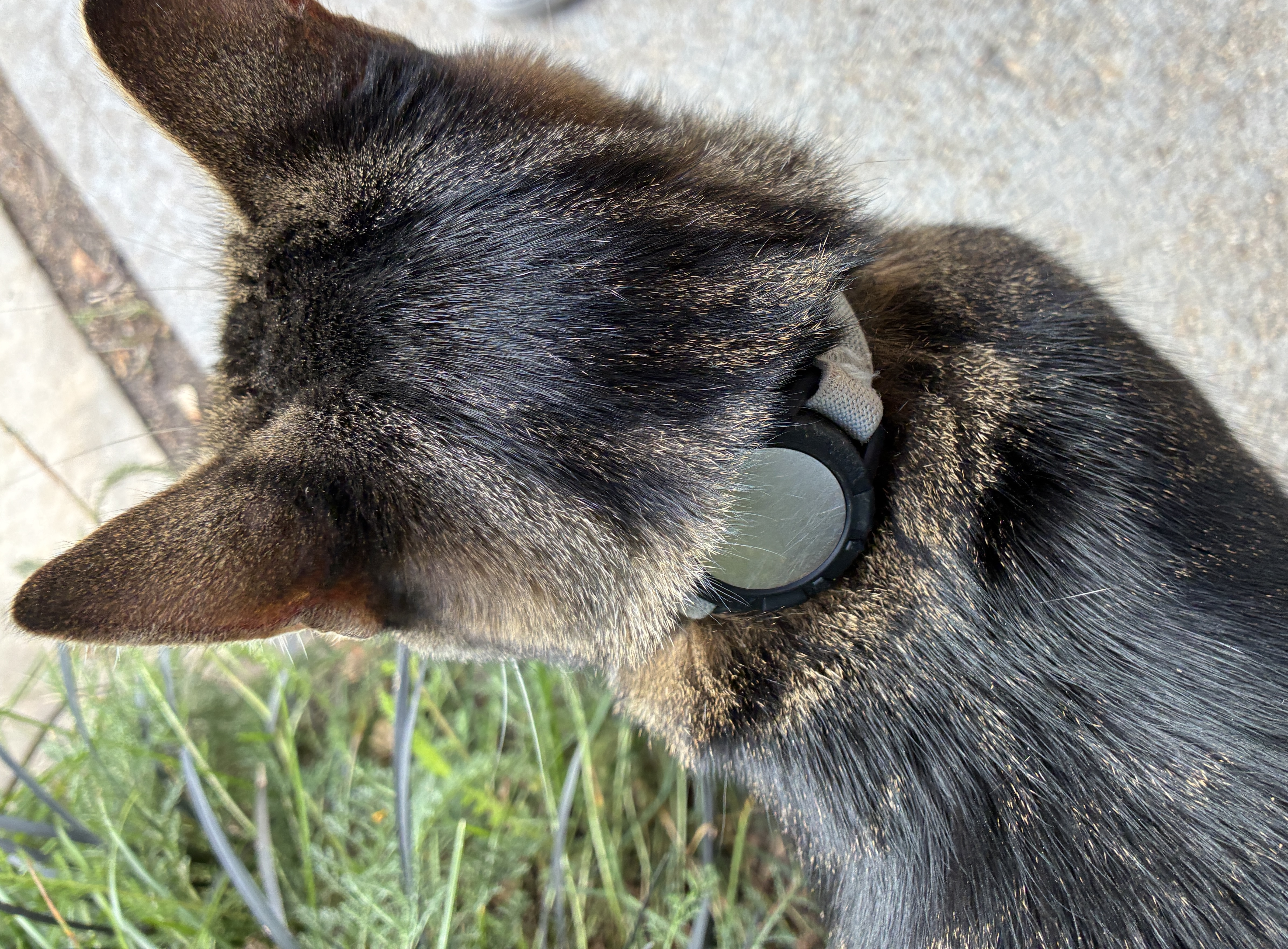
Close-up view of the back of a cat's head with a collar and a round tag, surrounded by greenery.

The big weakness is rural territory. If the cat in my neighborhood had wandered from the foothills it would have a good chance of being tracked. If a town cat got lost in a rural area, you may get no new location updates until somebody with an Apple device comes within range.

That’s quite different from a GPS pet tracker, which gets its position from satellites and typically sends that information over a cellular network.

I’d favor an AirTag over a Spotminders card for a pet because there’s an AirTag adapter for a band and it has a replaceable battery. Spotminders is a very thin Find My accessory designed for wallets, luggage, and backpacks. Its card is waterproof, but that’s not the same thing as being designed to survive life on a dog’s collar.

Lost People: Much Trickier

For someone with memory impairment who is prone to wandering, an AirTag or a Spotminders card could be one layer in a broader containment/safety plan:

  • AirTag or Spotminders card on clothing, shoes, a keychain, or in a bag. If the person wanders into an area with Apple devices nearby, Find My provides a location.
  • Family/caregivers can check Find My instead of immediately starting a neighborhood-wide search.
  • Both trackers would be useful in crowded environments. If the person gets lost in a shopping center, airport, cruise ship, or downtown area where lots of Apple devices are likely to be present, Find My will send out the location.
  • My Find trackers shouldn’t be the only safety measure. In a rural area, underground garage, or other place with few Apple devices, location updates may be sparse or nonexistent.
  • For someone who routinely wanders, a dedicated GPS/cellular device may provide more dependable continuous location information than an AirTag or a Spotminders card.

Am I Switching?

I’m keeping my AirTag on my key ring. It already does the job, and I like the convenience of its replaceable battery and Precision Finding feature on compatible iPhones.

I can see the appeal of the Spotminders Tracking Card, but the AirTag is $10 cheaper, and I can stick the disc in my wallet. It’s not a hockey puck. I may try a Spotminders for the heck of it.

The tracker’s shape matters less than the network behind it. Both rely on Apple’s Find My ecosystem, and neither is a magical, always-connected satellite tracker.

My brand loyalty remains intact. It’s just a matter of time before Apple flattens the AirTag into the iCard.
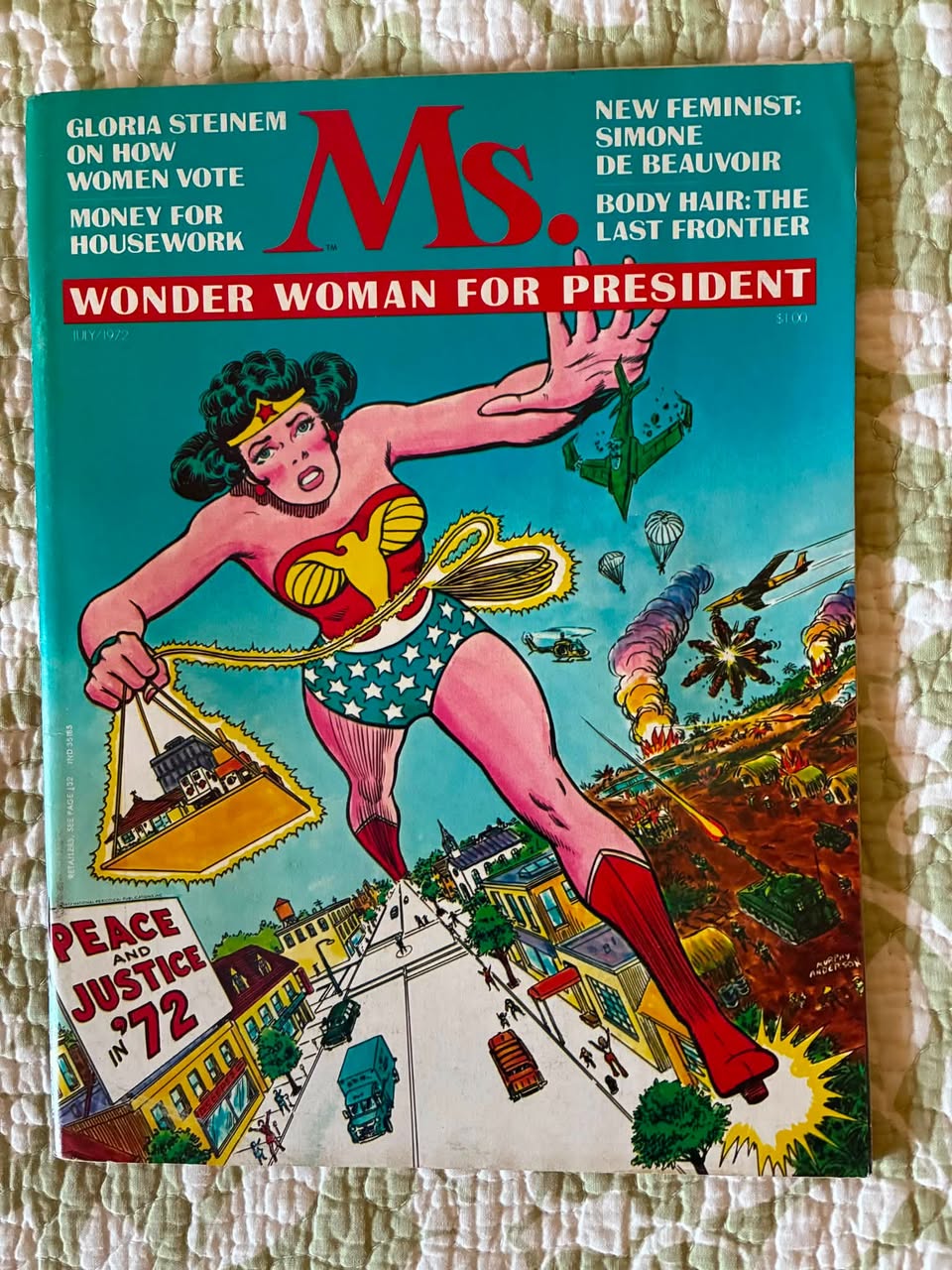
Wonder Woman, Dolly Parton, and Gloria Steinem

A couple of days ago, I sorted through my last box of autographed baseballs, and I found another artifact I’d forgotten about. Behind the printer and a 1962 “Life” magazine with a Roger Maris – Mickey Mantle Post cereal baseball card insert, I found my first edition of “Ms.” magazine.

The cover with the headline “Wonder Woman for President” threw me back to 1972.

Here’s another case of uncanny timing. The night before, a neighbor asked if I’d set up a projector in my Silver Sage Village community courtyard to screen “9 to 5,” the 1980 comedy starring Jane Fonda, Lily Tomlin, and the late Dolly Parton.

Three women fed up with a sexist boss turn the tables, take control of the company, and change the workplace. It’s slapstick funny and a pretty good primer on workplace misogyny.

Then I read in my Yahoo! news feed that Gloria Steinem had died at 92.

Steinem and others founded “Ms.” The magazine in my collection seemed a lot more significant than it had the day before. I read the table of contents and flipped through the pages. The country had changed, but much of it hasn’t.

The first regular issue of “Ms.” appeared in July 1972. It began as a preview inserted into “New York” magazine in December 1971. That preview sold 300,000 copies, generating thousands of subscription orders and letters. The response showed that the world had seriously underestimated what women wanted to read about.

The women’s magazines of the day largely revolved around fashion, beauty, marriage, children, and how to keep everybody else happy. “Ms.” treated women as citizens and political actors, not just consumers.

Steinem stood at the center of it.

She wore several hats in the startup. She had to be a businesswoman, a strong writer, a savvy political activist, and one of second-wave feminism’s most recognizable figures.

Steinem believed that the feminist movement needed a national publication where women’s experiences and political ideas could be taken seriously.

She and the magazine editors wanted Wonder Woman on the first cover as a symbol of female strength and independence.

At the time, DC Comics had stripped Wonder Woman of her superpowers and put her into a more conventional secret-agent role. DC restored Wonder Woman’s powers and traditional identity.

“Ms.” chose Wonder Woman to make a point about what happens when a powerful woman is made less powerful.

Inside the first issue, Steinem wrote an article with the provocative title “Women Voters Can’t Be Trusted.” Steinem took on the conventional political wisdom that women were unreliable, politically passive, or voted the way the men in their lives told them to vote.

In the article, Steinem argues that society misunderstood and underestimated women voters. She encourages women to discover their political power.

The political world looked very different in the 1970s when only 15 women served in Congress. No woman had been a major-party presidential or vice-presidential nominee. Democrat Shirley Chisholm changed all that when the Congresswoman became the first African American woman to run for president.

I learned that “Ms.” named Dolly Parton one of its “Women of the Year” in 1987. Steinem praised Parton for infusing feminism into her music and for celebrating women who made their own way. You can hear that spirit in “Just Because I’m a Woman,” “9 to 5,” and “Travelin’ Man,” the theme for “Transamerica.”

Parton gave voice to women’s independence, working lives, and the double standards they faced. Steinem observed that Dolly didn’t give political speeches but walked the talk through her song lyrics.

My copy of “Ms.” had survived, tucked away among baseball memorabilia.

That’s appropriate.

Baseball is all statistics, records, and arguments by armchair coaches about who belongs in the lineup. In 1972, women had no records to compare and had to battle to get through the turnstiles.

Gloria Steinem spent her life arguing that women belonged in the seats and in the field, diving for hard-hit line drives.

Dolly, Gloria, and Wonder Woman for MVP!

The Emotional Journey of Swedish Death Cleaning

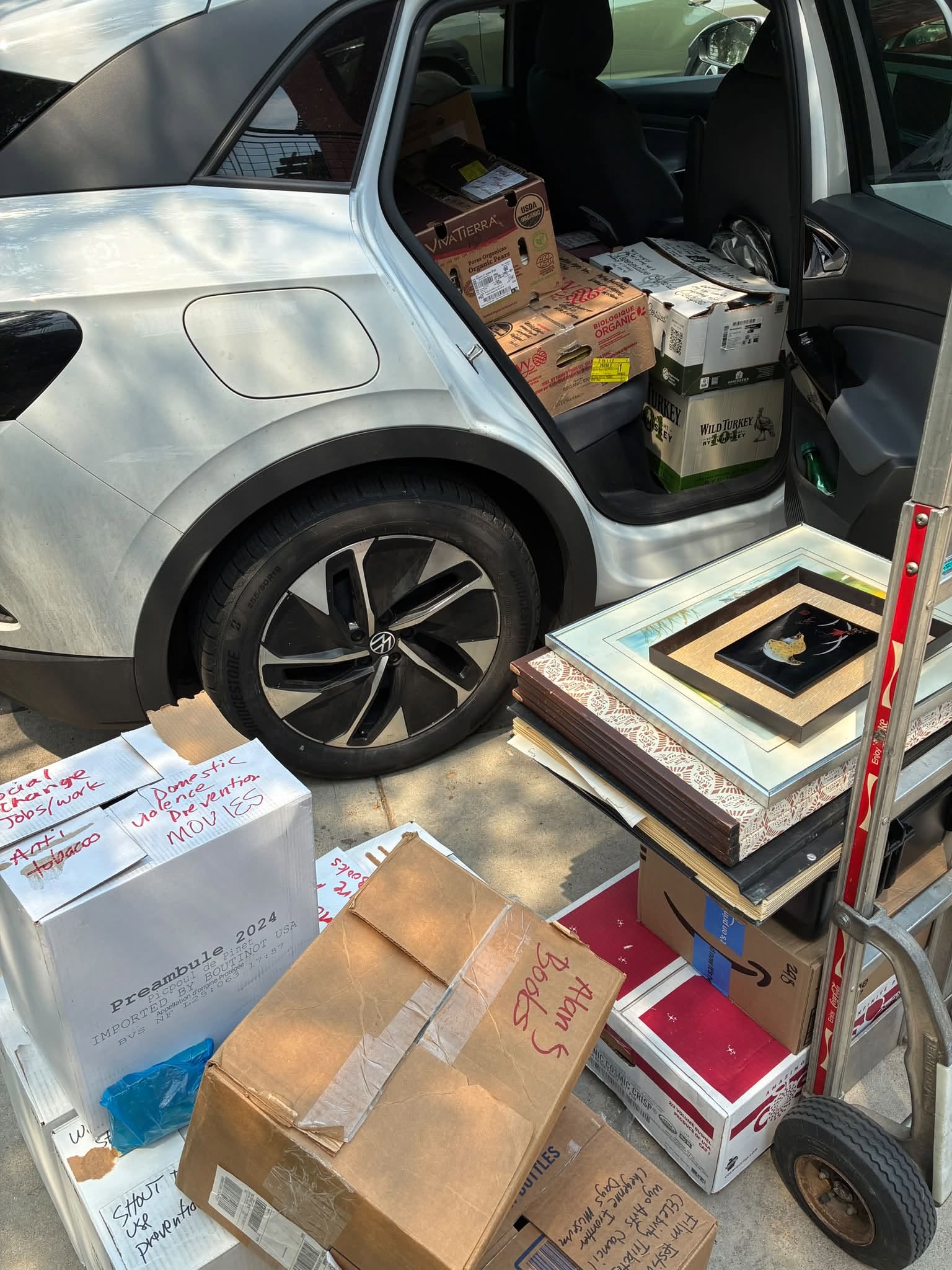
Today I drove a carload of boxes to Laramie and made the final major delivery for my Swedish death-cleaning project.

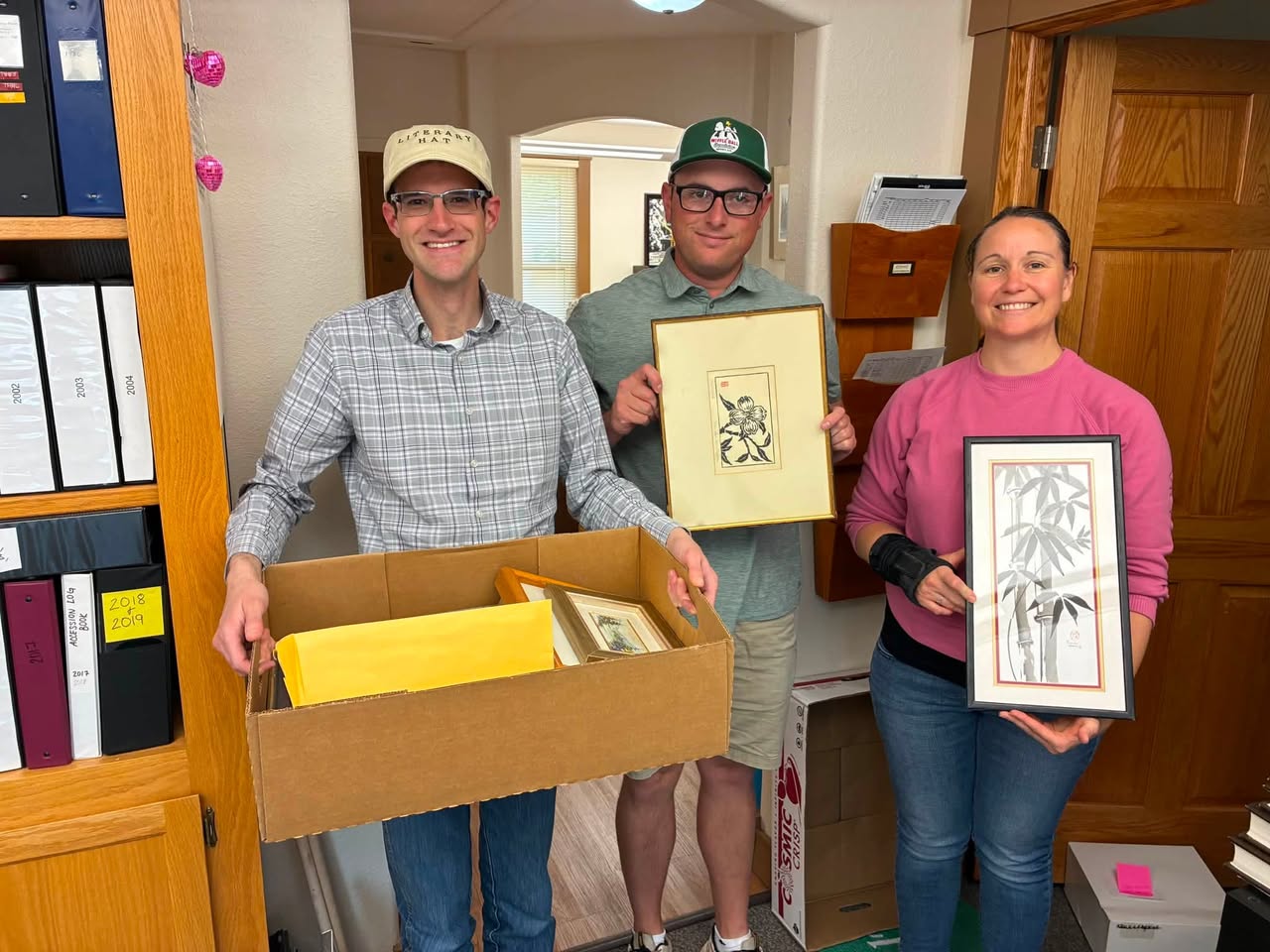
One destination was the American Heritage Center at the University of Wyoming in Laramie. The boxes contained decades of my life: research materials, hard drives, scrapbooks, manuscripts, photographs, films, books, and assorted records from projects that occupied countless hours over the years.

A separate box held watercolor paintings my mother created. Those went to the Laramie Plains Museum. Some will become part of the museum’s collection, while others will help support its mission through fundraising auctions.

As I handed everything over, I found myself experiencing mixed emotions. The handoff took all of 10 minutes.

Kind of anticlimactic, considering I’ve been sorting and sifting since the Wyoming Writers Inc. conference at the beginning of June. AHC staffer Brie Blasi asked if I’d donate my stuff.

Part of me felt a sense of relief. My materials are no longer stacked in closets, on shelves, and in corners, waiting for me to decide their fate. They now have a permanent home where they can be organized, preserved, and, if anyone finds value in them, used by future researchers, historians, students, or curious people.

Another part of me felt a touch of sadness. Every box represented a chapter of my life. The manuscripts reflected ideas I chased. The photographs captured moments that seemed important enough to save. The films documented stories and people I believed should be remembered. Letting go of them felt a little like saying goodbye to old companions.

Yet there was also comfort in knowing that I have not really lost them. If I ever need to revisit a project, confirm a memory, or look up some forgotten detail from my past life, I can make the trip to Laramie and review the materials. They are stored in a different place now.

This delivery marked the culmination of a process that has taken years. Along the way, I sold my grandmother’s Sony micro TV and Star Wars action figures I used for gender bias training. Colleagues purchased my sports card and political memorabilia collections. Other items found new homes through donations and gifts.

I hope the people who have received my stuff enjoy it. All my items spent years, sometimes decades, in my care. Collections are curious pursuits. We think we own them, but we’re only temporary caretakers. Eventually they move on to the next person, carrying their stories with them.

There’s little left. Some clothes. Some shoes. A few personal possessions. My car. The essentials.

I’m an organ donor. I imagine those will make it into worthy sick people if my parts aren’t too worn out.

What surprised me most about Swedish death cleaning is that it was never really about getting rid of stuff. It’s about deciding what mattered and what stories deserved a future beyond my shelves and storage boxes.

The works my mother painted will now have lives of their own. Some may hang on walls where people who never knew her will pause for a moment and admire her work. Others may help support a museum dedicated to preserving local history. In their own way, they will continue telling part of her story.

The same is true of the boxes I delivered. The manuscripts, photographs, films, and research materials represent a lifetime of curiosity and creativity. Long after I am gone, someone may open a folder, examine a photograph, watch a film, or read a manuscript and discover a small piece of the world as I saw it.

There is something comforting about that.

For years, I thought I was collecting things. Today, I realized I was collecting stories.

Now those stories belong to the future.

As I sit at an EV charging station writing this, listening to Jalan Jalan Crossland on Wyoming Public Radio & Media, I feel a sense of peace. My mother’s work has found a home. My work has found a home. The burden of holding on is replaced by the satisfaction of passing it all forward.

My final act of stewardship is not keeping material objects forever.

It’s about making sure they can continue their journey without me and not end up in the landfill.