Dolly, Brothers and the Search for the Perfect Rib

Do you like BBQ like Dolly?

I discovered that Dolly Parton and I have one thing in common.
I’ve never considered myself much of a Dolly Parton fan. Nothing against Dolly. She’s had an extraordinary career, but I wouldn’t have expected to find a culinary connection with the Queen of Country Music.

Dolly likes smoked barbecue ribs.

Maybe it comes from her humble Eastern Tennessee roots. I don’t know that for sure, and I don’t pretend that every food preference Dolly has can be traced back to the Smoky Mountains.

BBQ has a place in her empire. Her theme park, Dollywood, serves smoked and barbecue dishes, and her dinner attractions turn a meal into part of the show.

So, Dolly, this one’s for you.

*******

Wet or dry?

I’m beginning a little series on BBQ ribs, because ribs are one of those foods I could eat far more often than is advisable.

Like Dolly, I prefer them smoked, and I prefer dry ribs.

There are two BBQ rib camps.

Wet ribs are finished with barbecue sauce. The sauce can be sweet, tangy, spicy, smoky, or some combination of all four. It gives the ribs a glossy coating and plenty of flavor.

My favorite is yellow sauce that includes mustard. The recipe originated in the Carolinas and the Florida Panhandle.

Dry ribs rely on the rub and the smoke. A mixture of spices, at least salt, pepper, paprika, garlic, onion, brown sugar, or other seasonings, is rubbed directly onto the meat before it goes into the smoker. The result is a darker, crustier exterior, with the smoke and seasoning doing most of the talking.

I like that.

If the meat has been smoked properly, why cover it up?

A good dry rib should taste like pork, smoke, and seasoning, and not like whatever happens to be the dominant ingredient in a bottle of barbecue sauce.

*******

Brothers from England, BBQ in Denver

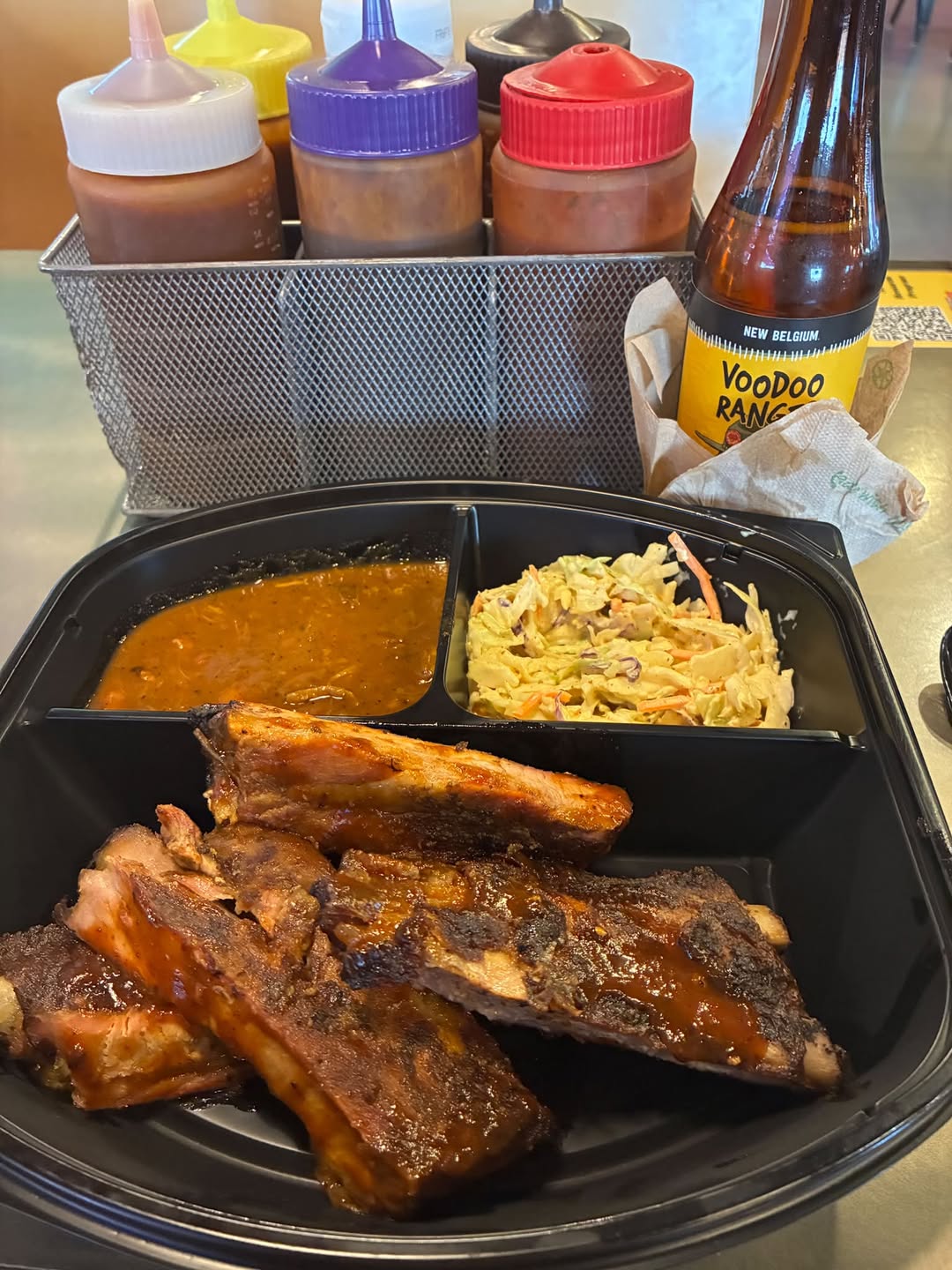
Today’s ribs came from Brothers BBQ in Broomfield.

I had been fasting, and after leaving the doctor’s office, I didn’t have to travel far to find an early dinner. About two miles later, I sat down with a plate of ribs.

Brothers BBQ has an interesting history. I came across their first store at Monaco Parkway and Leetsdale Drive and struck up a conversation with them in 1998.

Chris and Nick O’Sullivan hailed from England but were raised in Denver. While traveling around the country, they stopped at barbecue joints everywhere they went, sampling regional traditions from Kansas City and Memphis to Texas and South Carolina.

Their style is essentially Colorado BBQ, a little bit of everywhere. That fits Denver, where people have arrived from just about everywhere else.

*******

The usual

I’m not much of an adventurous eater.

When I find something I like, I tend to stick with it. There is no need to scan the menu and take a chance.

I ordered the rib special. Compared to other BBQ joints, Brothers serves huge Daddy Back ribs, rather than smaller Baby Back Ribs.

For sides, I went with baked beans and coleslaw. Instead of sweet tea, I bought a Voodoo IPA brewed by New Belgium up the road in Fort Collins.

The ribs arrived looking like ribs ought to look: smoked, seasoned, and ready to be attacked with my hands. I go through a lot of napkins.

This is one of barbecue’s great advantages. It doesn’t require much ceremony.

Pick up rib.

Eat rib.

Repeat.

*******

The $23 special

There was a time when ribs were associated with inexpensive food, the kind of thing working people could cook slowly and feed a family without spending a fortune.

That isn’t the case anymore.

My rib special, a beer, sides, and tip came to about $23.

That’s not unusual for BBQ these days. The once simple pork rib has joined the ranks of foods that can make a respectable dent in the wallet.

I suppose that’s what happens when something once considered ordinary becomes an American culinary art form.

People now debate barbecue the way wine people debate grapes.

Texas or Kansas City?

Memphis or Carolina?

Wet or dry?

Hickory or oak smoke?

The server brought over a condiment rack with three kinds of sauce on the side.

*******

Smoke beats my backyard grill.

I try my hand at grilling ribs from time to time.

Every once in a while I’ll buy a rack and throw it on the grill. I get reasonably good results, but the flame burns off most of my rub. My version is edible, and it makes me appreciate restaurants that know what they’re doing.

I haven’t managed to duplicate the flavor of properly smoked ribs. My upstairs neighbor is from Florida and has a smoker. I should collaborate more with him.

Time is an ingredient, too.

You can’t hurry good BBQ. The meat has to sit there and absorb the smoke while connective tissue slowly breaks down and the exterior develops that beautiful crust.

That’s the magic of barbecue.

Fire does the cooking.

Time does the work.

Smoke and rub supply the personality.

Dolly and me

Now, every time I eat ribs, I’ll think about Dolly Parton, except when I hear “Jolene.”

I may not have listened to enough Dolly Parton songs over the years, but we agree that ribs should be smoked.

BBQ doesn’t care about your roots.

Dolly came from the hills of East Tennessee.

The O’Sullivan brothers came from England and traveled America looking for BBQ.

I came from Wyoming and eat ribs wherever I happen to be.

Different roads. Same destination.

Put a rack of ribs in the smoker and don’t mess with it too much.

Dolly, I’m with you on this one.
MapQuest vs. Google Maps: A Personal Journey Through Navigation

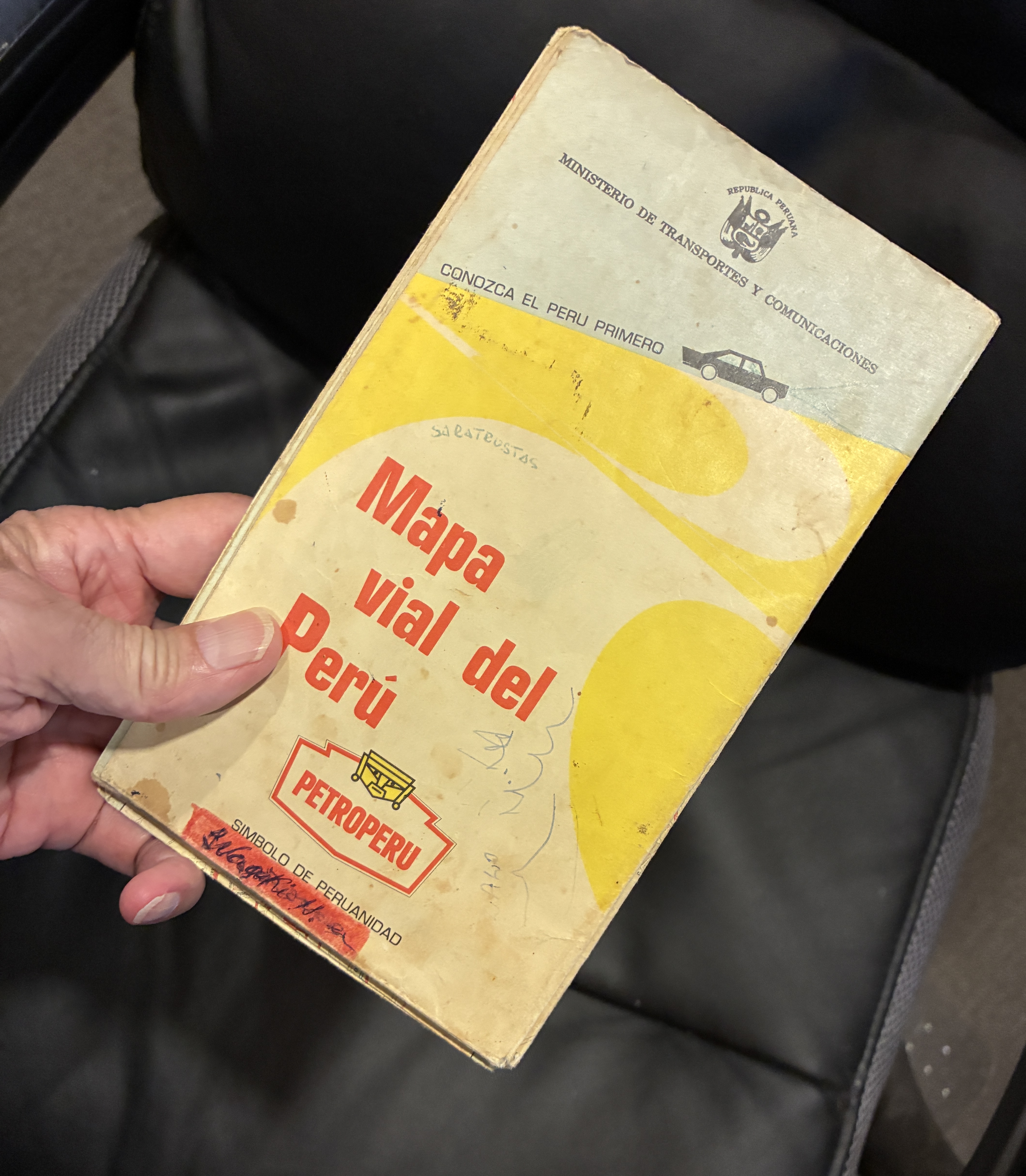
I remember when navigation meant opening a paper map and hoping I could refold the creases in the right order so the rectangular map would fit back in the glove box.

I used to keep road maps in the car. Rand McNally kept me company. AAA travel agents walked me through the maps and helped plan my route.

On family vacations, my dad stopped along the way, unfolded the map across the hood, and tried to figure out where we were.

In the 1960s, cities expanded, roads changed, and maps quickly fell out of date. Countries change names. Borders move. Entire countries disappear.

Columbus dealt with a similar problem, although his maps had considerably more blank space than mine. On his first voyage in 1492, he charted islands and coastlines in the Caribbean, adding information to the European maps. Early explorers thought they had reached Asia.

Maps have always been snapshots of what somebody thought the world looked like at a particular moment.

Africa provides plenty of examples. The Gold Coast became Ghana. Northern Rhodesia became Zambia. Southern Rhodesia became Zimbabwe. The Belgian Congo became Zaire, then the Democratic Republic of the Congo. Those changes reflected independence, revolution, political change, and the rejection of colonial names.

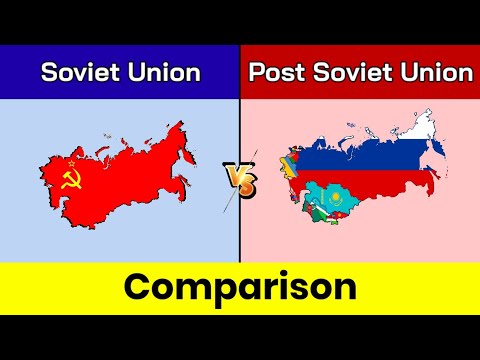
Then the Soviet Union became the mother of all map revisions. If you owned a map of the USSR in 1990, you had a collectible.

In 1991, the Soviet Union disappeared, and 15 independent countries emerged from its former republics. Russia, Ukraine, Belarus, the Baltic states, the Central Asian republics, and others became countries rather than chunks of a giant red blob.

Imagine being the guy at the map company who got that phone call.

“Hey, Bob. You know that giant country we’ve been printing for 40 years?”

“Yeah.”

“Well, it isn’t there anymore.”

“Great. I’ll call the printer and see if we can cancel that last order.”

The world’s constant change is one reason digital maps make so much sense. Digital maps can be updated overnight.

Then MapQuest came along.

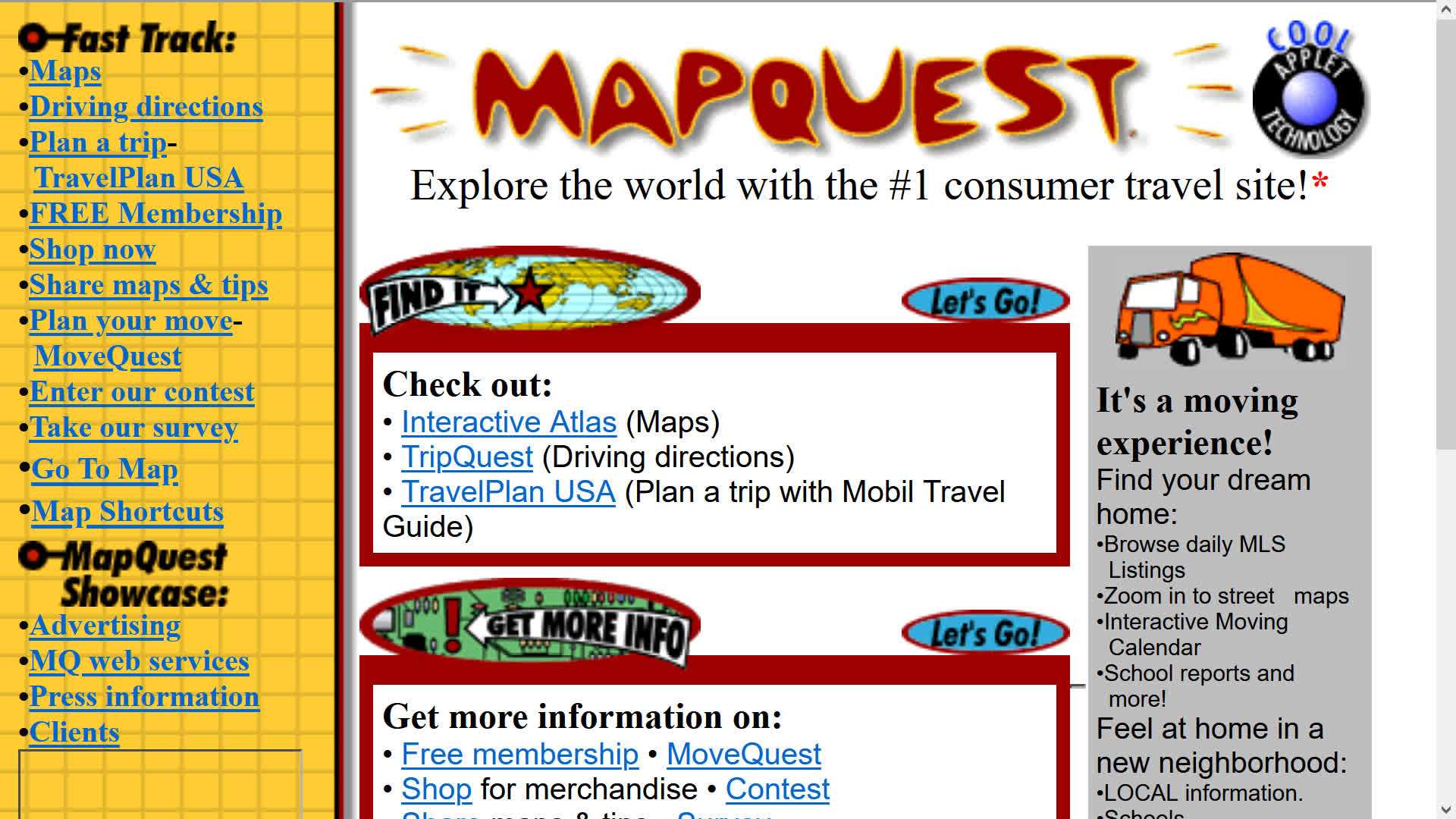
MapQuest moved the old business of producing maps and driving directions online. In 1996, it launched its web mapping service and became a pioneer of online interactive maps and driving directions. I could access MapQuest on my Palm Treo. I had to write down the driving directions, though.

In the early 2000s, MapQuest gave up its top spot to predatory Google Maps and Apple Maps. Between the two of them, they turned everybody’s phone into a dashboard navigator.

I used them both until today, when I went back to MapQuest.

There’s a reason.

In January 2025, the federal government renamed the Gulf of Mexico as the Gulf of America. The Interior Department updated the federal Geographic Names Information System and directed federal agencies to use the new name. The United States couldn’t make the rest of the world change its maps.

Then in 2026, the government changed Lake Ontario’s name to Lake America.

Google Maps and Apple Maps changed their digital maps. U.S. users see Gulf of America, while users in Mexico and Canada see Gulf of Mexico and Lake Ontario, respectively.

That’s when I decided I’d had enough and switched over to MapQuest. I’m a simple fellow and don’t like change.

It turns out MapQuest didn’t go along with the Lake America or Gulf of America renames. The OG digital map appealed to me again.

I like the idea that my navigation app won’t make me relearn geography.

At least for now.

This creates a new problem if MapQuest changes its mind.

My solution?

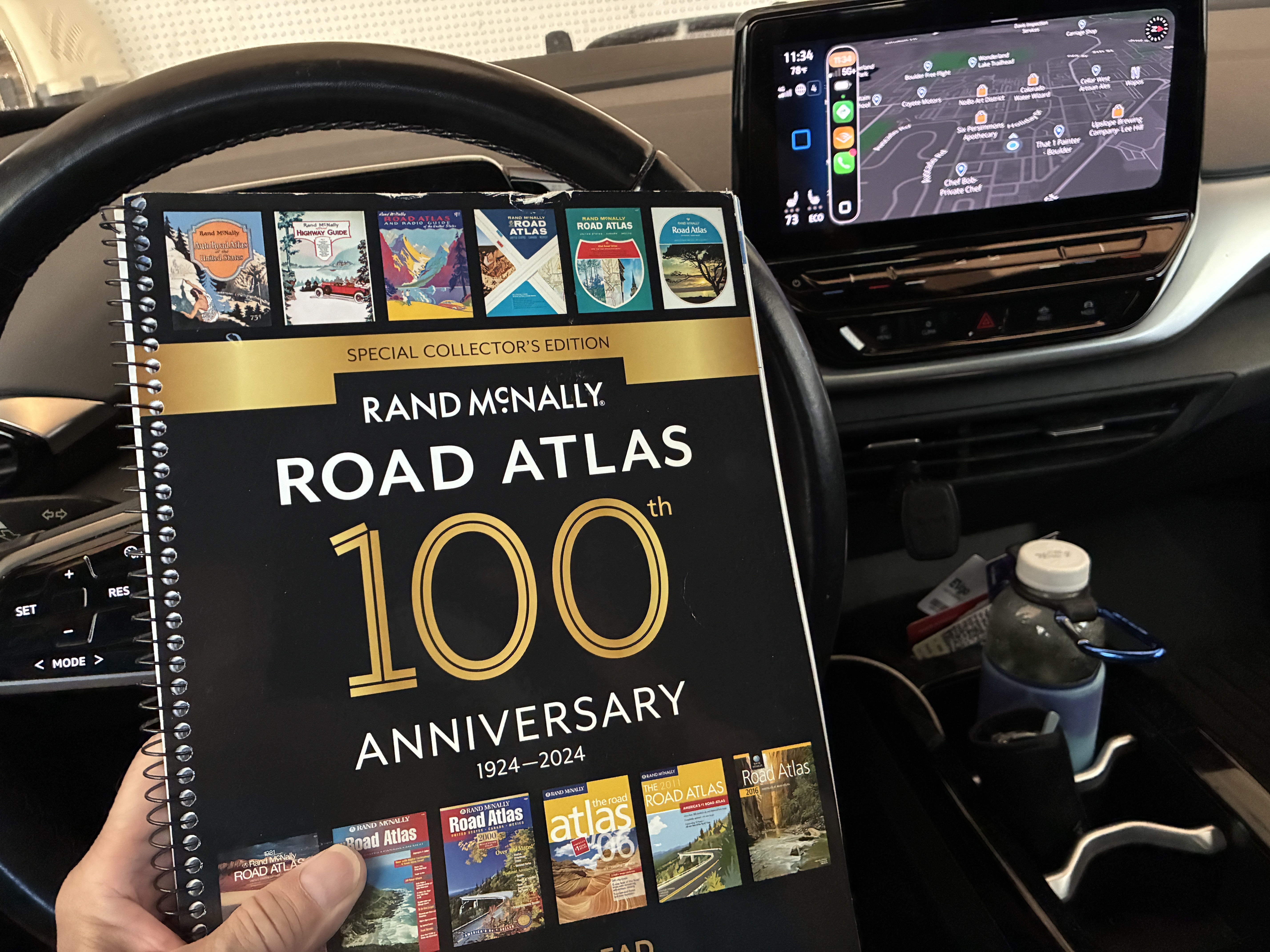
I keep an out-of-date hard-copy Rand McNally road atlas in the pocket behind the driver’s seat, where nobody can update it while I’m driving.

While driving through the middle of nowhere, I had no cell service in eastern Colorado. The apps didn’t work. I pulled into a truck stop.

No maps.

Walmart had one.

If everything else fails, I’ll pull over, get out the atlas, stare at it for five minutes, and pretend I know where I am.

I get curious when I research my stories.

Rand McNally began in Chicago when printer William H. Rand hired Irish immigrant Andrew McNally in 1858. The company began as a traditional printing company.

In 1924, Rand McNally published the “Auto Chum,” which evolved into the road atlas that became essential reading for generations of American motorists.

Car Wash Meditation

Do you intentionally meditate?

I’ve been trying to slow down by gardening, getting rid of my stuff so I don’t have to worry about what to do with it later.

I showed up at the gym for a drop-in class and didn’t make the cut.

Too many people, not enough spots. One of the hazards of spontaneity.

I had an hour to kill.

My Volkswagen ID.4 looked like it had recently crossed a biblical insect plague. I’d just returned from a couple of road trips: one to Casper for the Wyoming Writers Conference and another to a summer solstice party in Cheyenne.

Hundreds of miles of highway had transformed the front end and the windshield into a natural history museum of insect remains.

A car wash seemed like a productive use of my unexpected free time.

I picked up a Soccer Sandwich Special at Subway, fought my way around road construction, and pulled into the Gloss Auto Wash next door. The menu offered several packages. I chose the basic exterior wash.

“Do you want to drive it through or do you want us to do it?” the attendant asked.

“What’s the difference?”

“It’s faster if you do it,” she said. “Just follow the line.”

I had never driven through one of these conveyor-style washes before. Usually, someone would climb in while I waited outside wondering if my car will emerge intact.

The guy doing the prewash pointed toward a sign.

“Put it in neutral and keep your hands off the wheel.”

I turned off the radio.

This must be what riding in a self-driving Waymo cab feels like.

The car rolled forward on its own while workers sprayed down the front and back ends. This wasn’t one of those fully automated washes where machines do everything. It was a labor-intensive operation with people hosing, scrubbing, and prepping each vehicle before the machinery took over.

As I entered the tunnel, I couldn’t help thinking of a “Curb Your Enthusiasm” episode. Cheryl takes a colon cleanser to cure a cough, gets trapped in a car wash, exits the vehicle for a reason that quickly becomes too much information, and leaves Larry to deal with the consequences. It remains one of the more memorable, and uncomfortable, television depictions of a car wash.

Fortunately, my experience was considerably less dramatic.

The brushes never touched the car, but water thundered across the glass from every direction. I could feel the vibration. For a few minutes I sat in a cocoon of splashing water, humming motors, and blurred blue light.

The outside world disappeared.

No traffic. No road construction. No deadlines. No gym class I wasn’t getting into anyway.

Just water.

It struck me that we spend a lot of time looking for relaxation. We schedule it. Pay for it. Download apps designed to teach us how to sit quietly.

Yet here I was finding a few unexpected moments of peace in the middle of a midday car wash.

The conveyor eventually carried me back into daylight. One of the attendants pointed at an open drying stall. Four guys descended on the ID.4 with red rags, wiping away every remaining drop, even opening the doors to dry the jambs.

A few minutes later, the bug cemetery was gone.

I drove away with a clean car, a good deal on lunch, and the realization that the best part of a missed appointment is the unexpected place it takes you.

In my case, it was a moving meditation wrapped in soap, water, and a bunch of guys drying my car with a personal touch, a reminder that the universe knows when I need a pause, even if it has to disguise it as a car wash.